
In the fast-paced world of manufacturing, warehousing, and production, efficiency isn't just a buzzword—it's the backbone of success. Lean material handling, a cornerstone of modern operational excellence, focuses on eliminating waste, streamlining workflows, and maximizing value. At the heart of this system lies mobility: the ability to move materials, tools, and workstations quickly, safely, and precisely. Enter flat swivel castor wheels —small but mighty components that play a pivotal role in transforming static, rigid setups into dynamic, responsive environments. Whether you're managing a bustling assembly line, a busy warehouse, or a precision-focused workshop, these castors are more than just "wheels on a cart"; they're enablers of lean principles, designed to make every movement count. In this article, we'll dive deep into the top benefits of flat swivel castor wheels, exploring how they enhance maneuverability, reduce operator strain, boost productivity, and align seamlessly with the goals of a lean system .
Understanding the Role of Mobility in Lean Material Handling
Before we zoom in on flat swivel castor wheels, let's take a step back to appreciate why mobility matters in lean material handling. Lean systems thrive on flexibility: the ability to adapt to changing demands, reconfigure workspaces, and deliver materials exactly where they're needed, exactly when they're needed. Static equipment—think fixed workbench setups, immovable storage racks, or heavy trolleys that require multiple people to push—creates bottlenecks. Workers waste time walking back and forth, materials sit idle, and sudden shifts in production priorities lead to delays. In contrast, mobile equipment turns these inefficiencies into opportunities. A trolley that glides smoothly across the floor, a workbench that can be repositioned in seconds, or a storage rack that follows the flow of production—these aren't just conveniences; they're critical to minimizing waste (motion, waiting, inventory) and maximizing value.
But mobility isn't just about "moving things around." It's about moving them intelligently . That's where castor wheels come in. Not all castors are created equal, though. Fixed castors only roll forward and backward, limiting maneuverability. Swivel castors with bulky designs might get stuck on uneven floors or struggle with heavy loads. Flat swivel castor wheels, however, are engineered for the unique demands of lean environments. Their low-profile, flat-top design, combined with 360-degree rotation, makes them ideal for equipment that needs to navigate tight spaces, support heavy weights, and maintain stability—all while keeping movement smooth and effortless. Let's unpack what makes these castors stand out.
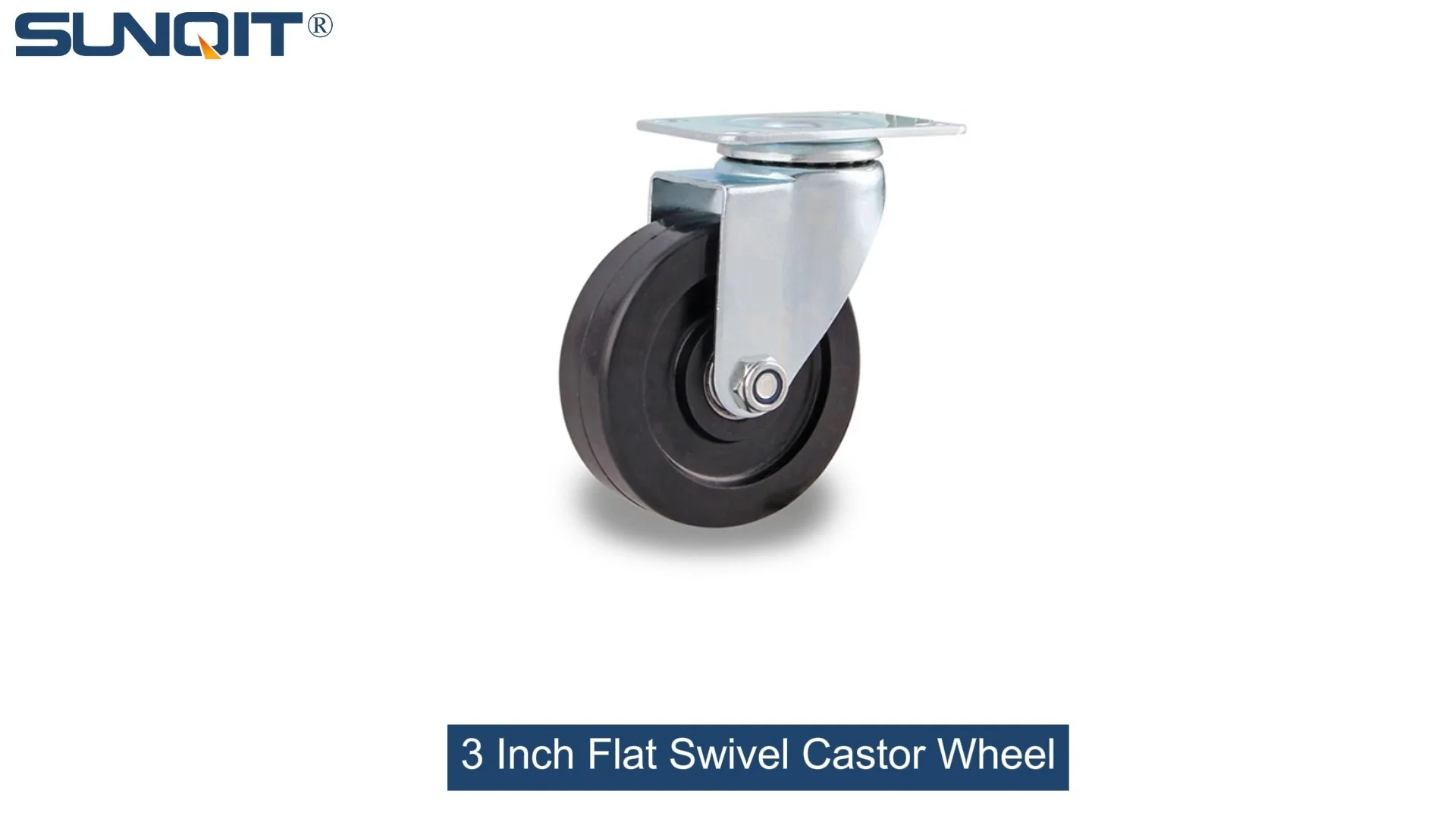
What Are Flat Swivel Castor Wheels?
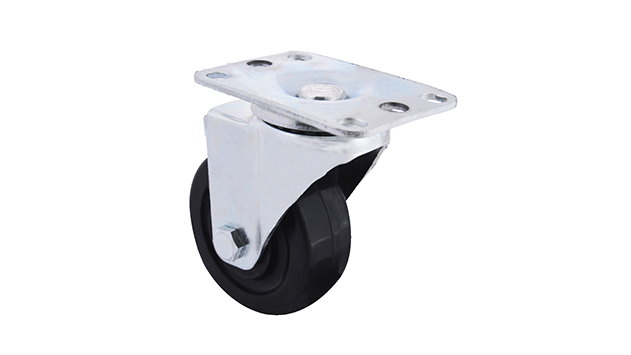
Flat swivel castor wheels are a type of caster designed with a low, flat mounting plate (the "flat" part) and a swivel head that allows the wheel to rotate 360 degrees (the "swivel" part). Unlike some castors with raised or bulky mounting brackets, their flat design sits close to the equipment it supports, lowering the center of gravity and enhancing stability. This is especially important for tall or top-heavy loads, like stacked turnover trolley and rack units or workbenches with tools and materials on upper shelves. The wheels themselves are typically made from durable materials like polyurethane, rubber, or steel, chosen for their ability to absorb shocks, resist wear, and roll smoothly across various floor surfaces—from concrete warehouses to polished factory floors.
Another key feature of flat swivel castors is their compatibility with a wide range of equipment. They're commonly found on workbenches, turnover trolleys, mobile storage racks, assembly line carts, and even medical equipment—anywhere mobility and precision are priorities. Many models also come with built-in brakes (lockable castors), which add an extra layer of safety by keeping equipment stationary when needed. And because they're designed for industrial use, they often include caster accessories like bearing covers, dust shields, or replacement axles, making maintenance straightforward and extending their lifespan.
Top Benefits of Flat Swivel Castor Wheels for Lean Material Handling
1. Unmatched Maneuverability in Tight Spaces
One of the most immediate benefits of flat swivel castor wheels is their ability to navigate tight, crowded spaces with ease. In lean environments—where every square foot of floor space is optimized for workflow—equipment often needs to move through narrow aisles, around stationary machinery, or between closely positioned workstations. Fixed castors or bulky swivel castors can make this a nightmare: a trolley might require multiple pushes, pulls, and readjustments to get from Point A to Point B, wasting time and increasing the risk of collisions. Flat swivel castors, with their 360-degree rotation and low profile, eliminate this hassle.
Imagine a warehouse worker tasked with moving a turnover trolley and rack loaded with components from the storage area to the assembly line. The path is narrow, with pallet racks on one side and a conveyor belt on the other. With fixed castors, the worker would need to "shuffle" the trolley back and forth, inching forward while correcting direction—a process that's slow and physically taxing. With flat swivel castors, however, the trolley glides. A light push, a gentle turn of the handle, and the castors pivot smoothly, allowing the trolley to snake through the aisle with minimal effort. This isn't just about speed; it's about reducing the number of movements required to complete a task—a core lean principle focused on eliminating wasteful motion.
This maneuverability also shines in dynamic workspaces, like automotive assembly lines, where workstations are reconfigured daily to accommodate different vehicle models. A workbench mounted on flat swivel castors can be moved, rotated, or nested with other benches in minutes, ensuring workers always have tools and materials within arm's reach. No more wasted steps walking to a distant storage shelf or struggling to position a heavy bench by hand. The result? A workflow that adapts to the task, not the other way around.
2. Reduced Operator Fatigue and Injury Risk
In any material handling environment, the well-being of operators is a top priority—and a critical component of lean systems. Fatigued workers are slower, less focused, and more prone to mistakes, all of which undermine efficiency. Heavy lifting, pushing, and pulling are major sources of workplace fatigue and injury, often leading to musculoskeletal disorders (MSDs) like back pain or strained shoulders. Flat swivel castor wheels address this by minimizing the force required to move equipment, turning strenuous tasks into manageable ones.
The science behind this is simple: rolling friction is far lower than sliding friction. When equipment is mounted on high-quality flat swivel castors, the force needed to move it is significantly reduced compared to dragging or pushing equipment with poorly designed wheels. For example, a loaded trolley that might require 50 pounds of force to push with worn, fixed castors could require as little as 15 pounds with smooth-rolling flat swivel castors. Over an 8-hour shift, that difference adds up—saving operators from unnecessary strain and keeping them energized and productive.
Lockable brakes on many flat swivel castors add another layer of safety. When a worker needs to load or unload a trolley or use a workbench , they can engage the brake with a simple foot pedal, preventing the equipment from rolling. This eliminates the need to wedge blocks under wheels or hold the trolley steady while working—tasks that can lead to slips, trips, or strains. Over time, this reduction in physical stress leads to fewer absences, lower workers' compensation costs, and a more engaged, motivated team—all of which contribute to a stronger lean system.
3. Enhanced Workflow Efficiency and Flexibility
Lean systems thrive on the ability to respond quickly to changes—whether it's a sudden rush in orders, a shift in production priorities, or the introduction of a new product line. Static equipment limits this flexibility, locking teams into rigid workflows that can't adapt. Flat swivel castor wheels, by contrast, turn equipment into "modular" components that can be rearranged on the fly, ensuring workflows remain efficient no matter what the day brings.
Consider a electronics manufacturing facility producing smartphones. One day, the line is assembling Model X; the next, it's switching to Model Y, which requires different tools and a slightly reconfigured assembly sequence. With workbenches mounted on flat swivel castors, the team can quickly move benches into a U-shape to reduce hand-off time, or relocate a testing station closer to the packaging area. What might take hours with fixed benches takes minutes with mobile ones. This agility ensures the line stays productive during transitions, minimizing downtime and keeping lead times short—key metrics in lean manufacturing.
Flexibility also extends to inventory management. In a lean warehouse, "just-in-time" (JIT) delivery means materials arrive exactly when they're needed, reducing the need for large stockpiles. Turnover trolley and rack units on flat swivel castors make this possible by allowing workers to transport small batches of materials directly to the production line, rather than storing them in a central location. When a component is needed, the trolley is wheeled to the workstation, unloaded, and returned to storage—no excess inventory, no wasted space, and no delays waiting for a forklift.
4. Durability and Longevity for Heavy-Duty Use
In industrial settings, equipment takes a beating. Castor wheels are no exception—they're exposed to heavy loads, rough floors, chemicals, and constant use. A flimsy castor that breaks or wears out quickly can derail a lean system, causing unplanned downtime and increasing maintenance costs. Flat swivel castor wheels are built to withstand this punishment, with robust materials and thoughtful engineering that ensure they last for years, even in the toughest environments.
Many flat swivel castors feature reinforced mounting plates made from steel or aluminum, which prevent bending or warping under heavy loads. The wheels themselves are often made from polyurethane, a material that combines the elasticity of rubber (for smooth rolling) with the durability of plastic (resistant to oils, chemicals, and abrasion). Steel ball bearings in the swivel head reduce friction, ensuring the castors rotate smoothly even after months of use. And with caster accessories like sealed bearings or grease fittings, maintenance is simple: a quick wipe down, a drop of lubricant, and the castors are good as new.
This durability translates to lower total cost of ownership (TCO). While high-quality flat swivel castors might have a higher upfront cost than cheaper alternatives, they pay for themselves by reducing the need for frequent replacements and repairs. In a lean system, where waste reduction includes minimizing unnecessary spending, this long-term reliability is invaluable.
5. Compatibility with a Wide Range of Lean Equipment
A lean system is only as strong as its components, and flat swivel castor wheels play well with others. They're designed to integrate seamlessly with a variety of lean material handling equipment, from simple workbenches to complex mobile storage systems. This versatility means you can standardize on a single type of castor across your facility, simplifying procurement, maintenance, and training.
For example, a manufacturer might use the same flat swivel castors on their assembly line workbenches, parts trolleys, and tool cabinets. This consistency ensures workers know how to operate and maintain the equipment, reducing the learning curve for new hires. It also makes it easier to swap castors between equipment if needed—say, moving a heavy-duty castor from a rarely used trolley to a frequently used workbench during a busy season.
This compatibility extends to specialized equipment, too. ESD (electrostatic discharge) workbenches, used in electronics manufacturing to protect sensitive components from static electricity, often rely on flat swivel castors with conductive wheels to dissipate static charges safely. Similarly, lean system setups that include automated guided vehicles (AGVs) can use flat swivel castors on manual backup trolleys, ensuring seamless workflow continuity even when AGVs are offline.

Choosing the Right Flat Swivel Castor Wheels for Your Lean System
To maximize the benefits of flat swivel castor wheels, it's important to choose the right model for your needs. Here are a few key factors to consider:
- Load Capacity: Calculate the maximum weight the equipment will carry (including the equipment itself) and choose castors with a load rating that exceeds this by 20-30% to account for uneven loading.
- Floor Type: For rough concrete floors, choose castors with thick, shock-absorbing wheels (like polyurethane). For smooth floors, harder wheels (like nylon) may offer better rolling resistance.
- Braking Needs: If the equipment needs to stay stationary during use, opt for castors with foot brakes or total-lock brakes (which lock both the wheel and swivel head).
- Environmental Factors: In wet or corrosive environments (like food processing), choose stainless steel castors with sealed bearings to prevent rust. In cleanrooms, non-marking wheels are a must.
- Mounting Type: Ensure the castor's mounting plate matches the equipment (e.g., bolt-on, stem-mounted, or plate-mounted).

Conclusion: Small Wheels, Big Impact on Lean Success
In the world of lean material handling, every detail matters. Flat swivel castor wheels may seem like a small component, but their impact is profound. By enhancing maneuverability, reducing operator strain, boosting flexibility, and standing up to heavy use, they empower teams to work smarter, not harder—aligning perfectly with the core principles of a lean system . Whether you're moving a workbench across a factory floor, transporting materials on a turnover trolley and rack , or reconfiguring a workstation for a new project, these castors turn obstacles into opportunities, waste into value, and static setups into dynamic, responsive environments.
As you look to optimize your lean material handling processes, don't overlook the power of mobility. Invest in high-quality flat swivel castor wheels, pair them with the right equipment, and watch as your team's efficiency, safety, and morale soar. After all, in lean manufacturing, the goal is to create a system where everything—including the wheels on your trolleys—works together to deliver value. And with flat swivel castors, you're one step closer to that goal.
| Feature | Flat Swivel Castor Wheels | Fixed Castors |
|---|---|---|
| Maneuverability | 360° rotation; navigates tight spaces easily | Only forward/backward; requires multiple movements to turn |
| Operator Effort | ∗30% less force required to move equipment | Higher force needed; increases fatigue |
| Flexibility | ∗Compatible with workbenches, trolleys, racks, etc. | Limited to straight-line movement; restricts workflow adaptability |
| Durability | Reinforced plates, sealed bearings; built for heavy use | Basic construction; prone to wear in industrial settings |
∗Based on industry studies comparing flat swivel castors to fixed castors under standard operating conditions.