- Company Articles
- Products and Technology
- Product knowledge
- Top Benefits of M10*56 Rubber Leveling Feet in 3C Assembly Lines

Top Benefits of M10*56 Rubber Leveling Feet in 3C Assembly Lines
Related Product
M10*56 Rubber Leveling Feet
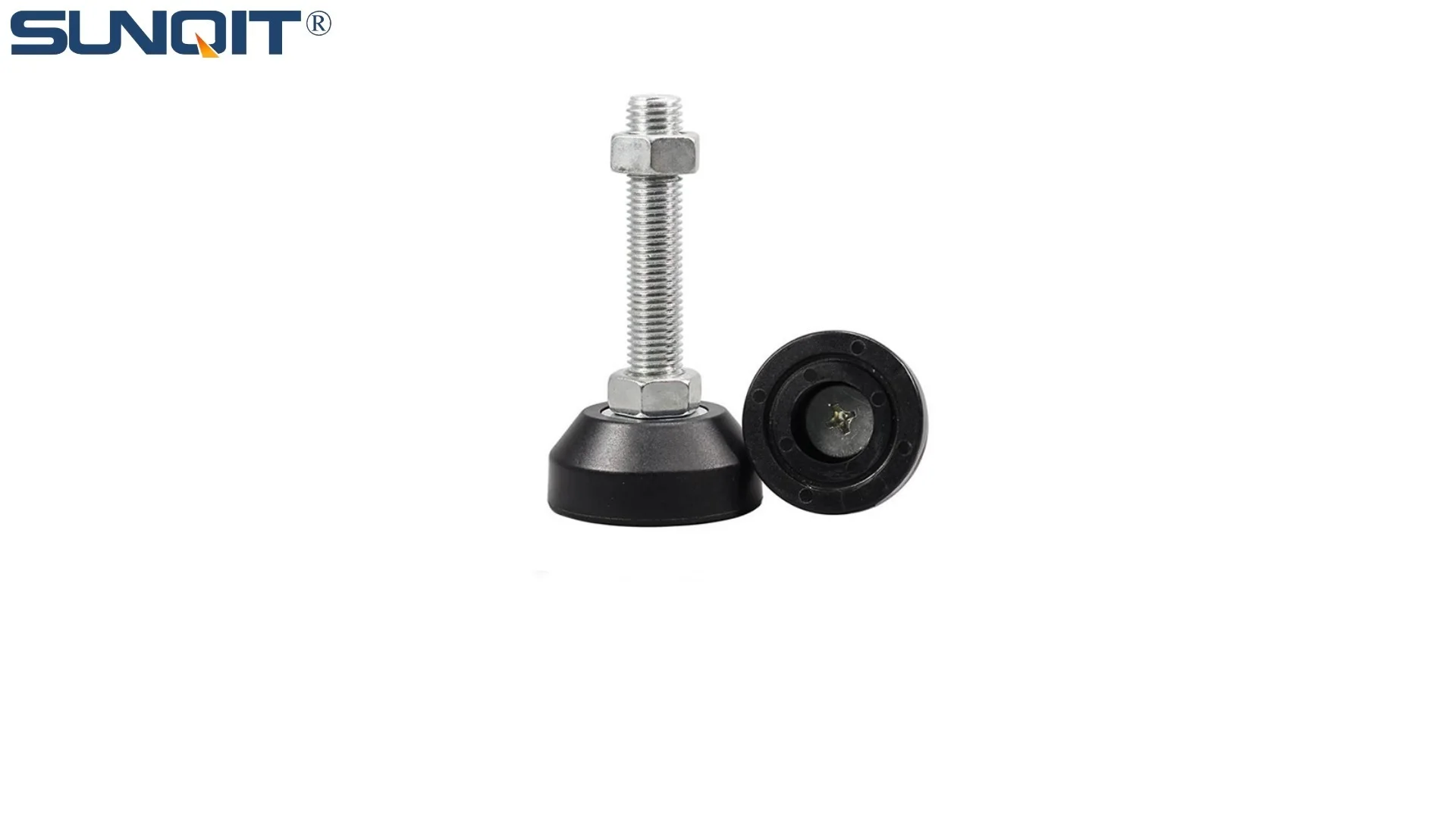
Adjustable leveling feet are designed to keep machines level when placed on uneven or sloped ground. Otherwise known as adjustable equipment feet, they are available to order in a wide variety of size and load capacity combinations.
In the fast-paced world of 3C manufacturing—where "3C" stands for computers, communications, and consumer electronics—precision isn't just a buzzword; it's the backbone of every successful production line. Imagine a bustling factory floor where workers assemble smartphones with components smaller than a grain of rice, or where laptops are pieced together with microchips that demand (hair's breadth accuracy). In such environments, even the tiniest instability can lead to costly errors, delayed production, or worse, defective products reaching customers. That's where yet critical components like the M10*56 rubber leveling feet come into play. These small but mighty tools are the unsung heroes of assembly lines, quietly ensuring that workbenches, conveyor systems, and workstations stay stable, level, and ready to support the intricate tasks of 3C manufacturing. Let's dive into why these specific leveling feet have become a staple in modern 3C assembly lines, and how they contribute to efficiency, precision, and lean manufacturing principles.
The Critical Role of Stability in 3C Assembly Lines
Before we zoom in on the M10*56 rubber leveling feet themselves, let's first understand why stability matters so much in 3C production. Unlike industries that handle larger, more robust components, 3C manufacturing deals with delicate parts: think microprocessors, camera lenses, and flexible circuit boards. A single misalignment during assembly—caused by a wobbly workbench or a vibrating conveyor—can result in a smartphone that won't power on, a laptop with a glitchy touchscreen, or a smartwatch with a faulty sensor. The cost of such errors? Beyond the immediate loss of materials and labor, there's the risk of damaged brand reputation and customer trust, which can take years to rebuild.
Consider a typical 3C assembly line: it's a symphony of moving parts. Workers stand at lean pipe workbenches installing components, while conveyors transport partially assembled products to the next station. ESD workstations (electrostatic discharge-protected areas) are critical for handling sensitive electronics, as static electricity can fry microchips in an instant. All these elements—workbenches, conveyors, ESD stations—rely on a stable foundation to function optimally. Even a slight tilt in a workbench leg or a loose caster wheel can disrupt the entire flow, leading to bottlenecks and frustrated operators.
Fun Fact: In 3C manufacturing, the tolerance for error is often measured in micrometers—one micrometer is 1/1000th of a millimeter, or about 1/25,400th of an inch. To put that in perspective, a human hair is roughly 50-100 micrometers thick. That means a workbench that's even 10 micrometers out of level could throw off an entire assembly process.
Stability isn't just about preventing errors, though. It also plays a key role in worker safety and comfort. A wobbly workbench forces operators to compensate by leaning, straining, or adjusting their posture, which can lead to fatigue, repetitive strain injuries, and decreased productivity over time. In contrast, a stable workstation allows workers to focus on their tasks without distraction, boosting both speed and accuracy. This is where leveling feet step in: they're the first line of defense against instability, ensuring that every surface in the assembly line stays grounded, level, and ready for action.
What Are M10*56 Rubber Leveling Feet?
Now that we've established why stability is non-negotiable, let's get to know the star of the show: the M10*56 rubber leveling feet. At first glance, they might look like simple screws with rubber caps, but their design is the result of careful engineering tailored to the demands of industrial environments. Let's break down the name: "M10" refers to the metric thread size (10mm in diameter), while "56" indicates the length of the threaded rod (56mm). The "rubber" component is the base, which sits between the threaded rod and the floor, providing grip, shock absorption, and protection against scratches.
These leveling feet are typically made from two main materials: a metal (often carbon steel or stainless steel) for the threaded rod and a durable rubber compound (like nitrile or EPDM) for the base. The metal rod is strong enough to support heavy loads—think of a fully loaded lean pipe workbench with tools, components, and a laptop for quality checks—while the rubber base is designed to flex slightly, absorbing vibrations and preventing slippage. Some models also include a hexagonal nut near the top of the rod, allowing for easy adjustment with a wrench, which is crucial for fine-tuning height on uneven floors.
But why M10*56 specifically? In 3C assembly lines, where workbenches and workstations are often built using modular systems (like aluminum profiles ), the size of the leveling feet needs to align with standard leg diameters and load requirements. M10 is a common thread size for medium-duty applications, offering a balance between strength and versatility, while 56mm provides enough length to accommodate minor floor irregularities without being overly bulky. This combination makes the M10*56 rubber leveling feet compatible with most modular workbench frames, ESD stations, and light-duty conveyors—perfect for the dynamic needs of 3C production.

Top 5 Benefits of M10*56 Rubber Leveling Feet in 3C Assembly Lines
1. Precision Adjustability for Uneven Floors
Factory floors are rarely perfectly level. Years of heavy equipment movement, temperature fluctuations, and general wear and tear can create small dips, bumps, or slopes—imperfections that might go unnoticed to the naked eye but can wreak havoc on assembly precision. This is where the adjustability of the M10*56 rubber leveling feet shines. The threaded rod allows operators to screw the feet in or out, raising or lowering individual legs of a workbench or workstation to compensate for these irregularities.
Imagine a scenario: a new ESD workstation is installed in a 3C factory, but the floor under one leg is slightly lower than the others. Without leveling feet, the workstation would rock back and forth, making it impossible for the operator to steady their hands while soldering a tiny component. With M10*56 feet, however, the solution is simple: using a wrench, the operator turns the hexagonal nut on the problematic foot, extending the rod until the workstation sits perfectly level. This process takes minutes but ensures that the workstation remains stable for months, if not years, to come.
The 56mm length of the rod is key here. It provides enough adjustment range to handle most common floor unevenness (typically up to 10-15mm) without requiring the feet to be excessively long. This is especially important in modular setups, where workbenches might need to be repositioned periodically to optimize workflow. Instead of rebuilding the entire workstation, operators can simply readjust the leveling feet to (adapt to) the new floor conditions—a prime example of lean manufacturing in action, where waste (in this case, time and materials) is minimized.
2. Vibration Dampening to Protect Sensitive Electronics
3C assembly lines are noisy places. Conveyors hum, air compressors roar, and tools like screwdrivers and soldering irons add to the din. All this activity generates vibrations that can travel through the floor and into workbenches, where they can jostle delicate components. For example, when installing a camera module into a smartphone, even a tiny vibration could misalign the lens, resulting in blurry photos. The rubber base of the M10*56 leveling feet acts as a shock absorber, dampening these vibrations and preventing them from reaching the work surface.
Rubber is an excellent material for vibration isolation because of its elasticity. When vibrations hit the rubber base, the material compresses and expands slightly, converting kinetic energy into heat (which dissipates harmlessly) rather than transferring it upward. This is particularly critical in ESD workstations , where sensitive electronics are handled. ESD protection isn't just about preventing static discharge; it's also about maintaining a stable environment where components aren't physically disturbed. By reducing vibration, the M10*56 rubber leveling feet help ensure that microchips, capacitors, and other delicate parts remain intact and functional during assembly.
Compare this to leveling feet with hard plastic or metal bases: while they might offer stability, they lack the shock-absorbing properties of rubber, acting more like conductors of vibration than barriers. Over time, this can lead to increased component failure rates and higher scrap costs—two things 3C manufacturers can't afford in an industry with razor-thin profit margins.
3. Enhanced Load Distribution to Prevent Workbench Sagging
A typical lean pipe workbench in a 3C line might support a variety of items: tools, bins of components, laptops for quality control software, and even the weight of the operator leaning on the surface. All this adds up—easily reaching 100-200kg per workstation. Without proper load distribution, the legs of the workbench can sink into the floor, warp, or even crack, leading to uneven surfaces and potential collapse. The M10*56 rubber leveling feet address this by spreading the load evenly across the floor.
The rubber base of these leveling feet has a larger contact area than a bare metal leg, which reduces the pressure exerted on the floor (pressure = force/area). For example, a workbench leg with a 20mm diameter metal end exerts more pressure on the floor than a rubber base with a 50mm diameter. By distributing the load over a wider area, the leveling feet prevent indentations in concrete floors, protect floor coatings, and reduce stress on the workbench frame itself. This not only extends the lifespan of the workbench but also ensures that the surface remains flat and stable, even under heavy, sustained loads—critical for tasks like PCB assembly, where a flat surface is essential for accurate component placement.
4. Chemical and Wear Resistance for Longevity
3C assembly lines use a variety of substances: cleaning solvents, lubricants, coolants, and even adhesives. These chemicals can be harsh on materials, especially if they're left in contact for extended periods. The rubber compounds used in M10*56 leveling feet—often nitrile or EPDM—are chosen for their resistance to oils, greases, and mild chemicals. This means they won't degrade, crack, or become brittle when exposed to common factory substances, ensuring a long service life even in harsh environments.
Additionally, the rubber base is wear-resistant, standing up to the constant friction of workbench movement (when reconfiguring lines) and the weight of heavy loads. Unlike plastic bases, which can scratch or chip over time, rubber maintains its integrity, providing consistent grip and stability for years. The metal rod, often coated with zinc or nickel, resists rust and corrosion, further extending the life of the leveling feet. This durability translates to lower maintenance costs and fewer replacements—a boon for lean manufacturing teams focused on reducing waste and maximizing uptime.
5. Compatibility with Modular Systems and Aluminum Profiles
Modern 3C assembly lines thrive on flexibility. As product designs change (think annual smartphone upgrades or new laptop models), production lines need to be reconfigured quickly to accommodate new processes. This is why modular systems—built using aluminum profiles , lean pipes, and interchangeable components—have become so popular. The M10*56 rubber leveling feet are designed to integrate seamlessly with these systems, making them a versatile choice for dynamic environments.
Aluminum profiles, for example, are lightweight yet strong, and they feature T-slots that allow for easy attachment of accessories like shelves, bins, and leveling feet. The M10 thread size of these leveling feet matches the standard hole sizes in most aluminum profile legs, meaning they can be screwed in directly without the need for adapters or custom modifications. This compatibility saves time during initial setup and reconfiguration, allowing teams to adjust workstations in hours rather than days.
Whether you're building a new ESD workstation , retrofitting an existing lean pipe workbench, or setting up a temporary assembly area for a product launch, the M10*56 rubber leveling feet fit right in. They're the kind of component that doesn't require a second thought—you install them, adjust them, and trust them to do their job, freeing up your team to focus on what matters: building high-quality 3C products.

M10*56 Rubber Leveling Feet vs. Other Common Leveling Solutions: A Comparison
To truly appreciate the value of M10*56 rubber leveling feet, it helps to compare them to other common options used in industrial settings. Let's take a look at how they stack up against plastic leveling feet, metal-only leveling feet, and adjustable casters (which are sometimes used as a substitute for fixed leveling feet).
| Feature | M10*56 Rubber Leveling Feet | Plastic Leveling Feet | Metal-Only Leveling Feet | Adjustable Casters |
|---|---|---|---|---|
| Vibration Dampening | Excellent (rubber base absorbs shock) | Poor (hard plastic conducts vibration) | Poor (metal conducts vibration) | Fair (some rubber on wheels, but casters add movement) |
| Adjustability Range | Up to ~15mm (via 56mm threaded rod) | Limited (shorter threads, less flexibility) | Good (similar to rubber, but no grip) | Limited (height adjustment often minimal) |
| Compatibility with Aluminum Profiles | High (M10 thread fits standard profile legs) | Medium (may require custom threading) | High (but risk of scratching profiles) | Medium (casters add height, may not fit all frames) |
| Load Capacity | Medium-High (supports ~100-200kg per foot) | Low (plastic can crack under heavy loads) | High (metal is strong, but no shock absorption) | Medium (depends on caster quality; risk of swiveling under load) |
| ESD Workstation Suitability | Excellent (stability + vibration reduction) | Poor (no vibration control, static risk) | Fair (stable but conductive, may require grounding) | Poor (movement increases static risk; unstable) |
As the table shows, M10*56 rubber leveling feet strike a unique balance between adjustability, vibration control, load capacity, and compatibility—making them the ideal choice for 3C assembly lines where precision and flexibility are paramount.

Real-World Applications: How 3C Manufacturers Use M10*56 Rubber Leveling Feet
Let's bring this all to life with a hypothetical but realistic example of a 3C manufacturer using M10*56 rubber leveling feet. Meet "TechPro," a mid-sized company that produces smart home devices—think Wi-Fi cameras, smart thermostats, and voice assistants. TechPro's assembly line has 10 workstations, each dedicated to a specific step: circuit board assembly, sensor installation, casing, testing, and packaging. Most of their workstations are built using aluminum profiles and lean pipe workbenches to allow for quick reconfiguration when new product models are launched.
A few months ago, TechPro introduced a new smart camera with a higher-resolution lens—a component that requires extremely precise alignment during assembly. Almost immediately, the production team noticed an increase in defective units: roughly 5% of cameras had blurry images, which was well above their usual 1% defect rate. After investigating, they traced the issue to the workbench in the lens installation station. The bench, which had been in use for over a year, was slightly tilted due to a dip in the factory floor, causing operators to misalign the lens during installation.
The solution? The team replaced the old plastic leveling feet on the workbench with M10*56 rubber leveling feet. Within a week, the defect rate dropped to 0.5%. The adjustability of the new feet allowed them to level the workbench perfectly, while the rubber base reduced vibrations from the nearby conveyor, ensuring steady hands during lens placement. Encouraged by the results, TechPro rolled out the M10*56 feet to all their ESD workstations , and within three months, overall defect rates decreased by 30%, saving the company an estimated $50,000 in scrap and rework costs.
Another example comes from a smartphone manufacturer that uses M10*56 rubber leveling feet on their testing stations. These stations are where finished phones undergo stress tests—dropping, button presses, camera functionality checks. The testing equipment is sensitive, and even minor vibrations can interfere with readings. By installing rubber leveling feet, the manufacturer reduced test errors by 25%, allowing them to process more units per day and meet tight delivery deadlines.
Installation and Maintenance Tips for M10*56 Rubber Leveling Feet
To get the most out of your M10*56 rubber leveling feet, proper installation and maintenance are key. Here are some best practices to ensure they perform optimally:
Installation Tips:
- Clean the threads first: Before installing, wipe down the threaded rod and the receiving hole in the workbench leg to remove dirt, debris, or rust. This ensures smooth adjustment and prevents cross-threading.
- Hand-tighten first, then adjust: Screw the leveling feet into the workbench legs by hand until they're snug, then use a wrench to make final height adjustments. Avoid over-tightening, as this can strip the threads or damage the rubber base.
- Use a level: Always use a spirit level to check the workbench surface after adjusting the feet. Place the level in both directions (front-to-back and side-to-side) to ensure true levelness.
- replace in sets: If one leveling foot is damaged or worn, replace all feet on the workstation at the same time. Mixing old and new feet can lead to uneven wear and instability.
Maintenance Tips:
- Inspect regularly: Check the rubber bases for cracks, tears, or hardening (which indicates aging). Inspect the threads for rust or debris, and clean them with a wire brush if needed.
- Lubricate threads: Every six months, apply a small amount of anti-seize lubricant to the threads to prevent corrosion and ensure smooth adjustment.
- Re-adjust after moving workstations: If a workstation is repositioned, always re-check and re-adjust the leveling feet to account for new floor conditions.
- replace when necessary: Rubber bases typically last 2-3 years in heavy-use environments. If you notice the feet slipping, vibrating excessively, or failing to hold adjustment, it's time for a replacement.
Conclusion: Small Component, Big Impact
In the grand scheme of 3C manufacturing—with its high-tech robots, precision tools, and cutting-edge materials—the M10*56 rubber leveling feet might seem (insignificant). But as we've explored, these small components play a outsized role in ensuring stability, precision, and efficiency on the assembly line. From adjusting for uneven floors to dampening vibrations, distributing loads, and integrating with modular systems, they're a testament to the idea that lean manufacturing isn't just about big-picture processes—it's also about the small details that add up to big results.
For 3C manufacturers looking to reduce defects, improve productivity, and stay competitive in a fast-changing industry, investing in quality leveling feet like the M10*56 rubber variety is a smart, cost-effective choice. They're not just tools for keeping workbenches level; they're tools for building better products, happier teams, and more resilient businesses.
So the next time you pick up a smartphone, smartwatch, or laptop, take a moment to appreciate the invisible heroes that helped create it—including the humble M10*56 rubber leveling feet, quietly doing their job to ensure that the device in your hand is as precise, reliable, and well-made as possible.