- Company Articles
- Products and Technology
- Solution
- Top Benefits of Using Aluminum Pipe Adjustable Leveling Feet in Lean Systems

Top Benefits of Using Aluminum Pipe Adjustable Leveling Feet in Lean Systems
Related Product
Aluminum Pipe Adjustable Leveling Feet
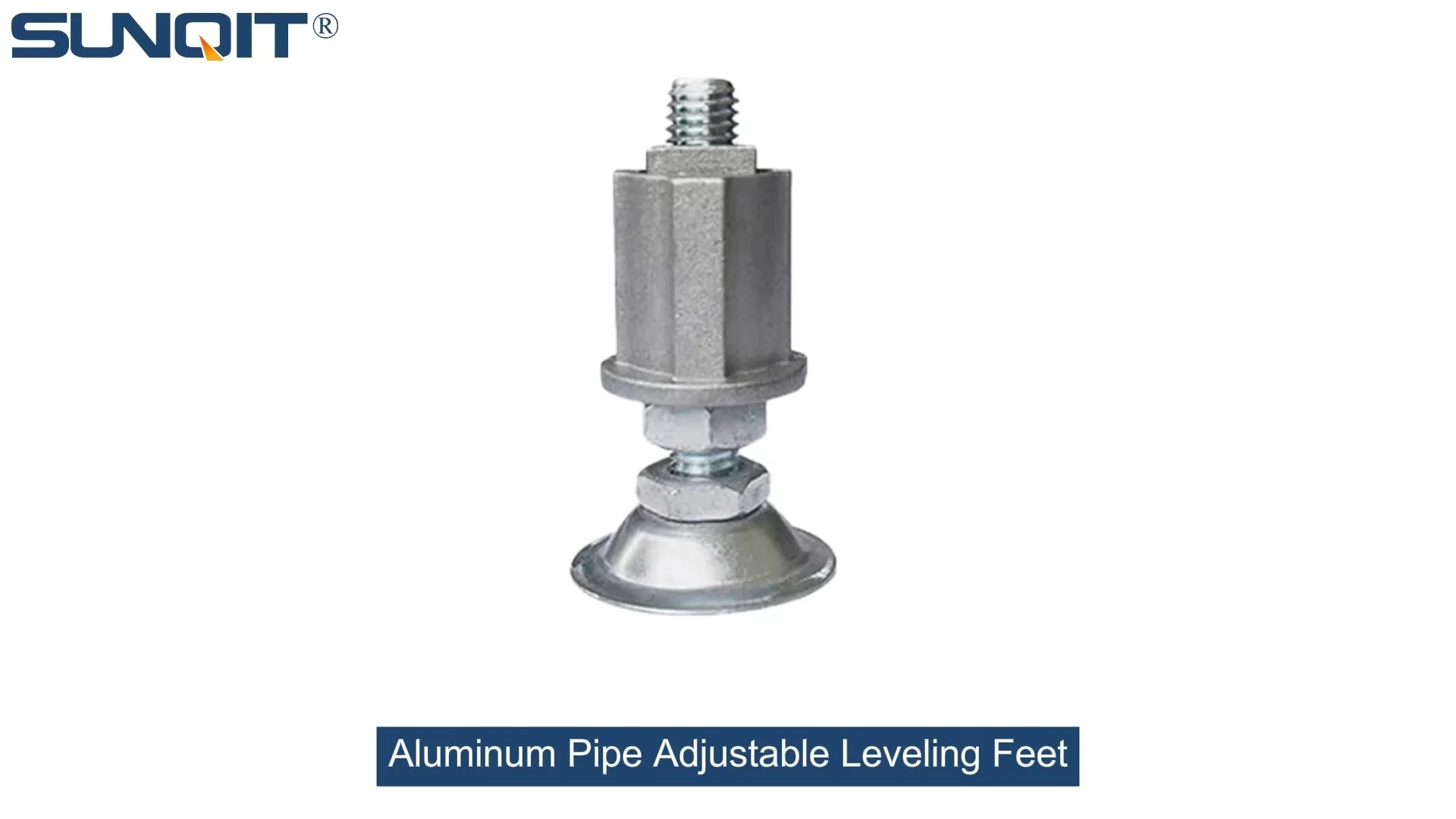
Aluminum Pipe Adjustable Leveling Feet are designed to keep machines level when placed on uneven or sloped ground. Otherwise known as adjustable equipment feet, they are available to order in a wide variety of size and load capacity combinations.
In the fast-paced world of lean manufacturing, where every process is scrutinized for waste and every workflow optimized for efficiency, the physical infrastructure that supports your team often takes a backseat—until it fails. Lean systems are built on the principle of flow : materials moving smoothly, tools within arm's reach, and workers operating in harmony with their environment. But what happens when the very foundation of that environment—a workbench, a material rack, or an assembly station—is unstable? A slight wobble, a subtle tilt, or an uneven surface can send ripples of inefficiency through your operation: parts rolling off tables, tools slipping, workers compensating with awkward postures, and even costly errors in precision tasks. These aren't just minor inconveniences; they're hidden sources of waste that chip away at your lean goals.
Enter aluminum pipe adjustable leveling feet: unassuming components that punch far above their weight in keeping lean systems on track. Designed to stabilize everything from lightweight aluminum profile workbenches to heavy-duty material racks, these feet combine the strength of aluminum with the precision of adjustable threading to create a foundation that adapts to your workspace— not the other way around . Whether you're setting up a new lean pipe workbench on a factory floor with decades of wear, reconfiguring an ESD workstation for a new product line, or ensuring a material rack stays level under shifting loads, aluminum pipe adjustable leveling feet are the silent workhorses that turn "good enough" setups into optimal ones.
In this article, we'll explore why these leveling feet have become indispensable in modern lean systems. We'll dive into their unique design, their compatibility with key lean components like aluminum profiles and lean pipe joints, and most importantly, the five core benefits they bring to your operation: unrivaled stability, adaptability across ever-changing workflows, long-term durability in harsh industrial environments, ergonomic support for your team, and seamless integration with the modular tools that make lean manufacturing possible. By the end, you'll understand why investing in quality leveling feet isn't just about "leveling up" your workspaces—it's about protecting the efficiency, safety, and profitability of your entire lean system.
Understanding Aluminum Pipe Adjustable Leveling Feet: More Than Just "Feet"
Before we jump into the benefits, let's take a moment to unpack what aluminum pipe adjustable leveling feet actually are—and why their design matters. At first glance, they might seem like simple components: a metal stem, a base, and a way to attach them to a pipe or frame. But under the surface, their engineering is tailored to solve the specific challenges of lean environments.
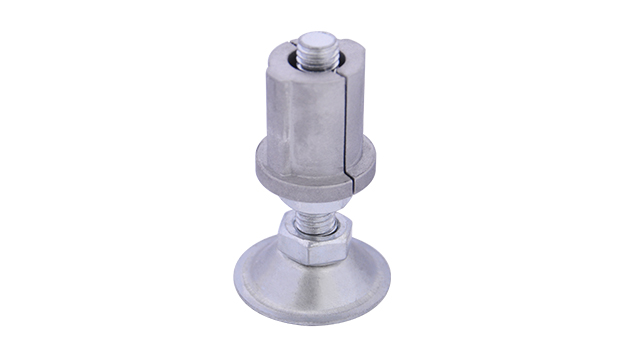
Most aluminum pipe adjustable leveling feet share a few key components: a threaded aluminum stem (typically made from 6061 or 6063 aluminum alloy, known for its strength and corrosion resistance), a base plate (often rubberized or made from non-slip aluminum to grip floors), and a top connector designed to attach to aluminum pipes, profiles, or lean pipe joints. The magic lies in the threading: twisting the stem raises or lowers the foot by fractions of an inch, allowing precise adjustments to compensate for uneven floors, warped surfaces, or varying load distributions. Some models even include swivel tops, which pivot slightly to ensure full contact with the pipe or profile, preventing stress cracks in frames and ensuring even weight distribution.
Why aluminum? Unlike steel, which is heavy and prone to rust in damp environments, aluminum offers a rare balance of strength, lightness, and corrosion resistance—critical in factories where moisture, oils, or chemicals might be present. It's also malleable enough to be precision-threaded for smooth adjustment but rigid enough to support heavy loads (many aluminum leveling feet can handle 500+ pounds per foot, depending on size). Compare that to plastic feet, which can crack under heavy loads or degrade when exposed to industrial cleaners, or fixed steel feet, which are impossible to adjust and risk rusting into immobility over time. Aluminum, in short, is the ideal material for a component that needs to be both durable and adaptable.
Another key feature is their compatibility with modular lean components. Most aluminum pipe adjustable leveling feet are designed to work seamlessly with standard aluminum profiles (like 2020, 3030, or 4040 series) and lean pipes, using common connectors or pre-drilled holes. This modularity is critical in lean systems, where reconfiguring workspaces is part of daily operations. Swap out a lean pipe workbench for a material rack? The same leveling feet can often be reused. Need to raise a workstation by 2 inches to match a worker's height? A few twists of the stem are all it takes. No custom drilling, no special tools—just quick, efficient adjustments that align with lean's "adapt or die" philosophy.
Benefit 1: Unmatched Stability—The Foundation of Lean Efficiency
Stability might seem like a basic requirement, but in the chaos of a manufacturing floor, it's often the first casualty. Factory floors, even newly poured ones, are rarely perfectly flat. Years of heavy machinery traffic, temperature fluctuations, and general wear create small dips, bumps, and cracks that go unnoticed—until you place a workbench on top. A lean pipe workbench with fixed feet might rock back and forth, a material rack might tilt under the weight of parts, or a conveyor might vibrate itself out of alignment. These issues might seem minor, but their impact compounds quickly.
Consider a simple example: a worker assembling small electronics components on a wobbly lean pipe workbench. Every time they reach for a tool, the bench shifts, causing tiny screws or resistors to roll off the surface. They spend 30 seconds retrieving parts, then another 15 seconds re-centering their workpiece. Multiply that by 50 workers across two shifts, and you're looking at hours of wasted time every week—all because the bench wasn't stable. Worse, instability can lead to errors: a drill bit slipping off-center, a adhesive application being uneven, or a measurement being slightly off. In lean terms, this is defect waste and motion waste —two of the seven wastes lean manufacturing to eliminate.
Aluminum pipe adjustable leveling feet solve this by putting control back in your hands. Their threaded stems allow for micro-adjustments (often as fine as 1/16 of an inch per turn), meaning even the smallest floor irregularities can be corrected. The rubberized or textured base plates grip the floor, preventing slipping even when the workbench is jostled. And because they're made from aluminum, they won't bend or warp under heavy loads, ensuring the adjustment holds steady over time. The result? A work surface that stays level, parts that stay put, and workers who can focus on their tasks instead of fighting an unstable setup.
| Floor Condition | Aluminum Adjustable Leveling Feet | Plastic Fixed Feet | Steel Fixed Feet |
|---|---|---|---|
| Smooth, New Concrete |
Stability: ★★★★★ (adjustable for minor dips)
Grip: ★★★★☆ (rubber base prevents slipping) Longevity: ★★★★★ (no rust, minimal wear) |
Stability: ★★★★☆ (stable but no adjustment)
Grip: ★★★☆☆ (plastic base may slide on smooth surfaces) Longevity: ★★☆☆☆ (prone to cracking under heavy loads) |
Stability: ★★★★☆ (stable but no adjustment)
Grip: ★★★★☆ (heavy base resists sliding) Longevity: ★★★☆☆ (prone to rust in humid environments) |
| Cracked/Worn Concrete |
Stability: ★★★★★ (adjusts to bridge cracks/dips)
Grip: ★★★★☆ (base conforms to uneven surfaces) Longevity: ★★★★★ (aluminum resists corrosion from floor moisture) |
Stability: ★★☆☆☆ (rocks in cracks; no adjustment)
Grip: ★★☆☆☆ (base may catch on cracks, causing further damage) Longevity: ★☆☆☆☆ (cracks/abrasions wear) |
Stability: ★★☆☆☆ (rocks in cracks; no adjustment)
Grip: ★★★☆☆ (heavy base stays put but can't level) Longevity: ★★☆☆☆ (rust accelerates in cracks with moisture) |
| Epoxy-Coated or Tiled Floors |
Stability: ★★★★★ (adjusts for grout lines or epoxy seams)
Grip: ★★★★★ (rubber base grips non-porous surfaces) Longevity: ★★★★★ (aluminum/epoxy compatibility prevents chemical damage) |
Stability: ★★★☆☆ (stable on flat tiles but wobbles over grout lines)
Grip: ★★☆☆☆ (plastic slides easily on smooth epoxy/tiles) Longevity: ★★☆☆☆ (epoxy cleaners may degrade plastic over time) |
Stability: ★★★☆☆ (stable on flat tiles but wobbles over grout lines)
Grip: ★★★☆☆ (heavy base resists sliding but no adjustment) Longevity: ★★★☆☆ (rust risk low but no adjustment limits utility) |
Real-World Impact: A medical device manufacturer in Ohio was struggling with frequent defects in their insulin pump assembly line. After months of investigation, they traced the issue to a slight wobble in their lean pipe workbench, which caused misalignment during a critical bonding step. Switching to aluminum pipe adjustable leveling feet allowed them to level the bench to within 0.5mm of flatness. Defect rates dropped by 32% in the first month, and workers reported a 20% reduction in time spent reworking parts. "We never thought a $15 part could save us tens of thousands in scrap," said their production manager.
Benefit 2: Adaptability—Keeping Pace with Lean's Constant Change
Lean manufacturing isn't static. Customer demands shift, product lines evolve, and workflows are reimagined—often overnight. One week, your team might be assembling small circuit boards; the next, they're scaling up to larger components. Today's single-deck workbench might need an extra shelf tomorrow, or a material rack might need to be moved to a new area to shorten material handling paths. In this environment, rigidity is the enemy. Your tools and infrastructure need to adapt as quickly as your processes do—and aluminum pipe adjustable leveling feet are built for exactly that.
Their adjustability is their superpower here. Need to raise a workbench by 4 inches to accommodate taller workers or larger equipment? Simply twist the leveling feet to extend the stems. Moving a material rack to a corner with a sloped floor? Adjust each foot individually to compensate. Even better, this adjustability isn't a one-time setup; it's a permanent feature. If you reconfigure the rack again next month, you can readjust the feet without replacing them. This flexibility turns what could be a day-long reconfiguration project into a 15-minute task—saving time and labor that's better spent on value-adding work.
But adaptability isn't just about height. It's also about compatibility with the modular components that make lean systems tick. Aluminum pipe adjustable leveling feet are designed to work seamlessly with aluminum profiles, lean pipes, and even stainless steel pipe series, using standard connectors that require no custom fabrication. For example, if you're building a custom workbench using 4040 aluminum profiles (a common choice for its strength-to-weight ratio), the leveling feet can be attached directly to the profile's T-slots using simple bolts or clips—no drilling or welding required. This means you can mix and match components: a lean pipe frame here, an aluminum profile shelf there, and leveling feet that tie it all together into a stable, unified structure.
From Workbench to Trolley: One Foot, Many Roles
Consider the humble turnover trolley—a staple in lean systems for moving materials between stations. When loaded with heavy parts, a trolley needs to stay stable to prevent spills, but when empty, it might need to be stored in a tight space. Aluminum pipe adjustable leveling feet solve both problems: when in use, lower the feet to keep the trolley steady during loading/unloading; when storing, raise the feet to reduce height, allowing more trolleys to stack. Similarly, workbench e (single deck-without caster), a popular model in many factories, can be transformed into a mobile workstation by adding casters—then stabilized with leveling feet when stationary, ensuring it doesn't roll during use. This kind of versatility is why aluminum leveling feet are a favorite among lean engineers: they don't just support one tool; they support the entire ecosystem of modular equipment that makes lean adaptable.
Perhaps the biggest advantage of this adaptability is cost savings. Instead of buying new workbenches, racks, or trolleys every time your needs change, you can repurpose existing ones—with a few twists of your leveling feet. This aligns perfectly with lean's "reduce waste" principle, as it cuts down on unnecessary purchases and keeps old equipment in use longer. In a world where manufacturing budgets are tight, that's a win-win.

Benefit 3: Durability—Built to Last in Industrial Battlefields
Factory floors are harsh environments. Dust, oil, coolant, chemicals, and heavy impacts are daily realities. Components that work perfectly in a clean office setting can fail within months in a manufacturing plant. This is where the choice of material—aluminum—shines brightest for leveling feet. Unlike plastic, which can crack under impact or degrade when exposed to industrial cleaners, or steel, which rusts when moisture seeps into threads, aluminum is built to withstand the chaos of industrial life.
Let's start with corrosion resistance. Aluminum naturally forms a thin oxide layer when exposed to air, which acts as a barrier against rust and corrosion. This makes aluminum pipe adjustable leveling feet ideal for environments with high humidity, occasional spills (like coolant or lubricants), or even outdoor use (e.g., loading docks). Steel feet, by contrast, require constant maintenance—painting, oiling threads—to prevent rust, which can seize the adjustment mechanism and render them useless. Plastic feet, while corrosion-resistant, often crack when exposed to UV light (from factory skylights) or harsh chemicals, leading to sudden failure.
Then there's impact resistance. In busy factories, it's not uncommon for forklifts, pallet jacks, or even workers to bump into workbenches or racks. Aluminum's ductility (its ability to bend without breaking) helps it absorb minor impacts without deforming. A steel foot might dent, jamming the thread, while a plastic foot would crack. Aluminum feet? They'll likely shrug off the bump and keep adjusting smoothly.
The threading itself is another durability highlight. Most aluminum leveling feet feature precision-cut threads that are either anodized (coated with a protective layer) or treated with anti-seize compounds to prevent galling (a common issue where metal threads stick together under pressure). This ensures that even after years of adjustments, the feet won't seize up—critical for lean systems that need to reconfigure on the fly. Compare this to cheaper plastic feet with molded threads, which strip easily, or steel feet with uncoated threads that rust into place. With aluminum, you're investing in a component that will adjust smoothly for 5, 10, even 15 years—far longer than the typical lifespan of the workbenches or racks they support.
Durability Test Case: A automotive parts supplier in Michigan installed aluminum pipe adjustable leveling feet on 20 material racks in their paint shop—a harsh environment with high humidity and regular exposure to solvent-based cleaners. After 7 years, they replaced the racks due to wear on the aluminum profiles (which had served their lifespan), but the leveling feet were still in perfect working order. "We unscrewed them and reused them on the new racks," said their maintenance supervisor. "They looked almost new, even after years of cleaning and humidity. We calculated that reusing the feet saved us about $1,200 in replacement costs alone."
In lean terms, durability translates directly to reduced waste—specifically, the waste of unnecessary replacement . When your leveling feet last as long as the equipment they support, you avoid the cost, time, and labor of swapping out failed components. You also avoid the downtime that comes with unstable workspaces while waiting for replacements. For lean systems, where every minute of downtime eats into efficiency, this is invaluable.

Benefit 4: Ergonomic and Safety Advantages—Protecting Your Most Valuable Asset: Your Team
Lean manufacturing often focuses on optimizing processes and eliminating waste, but there's a critical, often overlooked component: the people who power those processes. Worker safety and comfort directly impact productivity, quality, and retention—and aluminum pipe adjustable leveling feet play a quiet but vital role here. A stable, properly leveled workspace isn't just about efficiency; it's about creating an environment where your team can work without unnecessary strain or risk.
Let's start with ergonomics. OSHA estimates that musculoskeletal disorders (MSDs)—like back pain, carpal tunnel syndrome, and tendonitis—cost U.S. employers over $20 billion annually in workers' compensation claims. Many of these injuries stem from poorly designed workspaces: benches that are too low (causing hunching), too high (causing shoulder strain), or uneven (causing workers to shift their weight awkwardly to compensate). Aluminum pipe adjustable leveling feet let you dial in the perfect height for each workstation, ensuring it aligns with the "neutral posture" guidelines recommended by ergonomists: elbows at 90 degrees, wrists straight, and shoulders relaxed. For example, a workbench used for assembly by a team of workers of varying heights can have its leveling feet adjusted so each station is customized to the person using it—no more "one size fits all" discomfort.
Then there's safety. An unstable workstation is an accident waiting to happen. Tools can slide off, causing trips or falls. Heavy parts might tip off a tilted rack, injuring workers below. Even minor wobbles can lead to repetitive stress injuries as workers tense their muscles to steady themselves. Aluminum pipe adjustable leveling feet eliminate these risks by creating a rock-solid base. Their non-slip bases prevent workbenches from sliding, and their precise leveling ensures parts stay where they're placed. In ESD workstations (critical for electronics manufacturing), stable feet also help maintain consistent grounding—preventing static discharge that could damage sensitive components or harm workers.
A Safer Workspace = A More Productive Team
The link between safety, ergonomics, and productivity is well-documented. Workers in comfortable, safe environments are more focused, make fewer mistakes, and report higher job satisfaction—all of which boost output and reduce turnover. Conversely, workers in uncomfortable or unstable setups are more likely to take breaks, make errors, or even leave the company. By investing in aluminum pipe adjustable leveling feet, you're not just buying stability for your workbenches; you're investing in your team's well-being. And in lean systems, where every worker's contribution matters, that's an investment that pays dividends in quality, speed, and morale.
Consider this: a furniture manufacturer in North Carolina was struggling with high turnover in their assembly department. Exit interviews revealed that workers found the workbenches "uncomfortable" and "wobbly." Within a month of installing aluminum pipe adjustable leveling feet and customizing each station's height, turnover dropped by 18%, and production output increased by 12%. "Workers aren't leaving, and they're not taking as many micro-breaks," their HR manager noted. "They just… get more done."
Benefit 5: Seamless Integration with Lean's Modular Toolkit
Lean systems thrive on modularity: the ability to mix, match, and reconfigure components to meet changing needs. A typical lean setup might include aluminum profile workbenches, lean pipe material racks, roller track conveyors, and turnover trolleys—all working together as a cohesive unit. For this to work, every component needs to play well with others. Aluminum pipe adjustable leveling feet aren't just standalone parts; they're the glue that holds this modular ecosystem together.
Take aluminum profiles, for example. These extruded aluminum beams (like the 3030 or 4080 series) are the backbone of countless lean tools, from workbenches to machine guards. Their T-slot design allows for quick attachment of shelves, brackets, and accessories—and aluminum pipe adjustable leveling feet fit right into this system. Most feet come with base plates or top connectors that slide into the T-slots, secured with a simple bolt or cam lever. This means you can build a fully customized workbench: start with 4040 aluminum profiles for the frame, add a plywood top, attach a LED light bar via T-slot brackets, and finish with leveling feet to stabilize it all. No drilling, no welding, no custom parts—just a few hand tools and 30 minutes of assembly time.
The same goes for lean pipes and joints. Lean pipes (often coated steel or aluminum) are used to build lightweight, flexible structures like flow racks or assembly lines. Aluminum pipe adjustable leveling feet can be attached to these pipes using standard lean pipe joints, creating stable bases for even the most complex configurations. For example, a flow rack built with 28mm lean pipes can be outfitted with leveling feet to ensure the roller tracks stay perfectly angled—critical for gravity-fed material flow. If the rack needs to be moved, the feet can be adjusted to keep the tracks level on the new floor, ensuring materials continue to glide smoothly without jamming.
Beyond the Basics: Supporting Specialized Components
It's not just the big components, either. Aluminum pipe adjustable leveling feet integrate with smaller, specialized parts that make lean systems tick. Roller track systems, for instance, rely on precise alignment to ensure parts flow evenly. A slight dip in the track can cause jams, while a bump can send parts sliding off. Leveling feet under the track's support frame let you (fine-tune) the alignment, ensuring a consistent slope from start to finish. Similarly, ESD workstations require stable, grounded surfaces to protect sensitive electronics. Leveling feet with conductive rubber bases can even help maintain ESD continuity, preventing static buildup that could damage components.
This integration isn't just convenient—it's cost-effective. By using standardized components that work together, you reduce the need for custom tooling or proprietary parts. A single set of leveling feet can be reused across multiple projects, from a small workbench to a large material rack. And when it's time to upgrade or expand, you can add new components without replacing the old ones—keeping costs low and waste to a minimum.
Integration in Action: A contract manufacturer in Texas needed to build 10 custom workstations for a new client, each with unique requirements: one for soldering, one for inspection, one for packaging, etc. By using aluminum profiles, lean pipe accessories, and aluminum pipe adjustable leveling feet, they were able to standardize the base frames while customizing the tops and accessories. "We built all 10 frames in a day," their lead engineer said. "The leveling feet let us adjust each workstation to the client's specs—height, slope, stability—without redesigning the frame. It cut our build time by 40%."
Conclusion: Leveling Up Your Lean System—One Foot at a Time
In the world of lean manufacturing, success lies in the details. It's the small, often invisible components that determine whether your system runs like a well-oiled machine or sputters under hidden waste. Aluminum pipe adjustable leveling feet are one of those details—a humble part that delivers outsized returns in stability, adaptability, durability, safety, and integration. They're not just "feet" for your workbenches or racks; they're foundational tools that protect your lean investments, support your team, and keep your processes flowing smoothly.
Think about it: every benefit we've explored ties back to lean's core principles. Stability eliminates waste from defects and rework. Adaptability reduces the waste of overproduction (by letting you repurpose existing tools instead of buying new ones). Durability cuts down on the waste of unnecessary replacement. Ergonomics and safety eliminate the waste of worker downtime and turnover. And integration ensures the waste of inefficient setup and reconfiguration is a thing of the past. In short, aluminum pipe adjustable leveling feet don't just support your lean system—they embody it.
So, the next time you're designing a lean workspace, don't overlook the foundation. Invest in quality aluminum pipe adjustable leveling feet. They might not be the most glamorous part of your setup, but they'll be one of the most critical. After all, a lean system is only as strong as the surfaces it's built on—and with aluminum pipe adjustable leveling feet, those surfaces will be strong, stable, and ready to adapt to whatever the future throws at you.
In the end, lean manufacturing is about creating value—for your customers, your team, and your bottom line. And there's no better value than a component that works quietly in the background, solving problems before they arise, and making every other part of your system perform better. That's the power of aluminum pipe adjustable leveling feet: they don't just level your workspaces—they level up your entire lean system.