- Company Articles
- Products and Technology
- Product knowledge
- Top Benefits of Using External Straight Aluminum Joints in Manufacturing

Top Benefits of Using External Straight Aluminum Joints in Manufacturing
Related Product
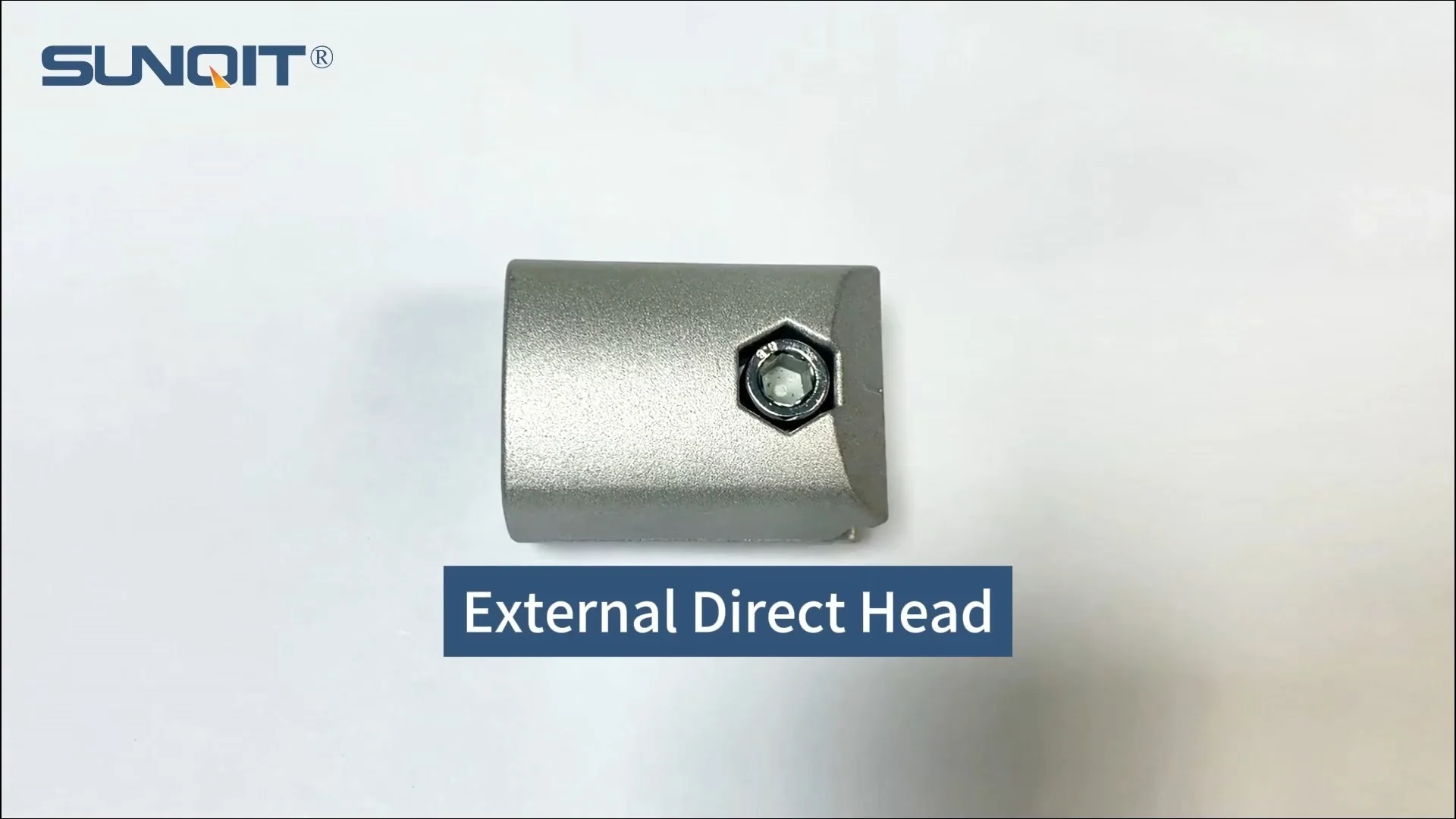
External Straight Aluminum Joint
Aluminum pipe joint outside connection used for two pcs 28pcs aluminum pipe connection in straight angle,it connects two pcs pipe from outside.
In the fast-paced world of manufacturing, where efficiency, adaptability, and cost control are make-or-break factors, the tools and components that keep production lines running smoothly often fly under the radar. Yet, every so often, a simple innovation emerges that transforms how factories operate—one that quietly eliminates bottlenecks, reduces waste, and empowers teams to do more with less. Enter the external straight aluminum joint: a unassuming but powerful component that's redefining lean manufacturing, workbench design, and material flow. Let's dive into why this small but mighty part deserves a spot in your production toolkit.
1. Built to Last: The Durability That Stands Up to Manufacturing's Toughest Environments
Manufacturing floors are unforgiving places. Heavy loads, constant movement, and exposure to dust, moisture, and even chemicals can wear down equipment over time. This is where external straight aluminum joints truly shine. Unlike plastic joints that crack under pressure or traditional steel joints that rust and corrode, aluminum brings a unique set of properties that make these joints a long-term investment.
Aluminum's natural resistance to corrosion is a game-changer. In environments where spills, humidity, or cleaning agents are common—such as automotive or food packaging plants—steel joints would require regular maintenance to prevent rust, and plastic joints might degrade. External straight aluminum joints, however, hold their ground without the need for frequent replacements or coatings. This durability isn't just about surviving; it's about maintaining structural integrity. The external straight design distributes weight evenly across connected components, whether you're building a workbench, an aluminum lean pipe frame, or a material rack. This even distribution reduces stress points, meaning your structures stay stable even when loaded with heavy tools, parts, or finished products.
| Feature | External Straight Aluminum Joint | Traditional Steel Joint | Plastic Joint |
|---|---|---|---|
| Material | Aluminum alloy (lightweight, corrosion-resistant) | Mild steel (heavy, prone to rust) | Polypropylene (light, but low load capacity) |
| Weight (per unit) | 80-120g | 250-350g | 50-70g |
| Load Capacity (vertical) | Up to 500kg per joint | Up to 600kg per joint | Up to 150kg per joint |
| Corrosion Resistance | Excellent (no rust, even in humid conditions) | Poor (requires painting/coating) | Good (but degrades in chemical exposure) |
| Expected Lifespan (in factory use) | 10-15 years | 5-8 years (with maintenance) | 2-3 years (prone to cracking) |
Take, for example, a typical assembly line workbench. A workbench built with external straight aluminum joints and aluminum lean pipe can support daily use—tools being set down, parts being assembled, workers leaning on it—without wobbling or weakening. Compare that to a plastic-jointed workbench that might start to flex after a few months or a steel-jointed one that adds unnecessary weight to the structure, making repositioning a hassle. When you factor in the long lifespan and minimal maintenance, aluminum joints quickly become the most cost-effective choice.
2. Flexibility: The Key to Adapting in a Lean System World
Modern manufacturing isn't static. Product lines change, demand fluctuates, and new processes are introduced regularly. A lean system thrives on adaptability—eliminating waste by making it easy to adjust workflows, reconfigure workstations, and repurpose equipment. External straight aluminum joints are designed with this flexibility in mind, turning rigid structures into modular, reconfigurable assets.
Unlike welded steel frames, which are fixed once built, or plastic joints that break when disassembled, aluminum joints allow for quick and tool-free adjustments. Need to raise a workbench by 10cm to improve ergonomics? Loosen the joint, adjust the aluminum lean pipe, and retighten. Launching a new product that requires a longer material rack? Add extra aluminum lean pipe sections and external straight joints to extend the structure. This modularity reduces downtime and waste—no need to build entirely new structures when a simple reconfiguration will do.
Consider a electronics manufacturer that produces both smartphones and tablets. Their assembly lines need to switch between small, delicate phone parts and larger tablet components. With external straight aluminum joints, they can quickly adjust their workbenches and aluminum lean pipe material racks to fit the new product dimensions. A workbench used for phone assembly in the morning can be reconfigured into a testing station for tablets by afternoon—all without cutting, welding, or replacing parts. This agility is exactly what lean systems demand: maximizing resource use and minimizing idle time.
Aluminum profile accessories further enhance this flexibility. From caster wheels that let you move entire structures to roller tracks that streamline material flow, these accessories integrate seamlessly with external straight aluminum joints. For example, adding a roller track to a workbench frame becomes a 10-minute task with the right aluminum profile accessories—no specialized tools required. This means your team can focus on production, not on building or rebuilding equipment.

3. Assembly Simplified: Saving Time, Labor, and Headaches
Time is money in manufacturing, and nowhere is that truer than during setup and reconfiguration. Traditional steel structures often require welding, drilling, or specialized tools—processes that take skilled labor and hours of work. Plastic joints, while lightweight, can be flimsy and require precise alignment to avoid instability. External straight aluminum joints, however, simplify assembly to a level that even new team members can master quickly.
The secret lies in their design. External straight aluminum joints typically use set screws or clamping mechanisms that grip aluminum lean pipe or profiles securely. No welding, no drilling—just a hex key or a wrench to tighten the joint into place. This simplicity cuts assembly time by up to 60% compared to steel structures. A basic workbench that might take 4 hours to weld from steel can be built in under 2 hours with aluminum joints and aluminum lean pipe. For larger projects, like multi-tier material racks or conveyor systems, the time savings add up exponentially.
This ease of assembly also reduces reliance on specialized labor. Welders are skilled professionals, but their time is often better spent on high-precision tasks, not on assembling workbenches. With external straight aluminum joints, any team member can build or adjust structures after a short training session. This frees up skilled workers for more critical roles and reduces labor costs. It also means that when a line needs a quick tweak—like raising a shelf or adding a side rail—floor supervisors or technicians can handle it on the spot, without waiting for the maintenance team.
The simplicity extends to disassembly and reassembly, too. If a structure needs to be moved to a new part of the factory, external straight aluminum joints can be loosened, the components transported, and the structure rebuilt in a fraction of the time it would take to dismantle and reconstruct a welded steel frame. This portability is a boon for manufacturers with limited space or those that frequently reorganize their floor layouts to optimize workflow.

4. Cost-Effective in the Long Run: Beyond the Initial Price Tag
At first glance, external straight aluminum joints might seem pricier than plastic alternatives or even some steel joints. But manufacturing costs aren't just about the initial purchase—they include maintenance, replacement, labor, and downtime. When you factor in these long-term costs, aluminum joints often come out ahead.
Let's break it down. Steel joints require regular painting or coating to prevent rust, adding maintenance costs over time. Plastic joints need frequent replacement, especially in high-load or high-temperature environments. External straight aluminum joints, with their corrosion resistance and durability, rarely need replacing. A single aluminum joint can last 10-15 years in a typical factory setting, outlasting multiple plastic joints or requiring far less maintenance than steel. This longevity reduces the total cost of ownership significantly.
Labor savings also play a big role. As mentioned earlier, aluminum joint assembly is faster and requires less skilled labor. Over the lifetime of a structure, the hours saved on assembly, reconfiguration, and maintenance add up to thousands of dollars. For example, a manufacturer that builds 10 workbenches per year could save over $10,000 annually in labor costs alone by switching to aluminum joints.
Then there's the value of reusability. When a project ends or a process changes, steel structures are often cut up and scrapped because they're too hard to disassemble. Plastic structures might be recycled, but their low load capacity limits reuse. Aluminum joints and aluminum lean pipe, however, can be taken apart and rebuilt into new structures. That workbench from last year's project? It can become a material cart, a storage rack, or a testing station tomorrow. This reusability turns what would be waste into a valuable asset, further lowering costs.
Case Study: How a Automotive Supplier Cut Costs by 22% with Aluminum Joints
A mid-sized automotive parts supplier was struggling with high costs and slow reconfiguration times on their assembly lines. Their steel workbenches and material racks were heavy, prone to rust, and took days to rebuild when product designs changed. They decided to test external straight aluminum joints, aluminum lean pipe, and aluminum profile accessories on one assembly line.
The results were striking: Assembly time for new workbenches dropped from 8 hours to 3 hours per unit. Reconfiguring the line for a new part took 2 days instead of a week. Over six months, they expanded the switch to all lines and saw:
- 22% reduction in annual equipment costs (due to lower labor and replacement parts).
- 18% increase in line uptime (less time spent on reconfiguration).
- 30% less waste (reused 70% of old aluminum lean pipe and joints in new structures).
The plant manager noted, "We used to dread product changes because of the downtime. Now, with aluminum joints, reconfiguring is just part of the day—no stress, no delays. It's like having a factory that can adapt as fast as our customers' needs change."

5. Safety and Ergonomics: Protecting Your Most Valuable Asset—Your Team
Manufacturing safety isn't just a compliance requirement; it's a moral and financial priority. Injuries from heavy lifting, unstable equipment, or sharp edges cost companies millions in lost productivity and workers' compensation claims. External straight aluminum joints contribute to a safer workplace in several key ways.
First, aluminum's lightweight nature reduces the risk of lifting injuries. A steel workbench might weigh 150kg, requiring two or three people to move. An aluminum workbench of the same size weighs just 60-80kg, making it movable by one person with the help of caster wheels (another aluminum profile accessory). This reduces strain and lowers the risk of back injuries or dropped equipment.
Second, the stability of external straight aluminum joints minimizes accidents. Unlike plastic joints that can loosen over time or steel joints that bend under stress, aluminum joints maintain their grip even with repeated use. This stability is crucial for structures like workbenches, where a sudden collapse could injure workers or damage products. The even weight distribution of the external straight design also reduces tipping hazards, especially when used with wide-based caster wheels.
Ergonomics, too, gets a boost. With aluminum joints, workbenches can be adjusted to the perfect height for each worker, reducing strain on shoulders, backs, and wrists. Material racks can be positioned at eye level, eliminating bending or reaching. Roller tracks added to workbench frames (using aluminum profile accessories) reduce the need to lift heavy parts—they simply glide into place. These small adjustments add up to happier, healthier workers and lower turnover rates.
6. Sustainability: Building a Greener Factory Without Sacrificing Performance
Sustainability is no longer a "nice-to-have"—it's a business imperative. Customers, investors, and regulators are demanding greener practices, and manufacturing is under pressure to reduce its environmental footprint. External straight aluminum joints align with these goals in ways that steel and plastic simply can't match.
Aluminum is one of the most recyclable materials on the planet. It can be melted down and reused repeatedly without losing quality, and recycling aluminum uses just 5% of the energy required to produce new aluminum. This means that even if an aluminum joint or aluminum lean pipe reaches the end of its life, it won't end up in a landfill—it will become part of a new product. Compare that to steel, which can be recycled but requires more energy, or plastic, which often ends up in oceans or landfills despite recycling efforts.
The modularity and reusability of aluminum structures also reduce waste. Instead of building new equipment for every project, you reuse existing parts. This cuts down on raw material extraction and manufacturing emissions. For example, a manufacturer that reuses 50% of its aluminum lean pipe and joints each year can reduce its carbon footprint by an estimated 15-20% compared to using disposable plastic or steel structures.
Even the production of aluminum joints has a lower environmental impact than steel. Aluminum production emits less CO2 per unit weight than steel, and modern aluminum plants are increasingly powered by renewable energy. When you choose external straight aluminum joints, you're not just choosing a better product—you're choosing a greener future for your factory and the planet.
Conclusion: Why External Straight Aluminum Joints Are the Future of Manufacturing
In a manufacturing landscape where efficiency, adaptability, and sustainability are critical, external straight aluminum joints stand out as a simple yet powerful solution. They bring durability that withstands harsh environments, flexibility that aligns with lean system principles, and simplicity that saves time and labor. Add in cost savings, safety benefits, and a smaller environmental footprint, and it's clear why more manufacturers are making the switch.
Whether you're building a workbench, a material rack, or an entire assembly line, these joints turn ordinary structures into adaptable, long-lasting assets. They empower your team to work faster, safer, and smarter—because in manufacturing, the right tools don't just build products; they build success.
So, the next time you look at your factory floor, think about the potential hidden in those joints and pipes. With external straight aluminum joints, aluminum lean pipe, and aluminum profile accessories, you're not just building structures—you're building a factory that can grow, adapt, and thrive in a world that never stops changing.