- Company Articles
- Products and Technology
- Product knowledge
- Top Benefits of Using Free Flow Chain Conveyors in Production Lines

Top Benefits of Using Free Flow Chain Conveyors in Production Lines
Related Product
Free Flow Chain Conveyor
The free flow conveyor system uses a free flow chain that can increase the speed of the tooling board that supports the products. This can improve the efficiency and quality of the production process, as well as reduce the wear and tear of the system.
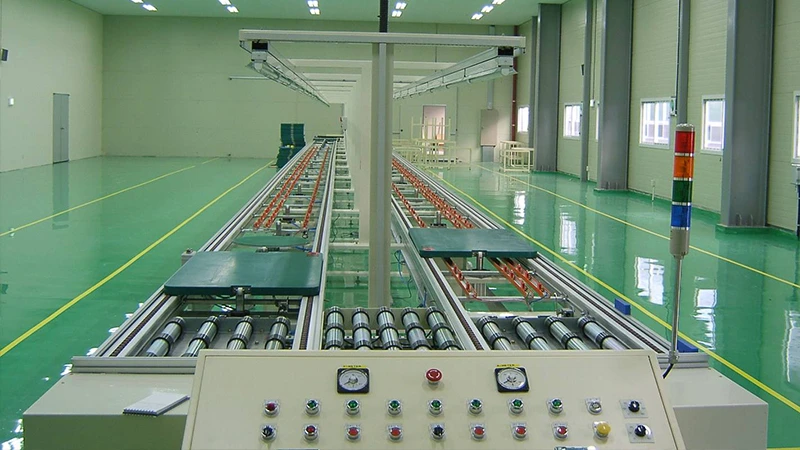
In today's fast-paced manufacturing world, every second counts. Production lines are under constant pressure to move faster, reduce waste, and keep up with ever-growing customer demands. If you've spent any time on a factory floor, you know the frustration of bottlenecks: products piling up, workers scrambling to keep pace, and deadlines slipping through the cracks. That's where the right equipment makes all the difference. Enter free flow chain conveyors—often the unsung heroes of efficient production assemble. These systems aren't just about moving parts from Point A to Point B; they're about redefining how smoothly, flexibly, and cost-effectively your entire operation runs. Let's dive into why more and more manufacturers are turning to free flow chain conveyors as a cornerstone of their lean system strategies.
1. Supercharging Production Efficiency: No More Bottlenecks
Let's start with the most obvious win: speed. In production assemble, time is money, and free flow chain conveyors are built to keep things moving—constantly. Unlike traditional roller track systems, which can sometimes cause products to bunch up or get stuck (especially with irregularly shaped items), free flow chain conveyors use a series of precision-engineered chains and sprockets to ensure a steady, uninterrupted flow. Imagine a line where each component glides from one workstation to the next without pausing, waiting, or needing manual intervention. That's the reality with free flow chain technology.
Here's why that matters for your bottom line: in industries like automotive or electronics, where thousands of parts are assembled daily, even a 10% increase in line speed can translate to hundreds more units produced each shift. For example, a mid-sized electronics manufacturer in Ohio recently switched from a roller track system to a free flow chain conveyor and reported a 15% boost in daily output within the first month. Their secret? The conveyor's ability to maintain consistent speed—no more stopping to clear jams or reposition products. Workers could focus on assembling, not troubleshooting, and the line kept humming from start to finish.
But efficiency isn't just about speed—it's about predictability. Free flow chain conveyors operate with minimal variation, which means you can accurately forecast production times, schedule shifts more effectively, and meet customer deadlines with confidence. When every part moves at the same reliable pace, you eliminate the guesswork that often leads to overstocking or understocking of materials. It's like having a metronome for your production line: steady, consistent, and always on beat.
2. Flexibility to Adapt to Your Changing Needs
Manufacturing isn't static. Product designs change, order volumes fluctuate, and new regulations (like ESD requirements for electronics) can turn your workflow upside down overnight. That's why rigidity in your equipment is a death sentence for productivity. Free flow chain conveyors, however, are built for adaptability—and that's a game-changer.
Unlike fixed conveyor systems that require major overhauls to reconfigure, free flow chain conveyors are modular by design. Most models use standardized components—think interchangeable tracks, adjustable heights, and easy-to-connect segments—that let you tweak your layout without tearing up the floor or halting production for days. Need to add a 90-degree turn to route parts to a new workstation? A reputable conveyor supplier can deliver the necessary joints and brackets, and your team can have it installed in hours, not weeks.
This flexibility is especially valuable for companies that handle multiple product lines or seasonal demand spikes. For instance, a furniture manufacturer might use the same free flow chain conveyor to move small chair components in the winter and larger table frames in the summer—all by adjusting the track width and adding temporary side guides. Compare that to a belt conveyor, which is often fixed in width and requires extensive modifications to handle different products. With free flow chain, you're not locked into one way of working; you're free to evolve as your business does.
And let's not forget about integration with other tools. Free flow chain conveyors play well with just about everything in your production ecosystem: workbenches, robotic arms, sorting systems, even ESD workstations (critical for sensitive electronics). A good conveyor supplier will work with you to ensure the system connects seamlessly with your existing equipment, so you don't have to replace perfectly functional tools just to upgrade your conveyor. It's like adding a new piece to a puzzle—one that fits right in with the pieces you already have.
3. Cost Savings That Add Up Over Time
Let's talk numbers—because at the end of the day, every manufacturing decision comes down to ROI. On the surface, free flow chain conveyors might seem like a bigger upfront investment than basic roller track or manual carts. But dig deeper, and you'll find they're one of the smartest cost-saving moves you can make for your production line.
| Factor | Free Flow Chain Conveyor | Traditional Roller Track | Manual Carts |
|---|---|---|---|
| Initial Cost | Higher (modular, durable components) | Moderate (simpler design) | Lowest (basic materials) |
| Maintenance Costs | Low (fewer moving parts, easy access to components) | Moderate (prone to jams, frequent track cleaning) | High (wear and tear on carts, labor for repairs) |
| Labor Costs | Low (automated flow reduces manual handling) | Moderate (some manual intervention for jams) | Very High (requires workers to push/pull carts) |
| Energy Efficiency | High (low-power motors, smooth operation) | Moderate (may require more power to overcome friction) | N/A (no motor, but high labor energy cost) |
| Long-Term ROI | Best (3–5 year payback on average) | Moderate (5–7 year payback) | Poor (ongoing labor costs erode savings) |
As the table shows, the initial investment in a free flow chain conveyor pays off quickly—usually within 3–5 years—thanks to lower maintenance, reduced labor, and energy savings. Let's break down the biggest cost drivers:
- Maintenance: Free flow chain conveyors have fewer moving parts than belt conveyors, and their open design makes it easy to spot and fix issues (like a loose sprocket or worn chain link) before they turn into major problems. Many conveyor suppliers even offer preventive maintenance kits with common replacement parts, so you can avoid costly downtime.
- Labor: Manual handling of materials is one of the biggest drains on factory labor costs. With a free flow chain conveyor, workers are freed from pushing carts, lifting heavy parts, or clearing jams. Instead, they can focus on skilled tasks like assembly, quality control, or troubleshooting—jobs that add real value to your products.
- Energy: Modern free flow chain conveyors are engineered for efficiency. They use low-voltage motors, lightweight materials, and friction-reducing components to minimize power consumption. Over time, those savings on your utility bill add up—especially for 24/7 operations.
Plus, because these conveyors are built to last (many have a lifespan of 10+ years with proper care), you won't need to replace them every few years like you might with cheaper, less durable systems. When you factor in all these savings, free flow chain conveyors aren't just an expense—they're an investment in your company's long-term profitability.
4. Safety First: Protecting Your Team and Products
A safe workplace isn't just a legal requirement—it's good business. Accidents lead to downtime, increased insurance costs, and damaged morale. Free flow chain conveyors are designed with safety in mind, making them a far better choice than manual carts or outdated roller track systems that pose hidden risks.
Let's start with ergonomics. Manual cart-pushing is a leading cause of back injuries, strains, and repetitive motion disorders in factories. Free flow chain conveyors eliminate the need for workers to lift, push, or pull heavy loads, reducing the risk of musculoskeletal injuries. The conveyors can also be adjusted to waist height, so employees don't have to bend or reach awkwardly to access parts—another win for ergonomics.
Then there's the issue of product damage. Ever seen a fragile component get knocked off a roller track because it hit a bump or got stuck? Free flow chain conveyors move items smoothly, with minimal vibration, so delicate parts (like circuit boards or glass components) arrive at their destination intact. Many models also come with optional side guides or ESD-safe surfaces, which are critical for electronics manufacturing where static electricity can fry sensitive chips.
And let's not overlook the little safety details that matter. Most free flow chain conveyors include emergency stop buttons, safety guards around moving parts, and low-profile designs that reduce tripping hazards. Some even have built-in sensors that automatically shut down the line if a worker steps into a restricted area. These features don't just keep your team safe—they also give everyone peace of mind, which translates to better focus and higher productivity.
5. Seamless Integration with Lean System Principles
If you're familiar with lean manufacturing, you know the goal is simple: eliminate waste (muda) in all its forms—whether that's wasted time, materials, or labor. Free flow chain conveyors aren't just tools for moving parts; they're powerful enablers of lean system practices, helping you cut waste and boost value at every step.
Take "just-in-time" (JIT) production, for example. JIT relies on delivering materials to workstations exactly when they're needed—not a minute early (which causes overstock) or a minute late (which causes delays). Free flow chain conveyors make JIT a breeze by ensuring a steady, predictable flow of parts. When a workstation finishes assembling a component, the next one arrives immediately, so workers never wait, and materials never pile up. It's like a well-choreographed dance where every step happens at the perfect time.
Then there's "continuous improvement" (kaizen), a core lean principle. Free flow chain conveyors generate data—like speed, downtime, and throughput—that you can use to identify inefficiencies. For instance, if a certain section of the conveyor consistently runs slower, you can investigate why (maybe a worn sprocket or a workstation bottleneck) and fix it. Over time, these small adjustments add up to big gains in productivity. A food packaging plant in Texas used conveyor data to redesign their line layout, reducing waste by 22% and increasing customer satisfaction scores by 15%.
Finally, free flow chain conveyors support "visual management," another lean staple. Because the conveyor is open and visible, managers can quickly spot issues (like a backed-up workstation or a missing part) from across the factory floor. No more hunting through spreadsheets or walking the line to find problems—you can see them at a glance and act fast. It's transparency in action, and it keeps everyone aligned on the goal of smooth, efficient production.
Choosing the Right Conveyor Supplier: Your Partner in Success
Of course, none of these benefits matter if you choose the wrong conveyor supplier. With so many options on the market, it's easy to get lured by cheap prices or flashy marketing—but the reality is, a low-quality conveyor will cost you more in the long run (think frequent breakdowns, poor customer support, and limited customization). So what should you look for in a supplier?
- Experience with Your Industry: A supplier who specializes in automotive conveyors might not understand the unique needs of pharmaceutical manufacturing (like strict hygiene standards). Look for someone with a track record in your field.
- Customization Options: Your production line is unique, so your conveyor should be too. Avoid suppliers who only offer "one-size-fits-all" solutions—opt for those who will work with you to design a system that fits your space, products, and goals.
- After-Sales Support: Even the best conveyors need maintenance. Make sure your supplier offers training, replacement parts, and responsive service (ideally with 24/7 support for breakdowns).
Remember, a free flow chain conveyor isn't just a piece of equipment—it's a long-term investment in your company's efficiency, safety, and growth. By choosing wisely, you'll set your production line up for success for years to come.
Final Thoughts: Why Free Flow Chain Conveyors Are Worth the Investment
At the end of the day, manufacturing is about balance: speed vs. quality, cost vs. durability, rigidity vs. flexibility. Free flow chain conveyors strike that balance better than any other material handling solution on the market. They boost efficiency by keeping production moving, adapt to your changing needs, save you money over time, keep your team safe, and align perfectly with lean system principles.
So if you're tired of dealing with bottlenecks, wasted labor, or outdated equipment that holds your production assemble line back, it might be time to talk to a conveyor supplier about free flow chain technology. The initial investment might seem steep, but when you factor in the savings, the increased output, and the peace of mind that comes with a reliable system, it's clear: free flow chain conveyors aren't just a purchase—they're a catalyst for growth.
Your production line deserves the best. Give it the gift of smooth, efficient flow—and watch your business thrive.