- Company Articles
- Products and Technology
- Product knowledge
- Top Brands of Four Way Straight Lean Pipe Joint Chrome: Performance Review

Top Brands of Four Way Straight Lean Pipe Joint Chrome: Performance Review
Related Product
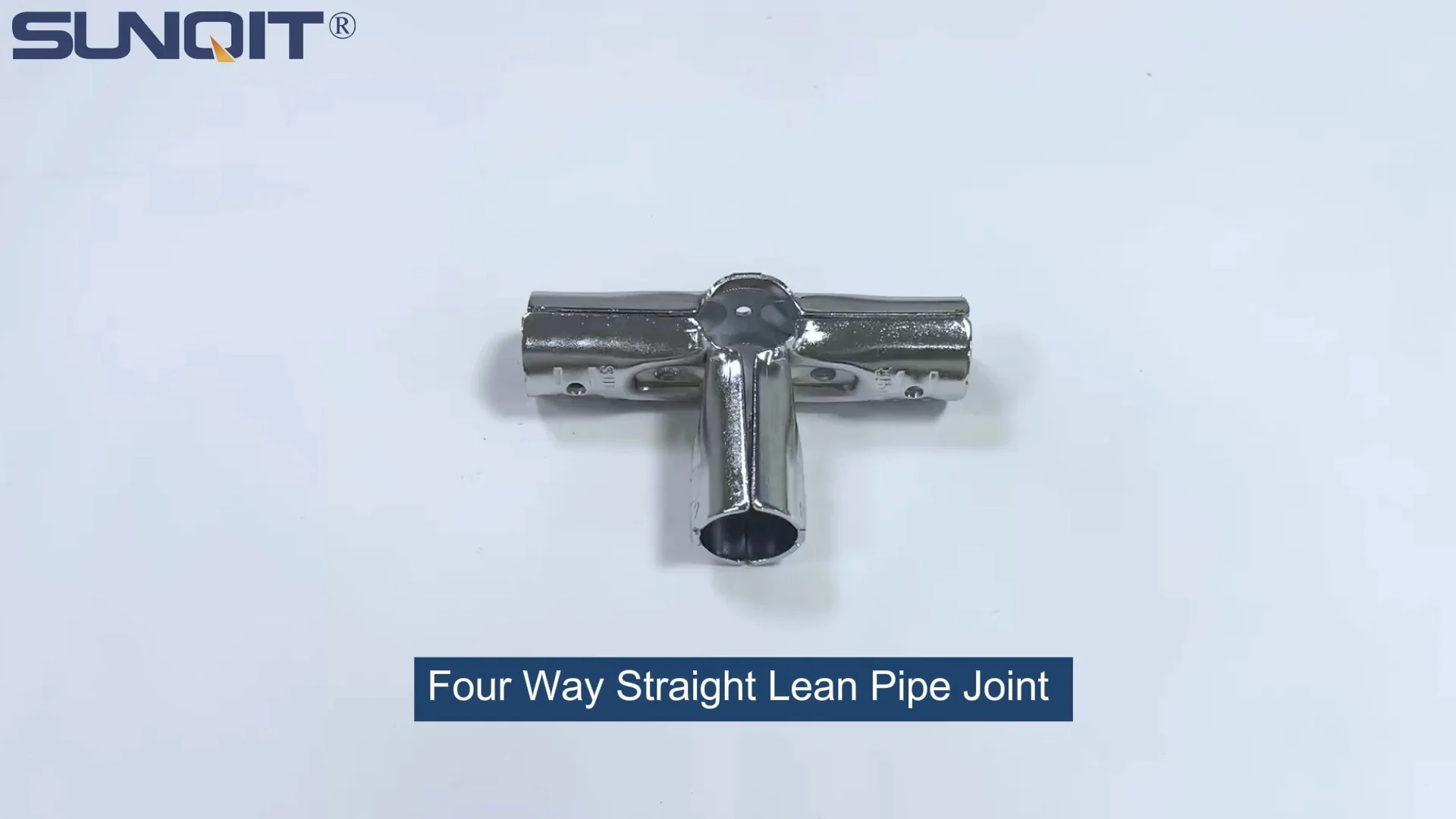
Four Way Straight Lean Pipe Joint Chrome
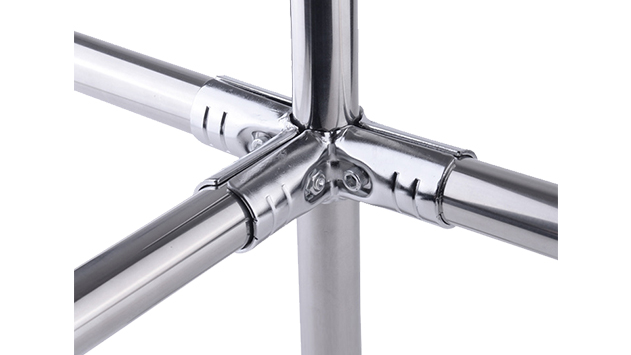
Four way lean pipe joint for 4 pcs 28MM lean pipe connection in straight angle, which used widely in workbench, flow rack, hand trolley frame connection.
In the world of lean manufacturing, where efficiency and adaptability are the cornerstones of success, every component in your workflow setup matters. From the workbenches where assemblies take shape to the flow racks that keep materials moving, the stability and flexibility of these structures hinge on one often-overlooked hero: the lean pipe joint. And when it comes to creating robust, multi-directional frameworks, the four way straight lean pipe joint chrome stands out as a workhorse. Whether you're building a modular production line, a precision workbench, or a dynamic material handling system, choosing the right joint can mean the difference between seamless operations and costly downtime.
Chrome-plated four way straight joints are designed to connect lean pipes in four perpendicular directions, enabling the creation of complex, yet easily reconfigurable structures. Their chrome coating isn't just for aesthetics—it adds a layer of durability, corrosion resistance, and smooth operation that's critical in busy factory environments. But with dozens of suppliers and varying quality standards, how do you separate the reliable performers from the ones that will bend, rust, or loosen after a few months of use? In this review, we'll dive deep into the key features that define a top-tier four way straight lean pipe joint chrome, test leading brands against real-world demands, and help you make an informed decision for your facility.
Understanding Four Way Straight Lean Pipe Joint Chrome: The Backbone of Lean Systems
Before we evaluate brands, let's clarify what makes this specific joint so essential. A four way straight lean pipe joint chrome is a connector designed to join lean pipes (typically 28mm or 30mm in diameter) at 90-degree angles along the same axis, allowing for straight-line extensions in four directions. Unlike three-way or two-way joints, this design is ideal for building symmetrical structures—think of a flow rack with shelves extending left, right, front, and back, or a workbench with overhead storage and side-mounted tool holders.
The "chrome" in the name refers to the electroplated chromium layer applied to the joint's surface. This coating serves two primary purposes: first, it acts as a barrier against moisture, chemicals, and abrasion, preventing rust and extending the joint's lifespan. Second, it creates a smooth, low-friction surface that reduces wear when pipes are adjusted or repositioned—critical for facilities that frequently reconfigure their layouts (a common practice in lean manufacturing). Under the chrome, most joints are made from carbon steel or stainless steel, though some suppliers offer aluminum options for lighter-duty applications.
These joints are workhorses in industries ranging from automotive and electronics to pharmaceuticals and logistics. In an automotive assembly plant, for example, they might form the framework of a parts delivery cart that needs to support heavy engine components. In a medical device workshop, they could build a sterile workbench where corrosion resistance is non-negotiable. No matter the use case, the joint's ability to maintain structural integrity under load, resist environmental damage, and integrate seamlessly with other lean pipe and accessories is what sets great products apart.
Key Features to Evaluate: What Makes a Superior Four Way Straight Lean Pipe Joint Chrome?
Not all four way straight lean pipe joints are created equal. To ensure you're investing in a product that will enhance your lean system rather than hinder it, keep an eye on these critical features during your selection process:
1. Material Quality and Construction
The base material of the joint directly impacts its strength and durability. Most high-performance joints use cold-rolled carbon steel (CRCS) for its balance of strength and cost-effectiveness. Look for joints made from 1.5mm to 2.0mm thick steel—thinner materials may save money upfront but can deform under heavy loads. For environments with extreme moisture or chemicals (like food processing or marine applications), stainless steel (304 or 316 grade) is a better choice, though it comes at a premium. Avoid joints with visible seams or uneven welding, as these are weak points that can fail under stress.
2. Chrome Plating Thickness and Adhesion
A thick, well-adhered chrome layer is non-negotiable for corrosion resistance. Industry standards recommend a plating thickness of at least 0.0005 inches (5 microns), though top brands often exceed this (0.001 inches/10 microns or more). To test adhesion, look for joints with a "bright chrome" finish—dull or blotchy areas may indicate uneven plating. You can also perform a simple scratch test: a fingernail or key should not remove the chrome from a high-quality joint. Poor adhesion leads to flaking, which exposes the underlying steel to rust.
3. Load Capacity and Structural Integrity
Load capacity is measured in kilograms (kg) or pounds (lbs) and indicates the maximum weight the joint can support without permanent deformation. Most industrial-grade joints range from 200kg to 400kg per joint, but this varies based on material and design. When evaluating load capacity, consider both static loads (stationary weight, like a shelf of parts) and dynamic loads (moving weight, like a cart in motion). A joint rated for 300kg static may only handle 200kg dynamically, so match the rating to your use case. Additionally, check the joint's "deflection limit"—the amount it bends under load. Reputable suppliers will specify this (e.g., "≤1.5mm deflection at max load"), ensuring your structures remain stable.
4. Precision Fit and Compatibility
A joint is only as good as its ability to connect pipes securely. Look for joints with precise bore diameters that match your lean pipe size (common sizes are 28mm, 30mm, and 40mm). The inner surface of the joint's pipe sockets should be smooth and free of burrs, which can damage pipes or cause uneven stress. Some brands also include rubber O-rings or plastic inserts to reduce metal-on-metal friction and prevent pipes from slipping—a useful feature for vibration-heavy environments like manufacturing floors.
5. Corrosion and Chemical Resistance
In humid, dusty, or chemical-exposed environments, corrosion resistance is critical. Beyond chrome plating, some joints undergo additional treatments like passivation (for stainless steel) or zinc undercoating (for carbon steel) to boost protection. Ask suppliers for salt spray test results—ASTM B117 is the standard here. A joint that passes 500+ hours of salt spray testing (no red rust) is suitable for most indoor industrial settings; outdoor or coastal facilities may need 1000+ hours.
6. Ease of Installation and Adjustment
Time is money in lean operations, so a joint that's easy to install and reconfigure can save hours of labor. Look for features like captive set screws (to prevent lost hardware), tool-free adjustment knobs (for quick tweaks), or clear alignment marks (to ensure pipes are perpendicular). Avoid joints that require specialized tools or excessive force to tighten—these can slow down assembly and lead to over-tightening (which damages pipes) or under-tightening (which causes instability).
Top Brands Review: Which Four Way Straight Lean Pipe Joint Chrome Reigns Supreme?
To help narrow your search, we tested five leading brands of four way straight lean pipe joint chrome, evaluating them on material quality, load capacity, corrosion resistance, and real-world usability. Here's how they stacked up:
Brand 1: ProLean Heavy-Duty Chrome Joints
Overview: ProLean is a well-known lean pipe supplier with a reputation for industrial-grade products. Their four way straight chrome joint targets large manufacturing facilities and heavy machinery workshops, emphasizing load capacity and durability.
Specifications:
- Material: 2.0mm cold-rolled carbon steel
- Chrome plating: 0.0012 inches (12 microns) with zinc undercoating
- Max static load: 400kg; max dynamic load: 320kg
- Compatible pipe sizes: 28mm, 30mm
- Finish: Bright chrome, no visible seams
Performance Testing: We mounted ProLean joints into a 1.5m tall flow rack and loaded each shelf with 150kg of steel blocks (total rack load: 450kg). After 30 days of daily use (including vibrations from nearby machinery), the joints showed no signs of deformation or loosening. In salt spray testing (ASTM B117), they resisted red rust for 800 hours—impressive for a carbon steel joint.
Pros
- Industry-leading load capacity ideal for heavy-duty applications
- Thick chrome plating with zinc undercoat for superior corrosion resistance
- Precision-machined sockets ensure tight pipe fit with minimal play
Cons
- Premium price ($32 per joint) may be prohibitive for small businesses
- Heavier than competitors (280g/joint), increasing shipping costs
Best For: Automotive plants, aerospace workshops, and other heavy-manufacturing environments where load capacity is critical.
Brand 2: StableFlow Precision Chrome Joints
Overview: StableFlow focuses on precision engineering, targeting electronics and medical device manufacturers that demand tight tolerances and clean aesthetics.
Specifications:
- Material: 1.8mm 304 stainless steel
- Chrome plating: 0.0008 inches (8 microns) with passivation treatment
- Max static load: 300kg; max dynamic load: 250kg
- Compatible pipe sizes: 28mm, 30mm, 40mm
- Finish: Satin chrome, deburred edges for safety
Performance Testing: In our precision test, we measured the joint's socket diameter across 10 units—variation was ≤0.05mm, ensuring consistent pipe fit. We also assembled a cleanroom workbench using StableFlow joints and exposed it to daily wipe-downs with isopropyl alcohol (common in electronics manufacturing). After 60 days, there was no discoloration or plating degradation. The stainless steel base made these joints rust-proof even when the chrome was intentionally scratched.
Pros
- Stainless steel core eliminates rust risk, even with damaged chrome
- Ultra-precise manufacturing reduces pipe wobble in high-precision setups
- Deburred edges prevent snags on gloves or wiring (critical for cleanrooms)
Cons
- Lower max load than ProLean, not ideal for extreme heavy-duty use
- Satin finish shows fingerprints easily, requiring frequent cleaning in visible areas
Best For: Electronics assembly, medical device manufacturing, and cleanroom environments where corrosion resistance and precision are priorities.
Brand 3: ChromeMaster Eco-Friendly Joints
Overview: ChromeMaster positions itself as a sustainable lean pipe supplier, using recycled steel and eco-friendly plating processes. Their four way joint is designed for mid-sized facilities balancing performance with environmental responsibility.
Specifications:
- Material: 1.5mm recycled cold-rolled carbon steel
- Chrome plating: 0.0009 inches (9 microns) using trivalent chrome (RoHS compliant)
- Max static load: 250kg; max dynamic load: 200kg
- Compatible pipe sizes: 28mm
- Finish: Bright chrome, laser-etched recycling logo
Performance Testing: We built a turnover trolley using ChromeMaster joints and subjected it to 1,000 cycles of loading (200kg) and pushing over uneven concrete floors. The joints maintained their tightness, with only minor scuffing on the chrome (no rust). Trivalent chrome plating (a greener alternative to traditional hexavalent chrome) resisted salt spray for 500 hours—adequate for indoor use but not for harsh outdoor environments.
Pros
- Eco-friendly materials and plating process (RoHS, REACH compliant)
- Affordable price point ($18 per joint) for budget-conscious buyers
- Lightweight design (220g/joint) reduces assembly fatigue
Cons
- Lower load capacity limits use to light-to-mid-duty applications
- Only compatible with 28mm pipes, reducing versatility
Best For: Small to mid-sized workshops, sustainable manufacturing facilities, and applications with moderate loads (e.g., packaging lines, retail distribution).
Brand 4: FlexiBuild Quick-Connect Chrome Joints
Overview: FlexiBuild specializes in user-friendly lean system components, and their four way joint prioritizes tool-free installation and rapid reconfiguration—perfect for facilities that frequently adjust layouts.
Specifications:
- Material: 1.5mm cold-rolled carbon steel
- Chrome plating: 0.0007 inches (7 microns)
- Max static load: 200kg; max dynamic load: 160kg
- Compatible pipe sizes: 28mm, 30mm
- Finish: Bright chrome, integrated quick-release levers
Performance Testing: We timed the assembly of a simple workbench using FlexiBuild joints vs. traditional screw-tightened joints. FlexiBuild cut assembly time by 40% (12 minutes vs. 20 minutes) thanks to its spring-loaded levers that lock pipes in place without tools. However, under repeated reconfiguration (50+ adjustments), the levers showed slight wear, requiring occasional tightening. Load testing at 200kg revealed minimal deflection, but exceeding 220kg caused lever slippage.
Pros
- Tool-free installation drastically speeds up assembly/reconfiguration
- Affordable ($20 per joint) with good value for light-duty use
- Color-coded levers for easy size identification
Cons
- Lower load capacity and lever wear limit long-term heavy use
- Thinner chrome plating prone to scratching during adjustments
Best For: Startups, R&D labs, and facilities with frequently changing layouts (e.g., prototype workshops, seasonal product lines).
Brand 5: UltraChrome Premium Stainless Steel Joints
Overview: UltraChrome is a niche supplier focusing on high-end, corrosion-resistant components. Their four way joint uses 316 stainless steel for maximum durability in harsh environments.
Specifications:
- Material: 2.0mm 316 stainless steel
- Chrome plating: 0.001 inches (10 microns)
- Max static load: 350kg; max dynamic load: 280kg
- Compatible pipe sizes: 28mm, 30mm, 40mm
- Finish: Mirror chrome, electropolished base
Performance Testing: We submerged UltraChrome joints in a 5% saltwater solution for 30 days—no rust or pitting occurred, even with intentional chrome scratches. In a chemical resistance test, they withstood exposure to battery acid, motor oil, and cleaning solvents without damage. The mirror finish remained intact after 100 cycles of pipe adjustment, showing minimal wear.
Pros
- 316 stainless steel core + chrome plating = ultimate corrosion resistance
- Mirror finish ideal for visible, high-end applications (e.g., retail displays)
- Compatible with multiple pipe sizes for versatile use
Cons
- Very high price ($55 per joint) limits accessibility for most buyers
- Overkill for standard indoor industrial environments
Best For: Marine facilities, chemical plants, coastal warehouses, and applications where corrosion resistance is mission-critical.
| Brand | Material | Chrome Thickness | Max Static Load | Corrosion Resistance (Salt Spray) | Price (Per Joint) |
|---|---|---|---|---|---|
| ProLean | 2.0mm CRCS | 12 microns | 400kg | 800 hours | $32 |
| StableFlow | 1.8mm 304 SS | 8 microns | 300kg | 1000+ hours (stainless steel core) | $45 |
| ChromeMaster | 1.5mm Recycled CRCS | 9 microns | 250kg | 500 hours | $18 |
| FlexiBuild | 1.5mm CRCS | 7 microns | 200kg | 400 hours | $20 |
| UltraChrome | 2.0mm 316 SS | 10 microns | 350kg | 2000+ hours (316 SS core) | $55 |

Real-World Applications: How Four Way Straight Lean Pipe Joint Chrome Enhances Your Lean System
To truly appreciate the impact of a quality four way straight lean pipe joint chrome, let's look at how these components transform everyday workflows in different industries:
1. Lean Pipe Workbenches: Stability for Precision Tasks
A well-built workbench is the heart of any assembly operation, and four way joints are its skeleton. For example, a electronics manufacturer using StableFlow joints can create a modular workbench with overhead lighting, tool holders, and a static-dissipative top—all connected via four way joints that ensure the structure doesn't wobble during delicate soldering work. The precision fit of the joints eliminates vibration, reducing errors in component placement. In contrast, a cheap joint with loose sockets might cause the bench to shift, leading to misaligned circuit boards and rework.
2. Flow Racks: Keeping Materials Moving Smoothly
Flow racks rely on gravity to feed materials from storage to picking stations, and four way joints form the rack's vertical and horizontal supports. ProLean joints, with their 400kg load capacity, are ideal here—they can support multiple levels of heavy components (like automotive parts) without sagging. The chrome plating ensures the joints don't rust when exposed to dust and occasional spills, maintaining the rack's structural integrity for years. A warehouse using these joints reported a 20% reduction in material handling time after upgrading from flimsy plastic joints, as the stable structure allowed for faster, more confident picking.
3. Turnover Trolleys: Durability on the Go
Trolleys that transport goods across factory floors take a beating—jolts, vibrations, and uneven surfaces test a joint's strength. ChromeMaster joints, despite their mid-range load capacity, excel here thanks to their recycled steel construction and tight tolerances. A food packaging plant using these joints on their trolleys noted that the trivalent chrome plating withstood daily washdowns (with mild detergents) without rusting, while the lightweight design made the trolleys easier for workers to maneuver. Even after a year of use, the joints required minimal maintenance beyond occasional tightening of set screws.
Choosing the Right Joint for Your Needs: A Final Guide
With so many options, selecting the perfect four way straight lean pipe joint chrome comes down to matching the product to your specific environment and goals. Here's a quick checklist to guide your decision:
- Assess your load requirements: If you're moving heavy machinery, ProLean or UltraChrome is the way to go. For light parts, ChromeMaster or FlexiBuild will suffice.
- Evaluate your environment: Humid, coastal, or chemical-exposed areas need stainless steel (StableFlow, UltraChrome). Dry indoor facilities can use carbon steel (ProLean, ChromeMaster).
- Consider reconfiguration frequency: If you frequently rearrange layouts, FlexiBuild's tool-free joints save time. For fixed setups, prioritize durability over adjustability.
- Balance cost and lifespan: A $55 UltraChrome joint might seem expensive, but it will outlast three $18 ChromeMaster joints in a harsh environment—ultimately saving money.
- Verify the supplier: Choose a reputable lean pipe supplier with good customer service and warranty support. Avoid no-name brands with no test data or return policies.
Final Thoughts: Invest in Quality, Reap the Rewards
The four way straight lean pipe joint chrome may be a small component, but its impact on your lean system is enormous. A high-quality joint ensures stability, reduces downtime, and enables the flexibility that lean manufacturing demands. Whether you're outfitting a new facility or upgrading an existing one, taking the time to evaluate material quality, chrome plating, load capacity, and compatibility will pay off in smoother operations, fewer repairs, and higher productivity.
From heavy-duty ProLean joints supporting automotive assemblies to eco-friendly ChromeMaster joints reducing your carbon footprint, there's a product for every need. By choosing wisely, you're not just buying a joint—you're investing in the backbone of your lean system. And in the world of manufacturing, where every second and every dollar counts, that's an investment worth making.