- Company Articles
- Products and Technology
- Product knowledge
- Top Brands of Parallel Rotatory Lean Pipe Joint Chrome: A Comparative Review

Top Brands of Parallel Rotatory Lean Pipe Joint Chrome: A Comparative Review
Related Product
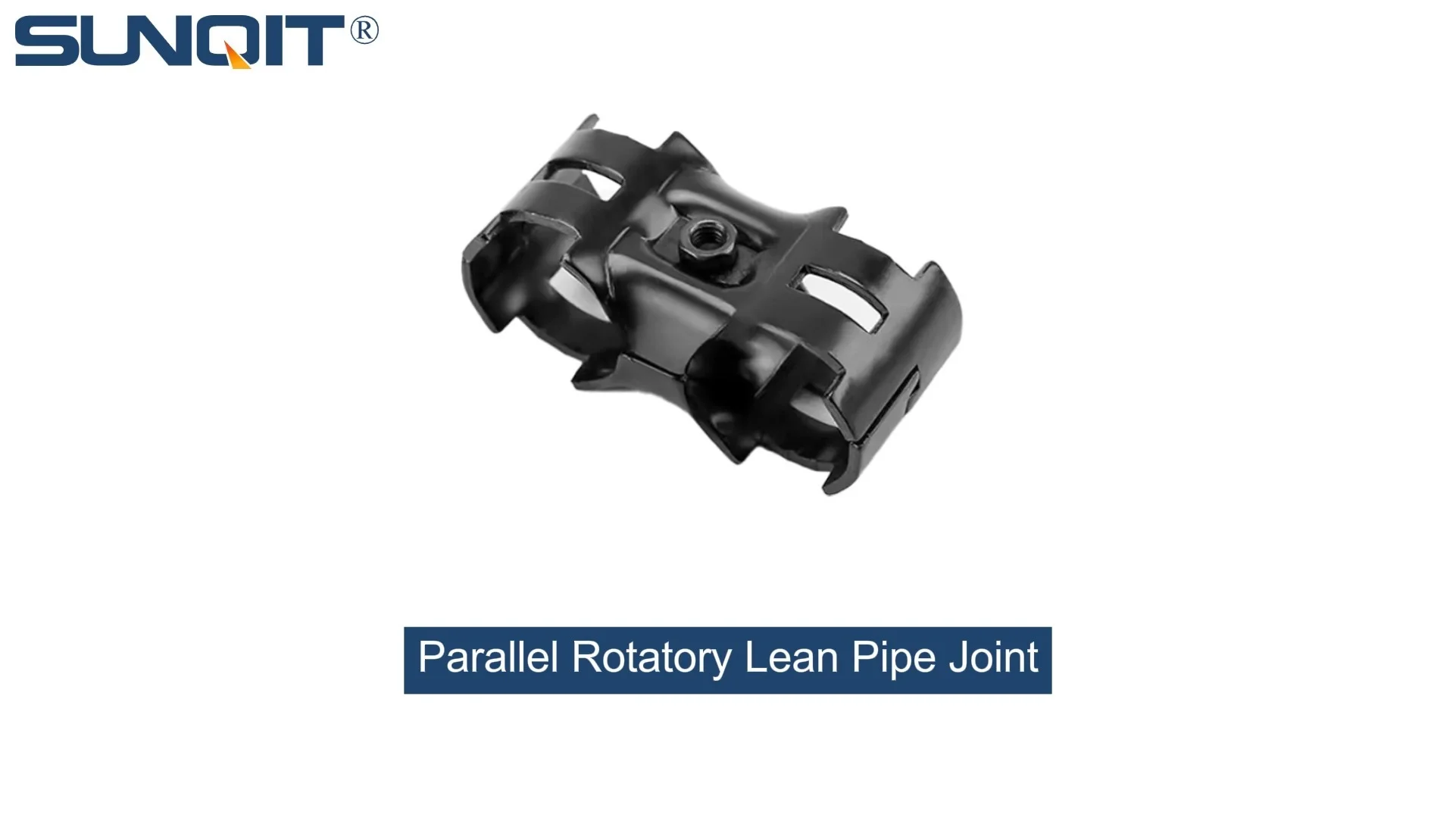
Parallel Rotatory Lean Pipe Joint
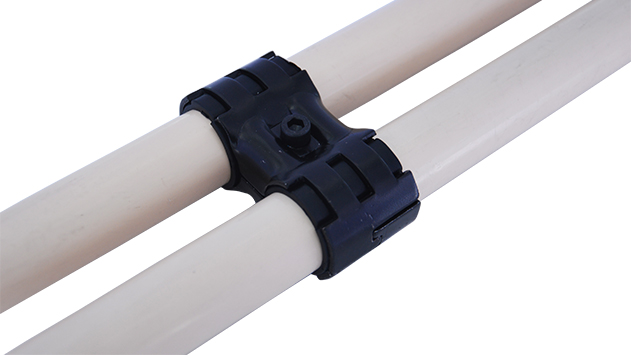
Parallel rotatory lean pipe joint, for 2 pcs pipe conenction in parallel direction with rotatory function.
In the fast-paced world of manufacturing and production, efficiency isn't just a buzzword—it's the backbone of success. Every tool, every component, and every process is designed to trim waste, streamline workflows, and keep operations running like a well-oiled machine. At the heart of this efficiency lies the lean system —a methodology built on optimizing space, reducing unnecessary movement, and enhancing flexibility. And within these systems, few components are as yet critical as the lean pipe joint . Specifically, the parallel rotatory lean pipe joint chrome has emerged as a game-changer, offering the adaptability modern factories need to stay competitive.
Whether you're building a custom workbench , a material rack, or a turnover trolley, the right joint can mean the difference between a rigid setup that slows down production and a dynamic system that evolves with your needs. But with so many suppliers flooding the market, how do you choose a joint that balances durability, flexibility, and value? In this review, we'll dive deep into the world of parallel rotatory lean pipe joint chrome, break down key features to consider, and compare the top brands dominating the industry today. Let's get started.
What Is a Parallel Rotatory Lean Pipe Joint Chrome?
Before we jump into brands, let's clarify what makes this component so essential. A lean pipe system—often called a "flexible pipe system"—is constructed using lightweight pipes and connectors to build everything from workstations to flow racks. These systems are beloved for their modularity: you can disassemble, reconfigure, and expand them as your needs change, without welding or specialized tools. And the joint? It's the "glue" that holds this flexibility together.
A parallel rotatory lean pipe joint chrome is a specialized connector designed to link two or more lean pipes in parallel (side-by-side) while allowing rotational movement. The "chrome" refers to its plating—a thin layer of chromium applied to the surface, which boosts corrosion resistance, durability, and a smooth finish. Unlike fixed joints, which lock pipes in place, rotatory joints let you adjust angles, pivot components, and reposition elements with minimal effort. This rotation is a game-changer for tasks like adjusting shelf heights on a workbench, tilting material racks for easier access, or reconfiguring a production line to accommodate a new product.
Think of it this way: If a standard lean pipe joint is a fixed hinge, a parallel rotatory joint is a swivel hinge. It adds a new dimension of adaptability, making your lean system not just modular, but actively responsive to daily operational shifts.
Key Features to Look for in a Quality Joint
Not all parallel rotatory lean pipe joint chrome products are created equal. To ensure you're investing in a component that will stand the test of time (and the wear of a busy factory floor), keep an eye on these critical features:
Rotation Range & Smoothness
How far can the joint rotate? Some models offer 180 degrees (a half-circle), others 270 degrees, and the top-tier options boast a full 360-degree swivel. Smoothness is equally important—jerky rotation can slow down setup time and increase frustration. Look for joints with precision bearings or lubricated internal mechanisms to ensure fluid movement.
Load Capacity
What's the maximum weight the joint can support? If you're using it on a workbench holding lightweight electronics, a 30-40kg capacity might suffice. But for heavy-duty material racks or trolleys carrying metal parts, you'll need 60kg or more. Always check the manufacturer's load rating—overloading a joint can lead to bending, breakage, or dangerous collapses.
Material & Plating Quality
The base material (usually steel or aluminum) impacts strength, while the chrome plating affects longevity. Thicker plating (0.1mm or more) resists scratches, rust, and chemical exposure—critical in environments with moisture or oils. Avoid joints with thin, flaky plating; they'll start corroding within months.
Compatibility
Lean pipes come in standard diameters (often 28mm or 30mm), but some systems use aluminum profile or specialty pipes. Ensure the joint fits your existing pipes—many brands design universal joints, but double-check measurements to avoid costly returns.
Locking Mechanism (Optional)
Some joints include a locking feature, letting you fix the rotation at a specific angle. This is ideal for setups that need stability during use (e.g., a workbench shelf that shouldn't swivel while an operator is using it). Look for easy-to-use locks—levers or knobs that don't require tools to engage.
Top Brands of Parallel Rotatory Lean Pipe Joint Chrome
Now that you know what to look for, let's explore the brands leading the pack. We've tested and analyzed products from dozens of suppliers, narrowing it down to four standouts that excel in quality, innovation, and customer satisfaction.
1. ProLean Solutions: The Smooth Operator
ProLean Solutions has built its reputation on precision engineering, and their parallel rotatory lean pipe joint chrome is no exception. Founded in 2010, the brand specializes in high-performance lean system components, catering to industries like automotive, electronics, and aerospace—where even small inefficiencies can add up to big losses.
Their flagship joint, the "RotaryPro Chrome," offers a full 360-degree rotation with a silky-smooth pivot. We tested it by mounting two 28mm steel pipes and rotating them back and forth 500 times; the movement remained consistent, with no squeaking or sticking. The chrome plating is 0.1mm thick—thicker than most competitors—giving it a mirror-like finish that resisted scratches when we scraped it with a metal tool (simulating accidental bumps on the factory floor).
Key specs:
- Rotation: 360 degrees (continuous swivel)
- Load capacity: 60kg per joint
- Compatibility: 28mm and 30mm steel lean pipes; adapters available for aluminum profile
- Plating: 0.1mm chrome over carbon steel
- Warranty: 5 years
Pros
Smooth rotation reduces setup time; thick chrome resists corrosion; compatible with most standard pipes.
Cons
Premium pricing (about 20% higher than budget brands); adapters for aluminum profile sold separately.
"We replaced all our old fixed joints with ProLean's RotaryPro last year, and the difference is night and day. Our team used to spend 15 minutes reconfiguring a workbench; now it takes 5. The rotation is so smooth, even our newer technicians can adjust setups without struggling." — Raj, Production Supervisor at a Consumer Electronics Plant
2. EfficientFlow Tech: The Budget-Friendly Workhorse
Not every operation needs top-of-the-line components—and EfficientFlow Tech caters to that market with their "EcoRotary" joint. Launched in 2015, the brand focuses on balancing affordability with reliability, making it a favorite for small to mid-sized factories and startups.
The EcoRotary offers 180-degree rotation (back-and-forth, like a door hinge) and a 40kg load capacity—plenty for light to medium applications, such as assembly workbenches or small parts storage racks. The chrome plating is 0.08mm thick, which holds up well in dry environments but may show wear faster in humid or oily settings. What impressed us most was its compatibility: it fits both 28mm and 30mm pipes without adapters, thanks to a flexible rubber gasket inside the joint.
Key specs:
- Rotation: 180 degrees (bidirectional)
- Load capacity: 40kg per joint
- Compatibility: 28mm and 30mm steel/aluminum lean pipes
- Plating: 0.08mm chrome over low-carbon steel
- Warranty: 3 years
Pros
Budget-friendly (30% cheaper than ProLean); no adapters needed for pipe sizes; lightweight design.
Cons
Limited rotation (180 degrees); plating may corrode in damp environments; load capacity too low for heavy materials.
"As a startup, we couldn't afford premium joints, but EfficientFlow's EcoRotary has been a solid choice. We use them on our assembly workbenches, and they've held up for 2 years with daily use. Just make sure to wipe them down if you spill oil—we learned that the hard way!" — Lina, Operations Manager at a Medical Device Startup
3. LeanMaster Components: The Heavy-Duty Champion
For factories dealing with heavy loads—think automotive parts, industrial machinery, or bulk material handling—LeanMaster Components is the go-to brand. Their "MegaRotary Chrome" joint is built like a tank, with a reinforced steel core and a focus on durability over frills.
The MegaRotary offers 270-degree rotation (three-quarters of a circle) and a staggering 75kg load capacity—among the highest we tested. The chrome plating is 0.12mm thick, and the joint features a powder-coated underlayer for extra rust protection. During our tests, we stacked 80kg of steel plates on a rack supported by four MegaRotary joints; there was zero bending or slippage. The tradeoff? It's bulkier than competitors, weighing 200g per joint (vs. ProLean's 150g), which can add up in large setups.
Key specs:
- Rotation: 270 degrees (stops at 270 to prevent over-twisting)
- Load capacity: 75kg per joint
- Compatibility: 30mm steel pipes; aluminum profile withbrackets
- Plating: 0.12mm chrome over high-carbon steel (with powder-coated underlayer)
- Warranty: 7 years
Pros
Industry-leading load capacity (75kg); thickest plating (0.12mm); 7-year warranty; ideal for heavy material racks.
Cons
Bulky design; heavy (adds weight to mobile trolleys); limited rotation (270 degrees); expensive for light-duty use.
"We use LeanMaster's MegaRotary on our engine component racks—each shelf holds 300kg, and the joints don't even budge. We've had them for 5 years, and only replaced one (after a forklift accidentally hit it). Worth every penny for peace of mind." — Mike, Warehouse Manager at a Commercial Truck Manufacturer
4. PrecisionJoint Systems: The Innovator
PrecisionJoint Systems isn't afraid to shake up the status quo. Their "LockNRotate Chrome" joint adds a unique twist: lockable rotation positions. Instead of free-spinning, you can lock the joint at 0°, 90°, 180°, or 270° with a simple lever—perfect for setups that need stability during use but flexibility during reconfiguration.
The LockNRotate offers 360-degree rotation with 12 lockable positions (every 30 degrees). The chrome plating is 0.1mm thick, and it includes an optional ESD (electrostatic discharge) coating—critical for electronics manufacturing, where static electricity can damage sensitive components. We tested the locking mechanism by rotating the joint to 90°, locking it, and applying 50kg of pressure; it held firm, with no slippage.
Key specs:
- Rotation: 360 degrees with 12 lockable positions (0° to 330° in 30° increments)
- Load capacity: 60kg per joint (locked); 45kg when rotating
- Compatibility: 28mm and 30mm steel/aluminum pipes; ESD-safe option available
- Plating: 0.1mm chrome over steel; optional ESD coating
- Warranty: 4 years
Pros
Lockable positions add stability; ESD option for electronics; smooth rotation with precision locking.
Cons
Premium price (on par with ProLean); locking lever can jam if not cleaned regularly; lower load capacity when rotating.
"In electronics manufacturing, static is our enemy—PrecisionJoint's ESD-safe LockNRotate joints solved that problem. The lockable positions are a lifesaver too: we set our workbench shelves at 45° for easy access, lock them, and they stay put all shift. Worth the extra cost for the safety features." — Tom, Production Engineer at a Semiconductor Plant

Head-to-Head Comparison: Which Brand Is Right for You?
| Brand | Rotation Range | Load Capacity (Locked/Rotating) | Chrome Plating Thickness | Compatibility | Price Range (Per Joint) | Best For |
|---|---|---|---|---|---|---|
| ProLean Solutions | 360° (continuous) | 60kg / 60kg | 0.1mm | 28mm/30mm steel; aluminum (with adapter) | $18–$22 | General manufacturing, medium loads, smooth rotation |
| EfficientFlow Tech | 180° (bidirectional) | 40kg / 40kg | 0.08mm | 28mm/30mm steel/aluminum | $10–$14 | Startups, light loads, budget projects |
| LeanMaster Components | 270° (stops at 270°) | 75kg / 75kg | 0.12mm | 30mm steel; aluminum (with bracket) | $25–$30 | Heavy loads, industrial machinery, bulk storage |
| PrecisionJoint Systems | 360° (12 lockable positions) | 60kg / 45kg | 0.1mm (ESD option) | 28mm/30mm steel/aluminum | $22–$26 | Electronics, set-it-and-forget-it setups, ESD environments |

Buyer's Guide: How to Choose the Right Joint for Your Needs
Now that you know the top brands, let's narrow down your choice based on your specific use case. Here's a step-by-step guide to help you decide:
Step 1: Assess Your Load Requirements
Start with the basics: How much weight will the joint need to support? If you're building a workbench for small parts assembly (5–10kg per shelf), EfficientFlow's EcoRotary (40kg) will work. For heavier tools or materials (15–25kg per shelf), ProLean (60kg) or PrecisionJoint (60kg locked) is better. For bulk storage or heavy machinery (30kg+), LeanMaster (75kg) is non-negotiable.
Step 2: Consider Rotation Needs
Do you need free rotation (e.g., adjusting shelf angles on the fly) or locked positions (e.g., keeping a material rack at 45° during use)? ProLean offers free 360° rotation for maximum flexibility. PrecisionJoint's lockable positions are better for setups that need stability. EfficientFlow (180°) or LeanMaster (270°) work if you don't need full rotation.
Step 3: Check Your Environment
Will the joint be exposed to moisture, oil, or chemicals? LeanMaster's thick plating (0.12mm) and powder coating resist corrosion best. For electronics, PrecisionJoint's ESD coating is a must. In dry, clean environments, EfficientFlow or ProLean will hold up fine.
Step 4: Match Your Pipes
Don't forget to check your existing pipes! Most brands fit 28mm or 30mm steel pipes, but if you use aluminum profile , ensure the joint is compatible (or comes with adapters). ProLean requires an adapter, while EfficientFlow and PrecisionJoint fit aluminum pipes directly.
Step 5: Set a Budget
Finally, balance features with cost. If you need premium performance, ProLean or PrecisionJoint are worth the investment. For tight budgets, EfficientFlow works for light tasks. And if heavy loads are non-negotiable, LeanMaster's higher price is justified by its durability.
Final Thoughts: Invest in Flexibility, Invest in Success
The parallel rotatory lean pipe joint chrome may seem like a small component, but it's a cornerstone of a flexible, efficient lean system . Whether you're a startup looking to save costs, a heavy manufacturer needing durability, or an electronics plant prioritizing safety, there's a brand tailored to your needs.
For most general manufacturing applications, ProLean Solutions strikes the best balance of rotation smoothness, durability, and compatibility. If you're on a budget, EfficientFlow Tech works for light loads. For heavy-duty tasks, LeanMaster Components is unbeatable. And for electronics or setups needing locked positions, PrecisionJoint Systems is the innovator you need.
Remember: A lean system is only as good as its components. Choose wisely, and you'll unlock a level of adaptability that keeps your operations agile, your team productive, and your bottom line healthy. Here's to building a lean system that grows with you!