- Company Articles
- Products and Technology
- Product knowledge
- Top Materials for Flat Adjustable Swivel Castor Wheels: Rubber vs. Polyurethane

Top Materials for Flat Adjustable Swivel Castor Wheels: Rubber vs. Polyurethane
Related Product
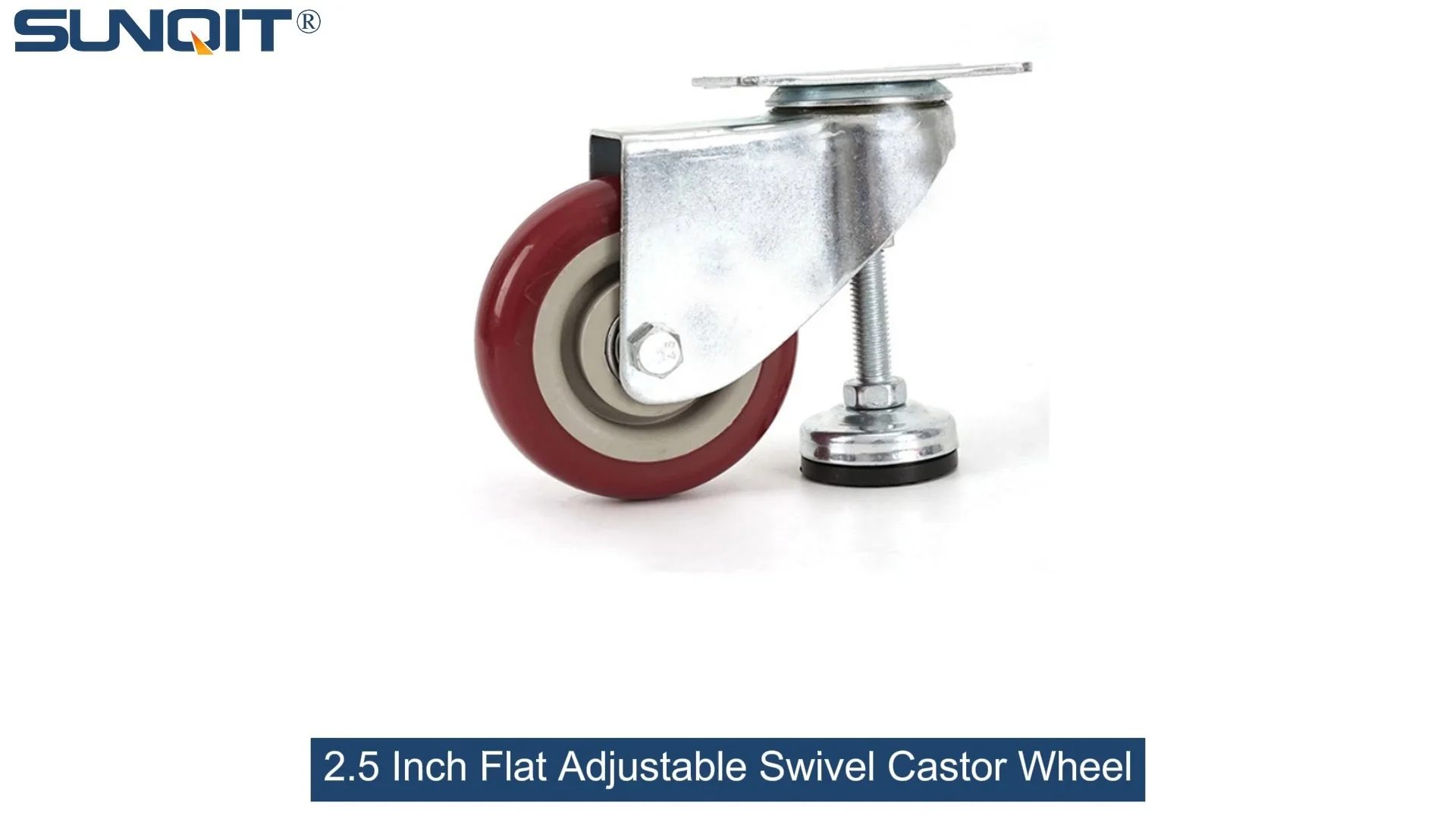
Flat Adjustable Swivel Castor Wheel
Swivel Chair Casters Ball Bearing Wheels Rubber Base with adjustable height function. Resistant to abrasion, impact and corrosion. Heavy payload can hold 80Kgs per pcs,which can make it works at a stable and smooth status.
On a bustling factory floor, a workbench that glides smoothly from station to station isn't just a convenience—it's the backbone of efficient production. In warehouses, a turnover trolley loaded with parts needs to stop precisely without skidding, and in labs, a mobile workstation must protect sensitive flooring while carrying delicate equipment. At the heart of all these movements? The humble caster wheel. But not just any wheel: flat adjustable swivel castor wheels, designed to balance mobility, stability, and precision. Today, we're diving into two of the most popular materials for these wheels—rubber and polyurethane—to help you decide which one truly rolls with your needs.
First Things First: What Are Flat Adjustable Swivel Castor Wheels?
Before we pit rubber against polyurethane, let's make sure we're all on the same page. Flat adjustable swivel castor wheels are the unsung heroes of material handling. Unlike fixed casters that only roll forward and backward, swivel casters rotate 360 degrees, making tight turns and maneuvering in tight spaces a breeze. The "flat adjustable" part? That means the wheel height can often be tweaked (sometimes with adjustable leveling feet) to keep equipment stable, even on uneven floors. They're the reason your workbench stays steady when you're assembling parts and glides when you need to relocate it.
Rubber Castor Wheels: The Classic Contender
Rubber has been a go-to for caster wheels for decades, and for good reason. It's familiar, reliable, and feels like an old friend in workshops and garages worldwide. But what exactly makes rubber tick?
What Is Rubber, Anyway?
Rubber is a natural or synthetic elastomer—a material that can stretch and return to its original shape. Natural rubber comes from the sap of rubber trees, while synthetic rubber (like styrene-butadiene rubber, or SBR) is made in labs. Both types share core properties that make them ideal for wheels: flexibility, grip, and a soft touch.
The Perks of Rubber: Why It's Still a Favorite
Floor Protection First:
If you've ever winced at a scratch on a polished concrete floor or a scuff on hardwood, rubber is your ally. Its soft, pliable surface acts like a buffer, reducing the risk of marks or damage. This makes it a top pick for environments where floors matter—think showrooms, offices, or labs with sensitive coatings.
Quiet as a Mouse: Ever pushed a metal cart across a tile floor and wished for earplugs? Rubber wheels muffle noise like no other. The material absorbs vibrations, turning clatters into gentle hums. In busy settings like hospitals or schools, this quiet operation isn't just nice—it's essential for keeping the peace.
Grip, Grip, Grip: Rubber loves to hold on. Even on smooth or slightly wet floors, it provides excellent traction, reducing the chance of slips or skids. This is a lifesaver when moving heavy loads—like a fully stocked turnover trolley—where sudden stops could mean spills or injuries.
Shock Absorption: Bumpy floors? Uneven thresholds? Rubber wheels soak up the jolt, protecting both the equipment and the items being transported. If you're moving fragile parts or sensitive electronics, that cushioning can prevent costly damage.
Quiet as a Mouse: Ever pushed a metal cart across a tile floor and wished for earplugs? Rubber wheels muffle noise like no other. The material absorbs vibrations, turning clatters into gentle hums. In busy settings like hospitals or schools, this quiet operation isn't just nice—it's essential for keeping the peace.
Grip, Grip, Grip: Rubber loves to hold on. Even on smooth or slightly wet floors, it provides excellent traction, reducing the chance of slips or skids. This is a lifesaver when moving heavy loads—like a fully stocked turnover trolley—where sudden stops could mean spills or injuries.
Shock Absorption: Bumpy floors? Uneven thresholds? Rubber wheels soak up the jolt, protecting both the equipment and the items being transported. If you're moving fragile parts or sensitive electronics, that cushioning can prevent costly damage.
Real Talk:
Maria, a maintenance manager at a small electronics workshop, swears by rubber wheels for her team's workbenches. "We have these old hardwood floors that the boss refuses to replace, and rubber wheels are the only ones that don't leave marks. Plus, when the guys are rushing to meet a deadline, the carts don't squeal—blessing for my sanity!"
The Downsides of Rubber: Where It Falls Short
No material is perfect, and rubber has its Achilles' heels:
Durability in Harsh Conditions: Rubber can break down when exposed to oils, solvents, or extreme temperatures. In a garage where oil drips are common, or a factory with high heat, rubber wheels might crack, harden, or degrade faster than expected.
Load Limits: While rubber handles moderate loads well, it's not the best for super-heavy duty. If you're moving a material rack loaded with steel parts (like Material Rack B with 3 rows and 3 floors), rubber might compress over time, leading to wobbly wheels or reduced lifespan.
Weather Woes: Natural rubber can become brittle in cold weather and sticky in heat, which affects performance. Synthetic rubber holds up better, but it's still not as resilient as some alternatives.
Durability in Harsh Conditions: Rubber can break down when exposed to oils, solvents, or extreme temperatures. In a garage where oil drips are common, or a factory with high heat, rubber wheels might crack, harden, or degrade faster than expected.
Load Limits: While rubber handles moderate loads well, it's not the best for super-heavy duty. If you're moving a material rack loaded with steel parts (like Material Rack B with 3 rows and 3 floors), rubber might compress over time, leading to wobbly wheels or reduced lifespan.
Weather Woes: Natural rubber can become brittle in cold weather and sticky in heat, which affects performance. Synthetic rubber holds up better, but it's still not as resilient as some alternatives.

Polyurethane Castor Wheels: The Modern Marvel
If rubber is the classic, polyurethane (often called "poly") is the new kid on the block—but it's quickly become a favorite. This synthetic material blends the best of rubber and plastic, offering a balance of strength and flexibility that's hard to beat.
Polyurethane 101: More Than Just Plastic
Polyurethane is a polymer—a chain of molecules linked together—created by mixing diisocyanates and polyols. The result? A material that can be tailored to specific needs: soft like rubber, rigid like plastic, or somewhere in between. For caster wheels, it's usually formulated to be tough yet flexible.
Why Polyurethane Is Stealing the Spotlight
Tough as Nails:
Polyurethane is built to last. It resists abrasion, cuts, and tears better than rubber, making it ideal for rough environments. In warehouses with concrete floors full of debris, or factories with metal shavings, poly wheels keep rolling long after rubber ones would have worn thin.
Heavy Lifter: Need to move a workbench stacked with tools, or a material rack loaded with 3 rows and 3 floors of inventory? Polyurethane handles heavy loads like a champ. Its rigid core (often paired with a metal or plastic hub) provides stability, even under hundreds of pounds.
Chemical Resistance: Oils, greases, solvents—polyurethane laughs them off. Unlike rubber, it doesn't swell or degrade when exposed to harsh chemicals, making it a star in auto shops, industrial kitchens, or labs where spills happen.
All-Weather Warrior: From freezing cold to scorching heat, polyurethane stays consistent. It doesn't harden in winter or soften in summer, so performance doesn't dip with the thermometer. This reliability is a big plus for outdoor use or unheated warehouses.
Heavy Lifter: Need to move a workbench stacked with tools, or a material rack loaded with 3 rows and 3 floors of inventory? Polyurethane handles heavy loads like a champ. Its rigid core (often paired with a metal or plastic hub) provides stability, even under hundreds of pounds.
Chemical Resistance: Oils, greases, solvents—polyurethane laughs them off. Unlike rubber, it doesn't swell or degrade when exposed to harsh chemicals, making it a star in auto shops, industrial kitchens, or labs where spills happen.
All-Weather Warrior: From freezing cold to scorching heat, polyurethane stays consistent. It doesn't harden in winter or soften in summer, so performance doesn't dip with the thermometer. This reliability is a big plus for outdoor use or unheated warehouses.
Real Talk:
Juan, a warehouse supervisor, switched to polyurethane wheels for his team's material racks last year. "We used to replace rubber wheels every 6 months because they'd crack from the warehouse's summer heat. Poly wheels? They're still going strong. And with all the oil and grease from the loading dock, they don't get sticky or gross—total game-changer."
The Catch with Polyurethane: What to Watch For
Floor Scratches (Yes, Even Poly):
While polyurethane is gentler than metal, it's firmer than rubber. On very soft floors (like vinyl or linoleum), it might still leave scuffs if not formulated as "non-marking." Always check for a "non-marking" label if floor protection is a priority.
Noisier Than Rubber: Polyurethane doesn't absorb vibrations as well as rubber, so it can be louder on hard floors. In quiet settings, this might require extra padding or choosing a softer poly blend.
Price Tag: Quality polyurethane wheels often cost more upfront than rubber ones. While they last longer (saving money in the long run), the initial investment can be a turnoff for small budgets.
Noisier Than Rubber: Polyurethane doesn't absorb vibrations as well as rubber, so it can be louder on hard floors. In quiet settings, this might require extra padding or choosing a softer poly blend.
Price Tag: Quality polyurethane wheels often cost more upfront than rubber ones. While they last longer (saving money in the long run), the initial investment can be a turnoff for small budgets.

Rubber vs. Polyurethane: The Ultimate Showdown
Now that we've broken down each material, let's put them head-to-head. Here's how they stack up on the factors that matter most:
| Factor | Rubber | Polyurethane |
|---|---|---|
| Durability | Good for moderate use; may degrade in harsh chemicals or temps. | Excellent for heavy use; resists abrasion, chemicals, and extreme temps. |
| Load Capacity | Best for light to medium loads (up to ~500 lbs per wheel). | Handles heavy loads (500+ lbs per wheel) with ease. |
| Floor Protection | Superior; soft surface minimizes marks and scratches. | Good, but firmer—opt for "non-marking" blends for sensitive floors. |
| Noise Level | Quiet; absorbs vibrations and reduces clatter. | Noisier than rubber; may need padding for quiet environments. |
| Cost | More affordable upfront. | Higher initial cost, but longer lifespan often offsets it. |
| Best For | Indoor use, sensitive floors, quiet settings, light to medium loads. | Heavy loads, harsh chemicals, extreme temps, outdoor or industrial use. |

When to Choose Rubber: Real-World Scenarios
Rubber wheels shine in specific situations. Here are the top times to go rubber:
You Care About Floors: If you're rolling on hardwood, polished concrete, or vinyl, rubber's softness prevents scratches. Think offices, retail stores, or art studios.
Noise Is a Dealbreaker: In hospitals, schools, or libraries, quiet operation is non-negotiable. Rubber's vibration absorption keeps things peaceful.
Loads Are Light to Medium: A workbench with tools, a cart with office supplies, or a small turnover trolley? Rubber handles these with ease, and you'll save on cost.
You're on a Tight Budget: If upfront cost matters more than long-term replacement, rubber is the wallet-friendly choice for low-to-moderate use.
You Care About Floors: If you're rolling on hardwood, polished concrete, or vinyl, rubber's softness prevents scratches. Think offices, retail stores, or art studios.
Noise Is a Dealbreaker: In hospitals, schools, or libraries, quiet operation is non-negotiable. Rubber's vibration absorption keeps things peaceful.
Loads Are Light to Medium: A workbench with tools, a cart with office supplies, or a small turnover trolley? Rubber handles these with ease, and you'll save on cost.
You're on a Tight Budget: If upfront cost matters more than long-term replacement, rubber is the wallet-friendly choice for low-to-moderate use.
When to Choose Polyurethane: Real-World Scenarios
Polyurethane is the way to go when you need toughness and reliability. Here's when to pick poly:
Heavy Loads Are the Norm: A material rack stacked with parts (like Material Rack B with 3 rows and 3 floors), a industrial workbench, or a trolley carrying machinery? Polyurethane's strength won't let you down.
Chemicals or Extreme Temps: Auto shops, factories, or outdoor settings? Poly resists oils, solvents, heat, and cold, so it won't degrade.
You Want to replace Wheels Less Often: Polyurethane lasts 2-3x longer than rubber in harsh conditions. The higher upfront cost pays off in fewer replacements.
Floor Scratches Are Manageable: If your floors are tough (concrete, tile) or you don't mind the occasional scuff, poly's durability is worth it.
Heavy Loads Are the Norm: A material rack stacked with parts (like Material Rack B with 3 rows and 3 floors), a industrial workbench, or a trolley carrying machinery? Polyurethane's strength won't let you down.
Chemicals or Extreme Temps: Auto shops, factories, or outdoor settings? Poly resists oils, solvents, heat, and cold, so it won't degrade.
You Want to replace Wheels Less Often: Polyurethane lasts 2-3x longer than rubber in harsh conditions. The higher upfront cost pays off in fewer replacements.
Floor Scratches Are Manageable: If your floors are tough (concrete, tile) or you don't mind the occasional scuff, poly's durability is worth it.
How to Choose: A Step-by-Step Guide
Still torn? Let's break it down with a simple process:
1. Know Your Load: How much weight will the caster wheels carry? If it's under 500 lbs per wheel, rubber might work. Over 500 lbs? Go poly.
2. Check Your Floors: Soft floors (wood, vinyl) = rubber. Hard floors (concrete, tile) = poly (or non-marking poly if you're cautious).
3. Assess the Environment: Chemicals, extreme temps, or outdoor use? Polyurethane. Quiet, indoor, clean settings? Rubber.
4. Think About Lifespan: Will you use the wheels daily (heavy use) or occasionally (light use)? Poly lasts longer for heavy use; rubber is fine for light.
5. Budget vs. Long-Term Cost: If you can invest upfront, poly saves money over time. If not, rubber is cheaper now (but plan for replacements).
1. Know Your Load: How much weight will the caster wheels carry? If it's under 500 lbs per wheel, rubber might work. Over 500 lbs? Go poly.
2. Check Your Floors: Soft floors (wood, vinyl) = rubber. Hard floors (concrete, tile) = poly (or non-marking poly if you're cautious).
3. Assess the Environment: Chemicals, extreme temps, or outdoor use? Polyurethane. Quiet, indoor, clean settings? Rubber.
4. Think About Lifespan: Will you use the wheels daily (heavy use) or occasionally (light use)? Poly lasts longer for heavy use; rubber is fine for light.
5. Budget vs. Long-Term Cost: If you can invest upfront, poly saves money over time. If not, rubber is cheaper now (but plan for replacements).
Caring for Your Castor Wheels: Tips to Make Them Last
No matter which material you choose, a little maintenance goes a long way. Here's how to keep your flat adjustable swivel castor wheels rolling smoothly:
Clean Regularly: Dirt and debris can wear down wheels. Wipe rubber wheels with a damp cloth; for poly, use mild soap and water (avoid harsh chemicals, even if poly resists them).
Lubricate the Swivel: The swivel joint needs grease to stay flexible. Use a silicone-based lubricant every 3-6 months (more often for heavy use).
Check for Wear: Inspect wheels for cracks, flat spots, or uneven wear. replace them before they fail—damaged wheels can cause instability or floor damage.
Tighten Casters and Accessories: Nuts and bolts can loosen over time. Tighten them regularly to prevent wobbling, and replace worn caster accessories (like brakes or bearings) as needed.
Clean Regularly: Dirt and debris can wear down wheels. Wipe rubber wheels with a damp cloth; for poly, use mild soap and water (avoid harsh chemicals, even if poly resists them).
Lubricate the Swivel: The swivel joint needs grease to stay flexible. Use a silicone-based lubricant every 3-6 months (more often for heavy use).
Check for Wear: Inspect wheels for cracks, flat spots, or uneven wear. replace them before they fail—damaged wheels can cause instability or floor damage.
Tighten Casters and Accessories: Nuts and bolts can loosen over time. Tighten them regularly to prevent wobbling, and replace worn caster accessories (like brakes or bearings) as needed.
Final Thoughts: It's All About Your Needs
Rubber and polyurethane are both fantastic materials for flat adjustable swivel castor wheels—but they're not one-size-fits-all. Rubber is the gentle, budget-friendly choice for quiet, indoor, light-to-medium use. Polyurethane is the tough, long-lasting workhorse for heavy loads, harsh environments, and anyone who hates replacing wheels.
At the end of the day, the best wheel is the one that fits your space, your load, and your daily grind. Whether you're rolling a workbench across a factory floor or a trolley through a busy warehouse, choosing the right material means smoother operations, fewer headaches, and wheels that keep up with you—today, tomorrow, and for years to come.
At the end of the day, the best wheel is the one that fits your space, your load, and your daily grind. Whether you're rolling a workbench across a factory floor or a trolley through a busy warehouse, choosing the right material means smoother operations, fewer headaches, and wheels that keep up with you—today, tomorrow, and for years to come.