- Company Articles
- Products and Technology
- Product knowledge
- Top Myths About One Side Rotatory Chrome Parallel Lean Pipe Joints Debunked

Top Myths About One Side Rotatory Chrome Parallel Lean Pipe Joints Debunked
Related Product
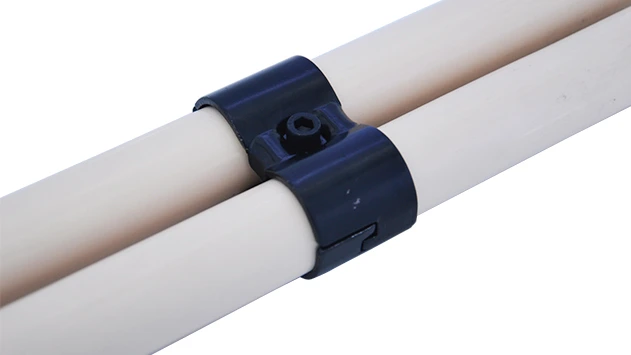
Parallel Lean Pipe Joint
Parallel lean pipe joint used for 2 pcs 28MM lean pipe connection in parallel direction to enhance frame structure, usually for heavy payload requirement for workbench. flow rack, hand trolley.
In the fast-paced world of manufacturing and industrial operations, efficiency isn't just a buzzword—it's the lifeblood that keeps production lines moving, costs in check, and teams productive. At the heart of this efficiency lies the humble yet mighty lean pipe system, a modular solution that has revolutionized how factories, warehouses, and workshops organize their spaces. From workbenches to material racks, from conveyor systems to turnover trolleys, lean pipe systems owe their versatility to one critical component: the lean pipe joint. And among these joints, the One Side Rotatory Chrome Parallel Lean Pipe Joint has emerged as a standout, praised for its flexibility and durability. Yet, despite its growing popularity, this unassuming piece of hardware is shrouded in myths—misconceptions that often prevent businesses from leveraging its full potential. Today, we're setting the record straight. Let's dive into the top myths surrounding these joints and uncover the truth that could transform your lean operations.
Myth #1: "They're Only Suitable for Light-Duty Applications"
Walk into any workshop, and you'll likely hear someone say, "Those chrome joints? They look nice, but I wouldn't trust them with anything heavy." It's a common assumption: chrome plating is often associated with shiny, decorative finishes, leading many to believe that the One Side Rotatory Chrome Parallel Lean Pipe Joint is little more than a lightweight accessory, unfit for rigorous industrial use. But let's stop and ask: Is this really the case?
The truth is, the chrome plating on these joints is not just for show—it's a functional layer that enhances the joint's performance, while the underlying structure is built to bear significant weight. Let's break down the engineering. Most high-quality One Side Rotatory Chrome Parallel Lean Pipe Joints are constructed from cold-rolled steel, a material known for its high tensile strength and rigidity. The steel core is then electroplated with a layer of chrome, which serves two key purposes: first, it creates a barrier against corrosion, making the joint resistant to moisture, oils, and chemicals commonly found in factory environments; second, it reduces friction, ensuring smooth rotation of the joint's moving parts over time.
To put this into perspective, consider load-testing data from leading manufacturers. A standard 1-inch diameter One Side Rotatory Chrome Parallel Lean Pipe Joint can typically support vertical loads of up to 200 kilograms (440 pounds) and horizontal shear loads of 150 kilograms (330 pounds) without deformation. That's more than enough to handle heavy tools, bulky components, or stacked materials on a workbench or material rack. In fact, automotive assembly plants—where the average car part weighs anywhere from 10 to 50 kilograms—routinely use these joints to build adjustable workstations for engine components and chassis parts. One such plant in Michigan reported using the joints to support a 180-kilogram transmission assembly fixture for over three years, with zero signs of structural fatigue.
But don't just take our word for it. Let's look at a real-world example: a mid-sized electronics manufacturer in Taiwan that switched to these joints for their PCB (printed circuit board) assembly lines. Previously, they used traditional welded steel frames, which were sturdy but inflexible. When they upgraded to lean pipe systems using One Side Rotatory Chrome Parallel Lean Pipe Joints, they were initially skeptical about weight capacity. To test it, they mounted a 120-kilogram automated soldering machine on a workbench built with these joints. Six months later, the workbench showed no signs of sagging, and the joints' rotation function was still smooth enough to allow operators to swivel the machine 90 degrees for maintenance—something the welded frames could never do. "We were worried the joints would give out under the machine's weight," said the plant manager, "but they've held up better than we ever expected. Now we're using them for all our heavy-duty workstations."
So, the next time someone tells you these joints are "only for light duty," remember: their chrome finish hides a steel backbone built for strength. Whether you're assembling heavy machinery or storing bulk materials, these joints are more than up to the task.
Myth #2: "Rotatory Functionality Leads to Instability Over Time"
"Sure, they rotate smoothly now," you might hear a skeptical maintenance technician say, "but give it six months—those joints will start wobbling, and your whole workstation will be shaking like a leaf." This myth preys on a fundamental fear: that moving parts wear out, and the more a joint rotates, the looser and less stable it becomes. After all, if a joint is designed to swivel, doesn't that mean there's more room for play or degradation over time? Let's unpack this concern.
The rotatory mechanism in One Side Rotatory Chrome Parallel Lean Pipe Joints is not an afterthought—it's a precision-engineered feature designed for long-term stability. Unlike cheaply made hinges or pivot points that rely on simple friction, these joints often use ball bearings or self-lubricating bushings to ensure smooth rotation. The chrome plating, as mentioned earlier, reduces friction between moving parts, minimizing wear. Additionally, the joint's design includes a locking mechanism (usually a set screw or cam lever) that allows users to secure the rotation at a specific angle once adjusted. This means that when the joint is in use, it's not constantly rotating; it's locked into place, reducing unnecessary movement that could cause wear.
To understand longevity, let's consider the wear and tear cycle. A well-maintained One Side Rotatory Chrome Parallel Lean Pipe Joint can withstand up to 10,000 rotations (equivalent to daily adjustments over 5–7 years in a typical factory setting) before showing signs of minor wear—and even then, the wear is usually limited to the rotation mechanism, not the structural components. Manufacturers often include replaceable rotation inserts, meaning you don't have to replace the entire joint if the moving parts eventually wear out; you can simply swap the insert for a new one, extending the joint's lifespan by another 5–7 years.
Take the case of a food packaging plant in Germany that uses these joints on their conveyor systems. The plant runs two shifts daily, and operators adjust the angle of the roller track (connected via One Side Rotatory Chrome Parallel Lean Pipe Joints) up to 15 times per shift to accommodate different package sizes. After three years of continuous use, the maintenance team inspected the joints and found that only 3 out of 50 joints showed slight stiffness in rotation—and even those were fixed with a quick application of lubricant. "We expected to replace the joints every year," said the maintenance supervisor, "but they've lasted three times longer than that. The rotation still works like new on most of them."
Of course, like any mechanical component, these joints benefit from basic maintenance. To keep them stable over time, simply lubricate the rotation mechanism every 6–12 months with a light machine oil, and tighten the locking screws if you notice any play. Avoid overloading them beyond their rated capacity (though as we saw in Myth #1, that capacity is higher than most assume), and inspect them quarterly for signs of corrosion (unlikely, thanks to the chrome plating, but still good practice in harsh environments). With these simple steps, instability becomes a non-issue.
The rotatory feature isn't a weakness—it's a strength, designed to last. With proper care, these joints will stay stable and functional for years, making them a reliable choice for dynamic work environments.

Myth #3: "They're Incompatible with Non-Chrome or Aluminum Components"
"If I use these chrome joints, do I have to buy all chrome pipes too?" This is a question we hear often, and it's rooted in a common misconception: that One Side Rotatory Chrome Parallel Lean Pipe Joints are proprietary, designed to work only with specific brands or materials—namely, other chrome-plated components. This fear of incompatibility often leads businesses to stick with their existing systems, even if they're outdated, rather than investing in these joints. But is this fear justified?
The short answer: no. In fact, interoperability is one of the key design principles behind modern lean pipe joints, including the One Side Rotatory Chrome Parallel Lean Pipe Joint. These joints are engineered to fit standard lean pipe sizes, which means they work seamlessly with a wide range of materials, from traditional black steel pipes to aluminum profiles, stainless steel tubes, and even plastic-coated lean pipes. Let's break down the compatibility:
| Component Type | Compatibility | Notes |
|---|---|---|
| Standard Lean Pipes (1-inch diameter) | Full | Direct fit; no adapters needed |
| Aluminum Profiles (e.g., 2020, 3030) | Full (with adapters) | Use aluminum profile accessories like pipe clamps or bracket mounts |
| Stainless Steel Pipes | Full | Chrome plating resists galvanic corrosion with stainless steel |
| Plastic-Coated Lean Pipes | Full | Soft coating won't damage joint's inner grip |
Take aluminum profiles, for instance—a popular choice in lean systems due to their lightweight and modularity. Many users assume that chrome joints won't connect to aluminum, but manufacturers have solved this with simple adapters. For example, a 3030 aluminum profile can be paired with a One Side Rotatory Chrome Parallel Lean Pipe Joint using an aluminum pipe clamp, which bolts onto the profile's T-slot and grips the pipe inserted into the joint. This setup is so common that some suppliers even sell pre-assembled kits with joints, aluminum profiles, and clamps for building workbenches or material racks. A furniture manufacturer in Italy used this exact combination to build a hybrid workbench: aluminum profile legs for lightweight stability, chrome joints for rotatory shelving, and plastic-coated lean pipes for the shelving frames. "We wanted the best of both worlds—aluminum's lightness and the joints' flexibility," said the design engineer. "The adapters made it so easy to connect everything; we had the workbench built in a day."
Another example is compatibility with roller tracks, a staple in material flow systems. Roller tracks are often made of aluminum or plastic, but the One Side Rotatory Chrome Parallel Lean Pipe Joint can connect to them using roller track placon mounts—small brackets that attach the joint to the track's frame. A warehouse in Texas used this to create a dynamic picking system: they mounted roller tracks on a rack built with these joints, allowing the tracks to rotate 45 degrees for easy access to bins. "We were worried the chrome joints wouldn't work with our aluminum roller tracks," said the warehouse manager, "but the placon mounts fit perfectly. Now our pickers can swivel the tracks to reach items without bending over—productivity has gone up 20%."
The bottom line: these joints are designed to play well with others. Whether you're mixing them with aluminum profiles, stainless steel pipes, or roller tracks, compatibility is rarely an issue. Don't let the fear of incompatibility hold you back—these joints are team players in any lean system.

Myth #4: "Chrome Plating is Just for Aesthetics and Adds Unnecessary Cost"
"Why pay extra for chrome? It's just a shiny finish—give me a plain steel joint any day." This is a sentiment we've heard from cost-conscious buyers, who view chrome plating as a luxury add-on that drives up the price without any real benefit. After all, if the joint's structure is steel, why not skip the chrome and save money? But this myth overlooks the critical functional benefits of chrome plating, which often end up saving money in the long run.
First, let's address the cost argument. It's true that chrome-plated joints are slightly more expensive than their unplated steel counterparts—typically by 10–15%. But this upfront cost is offset by long-term savings. Chrome plating acts as a protective barrier, preventing rust and corrosion. In environments with high humidity, oil, or chemicals (think food processing plants, automotive workshops, or coastal factories), unplated steel joints can start rusting within months, leading to weakened structural integrity and the need for replacement. Chrome-plated joints, on the other hand, resist corrosion for years. A study by a leading industrial supply company found that chrome-plated joints had a 70% longer lifespan than unplated ones in humid environments, reducing replacement costs by 50% over five years. "We used to replace unplated joints every two years because of rust," said a maintenance manager at a seafood processing plant, "but with chrome-plated ones, we haven't replaced a single joint in four years. The upfront cost was worth every penny."
Second, chrome plating reduces friction, which is crucial for the joint's rotatory function. The smooth, hard surface of chrome allows the joint's moving parts to glide past each other with minimal resistance, reducing wear and tear on the rotation mechanism. Unplated steel, by contrast, has a rougher surface that can cause friction buildup, leading to stiffer rotation and premature wear. This means chrome-plated joints require less lubrication and maintenance, saving time and labor costs. For example, a manufacturing plant in Mexico that switched from unplated to chrome-plated joints reported a 40% reduction in maintenance time for their rotatory workstations—time that could be redirected to more critical tasks.
In industries where cleanliness is paramount—like pharmaceuticals or electronics manufacturing—chrome plating also offers hygiene benefits. Its non-porous surface is easier to clean and sanitize, resisting the buildup of dirt, bacteria, or contaminants. Unplated steel, with its microscopic pores, can harbor germs even after cleaning. A medical device manufacturer in Ireland switched to chrome-plated joints for their assembly workbenches after an audit found bacterial growth on unplated joints. "The chrome surface wipes clean with disinfectant, which is essential for our sterile environment," said the quality control manager. "We couldn't afford to risk contamination, so the chrome plating wasn't a luxury—it was a necessity."
And yes, while aesthetics aren't the primary benefit, they do matter. A clean, shiny chrome finish gives workstations a professional look, which can boost employee morale and impress clients during factory tours. "Our old workbenches with rusted steel joints looked run-down," said a plant supervisor in California, "but the chrome joints make the whole line look modern and well-maintained. Our operators even take more pride in keeping their workstations clean now."
So, is chrome plating just for aesthetics? Hardly. It's a functional investment that saves money on replacements, reduces maintenance, improves hygiene, and yes—adds a polished look. When you consider the total cost of ownership, chrome-plated joints are often the more economical choice.
Myth #5: "Installation Requires Specialized Tools or Expertise"
"We don't have the tools or skills to install these rotatory joints—we'll need to hire a professional." This myth stems from the assumption that any component with moving parts or a "technical" design must be complicated to install. But the reality is that One Side Rotatory Chrome Parallel Lean Pipe Joints are engineered for simplicity, designed to be assembled by anyone with basic hand tools and a little common sense.
Let's walk through a typical installation process. To build a basic workbench with these joints, you'll need: the joints, lean pipes, a rubber mallet, an Allen wrench (included with most joint kits), and maybe a level. Here's how it works: 1) insert the lean pipe into the joint's socket until it hits the stop; 2) Tighten the set screw on the joint using the Allen wrench—this grips the pipe securely; 3) If using the rotatory function, adjust the joint to the desired angle and lock it in place with the locking lever or additional set screw; 4) Repeat with the remaining pipes and joints, using the level to ensure everything is straight. That's it. No welding, no drilling, no specialized machinery. Most people can assemble a simple workbench in under an hour on their first try.
The key here is that manufacturers have prioritized user-friendly design. The joints feature standard-sized set screws that fit common Allen wrenches, and the pipe sockets are sized to accept standard 1-inch lean pipes with a snug, no-slip fit. Even the rotatory mechanism is intuitive: a simple lever or knob allows you to unlock, rotate, and relock the joint in seconds. "I was worried we'd need a technician to install these," said a small business owner who built a material rack with the joints, "but my 16-year-old son helped me put it together in 45 minutes using just the tools in my garage. It was easier than building IKEA furniture!"
For more complex setups—like integrating with aluminum profiles or roller tracks—suppliers often provide detailed installation guides, video tutorials, or even free online training sessions. Some suppliers even offer starter kits that include all the necessary accessories (adapters, brackets, tools) and step-by-step instructions. A manufacturing co-op in Canada reported that after watching a 15-minute tutorial video, their team of assembly line workers was able to build a custom conveyor system with these joints in a single afternoon. "We were intimidated at first, but the instructions were so clear that even our newest hires could follow along," said the co-op manager.
Compare this to traditional welded steel frames, which require skilled welders, heavy equipment, and time-consuming measurements. Welding also introduces the risk of warping or weakening the metal, and once welded, the frame can't be reconfigured. With these joints, installation is not only easier but also reversible—if you make a mistake, you can simply loosen the set screws and adjust. This flexibility is a game-changer for small businesses or facilities with limited resources.
So, do you need specialized tools or expertise? No. All you need is a basic toolkit, a willingness to follow instructions, and maybe a friend to help hold the pipes. These joints are designed to empower your team, not frustrate them. With a little practice, you'll be building custom lean systems in no time.
The Bottom Line: Time to Embrace the Truth
One Side Rotatory Chrome Parallel Lean Pipe Joints are more than just hardware—they're a gateway to more efficient, adaptable, and durable lean systems. By debunking these myths, we've seen that they're strong enough for heavy loads, stable over time, compatible with a wide range of components, cost-effective in the long run, and easy to install. Whether you're a large manufacturer or a small workshop, these joints have the potential to transform how you build and use your workspaces.
So, the next time you hear someone repeating these myths, set them straight. Share the stories of factories that have used these joints for years, the data on their load capacity and longevity, and the simplicity of their design. And if you haven't tried them yet? Now's the time. Invest in a few joints, build a small workstation, and see for yourself—you might just be surprised by how much they can do.
In the world of lean manufacturing, knowledge is power. And now that you know the truth about these unsung heroes of lean systems, you're ready to build a more efficient, adaptable, and successful operation.