- Company Articles
- Products and Technology
- Procurement Guidelines
- Total Cost of Ownership: Flat Swivel Castor Wheel with Brake vs. Standard Casters

Total Cost of Ownership: Flat Swivel Castor Wheel with Brake vs. Standard Casters
Related Product
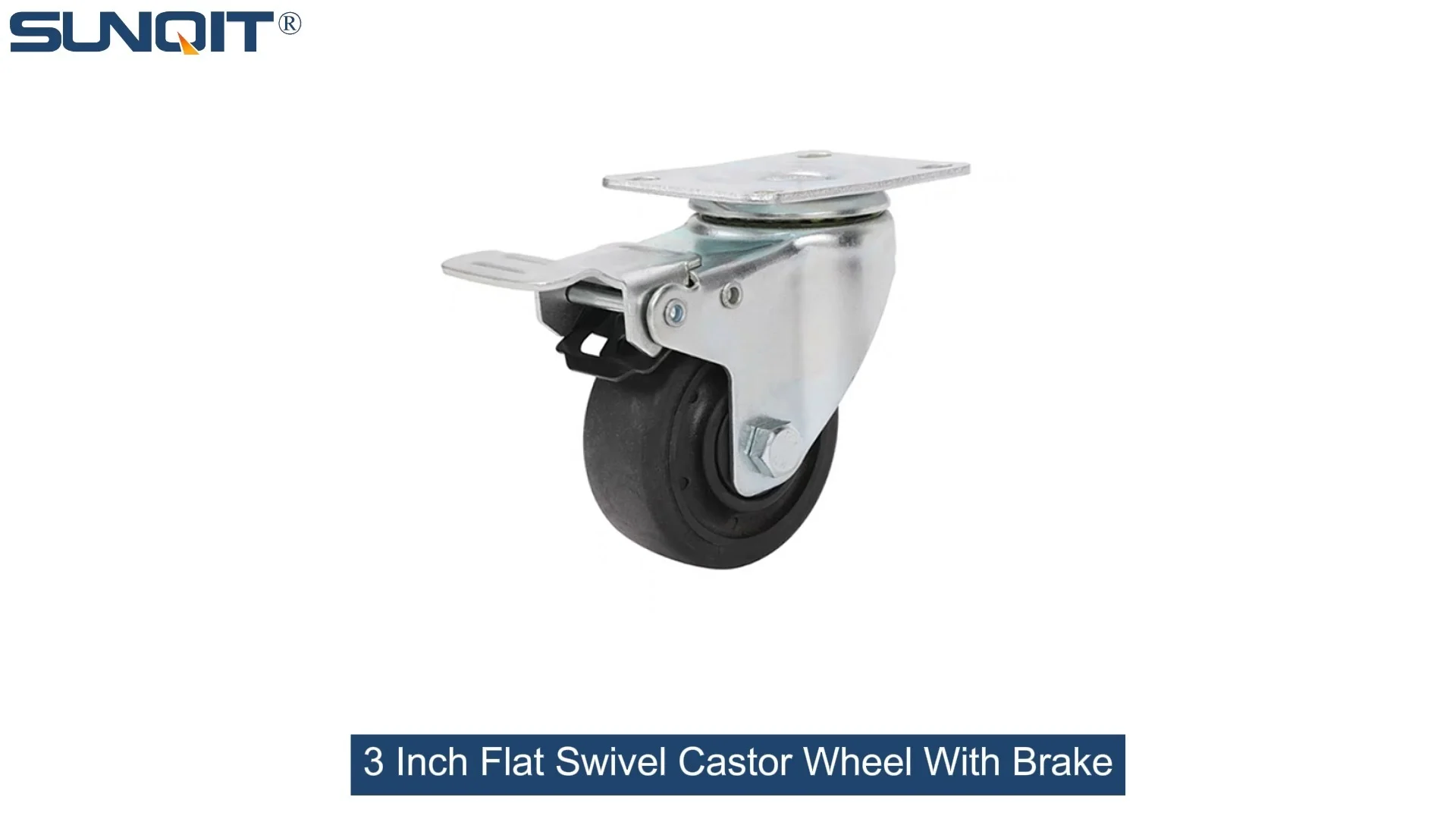
Flat Swivel Castor Wheel With Brake
Chair Casters Ball Bearing Wheels Rubber Base with brake design. Resistant to abrasion, impact and corrosion. Heavy payload can hold 70Kgs per pcs,which can make it works at a stable and smooth status.
In the bustling world of manufacturing, warehousing, or even office operations, it's often the smallest components that quietly shape daily productivity. Think about the last time you pushed a workbench across the shop floor, or loaded a turnover trolley and rack with inventory—chances are, you didn't give much thought to the wheels beneath you. But those wheels, known as casters, are far more than just "moving parts." They're the unsung heroes (or occasional villains) of efficiency, safety, and long-term cost management. Today, we're diving into a critical comparison that could save your business time, money, and headaches: the total cost of ownership (TCO) of flat swivel castor wheels with brakes versus standard casters. Spoiler: It's not just about the upfront price tag.
First Things First: What Are We Actually Comparing?
Before we crunch numbers, let's make sure we're on the same page. Not all casters are created equal, and understanding the basics will help you see why TCO matters more than the sticker price.
Flat Swivel Castor Wheels with Brake: The "Premium" Contender
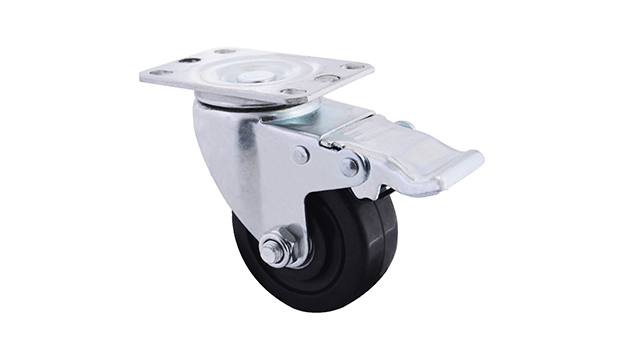
Imagine a caster designed for precision and control. A flat swivel castor wheel with a brake typically features a few key upgrades over basic models. First, the "flat" part refers to the mounting plate—a broad, stable base that attaches securely to equipment like workbenches, trolleys, or material racks. The "swivel" mechanism lets the wheel rotate 360 degrees, making maneuvering tight corners or crowded spaces feel effortless. And then there's the "brake": usually a foot-operated lever that locks the wheel (or sometimes the swivel motion) in place, preventing accidental rolling when the equipment is stationary.
These casters often use higher-quality materials, too. Wheels might be made of polyurethane or rubber (gentler on floors, quieter) instead of hard nylon, and the swivel joints are often reinforced with ball bearings for smoother rotation. Even the brakes are built to last, with metal components that stand up to repeated use. They're the kind of caster you'd find on a medical cart (where stability is life-or-death) or a high-end manufacturing workbench (where precision positioning matters).
Standard Casters: The "Budget" Workhorse
Standard casters, on the other hand, are the "everyday" option. They come in two main flavors: fixed (non-swiveling, only roll forward/backward) or swivel (without brakes). Their design is simpler: a smaller mounting plate, basic wheel materials (often nylon or hard plastic), and minimal frills. You'll spot them on basic carts, cheap shelving units, or temporary storage racks. They're affordable upfront, easy to replace, and get the job done… as long as the job is straightforward.
But here's the catch: "getting the job done" doesn't always translate to "cost-effective in the long run." Let's break down TCO to see why.
Total Cost of Ownership (TCO): Beyond the Initial Purchase
TCO is a fancy term for "what this thing will really cost you over its entire life." It includes: upfront purchase cost, maintenance and repair expenses, replacement frequency, productivity losses (or gains), safety-related costs, and even indirect impacts like floor damage. Let's walk through each factor for both caster types.
1. Upfront Cost: The Temptation of "Cheap" Standard Casters
Let's start with the obvious: standard casters are almost always cheaper to buy upfront. A basic 4-inch standard swivel caster might cost $10–$15 per unit, while a comparable flat swivel castor with a brake could run $25–$40. If you're outfitting a fleet of trolleys or workbenches, that price gap can look significant at first glance. For example, 100 standard casters might cost $1,200, versus $3,000 for 100 brake-equipped flat swivel casters—a $1,800 difference upfront. It's easy to think, "Why pay more?" But TCO is a marathon, not a sprint.
2. Durability: How Long Do They Actually Last?
Standard casters are often built with cost-cutting in mind, which means thinner metal in the mounting plates, plastic swivel joints (instead of ball bearings), and hard nylon wheels that wear down quickly on rough floors. In a busy warehouse where a trolley is pushed 50+ times a day, standard casters might start showing signs of failure—sticking swivels, cracked wheels, or bent axles—in as little as 6–12 months. Flat swivel castors with brakes, by contrast, are engineered for longevity. Their ball-bearing swivel joints resist wear, their polyurethane wheels absorb shock (reducing stress on the caster body), and their steel mounting plates stand up to heavy loads. With moderate use, they can last 3–5 years before needing replacement.
Let's do the math here. If standard casters last 1 year and cost $12 each, replacing 100 casters annually would cost $1,200/year. Over 5 years, that's $6,000. A flat swivel castor with brake at $30 each, lasting 5 years, would cost $3,000 total over the same period. Suddenly, the "cheaper" option is costing twice as much in replacement alone.
3. Maintenance: Time (and Money) Spent on Repairs
Standard casters aren't just prone to early failure—they also require frequent maintenance to keep them rolling. A sticking swivel joint might need lubrication every month. A cracked wheel could jam, requiring a mid-shift repair that halts workflow. And if you're using non-brake casters, you might "solve" the rolling problem by wedging a block of wood under the wheel—a temporary fix that wastes employee time and risks damaging floors. Flat swivel castors with brakes, on the other hand, need minimal maintenance. Their sealed ball bearings rarely need lubrication, and their durable wheels hold up to daily use. When maintenance is needed, caster accessories (like replacement brake pads or wheel bearings) are often readily available, making repairs faster and cheaper than full caster replacement.
Consider this: If a standard caster requires 2 hours of maintenance per year (lubrication, fixing jams, etc.) at an average labor cost of $25/hour, 100 casters would cost $5,000/year in maintenance time. Flat swivel casters might need 0.5 hours of maintenance per year, totaling $1,250/year. Over 5 years, that's a $18,750 difference in labor costs alone.
4. Productivity: When "Stuck" Casters Slow You Down
Time is money, and nothing kills productivity faster than a caster that doesn't roll smoothly. Picture this: An employee needs to move a workbench to a new assembly line. With standard casters, the swivel joint sticks, so the workbench veers left when they push right. They struggle, strain, and finally get it into place—taking 10 minutes instead of 2. Multiply that by 10 employees doing similar tasks daily, and you're losing 80 minutes of productive time per day, or over 300 hours per year. At $25/hour, that's $7,500 in lost productivity annually.
Flat swivel castors with brakes eliminate this frustration. Their smooth swivel and easy-rolling wheels let employees move equipment quickly and precisely. And when they reach the destination, a quick tap of the brake locks the caster in place—no more chasing a rolling trolley across the floor. The result? Less time wasted, less employee fatigue, and more focus on actual work.
5. Safety: The Hidden Cost of "No Brakes"
Here's where the "brake" feature becomes a game-changer. Standard casters (especially non-swivel or non-brake models) are a safety hazard waiting to happen. A loaded turnover trolley and rack left unattended on a slight incline can roll away, crashing into equipment or employees. In 2023, the Bureau of Labor Statistics reported over 26,000 workplace injuries involving "materials handling equipment"—many linked to unstable or unbraked trolleys. The average cost of a workplace injury (medical bills, lost workdays, insurance claims) is around $40,000 per incident. Even a single accident could wipe out any upfront savings from choosing standard casters.
Flat swivel castors with brakes mitigate this risk. The brake ensures equipment stays put when not in use, reducing the chance of collisions or tip-overs. It's a small feature that delivers big peace of mind—and big savings on potential liability.
6. Floor Damage: Scratches, Dents, and Repair Bills
Standard casters with hard nylon wheels are tough on floors. Over time, they can scratch concrete, chip tile, or leave marks on warehouse floors—especially if they're carrying heavy loads. Repairing or resurfacing a 10,000 sq. ft. warehouse floor costs $3–$5 per square foot, totaling $30,000–$50,000. While not all floor damage is caster-related, rough wheels the wear. Flat swivel castors with polyurethane wheels, by contrast, are floor-friendly. The soft, rubber-like material glides smoothly without scratching, extending the life of your floors and delaying costly repairs.
The TCO Showdown: A Side-by-Side Comparison
To make this concrete, let's build a 5-year TCO comparison for outfitting 100 pieces of equipment (e.g., workbenches, trolleys) with either standard casters or flat swivel castor wheels with brakes. We'll assume moderate use (50 moves per day per caster) in a warehouse setting.
| TCO Factor | Standard Casters (100 units) | Flat Swivel Castor with Brake (100 units) |
|---|---|---|
| Upfront Purchase Cost | $1,200 ($12/caster) | $3,000 ($30/caster) |
| Replacement Cost (5-year lifespan) | $6,000 (replaced annually: 5x $1,200) | $3,000 (replaced once after 5 years) |
| Maintenance Labor Cost (5 years) | $7,500 (10 hrs/week @ $25/hr) | $1,250 (1.7 hrs/week @ $25/hr) |
| Productivity Loss (5 years) | $37,500 (300 hrs/year @ $25/hr) | $0 (minimal delays) |
| Potential Safety Incident Cost | $40,000 (1 incident @ avg. $40k) | $0 (reduced risk) |
| Floor Repair Cost (5 years) | $10,000 (partial resurfacing) | $2,000 (minimal wear) |
| 5-Year Total Cost of Ownership | $102,700 | $12,250 |
The numbers speak for themselves: Over 5 years, standard casters could cost your business over $100,000, while flat swivel castors with brakes would cost just $12,250—a savings of nearly $90,000. That's not a typo. The "cheap" upfront choice ends up being exponentially more expensive when you factor in replacements, maintenance, lost productivity, and safety risks.

Real-World Example: How One Warehouse Cut Costs by Switching
Let's ground this in a real story. A mid-sized electronics manufacturer in Ohio was using standard casters on their assembly line workbenches and component trolleys. They'd been buying the cheapest casters available for years, reasoning that "wheels are wheels." But by 2022, they were facing frequent issues: workbenches would drift during assembly (ruining precision), trolleys would roll into walls, and the maintenance team was spending 15+ hours/week fixing stuck or broken casters. Employee morale was low, and a near-miss accident (a trolley rolling into a worker's foot) finally prompted them to reevaluate.
They switched 50 workbenches and 30 trolleys to flat swivel castor wheels with brakes. The upfront cost was $4,800 (80 casters x $60 each—they opted for heavy-duty models), but the results were immediate. Maintenance time dropped to 2 hours/week. Workbench drift disappeared, reducing assembly errors by 15%. And in two years since the switch, they've had zero caster-related accidents or replacements. The plant manager later reported, "We used to think we were saving money with cheap casters. Now we realize we were throwing money away."

When Might Standard Casters Still Make Sense?
To be fair, standard casters aren't always a bad choice. If you're using equipment in a low-traffic, low-weight setting—like a light-duty cart in an office that's moved once a week—standard casters might be sufficient. Their TCO in such cases would be lower because they'd rarely wear out, and the risk of safety incidents is minimal. But for high-use, high-weight, or safety-critical applications (which describes most industrial settings), flat swivel castor wheels with brakes are the clear winner.
Final Thoughts: Invest in the Wheels That Invest in You
At the end of the day, choosing between flat swivel castor wheels with brakes and standard casters is about more than wheels—it's about investing in your operations. Standard casters offer a quick, cheap fix, but they cost you in the long run through replacements, downtime, and risk. Flat swivel castors with brakes, on the other hand, are a strategic choice that pays dividends in durability, productivity, and safety.
So the next time you're shopping for casters, remember: TCO, not upfront cost, is the true measure of value. Your team, your bottom line, and your peace of mind will thank you.