- Company Articles
- Products and Technology
- Product knowledge
- Total Lock vs. Brake-Only: Comparing Flat Swivel Castor Wheel Locking Systems

Total Lock vs. Brake-Only: Comparing Flat Swivel Castor Wheel Locking Systems
Related Product
Flat Swivel Castor Wheel
Chair Casters Ball Bearing Wheels Rubber Base. Resistant to abrasion, impact and corrosion. Heavy payload can hold 70-90Kgs per pcs,which can make it works at a stable and smooth status.
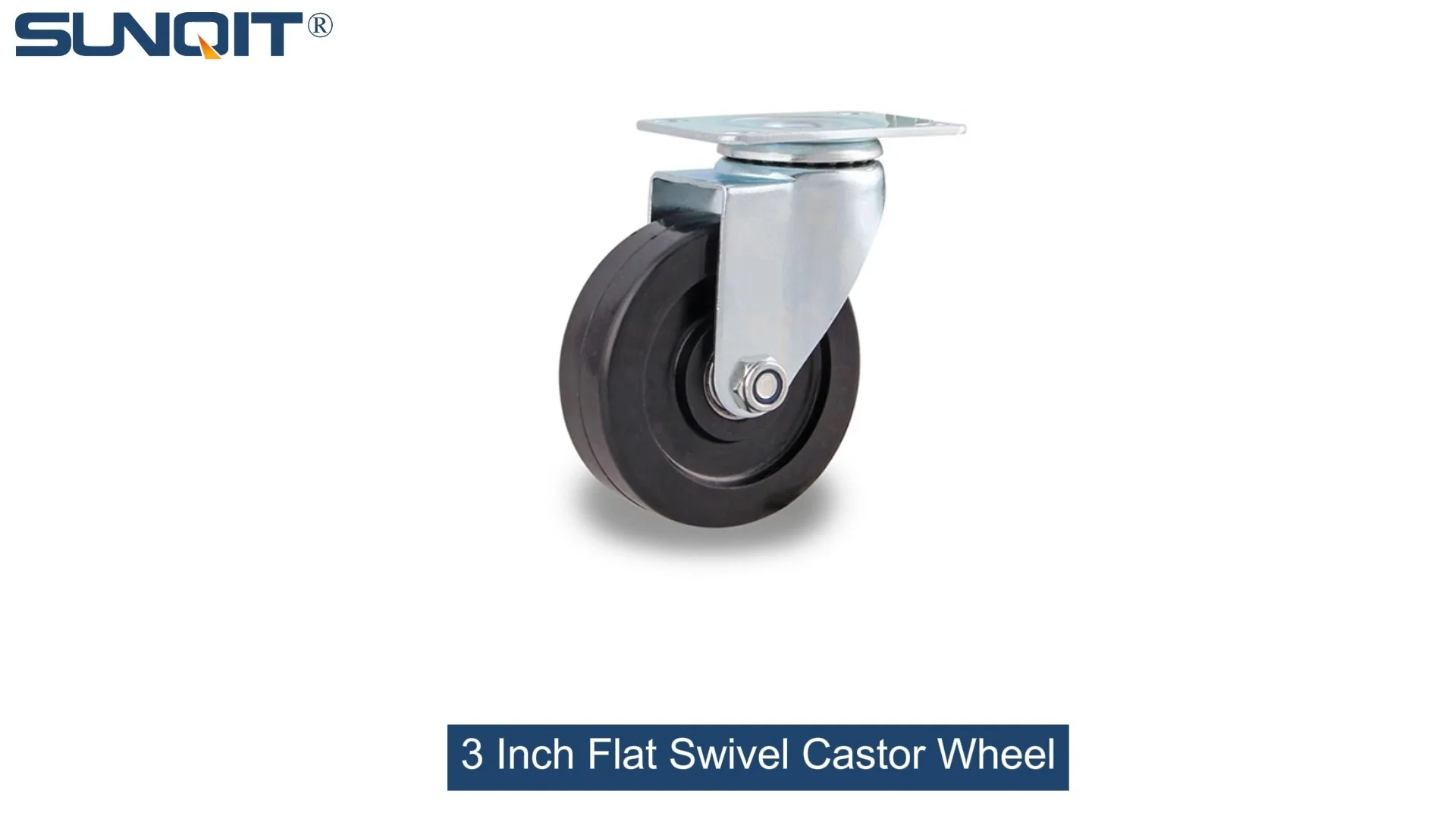
Walk into any factory, warehouse, or even a busy office, and you'll notice something but absolutely critical: the wheels under workbenches, carts, and material racks. These aren't just any wheels—they're caster wheels , the unsung heroes that keep operations rolling (literally). But not all caster wheels are created equal, and when it comes to safety and efficiency, one feature stands out above the rest: the locking system. Today, we're zeroing in on a popular type of caster: the flat swivel castor wheel . Specifically, we'll break down two of its most common locking systems: Total Lock and Brake-Only. By the end, you'll know exactly which one belongs under your workstation, trolley, or rack—and why it matters more than you might think.
First Things First: What Are Flat Swivel Castor Wheels?
Before we dive into locks, let's get clear on what a flat swivel castor wheel actually is. Unlike rigid casters (which only roll forward and backward) or stem-mounted casters (which attach via a rod), flat swivel casters have a flat, plate-like mounting base that bolts directly to the bottom of equipment. The "swivel" part means the wheel can rotate 360 degrees, making it easy to maneuver tight corners or change direction on a dime—perfect for busy workspaces where agility is key.
These casters come in all shapes and sizes, with wheels made from rubber, plastic, steel, or even aluminum, depending on the load they need to handle and the floor they'll roll on. You'll find them under everything from lightweight office chairs to heavy-duty turnover trolleys and racks in factories, and yes—even the workbench in your garage. Their popularity boils down to three things: versatility, durability, and that all-important swivel action that turns cumbersome equipment into something you can move with one hand.
But here's the thing: a swivel caster that moves too freely can be a liability. Imagine trying to assemble parts on a workbench that drifts across the floor every time you lean on it, or a loaded trolley that starts rolling downhill because someone forgot to lock it. That's where locking systems come in. They're the brakes that turn a "movable" tool into a "stationary" one—when you need it to stay put.
Why Locking Systems Matter: Safety, Stability, and Sanity
Locking systems aren't just "nice to have"—they're essential. Think about it: in a manufacturing plant, a workbench with unlocked casters could shift mid-assembly, ruining a product or even injuring a worker. In a warehouse, an unattended cart rolling into a conveyor belt could jam the entire line. Even in a quiet office, a filing cabinet on casters that slides into a wall during a meeting is a hassle (and a potential dent). The right lock keeps equipment stable when it needs to be, prevents accidents, and saves everyone from unnecessary frustration.
But not all locks do the same job. Some only stop the wheel from rolling, while others go a step further and lock the swivel too. That's the crux of our comparison today: Brake-Only locks versus Total Lock (sometimes called "dual lock") systems. Let's break them down, starting with the simpler of the two: Brake-Only.
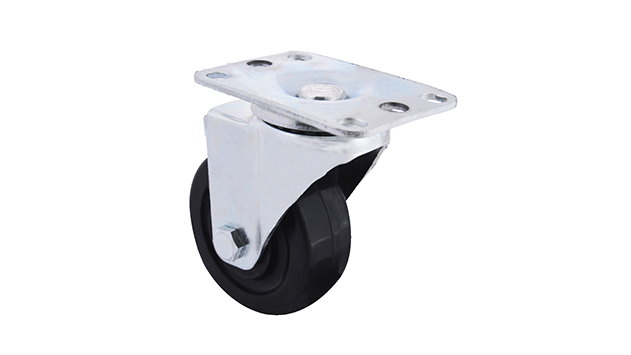
Brake-Only Locking Systems: The Basics
How They Work
A Brake-Only locking system does exactly what its name suggests: it locks the wheel to prevent it from rolling. The swivel mechanism, however, remains free to rotate. Here's the typical setup: there's a small lever (usually foot-operated, so you don't have to bend down) connected to a brake pad. When you step on the lever, the pad presses against the wheel, creating friction that stops it from turning. Release the lever, and the pad lifts—wheel rolls again, swivel still spins.
These locks are simple by design. No fancy gears or extra parts—just a lever, a spring, and a brake pad. That simplicity is part of their appeal. They're easy to install, easy to use, and easy to fix if something goes wrong (more on maintenance later).
Pros of Brake-Only Locks
1. Cost-Effective: Since they have fewer components, Brake-Only casters are almost always cheaper than Total Lock versions. If you're outfitting a fleet of lightweight carts or workbenches on a budget, this can add up to big savings.
2. Quick and Easy to Engage: The foot lever is intuitive—step down to lock, step again to release. Even someone using the equipment for the first time won't fumble with it. No need for keys or complicated mechanisms.
3. Lightweight: With fewer parts, Brake-Only casters are often lighter than Total Lock ones. This matters if you're dealing with equipment that needs to be moved frequently (like a portable workbench) and every pound counts.
4. Good for Smooth Floors: On flat, even surfaces (think polished concrete or linoleum), Brake-Only locks work well. The wheel stays put, and since the floor is smooth, the swivel doesn't tend to drift much—so the equipment feels stable enough.
Cons of Brake-Only Locks
1. Swivel Still Moves: This is the big one. Even with the wheel locked, the caster can still swivel. So if you push or pull the equipment, the wheel might pivot, making the whole thing shift. Imagine leaning against a workbench locked with Brake-Only casters on a slightly uneven floor—the swivel could turn, and suddenly the bench is at an angle.
2. Less Stability for Heavy Loads: If you're hauling 500 pounds of materials on a trolley, a Brake-Only lock might not cut it. The weight can cause the swivel to "creep" over time, even if the wheel isn't rolling. That's a safety risk—no one wants a loaded cart slowly shifting toward a edge or a worker's foot.
3. Not Great on Uneven Surfaces: Floors in warehouses or construction sites are rarely perfect. Cracks, bumps, or even a slight slope can make a Brake-Only-locked caster swivel unexpectedly. The wheel stays locked, but the caster itself turns, leaving the equipment wobbly or off-kilter.

Total Lock Systems: When "Good Enough" Isn't Enough
How They Work
Total Lock systems (also called "dual locks" or "wheel and swivel locks") take things a step further: they lock both the wheel and the swivel. That means when you engage the lock, two things happen at once: the wheel stops rolling, and the swivel plate (the part that lets the wheel turn 360 degrees) gets clamped down, preventing rotation. It's like putting a car in park and engaging the emergency brake—double the security.
The mechanics are a bit more complex. Along with the wheel brake pad, there's usually a secondary lock that pinches or bolts the swivel plate in place. Some use a pin that slides into a hole in the swivel plate; others use a cam that clamps down on it. Either way, the result is a caster that's completely immobilized—no rolling, no swiveling.
You'll often find these on heavy-duty equipment, like material racks loaded with inventory or workbenches where precision is critical (think electronics assembly, where even a tiny shift can ruin a circuit board). They're also common in environments where safety is non-negotiable, like hospitals or labs, where equipment can't afford to move an inch during procedures.
Pros of Total Lock Systems
1. Maximum Stability: This is their biggest selling point. With both wheel and swivel locked, the equipment stays exactly where you put it—even on uneven floors or when bumped. If you've ever tried to use a microscope on a rolling cart, you'll appreciate this: no more adjusting the cart every time you lean in.
2. Safer for Heavy Loads: Total Lock casters are built to handle weight. The dual locks distribute pressure evenly, so even a fully loaded trolley won't shift under stress. This reduces the risk of tip-overs or collisions in busy areas.
3. Versatile Across Floors: Whether you're on concrete, asphalt, or a sloped warehouse ramp, Total Lock holds tight. The swivel lock prevents drifting, so you don't have to worry about the equipment "walking" away over time.
4. Durable in High-Traffic Areas: Since they're designed for heavy use, Total Lock systems often have sturdier components—thicker steel plates, reinforced levers, and corrosion-resistant finishes. They stand up to grease, dirt, and daily wear better than simpler locks.
Cons of Total Lock Systems
1. Higher Cost: More parts mean higher prices. A Total Lock caster can cost 30-50% more than a Brake-Only one. For small businesses or projects with tight budgets, this can be a dealbreaker—though many argue the safety benefits are worth the investment.
2. Heavier and Bulkier: The extra locking mechanism adds weight and size. If you're mounting casters on a lightweight cart that needs to be lifted or carried (yes, some carts are that portable), the added heft might be a problem.
3. Slightly Trickier to Engage: While still user-friendly, some Total Lock levers require a firmer step to engage both locks. In rare cases, if the swivel is in an awkward position, the lock might not engage smoothly (though this is less common with modern designs).
4. More Maintenance: With two locking mechanisms, there are more parts that can wear out or get stuck. Brake pads, swivel pins, and levers all need occasional checks—especially in dirty environments where dust or debris can gum up the works.

Total Lock vs. Brake-Only: A Head-to-Head Comparison
Still on the fence? Let's put these two systems side by side. The table below breaks down their key features, so you can see at a glance which one fits your needs.
| Feature | Brake-Only Locking System | Total Lock System |
|---|---|---|
| What It Locks | Only the wheel (prevents rolling) | Wheel (rolling) + swivel (rotation) |
| Stability Level | Medium (good on smooth floors, light loads) | High (excellent on all floors, heavy loads) |
| Load Capacity Range | Typically 50-500 lbs per caster | Typically 200-2,000+ lbs per caster |
| Best For | Lightweight equipment, smooth floors, temporary locking (e.g., office carts, small workbenches) | Heavy equipment, uneven floors, precision work (e.g., material racks, lab workbenches, industrial trolleys) |
| Cost | Low to medium | Medium to high |
| Installation Difficulty | Easy (fewer parts, simple mounting) | Moderate (extra steps to align swivel lock) |
| Maintenance Needs | Low (only wheel brake to check) | Medium (wheel brake + swivel lock to maintain) |
| Common Accessories Needed | Replacement brake pads, lubricant | Replacement brake pads, swivel lock pins, lubricant, caster accessories like lever extensions |
Choosing the Right Lock: 5 Questions to Ask Yourself
At this point, you might be thinking, "Total Lock sounds better, but do I really need it?" The answer depends on your specific situation. Here are five questions to help you decide:
1. How Heavy Is the Equipment (and Its Load)?
If you're moving 100 lbs or less (like a small tool cart), Brake-Only might be fine. But if you're hauling 500+ lbs (think pallets of inventory on a trolley), Total Lock is a no-brainer. The heavier the load, the more stability you need—and swivel lock makes all the difference.
2. What's the Floor Like?
Smooth, polished floors (tile, linoleum) are Brake-Only friendly. Uneven, rough, or sloped floors (concrete with cracks, gravel, ramps) demand Total Lock. Even a slight slope can cause a Brake-Only caster to swivel and drift over time.
3. How Often Do You Need to Lock It?
If the equipment stays locked 90% of the time (like a permanent workbench), Total Lock's stability is worth the cost. If you're constantly moving and locking/unlocking (like a cart that goes from station to station), Brake-Only's simplicity and lighter weight might be better—unless the cart is heavy, in which case Total Lock still wins.
4. What's the Risk of Movement?
Ask: What happens if this equipment moves unexpectedly? If the answer is "nothing major" (e.g., a copy paper cart in an office), Brake-Only is okay. If it's "someone could get hurt" or "we could lose thousands in product" (e.g., a workbench with fragile electronics), Total Lock is non-negotiable.
5. What's Your Budget?
Let's be real: budget matters. If Total Lock is 50% more expensive and you're buying 50 casters, that's a big jump. But consider this: the cost of a single accident (a damaged product, a worker injury) could far exceed the savings from choosing Brake-Only. Sometimes, it's worth investing upfront to avoid bigger costs later.
Caster Accessories: Boosting Performance, No Matter the Lock
Whichever locking system you choose, the right caster accessories can make it work better and last longer. These aren't just "extras"—they're the little things that turn a basic caster into a high-performance tool. Here are a few to consider:
Replacement Brake Pads: Over time, brake pads wear down (especially on rough floors). Having spares on hand means you can swap them out in 5 minutes instead of waiting for a new caster to arrive.
Lubricant: Swivel joints and brake levers need regular lubrication to stay smooth. A silicone-based lube works best (avoid oil, which attracts dust). Spray a little on the swivel plate and brake mechanism every few months, and your casters will glide like new.
Mounting Plates: If your equipment doesn't have pre-drilled holes for casters, heavy-duty mounting plates can add strength and stability. Look for ones made from steel, not plastic—they'll hold up better under stress.
Wheel Guards: In dirty environments (like construction sites or auto shops), wheel guards keep debris from getting stuck in the wheel or swivel mechanism. They're cheap insurance against jams and breakdowns.
For Total Lock systems, pay extra attention to caster accessories like swivel lock pins or lever extensions. Some manufacturers sell extended levers that make it easier to engage the lock, even if the caster is mounted low to the ground.
Installation and Maintenance: Keeping Your Locks Locked
Even the best caster lock won't work if it's installed wrong or neglected. Here's how to set yours up for success:
Installation Tips
1. Use the Right Tools: Always bolt casters down with the correct size screws or bolts (check the manufacturer's specs). Loose mounting is the #1 cause of caster failure—if the plate wobbles, the lock won't engage properly.
2. Align the Swivel: For Total Lock casters, make sure the swivel plate is centered before locking it down. If it's off-kilter, the swivel lock might not engage fully, leaving the caster wobbly.
3. Test Before Full Use: After installing, roll the equipment around, lock and unlock the casters a few times, and check for any sticking or slipping. Better to fix a loose bolt now than after it's loaded with 500 lbs of materials.
Maintenance Checklist
Weekly: Inspect brake levers for cracks or bends. Make sure they engage and release smoothly. Wipe down wheels to remove debris (small rocks or threads can get stuck and prevent locking).
Monthly: Lubricate swivel joints and brake mechanisms. Check mounting bolts for tightness—vibration from rolling can loosen them over time.
Quarterly: replace worn brake pads (look for thinning or cracks). Check swivel locks on Total Lock casters to ensure they're still clamping tightly—if they slip, adjust or replace the locking pin/cam.
Annually: If casters are used in harsh environments (wet, dusty, or corrosive), take them apart, clean all components, and replace any rusted or damaged parts. This might sound like a lot, but it'll extend their lifespan by years.
Real-World Examples: When to Choose Which
Still not sure? Let's look at a few real scenarios to see how these systems play out in the wild.
Scenario 1: A Small Office Supply Cart
You run a small office, and you need a cart to move printer paper, folders, and office supplies between desks. The cart weighs 30 lbs empty, and you'll load it with maybe 50 lbs of supplies max. The floors are carpeted or smooth tile, and the cart is only used a few times a day. Brake-Only is perfect here. It's lightweight, cheap, and the smooth floors mean the swivel won't drift much when locked. Save the Total Lock budget for something else.
Scenario 2: A Factory Workbench for Electronics Assembly
You're setting up a workbench where workers will assemble circuit boards. The bench itself weighs 150 lbs, and with tools and parts, it's closer to 300 lbs. Precision is critical—even a 1-inch shift could ruin a board. The factory floor is concrete with a few cracks. Total Lock is a must. You need that bench to stay rock-solid while someone solders or uses a microscope. The extra stability is worth the cost.
Scenario 3: A Warehouse Trolley for Heavy Pallets
Your warehouse uses trolleys to move pallets of inventory, each weighing 800 lbs. The trolleys are moved by forklifts or manual labor, and they're often left parked on slight ramps while being loaded/unloaded. Total Lock —no question. A Brake-Only lock would let the trolley swivel and roll down the ramp, risking injury or damaged goods. Total Lock's dual protection is non-negotiable here.
Final Thoughts: It's All About Balance
At the end of the day, choosing between Total Lock and Brake-Only comes down to balancing three things: stability needs, budget, and environment. Brake-Only is simple, affordable, and great for light loads and smooth floors. Total Lock is more complex and costly, but it's the only choice when stability, safety, and heavy loads are in play.
Remember: flat swivel castor wheels are more than just wheels—they're the foundation of how your equipment moves (or doesn't move). Investing a little time to pick the right locking system can save you a lot of headaches later. Whether you go with Brake-Only or Total Lock, make sure you pair it with quality caster accessories and regular maintenance. Your workers, your equipment, and your bottom line will thank you.
So next time you're shopping for casters, don't just look at the wheel material or load capacity. Ask: "What kind of lock does this have?" It might be the most important question you answer.