- Company Articles
- Products and Technology
- Installation And Maintenance
- Troubleshooting 85 Steel Roller Track: Common Performance Issues

Troubleshooting 85 Steel Roller Track: Common Performance Issues
Related Product
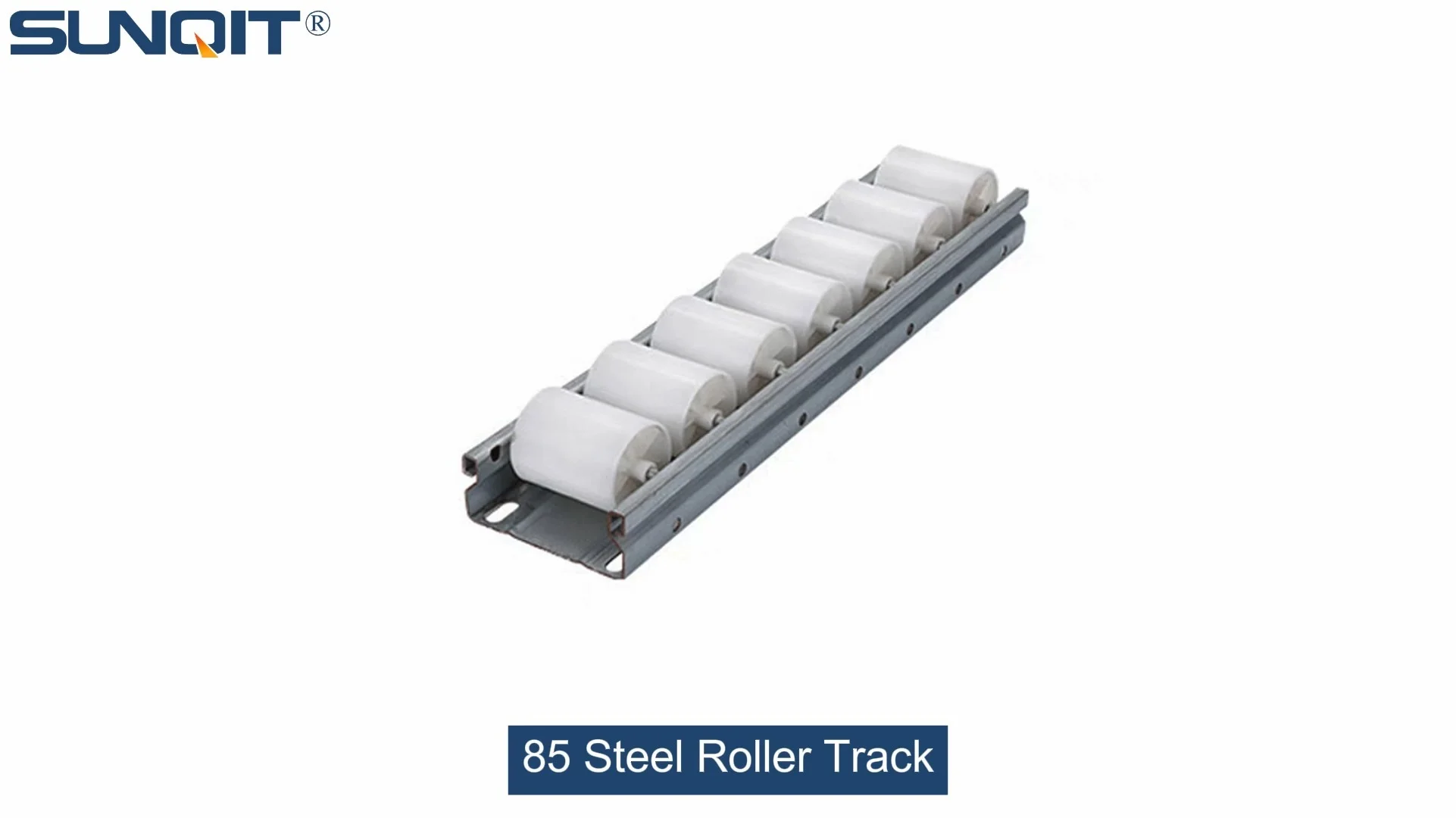
85 Steel Roller Track
85 heavy duty modular system roller track.Its use is focused on the transport of heavy products. Its implantation is carried out by creating a slope for the product to move under the force of gravity.
In the fast-paced world of manufacturing, every component on the production floor plays a critical role in keeping operations running smoothly. Among these, 85 steel roller tracks stand out as workhorses in assembly lines, warehouses, and distribution centers—quietly ensuring materials glide seamlessly from one workstation to the next. Whether integrated into flow rack systems, conveyor setups, or lean workstations, these tracks are the unsung heroes of efficient material handling. But like any hardworking equipment, they're prone to performance hiccups that can slow down production, increase downtime, and even compromise product quality. Let's dive into the most common issues with 85 steel roller tracks, why they happen, and how to fix them—so you can get back to what matters: keeping your operations lean, efficient, and on track.
Understanding 85 Steel Roller Track: What Makes It Essential?
Before we jump into troubleshooting, let's take a moment to appreciate what makes 85 steel roller tracks a staple in modern manufacturing. These tracks are built with durability in mind: the "85" refers to their high carbon steel composition, which balances strength and flexibility—perfect for handling the daily wear of heavy loads and constant motion. Typically found in production assemble lines, flow racks, and conveyor systems, they're designed to minimize friction, allowing bins, pallets, or components to move with minimal effort. From 3C electronics assembly (where precision is key) to automotive parts distribution (where weight matters), 85 steel roller tracks are trusted to keep materials flowing—until they don't. Let's troubleshoot the kinks that can throw a wrench in your workflow.
Common Performance Issues & Step-by-Step Solutions
When 85 steel roller tracks start acting up, the signs are usually clear: jams, strange noises, or uneven movement. Below are the most frequent problems, why they occur, and how to resolve them quickly.
1. Roller Jamming or Sticking
One of the most frustrating issues is when rollers suddenly stop spinning freely, causing materials to get stuck mid-flow. This isn't just an annoyance—it can bring an entire section of your line to a halt. Let's break down the root causes and fixes:
Why it happens:
- Debris buildup: Dust, metal shavings, or product residues get trapped between rollers or in the track channels.
- Lack of lubrication: Over time, roller bearings dry out, increasing friction.
- Bent or damaged rollers: Heavy impacts or overloading can warp individual rollers.
- Misaligned axles: Loose or shifted axles cause rollers to sit unevenly, leading to jams.
How to fix it:
- Inspect and clean: Start by powering down the system (safety first!). Use a soft brush or compressed air to clear debris from between rollers and track crevices. For sticky residues, wipe with a lint-free cloth dampened with mild solvent (avoid harsh chemicals that may damage steel).
- Lubricate bearings: Apply a high-quality, industrial-grade lubricant (like lithium grease) to roller bearings. Spin each roller by hand after lubricating to ensure even distribution—you should feel smooth, resistance-free movement.
- Check for damage: Examine each roller for bends, cracks, or flat spots. replace any damaged rollers immediately (pro tip: keep spare rollers on hand for quick swaps).
- Realign axles: Tighten loose axle nuts or bolts with a torque wrench (follow manufacturer specs to avoid over-tightening). If axles are bent, replace them to ensure rollers sit parallel to the track.
2. Excessive Noise During Operation
A little background hum is normal, but loud clanging, grinding, or squealing from your roller track is a red flag. Not only is it a distraction for workers, but it often signals underlying mechanical stress that can lead to bigger issues down the line.
Why it happens:
- Loose components: Track brackets, support legs, or roller axles vibrate against each other.
- Mismatched or worn rollers: Rollers of different diameters or with worn treads create uneven motion and impact noise.
- Misaligned track sections: Gaps or overlaps between track segments cause materials to "clunk" as they transition.
- Dry or contaminated bearings: Without proper lubrication, metal-on-metal contact creates friction noise.
How to fix it:
- Tighten all fasteners: Walk the length of the track and check every bracket, bolt, and clamp. Use a wrench to snug up loose connections—pay special attention to joints between track sections and where the track mounts to frames or flow rack structures.
- replace worn/worn rollers: Swap out rollers with uneven treads or those that don't spin freely. Ensure all new rollers match the original diameter and material (85 steel) to maintain consistent motion.
- Align track sections: Use a level to check that track segments are flush and even. Adjust support legs or shim under brackets to eliminate gaps. For longer tracks, use a string line as a guide to ensure straight alignment.
- Add vibration dampeners: For persistent noise, consider installing rubber gaskets between track brackets and support frames to absorb vibrations—this is especially useful in high-speed conveyor systems.
3. Inconsistent Material Flow or Slowing
When materials start moving at varying speeds or slow to a crawl, it disrupts the entire production rhythm—leading to bottlenecks and uneven workflow. This is often a sign that the track isn't distributing weight or maintaining momentum as intended.
Why it happens:
- Overloading: Exceeding the track's weight capacity causes rollers to compress or drag.
- Uneven track elevation: Sections that slope upward (even slightly) create resistance, slowing materials.
- Dirty or sticky roller surfaces: Oil, dust, or product buildup on rollers increases friction.
- Worn drive components: In motorized conveyor systems, belts or chains may slip, reducing power to the rollers.
How to fix it:
- Verify load limits: Check the manufacturer's specs for your 85 steel roller track—most are rated for 50-200 lbs per linear foot, depending on roller spacing. If you're consistently exceeding this, consider upgrading to a heavier-duty track or redistributing loads across multiple tracks.
- Level the track: Use a laser level to ensure the track has a consistent, gentle downward slope (for gravity-fed flow racks) or is perfectly flat (for motorized conveyors). Adjust support legs as needed to eliminate upward gradients.
- Clean roller surfaces: Wipe rollers with a degreaser to remove oil or sticky residues. For dusty environments, schedule daily wipe-downs to prevent buildup.
- Inspect drive systems: For motorized tracks, check belts for tension and wear, or chains for rust and tight links. replace or adjust as needed to restore consistent power transmission.
4. Track Misalignment or Warping
Over time, 85 steel roller tracks can shift out of alignment or even warp, especially in environments with temperature fluctuations or heavy, repeated loading. This leads to materials jamming, uneven wear, and increased stress on the entire system.
Why it happens:
- Thermal expansion/contraction: Extreme temperature changes cause steel to expand or shrink, pulling tracks out of alignment.
- Weak support structures: Flimsy or undersized frames can't stabilize the track, leading to sagging or shifting.
- Impact damage: Forklifts, pallet jacks, or dropped heavy objects can bend track rails or knock supports out of place.
- Improper installation: Tracks that weren't secured to the floor or frame with enough fasteners are prone to movement.
How to fix it:
- Assess the extent: Use a straightedge or laser alignment tool to check for bowing, twisting, or sagging along the track's length. Mark areas that are off by more than 1/8 inch—these need immediate attention.
- Reinforce supports: Add additional brackets or cross-braces to weak areas of the support frame. For floor-mounted tracks, ensure anchor bolts are tight and consider adding concrete footings for extra stability.
- Straighten minor bends: For small warps in track rails, use a hydraulic jack or pipe bender (by a trained technician) to gently bend the steel back into shape. Severe warps will require track replacement.
- Add expansion joints: In environments with large temperature swings, install expansion joints every 10-15 feet to allow the track to expand/contract without warping.
5. Electrostatic Discharge (ESD) Issues (In Sensitive Environments)
In industries like 3C assembly or medical device manufacturing, electrostatic discharge (ESD) can damage sensitive components. If your 85 steel roller track is part of an ESD workstation, static buildup on the track itself can be a hidden problem—even if the workstation has ESD mats or wristbands.
Why it happens:
- Insufficient grounding: The track isn't properly bonded to the facility's ESD grounding system.
- Dirty or oxidized surfaces: Dust and corrosion create a barrier, preventing static from dissipating.
- Non-conductive lubricants: Some lubricants insulate rollers, trapping static charge.
How to fix it:
- Test grounding continuity: Use a multimeter to check that the track has a resistance of less than 30 ohms to ground. If not, add grounding straps between the track and a verified earth ground point.
- Clean and treat surfaces: Wipe the track with an ESD-safe cleaner to remove dust and oxidation. Apply a conductive coating if needed to restore conductivity.
- Use conductive lubricants: Switch to ESD-approved lubricants (look for "conductive" or "anti-static" labels) to ensure static can bleed off through rollers and into the track.

Quick Reference: Troubleshooting Table
| Issue | Common Causes | First Steps to Fix | Preventive Action |
|---|---|---|---|
| Roller jamming | Debris, dry bearings, bent rollers | Clean track, lubricate bearings, replace damaged rollers | Daily debris checks, weekly lubrication |
| Excessive noise | Loose fasteners, misaligned sections, worn rollers | Tighten bolts, align tracks, replace worn parts | Monthly fastener inspection, quarterly alignment checks |
| Inconsistent flow | Overloading, uneven track slope, dirty rollers | Reduce load, level track, clean rollers | Post load limits, daily slope checks |
| Track warping | Thermal changes, weak supports, impact damage | Straighten track, reinforce supports, repair damage | Install expansion joints, use heavy-duty frames |
| ESD buildup | Poor grounding, dirty surfaces, non-conductive lube | Test grounding, clean/treat surfaces, use conductive lube | Weekly grounding tests, ESD-safe maintenance supplies |

Preventive Maintenance: Keeping Your Track in Top Shape
The best way to avoid these issues? A proactive maintenance routine that aligns with lean manufacturing principles—focused on "sustainable improvement" and minimizing waste (including downtime waste). Here's a simple schedule to follow:
- Daily: Quick visual inspection for debris, loose parts, or obvious damage. Wipe down rollers in dusty or sticky environments.
- Weekly: Lubricate bearings, check load limits are being followed, test ESD grounding (if applicable).
- Monthly: Tighten all fasteners, check track alignment with a level, inspect roller treads for wear.
- Quarterly: Deep clean track channels, replace any rollers showing early signs of wear, evaluate support structures for stability.
- Annually: Conduct a full system audit—measure alignment, test weight capacity, and consult with a lean solution provider to identify opportunities for upgrades (like adding sensors for predictive maintenance).

Real-World Example: Solving 85 Steel Roller Track Issues in 3C Assembly
Let's look at how a mid-sized 3C electronics manufacturer tackled chronic roller track issues using these troubleshooting steps. Their assembly line for smartphone components relied on 85 steel roller tracks to move circuit boards between workstations, but frequent jams were causing 2-3 hours of downtime weekly.
After following our troubleshooting guide, their team discovered two root causes: 1) Dust from circuit board drilling was clogging roller bearings, and 2) The track had sagged in the middle due to undersized support frames. They implemented daily compressed air cleaning, switched to a higher-temp lubricant (resistant to dust adhesion), and added two additional support legs under the sagging section. Result? Downtime dropped to less than 30 minutes monthly, and the line's overall efficiency improved by 15%—a tangible win for their lean manufacturing goals.
Conclusion: Your Track, Your Productivity
85 steel roller tracks might seem like simple components, but their performance directly impacts your production speed, product quality, and bottom line. By understanding common issues, following systematic troubleshooting steps, and staying ahead with preventive maintenance, you can keep these workhorses running smoothly for years. And when challenges arise that go beyond basic fixes—like designing a custom track system for a new medical device line or upgrading to heavier-duty tracks for automotive parts—remember that lean solution providers specialize in tailoring systems to your unique needs. After all, in manufacturing, every small improvement adds up to big results.