- Company Articles
- Products and Technology
- Installation And Maintenance
- Troubleshooting Common Issues with 4080B EU Standard Aluminum Profile Assemblies

Troubleshooting Common Issues with 4080B EU Standard Aluminum Profile Assemblies
Related Product
4080B EU Standard Aluminum Profile
4080B is a 4.00x8.00 CM fractional 40 series square extrusion T-slot profile with two side open T-slots, each side with 4.00cm face, two side with 8.00cm face. The profile has align-a-grooves to assist in aligning connecting profiles.
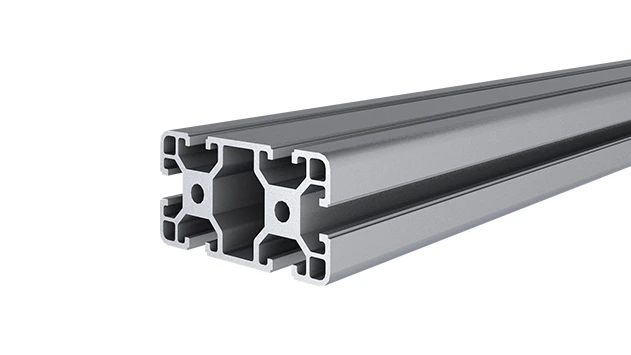
If you've spent any time in a modern workshop, factory, or even a DIY garage, you've probably encountered aluminum extrusion profiles. These modular, T-slot aluminum rails are the unsung heroes of efficient workspace design—they're lightweight yet sturdy, customizable, and adaptable enough to build everything from workbenches and material racks to conveyor systems and machine guards. Among the most popular options in industrial settings is the 4080B EU standard aluminum profile . With its 40mm x 80mm cross-section and standardized slot design, it strikes the perfect balance between load capacity and flexibility, making it a go-to choice for everything from heavy-duty production lines to small-scale assembly stations.
But here's the thing: even the most reliable tools can throw curveballs during assembly. You've unboxed your shiny new profiles, grabbed your aluminum profile accessories , and started building—only to hit a snag. Maybe the holes won't align, the connectors feel loose, or the whole structure wobbles when you test it. Sound familiar? You're not alone. In this guide, we're diving into the most common headaches people face when assembling 4080B EU standard aluminum profiles, why they happen, and how to fix them—no fancy engineering degree required.
1. Misalignment During Profile Joining: When Holes Just Won't Line Up
Picture this: you're trying to connect two 4080B profiles at a 90-degree angle using an aluminum profile connector . You hold them steady, squint to line up the pre-drilled holes, and… nothing. The holes are off by a hair, making it impossible to slide the bolt through. Frustrating, right? Misalignment is hands down the most common issue during assembly, and it can slow down even the most experienced builders.
Why It Happens
Most of the time, misalignment boils down to one of three culprits:
- Manufacturing Tolerances: Even high-quality profiles have tiny variations in hole placement (usually within 0.1-0.3mm). When you're connecting multiple profiles, these small differences add up.
- Damaged Ends: If the profile was dropped or mishandled during shipping, the ends might be slightly bent or dented, throwing off the hole alignment.
- Using the Wrong Connectors: Not all 90-degree connectors are created equal. Some are designed for specific profile sizes, and using a 3030 connector on a 4080B profile (yes, it happens!) will almost always cause misalignment.
How to Fix It
Don't reach for the hammer just yet—there's a smarter way:
- Check for Burrs or Dents: Run your finger along the end of the profile. If you feel a rough spot or a dent, gently file it down with a fine-grit sandpaper. Even a tiny burr can push the profiles out of alignment.
- Use a Guide Pin: insert a temporary "guide pin" (a short bolt or a nail with the head cut off) into one hole to hold the profiles steady while you align the others. Once the pin is in, the rest of the bolts should slide through easily.
- Loosen Nearby Connections: If you're building a larger structure (like a frame with multiple crossbars), some misalignment might come from tension in the existing assembly. Loosen the bolts on adjacent connections slightly to let the profiles "settle" into place, then retighten.
Pro Tip:
Always start with the largest, most stable part of your structure (like the base frame) and work outward. Building from a solid foundation reduces the chance of cumulative misalignment later.
2. Loose Connections: When "Tight" Just Isn't Tight Enough
You've finally aligned the holes, bolted everything together, and stepped back to admire your handiwork. But when you give the structure a gentle shake, something feels off—the joints wobble, and you can hear a faint "rattle" from the connectors. Loose connections aren't just annoying; they can compromise safety, especially if the structure is holding tools, materials, or even people.
Why It Happens
Loose connections are usually a mix of user error and material behavior:
- Under-Tightening: It's easy to stop turning the wrench once the bolt feels "snug," but aluminum profiles need a specific amount of torque to create a secure friction fit. Too little, and the joint will loosen over time.
- Vibration: If your structure is near machinery or foot traffic, constant vibration can slowly loosen bolts—even if they were tight initially.
- Thermal Expansion: Aluminum expands and contracts with temperature changes. In a workshop with fluctuating heat (like near a furnace or air conditioning vent), this movement can wiggle bolts loose.
How to Fix It
The key here is to create a connection that stays tight, even under stress:
- Use a Torque Wrench: Most 4080B profiles use M8 or M10 bolts. Check the manufacturer's specs (usually 15-20 Nm for M8, 25-30 Nm for M10) and use a torque wrench to get it right. Over-tightening can strip the threads, so precision matters!
- Add Lock Washers or Thread Locker: Split lock washers (the ones that look like a bent spring) or liquid thread locker (like Loctite Blue) can prevent bolts from backing out due to vibration. Just don't use thread locker on connectors you might need to disassemble later—it can make removal a nightmare.
- Upgrade to Heavy-Duty Connectors: If standard angle brackets keep loosening, try "reinforced" connectors with larger contact surfaces. They distribute pressure more evenly, reducing the chance of slipping.

3. T-slot Jamming: When Accessories Get Stuck (or Won't Stay Put)
One of the best things about 4080B profiles is their T-slots—those long, narrow channels that let you slide in accessories like brackets, shelves, or tool holders. But what happens when an accessory gets stuck halfway in, or slides around even after you tighten the knob? T-slot jamming (or slipping) can turn a "quick adjustment" into a 20-minute battle with a screwdriver.
Why It Happens
T-slot issues are almost always related to debris or mismatched parts:
- Dust and Grit: If the profile sat in a warehouse or workshop, dust, metal shavings, or even tiny plastic bits can collect in the T-slot, blocking accessories from sliding smoothly.
- Wrong T-nut Size: T-nuts (the small, T-shaped fasteners that slide into the slot) come in different widths. A T-nut for a 30mm profile will be too narrow for a 4080B's slot, causing it to wiggle or slip.
- Damaged T-slot Edges: If the slot's edges are bent or burred (from rough handling), accessories can catch on the imperfections, making them stick.
How to Fix It
Clearing a jammed T-slot is easier than you think:
- Clean the Slot: Use a can of compressed air to blow out debris, then run a soft-bristled brush (like an old toothbrush) along the slot to dislodge stubborn grit. For really dirty slots, wipe with a cloth dampened with isopropyl alcohol.
- Check T-nut Fit: Grab a T-nut and slide it into the slot without tightening. It should move smoothly but not rattle—if there's play, you're using the wrong size. Most 4080B profiles use M6 or M8 T-nuts with a 10mm slot width.
- Smooth the Edges: If the slot edges are bent, gently straighten them with needle-nose pliers. For burrs, use a deburring tool or a piece of fine sandpaper wrapped around a flat stick to smooth the edges.
4. Warping Under Load: When the Profile Bends More Than It Should
You've built a sturdy-looking shelf using 4080B profiles, loaded it with boxes of parts, and… uh-oh. The middle of the shelf sags noticeably. Warping under load is a scary issue because it makes you question the profile's strength—but before you blame the aluminum, let's dig into why it happens.
Why It Happens
4080B profiles are strong, but they're not indestructible:
- Overloading: Every profile has a "maximum span" (how far it can stretch between supports without sagging). For 4080B, the typical max span for a single profile with a 50kg load is around 800mm. Go beyond that, and sagging is inevitable.
- Uneven Weight Distribution: Piling all the weight in the middle of a shelf (instead of spreading it out) puts extra stress on the center of the profile, causing it to bend.
- Thin-Wall Profiles: Some budget 4080B profiles have thinner walls (1.5mm instead of the standard 2mm). Thinner walls mean less rigidity, making them more prone to warping under heavy loads.
How to Fix It
Fixing warping usually involves reinforcing the structure:
- Add More Supports: The easiest fix is to shorten the span by adding a middle support (like a vertical profile under the sagging shelf). For example, if your shelf spans 1200mm, adding a support at 600mm will cut the span in half, drastically reducing sag.
- Redistribute the Load: Move heavy items closer to the supports (the ends of the shelf) instead of piling them in the middle. Evenly distributing weight reduces stress on the profile.
- Upgrade to Thicker Walls: If you're consistently overloading, consider switching to a 4080B profile with a 2mm wall thickness (instead of 1.5mm). The extra material adds rigidity without much extra weight.
5. Compatibility Headaches: Mixing 4080B with Other Profiles
Maybe you're expanding an existing setup and need to connect your 4080B profiles to older 3030 or 4040 profiles. Or perhaps you bought accessories meant for "standard" aluminum profiles, only to find they don't fit. Compatibility issues are common when mixing and matching, but with a little know-how, you can avoid them.
Why It Happens
Aluminum extrusion profiles come in two main standards: EU (metric) and US (imperial). Even within EU standards, there are subtle differences:
- Slot Size Variations: EU profiles like 4080B have standardized slot widths (usually 8mm or 10mm), but some older or off-brand profiles might have slightly different slot sizes, making T-nuts or connectors incompatible.
- Profile Dimensions: A "4080" profile from one brand might measure 40.2mm x 80.1mm, while another measures 39.8mm x 79.9mm. These tiny differences can make connectors designed for a snug fit feel loose or too tight.
- Accessory Design: Some accessories (like corner brackets) are designed for specific profile heights. A bracket for a 4040 profile (40mm tall) will be too short to wrap around a 4080B (80mm tall), leaving gaps in the connection.
How to Fix It
The best way to avoid compatibility issues is to plan ahead, but if you're already stuck:
- Use Adapter Brackets: Many manufacturers sell "transition brackets" that connect different profile sizes (e.g., 4080B to 4040). These brackets have adjustable holes to accommodate size variations.
- Measure Twice, Buy Once: Before purchasing new accessories, measure the slot width (with a caliper if possible) and profile dimensions. Compare them to the accessory's specs—most brands list compatibility on their websites.
- Stick to One Brand (When Possible): If you're building a new structure, using profiles and accessories from the same brand (e.g., Bosch Rexroth, Item, or a reputable local supplier) reduces the risk of compatibility issues.
Troubleshooting Cheat Sheet: Quick Fixes at a Glance
| Issue | Common Cause | Quick Fix | Prevention Tip |
|---|---|---|---|
| Misaligned holes | Manufacturing tolerances or bent ends | File dents, use a guide pin, loosen adjacent connections | Inspect profiles for damage before assembly; build from a stable base |
| Loose connectors | Under-tightening or vibration | Retighten with a torque wrench; add lock washers | Follow torque specs; avoid placing structures near vibrating machinery |
| T-slot jamming | Debris or wrong T-nut size | Clean slot with air/brush; use correct T-nut size | Store profiles in a clean, dry area; check T-nut fit before buying |
| Warping under load | Overloaded span or uneven weight | Add middle supports; redistribute weight | Check max span specs; spread weight evenly across the profile |
| Compatibility issues | Mismatched profile sizes or brands | Use adapter brackets; measure specs before buying | Stick to one brand/standard when possible; verify accessory compatibility |
Final Thoughts: Building with Confidence
At the end of the day, assembling 4080B EU standard aluminum profiles is all about patience and attention to detail. Most issues are fixable with simple tools and a little know-how, and even the most frustrating snags (looking at you, misaligned holes) become easier to handle with experience. Remember: the goal isn't perfection—it's a structure that's safe, sturdy, and works for your needs.
Whether you're building a workbench for your home garage or a production line for a factory, the aluminum extrusion profile is a tool that rewards creativity. With these troubleshooting tips in your back pocket, you can focus on designing something amazing—instead of fighting with the parts. Now go grab your profiles, tighten those bolts, and build something that makes your workspace smarter, safer, and more efficient. You've got this!