- Company Articles
- Products and Technology
- Installation And Maintenance
- Troubleshooting Common Issues with Single Side Aluminum Pipe Connections

Troubleshooting Common Issues with Single Side Aluminum Pipe Connections
Related Product
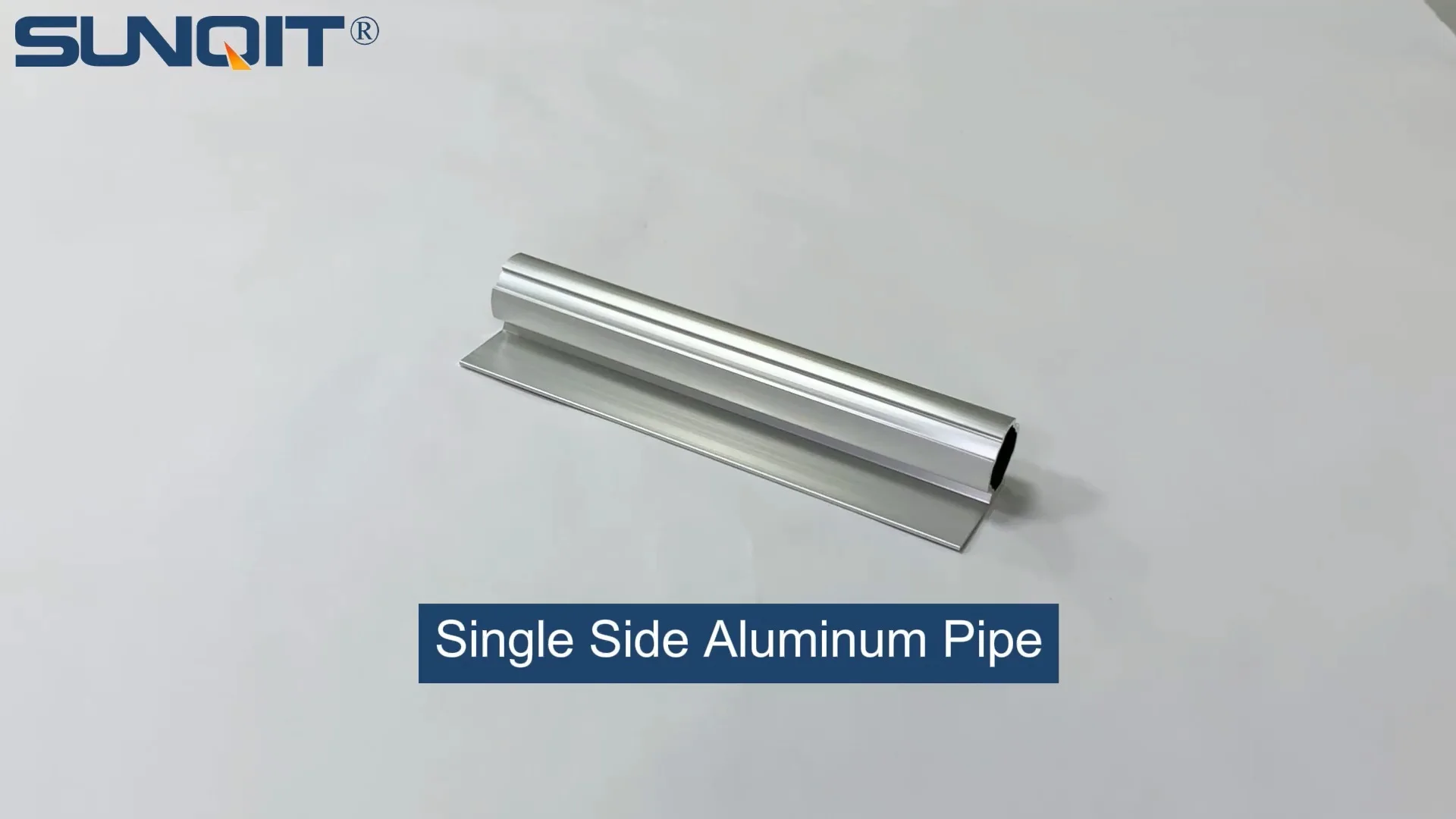
Single Side Aluminum Pipe
The single-sided plane can be installed with a back-mounted material box, and can also be used as a sidewall or partition.
Walk into any modern factory, workshop, or logistics hub, and you'll likely spot a familiar sight: sleek, modular structures built with single side aluminum pipes. From assembly line workbenches to material flow racks and roller track conveyors, these lightweight yet durable pipes have revolutionized lean manufacturing and workspace organization. But here's an open secret in the industry: even the sturdiest aluminum pipe is only as reliable as the connections holding it together. Whether it's a wobbly workbench, a misaligned roller track, or a joint that just won't stay tight, connection issues can bring productivity to a grinding halt. In this guide, we're rolling up our sleeves to tackle the most common problems with single side aluminum pipe connections, why they happen, and how to fix them—so you can keep your operations running smoothly, safely, and efficiently.
Why Single Side Aluminum Pipes Matter (And Why Connections Fail)
Single side aluminum pipes have become a go-to for businesses aiming to balance strength, flexibility, and cost. Unlike rigid steel structures, they're easy to assemble, reconfigure, and transport, making them ideal for dynamic workplaces where layouts change with production needs. But their modularity relies heavily on one critical component: the aluminum pipe joint. These small, often overlooked parts are the glue that holds everything together, and when they fail, the consequences range from minor annoyances (a squeaky trolley) to major hazards (a collapsing material rack).
Over the years, I've worked with dozens of manufacturers, from small-scale workshops to Fortune 500 plants, and the same issues keep popping up. Loose joints, misalignment, instability under load—these aren't just random glitches. They're often the result of common mistakes: rushing assembly, using the wrong accessories, or neglecting basic maintenance. Let's break down the biggest culprits and how to solve them.
Issue #1: Loose Aluminum Pipe Joints—The Silent Productivity Killer
If there's one problem I see more than any other, it's loose aluminum pipe joints. Picture this: you've just assembled a new material rack, and on day one, it's solid as a rock. By week three, though, it's wobbling every time you load a box. What gives? More often than not, the joints connecting the pipes have worked themselves loose—and that's not just annoying. A loose joint can throw off alignment in roller tracks, cause uneven wear on caster wheels, or even lead to the entire structure shifting under load.
Causes of Loose Joints: Let's start with the obvious: under-tightening. It's tempting to hand-tighten joints and call it a day, but aluminum threads (especially on lightweight joints) need precise torque to stay secure. On the flip side, over-tightening is just as bad—cranking down too hard can strip threads or warp the joint, turning a snug fit into a loose one over time. Then there's wear and tear: if you're reusing joints from old setups, the threads might be worn or bent, making a tight connection impossible. Even environmental factors play a role—vibrations from nearby machinery can gradually loosen joints, especially in high-traffic areas like conveyor lines.
Solutions That Actually Work: First, grab a torque wrench. Most aluminum pipe joint manufacturers (yes, even budget brands) provide torque specs—usually between 15-25 Nm for standard joints. Stick to that range, and you'll avoid stripping or under-tightening. If you're dealing with vibrations, add a drop of thread locker (blue, not red—you'll want to disassemble later!) to the threads before tightening. For joints that just won't hold, inspect the threads: if they're crossed or worn, replace them. It's a small cost compared to the downtime of a failed structure.
Pro Tip: Not all joints are created equal! If your setup handles heavy loads (think 500+ kg), skip the standard plastic or light aluminum joints and opt for heavy-duty steel-reinforced ones. I recently helped a automotive parts shop that was using basic plastic joints on a 800-kg capacity trolley—switching to steel-core aluminum pipe joints eliminated their loose joint issues overnight.

Issue #2: Misalignment During Assembly—When Straight Lines Go Crooked
Ever spent hours assembling a workbench, only to step back and realize one side is higher than the other? Or noticed that items on your roller track keep veering off to one side? Misalignment is another common headache with single side aluminum pipes, and it's usually a result of small mistakes during setup that add up.
Why Misalignment Happens: Start with the basics: measuring errors. If you cut pipes even 5mm too short (or long) on one side, the entire structure will lean. Uneven floors are another culprit—most workshops aren't perfectly level, and a 1° slope can throw off alignment in longer setups. Bent pipes are a silent enemy too: if your aluminum pipe got dropped or stored improperly, it might have a slight curve you can't see with the naked eye, leading to a wonky assembly. Even something as simple as using the wrong aluminum profile accessories can cause issues—using a fixed 90° joint where an adjustable one is needed, for example, leaves no room to correct small misalignments.
Getting Things Straight: Start with a dry fit. Before tightening any joints, assemble the entire structure loosely—pipes in joints, no torque. Then, grab a spirit level and check for plumb (vertical) and level (horizontal) alignment. Most aluminum profile accessories, like angle brackets or T-connectors, have slotted holes for a reason—use them to adjust pipes up, down, left, or right until everything is straight. For uneven floors, use adjustable feet (most workbench kits include them) to raise or lower individual legs. And if you suspect a bent pipe, roll it on a flat surface—if it wobbles, replace it. It's better to spend an extra 10 minutes checking than to rebuild the entire setup later.
For roller track systems, alignment is even trickier. A 1mm difference in height between track sections can cause items to jam or slide off. Here's where roller track placon mount comes in—these small brackets secure the track to the aluminum profile, and many are adjustable. Use a laser level to align the track sections, then lock the placon mounts down. Trust me, your future self (and your production team) will thank you.

Issue #3: Instability in Load-Bearing Setups—When Your Structure Can't Keep Up
You've tightened the joints, aligned the pipes, and your new workbench looks perfect. Then you load it with tools and parts—and suddenly, it's swaying like a leaf in the wind. Instability is a big issue in load-bearing setups, and it's rarely caused by a single problem. More often, it's a combo of weak support, wrong accessories, and overestimating what your aluminum pipes can handle.
What's Weighing You Down: Let's start with support. A single side aluminum pipe structure is only as stable as its base. If you're using a workbench with four legs but no cross-braces, it'll wobble under lateral force (like pushing a heavy box across the surface). Then there are caster wheels—using lightweight, plastic caster accessories on a setup that carries 300+ kg is a recipe for disaster. Those wheels will flex, the base will shift, and suddenly your "stable" trolley is a hazard. Overloading is another culprit: just because a pipe is rated for 200 kg per linear meter doesn't mean the entire structure can handle 10x that. Always factor in dynamic loads too—if you're rolling a trolley over uneven floors, the load spikes with every bump.
Stabilizing Solutions: First, add cross-braces. Even a simple diagonal brace between two vertical pipes can double stability. For mobile setups (trolleys, rolling workbenches), upgrade to heavy-duty caster accessories—look for steel frames and rubber wheels rated for at least 1.5x your maximum load. If you're using roller tracks, the roller track placon mount isn't just for alignment—it also adds support. Mounting the track to the aluminum profile with high placon mounts (instead of flat ones) raises it off the surface, reducing flex and improving stability.
| Scenario | Common Mistake | Fix |
|---|---|---|
| Workbench wobbling under tools | No cross-braces; plastic casters | Add diagonal cross-braces; switch to steel caster accessories |
| Roller track sagging in the middle | Too few placon mounts | Add center support roller track placon mount brackets |
| Trolley tipping when loaded | Top-heavy design; small caster base | Widen the base; use larger caster wheels (at least 5-inch diameter) |

Issue #4: Corrosion and Wear—When Aluminum Starts to Break Down
Aluminum is naturally resistant to corrosion, but that doesn't make it invincible. I've seen shiny new aluminum pipe setups turn dull and pitted in months, all because of overlooked environmental factors. Corrosion isn't just ugly—it weakens joints, causes friction in moving parts (like roller tracks), and can even lead to sudden failure.
What's Eating Away at Your Pipes? Moisture is the biggest villain. If your workshop is in a humid area (looking at you, coastal factories) or deals with liquids (like automotive or food processing), condensation can build up in joints, leading to oxidation. Chemicals are another threat—oils, solvents, or cleaning agents can strip the aluminum's natural oxide layer, leaving it vulnerable. Even friction plays a role: if you're sliding heavy items along uncoated aluminum pipes, the constant rubbing can wear away the surface, exposing fresh metal to corrosion.
Fighting Back Against Corrosion: Start with the right materials. If you're in a high-moisture area, use stainless steel or anodized aluminum pipe joints—they're pricier, but they'll outlast standard aluminum by years. For moving parts like roller tracks, apply a thin coat of silicone lubricant every month to reduce friction and repel moisture. Regular cleaning helps too—wipe down pipes and joints with a mild detergent (avoid harsh chemicals!) and dry thoroughly. If you spot early signs of corrosion (white or gray powder on joints), sand it off with fine-grit sandpaper and apply a clear protective coating.
Issue #5: Compatibility Headaches with Aluminum Profile Accessories
Here's a scenario I hear all the time: "I bought aluminum pipes from Brand A, joints from Brand B, and roller track placon mount from Brand C—why won't anything fit?" Mixing and matching accessories might seem like a money-saver, but it's a common cause of connection issues. Aluminum profile accessories (joints, brackets, placon mounts) aren't universal, and even small differences in size or design can turn assembly into a nightmare.
Why Compatibility Matters: Let's take pipe diameter: a "30mm" pipe from one brand might actually be 29.8mm, while another's is 30.2mm. That tiny difference means a joint that fits snugly on one will be loose or too tight on the other. Threads are another issue—some brands use metric threads (M8), others use imperial (5/16"), and forcing a mismatched joint can strip threads or crack the pipe. Even roller track placon mount can be problematic: a "flat" mount from Brand X might have a different hole spacing than Brand Y's aluminum profile, making it impossible to secure without drilling new holes (which weakens the profile).
Sticking to a System: The easiest fix? Buy all your aluminum profile accessories from the same manufacturer as your pipes. Most brands (like Bosch Rexroth, Item, or even budget-friendly ones like Misumi) design accessories to work seamlessly with their pipes. If you must mix brands, check the specs: pipe diameter (OD and ID), thread size, and hole spacing on brackets/placon mounts. For roller track placon mount, look for universal designs—some manufacturers make mounts that fit both 20x20 and 30x30 profiles, saving you the hassle of returns.
Preventive Maintenance—Stopping Issues Before They Start
Troubleshooting is important, but the best way to avoid connection issues is to prevent them in the first place. A little maintenance goes a long way, and it doesn't have to be time-consuming. Here's a quick checklist to keep your single side aluminum pipe connections in top shape:
- Weekly Inspections: Walk around your setups and check for loose joints (give them a gentle wiggle—if they move, retighten). Look for signs of corrosion or bent pipes.
- Monthly Cleaning: Wipe down pipes, joints, and roller tracks with a damp cloth to remove dust and grime. Lubricate moving parts (caster wheels, roller tracks) with silicone spray.
- Quarterly Torque Checks: Use a torque wrench to retighten all joints—vibrations loosen even the best-tightened connections over time.
- Seasonal Overhauls: Once a year, disassemble and inspect high-use setups (like conveyor roller tracks). replace worn joints, bent pipes, or cracked placon mounts.
Final Thoughts: Your Connections Are the Foundation—Treat Them Like It
Single side aluminum pipes are a game-changer for flexible, efficient workspaces—but their success hinges on strong, reliable connections. Loose aluminum pipe joints, misalignment, instability, corrosion, and compatibility issues are all solvable with the right tools, knowledge, and a little proactive maintenance. By taking the time to torque joints properly, use the right aluminum profile accessories (like heavy-duty caster accessories and roller track placon mount), and inspect regularly, you'll keep your structures solid, your team safe, and your productivity high.
Remember: a single loose joint might seem minor today, but tomorrow it could be the difference between a smooth shift and a costly shutdown. So grab that torque wrench, check those joints, and build connections that last.