- Company Articles
- Products and Technology
- Installation And Maintenance
- Troubleshooting One Way Rotatory Straight Lean Pipe Joint Issues: Common Fixes

Troubleshooting One Way Rotatory Straight Lean Pipe Joint Issues: Common Fixes
Related Product
One Way Rotatory Straight Lean Pipe Joint
Two way lean pipe joint for 2 pcs 28MM lean pipe connection in straight angle with rotatory fucntion, which used widely in workbench, flow rack, hand trolley frame connection.
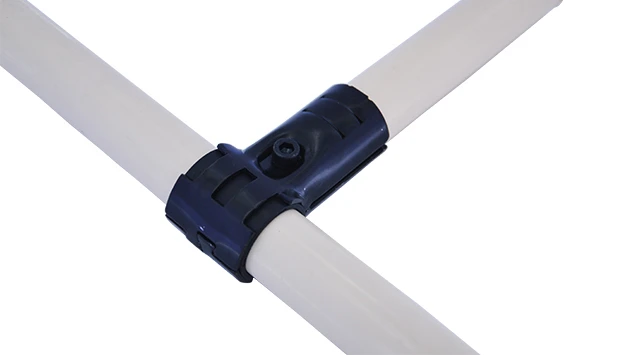
If you've ever stood in a bustling factory, watching assembly lines hum or workbenches stay steady, you've witnessed the quiet heroes of lean systems: lean pipe joints. These unassuming components—small, often metallic, and designed to connect pipes—are the backbone of everything from flow racks to turnover trolleys. Among them, the one way rotatory straight lean pipe joint chrome stands out for its unique role: enabling controlled, one-directional rotation while maintaining the rigidity needed for heavy loads. But like any hardworking tool, it's prone to glitches. A seized joint can slow a production line to a crawl; a wobbly connection can compromise safety. In this guide, we'll walk through the most common issues with these joints, why they happen, and how to fix them—so you can keep your lean system running smoothly, no matter the challenge.
First, Let's Get to Know the One Way Rotatory Straight Lean Pipe Joint Chrome
Before diving into fixes, it helps to understand what makes this joint tick. The one way rotatory straight lean pipe joint chrome is engineered for precision. Its name breaks down its purpose: "one way rotatory" means it rotates freely in one direction but locks in the other, preventing backsliding; "straight" refers to its linear pipe connection; "chrome" denotes its protective finish, which resists corrosion and adds durability. Inside, it's a clever mix of parts: a chrome-plated steel body, a rotating sleeve with internal bearings, a spring-loaded locking mechanism, and a threaded base for securing to pipes. When installed correctly, it handles loads up to 50kg, making it ideal for moving parts along flow racks or adjusting workbench angles in real time.
What makes it indispensable in lean systems ? Imagine an electronics assembly line where circuit boards need to glide from one station to the next—too fast, and components might jostle loose; too slow, and workers wait idle. This joint controls that motion, letting parts move forward smoothly but stopping them from sliding back. It's the reason your team can trust the line to stay efficient, even during high-pressure shifts.
The Top 5 Issues Users Face (And Why They Happen)
Even the best-designed parts run into trouble. From daily wear to improper installation, here are the problems technicians and plant managers report most often with one way rotatory straight lean pipe joint chrome components:
1. Seized Rotation: "It Just Won't Turn"
The most frustrating problem: you try to rotate the joint, and it's stuck—stiff as a rusted gate. This usually happens when debris (dust, grease, metal shavings) builds up in the rotating sleeve, gumming up the works. In humid environments, even the chrome finish can't always prevent tiny amounts of corrosion from forming between the sleeve and the joint body. Over time, that corrosion acts like sandpaper, making rotation harder until it seizes entirely.
2. Excessive Wobble: "It Feels Like It's Going to Break"
A little movement is normal, but if the joint rocks or shifts when you touch it, something's wrong. Wobble often starts with loose connections: maybe the pipe wasn't tightened enough during installation, or the threads on the joint are worn. Another culprit? Damaged internal bearings. These small, smooth components let the sleeve rotate; if they crack or wear down, the joint loses stability. Left unchecked, wobble can spread to the entire structure—think a flow rack that sways when you load a box, risking damage to both the rack and the materials.
3. Chrome Peeling or Flaking: "The Finish Is Coming Off"
The chrome coating on these joints isn't just for looks—it's a shield. When it peels, the underlying metal is exposed to moisture, chemicals, and friction, accelerating rust and wear. Peeling often starts with impact damage: a dropped tool, a heavy cart bumping the joint, or even over-tightening during installation (which can crack the chrome). In factories with high humidity or frequent cleaning with harsh detergents, the chrome may also degrade over time, especially if the joint isn't dried properly after washing.
4. Locking Mechanism Failure: "It Rotates Both Ways Now"
The "one way" in the joint's name is non-negotiable. If it starts rotating backward, the locking mechanism is failing. Inside the joint, a small spring or pawl (a tiny, tooth-like piece) catches on notches to stop reverse rotation. If the spring weakens (from overuse or age), or the pawl gets bent or clogged with debris, the lock slips. Suddenly, parts on a flow rack might slide backward, causing jams or even collisions. This isn't just an efficiency issue—it's a safety risk for anyone near the line.
5. Incompatibility with Pipes: "It Just Doesn't Fit Right"
This one's often a surprise: you buy a new joint, try to attach it to your existing lean pipe, and it's either too loose or too tight. Why? Lean pipes come in different diameters (1.5mm, 2.0mm, etc.), and joints are designed to match specific sizes. If you mix a 2.0mm joint with a 1.5mm pipe, the fit will be loose. Conversely, forcing a small-diameter joint onto a thick pipe can warp the joint's opening, ruining it for future use. Even slight mismatches cause stress—imagine wearing shoes that are two sizes too big; you'll stumble, and eventually, the shoes (or your feet) will break down.

Quick Reference: Common Issues & Fixes
| Issue | Key Symptoms | Tools You'll Need | Step-by-Step Fix |
|---|---|---|---|
| Seized Rotation | Joint won't rotate; feels stiff or "sticky" | Wire brush, degreaser (e.g., WD-40), lithium grease, cloth | 1. Disconnect the joint from the pipe (use a hex key if needed). 2. Scrub the rotating sleeve and joint body with a wire brush to remove debris. 3. Spray degreaser into the gap between the sleeve and body; let sit 5 minutes. 4. Wipe clean, then apply a thin layer of lithium grease to the sleeve. 5. Reconnect and test rotation—should move smoothly now. |
| Excessive Wobble | Joint rocks/shifts; loose when touched | Hex key set, thread locker (e.g., Loctite), replacement bearings (if needed) | 1. Tighten the pipe connection with a hex key—don't over-tighten (snug but not forced). 2. If wobble continues, disassemble the joint (check manufacturer instructions) and inspect bearings. 3. replace cracked/worn bearings with new ones. 4. Apply thread locker to the pipe threads before reconnecting to prevent future loosening. |
| Chrome Peeling | Flaking chrome; exposed metal underneath | Fine-grit sandpaper, rust remover, chrome spray paint (optional) | 1. Sand the peeling area gently to remove loose chrome and rust. 2. Apply rust remover with a cloth; let sit 10 minutes, then wipe clean. 3. For minor damage: touch up with chrome spray paint (light coats, let dry 24 hours). For severe peeling: replace the joint (extensive damage means corrosion has spread internally). |
| Locking Mechanism Failure | Joint rotates backward; no "click" when rotating forward | Small flathead screwdriver, replacement spring/pawl (check joint specs) | 1. Disassemble the joint carefully (use a screwdriver to pry open the casing if needed). 2. Locate the spring and pawl—look for cracks, bends, or debris. 3. Clean debris with a toothbrush; replace broken springs/pawls with new parts. 4. Reassemble and test: Rotate forward (should move freely) and backward (should lock firmly). |

Deep Dive: Fixing the Toughest Problems
Some issues need more than a quick fix. Let's break down solutions for the most stubborn problems, with tips to avoid repeat headaches.
Fixing a Severely Seized Joint (When Basic Cleaning Doesn't Work)
If degreaser and a wire brush don't free up a seized joint, it's time for a deeper clean. Start by submerging the joint (disconnected from pipes) in a container of white vinegar or a commercial rust dissolver. Let it soak overnight—the acid will eat away at corrosion without damaging the metal. The next day, use a small brush (like a toothbrush) to scrub the rotating sleeve and body. If it still won't move, gently tap the joint with a rubber mallet while rotating the sleeve—this can loosen stuck debris. Once it rotates, dry it thoroughly and apply a heavy-duty lubricant (like graphite grease) to keep it moving smoothly. Pro tip: Avoid using oil-based lubricants in dusty environments—they attract dirt, which can cause re-seizing.
Stopping Wobble at the Source: Reinforcing Weak Connections
Wobble often starts with the pipe itself. If the pipe is bent (even slightly), it will throw off the joint's alignment. Use a pipe straightener tool to fix bends before reattaching the joint. For joints that still wobble after tightening, add a lean pipe clamp (another key component in lean systems) near the joint. These clamps wrap around the pipe and joint, adding extra stability. Make sure the clamp is compatible with your pipe diameter—too small, and it will crack; too large, and it won't grip. Finally, check the surface where the joint is mounted (e.g., a workbench or rack). If the surface is uneven, shim it with a thin metal plate to create a flat base—this prevents the joint from tilting and wobbling over time.
Preventing Chrome Damage (Before It Starts)
The best way to deal with peeling chrome is to avoid it. Start by handling joints carefully—no dropping, and use padded gloves when moving them. During installation, tighten pipes with a torque wrench (most manufacturers recommend 15-20 Nm for these joints) to avoid over-stressing the chrome. In humid areas, wipe joints down weekly with a dry cloth to remove moisture. For factories that use pressure washers or harsh cleaners, cover joints with plastic caps during cleaning, then remove and dry them afterward. If you notice small chips in the chrome early, seal them with clear nail polish—this stops moisture from seeping in and causing further damage.
Preventive Maintenance: Keep Your Joints Happy Long-Term
Fixing problems is necessary, but preventing them saves time, money, and frustration. Here's a simple maintenance routine to extend the life of your one way rotatory straight lean pipe joint chrome :
- Daily Check: Spend 30 seconds inspecting joints during your morning walkthrough. Look for wobble, rust, or peeling chrome. If something feels off, mark it for repair before it worsens.
- Weekly Clean & Lubricate: Wipe joints with a dry cloth to remove dust. Apply a light coat of silicone lubricant to the rotating sleeve—silicone resists dust and moisture better than oil-based lubes.
- Monthly Tightening: Use a hex key to snug up pipe connections. Vibration from machinery can loosen threads over time, so a quick tighten prevents wobble.
- Quarterly Deep Clean: Disassemble one joint per section (rotate which one each quarter) to check for internal debris or wear. Clean parts with degreaser and replace any worn components (bearings, springs) proactively.
- Annual Replacement Plan: Even with perfect care, joints wear out. Plan to replace high-use joints (those on assembly lines or heavy-load flow racks) every 2-3 years. Keep spares in stock so you're not stuck waiting for replacements during a breakdown.
Real-World Story: How a Small Fix Saved a Production Line
Let's talk about a scenario we've seen too often: A mid-sized automotive parts plant was struggling with delays. Their main assembly line, which used one way rotatory straight lean pipe joint chrome components on the flow rack, kept jamming. Parts would get stuck halfway down, forcing workers to stop and manually push them—costing 10-15 minutes per hour, every hour. The team initially blamed the parts (too heavy, they thought), but after checking the joints, they found the real issue: seized rotation. Years of dust and occasional oil spills had gummed up the sleeves.
Following the steps above, they disassembled the joints, soaked them in vinegar overnight, and scrubbed out the debris. They then lubricated each joint with lithium grease and tightened the pipe connections. The result? The line started moving again—no more jams, no more manual pushing. Over a month, those saved 15 minutes per hour added up to 60 extra production hours. For a plant running two shifts, that meant completing 300 more orders than the previous month. All from a few hours of cleaning and lubrication.
Conclusion: Your Lean System Deserves Reliable Joints
The one way rotatory straight lean pipe joint chrome might be small, but its impact on your lean system is huge. When it works, it's invisible—just another part of the background, keeping things moving. When it fails, it's impossible to ignore. By understanding the common issues, fixing them quickly, and sticking to a maintenance routine, you can keep these joints (and your entire operation) running at peak efficiency. Remember: Every minute spent troubleshooting a seized joint is a minute your team isn't building, creating, or delivering. Invest in the small fixes today, and you'll avoid the big headaches tomorrow.
So grab your wire brush, check those joints, and let's keep your lean system strong—one rotation at a time.