- Company Articles
- Products and Technology
- Product knowledge
- Turning Angle Code 2020: A Key Factor in Lean Tube System Cost Reduction

Turning Angle Code 2020: A Key Factor in Lean Tube System Cost Reduction
Related Product
Urning Angle Code 2020
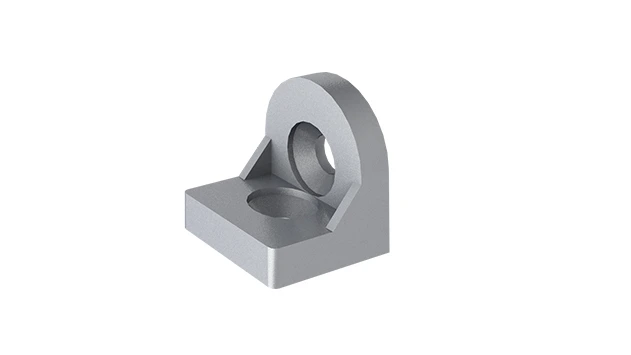
The turning angle aluminum profile connector provides a 90 degree hidden corner connection. 2020 it is means this size is used for 20 series aluminum profile.The corner code comes with set screws that allow for quick, easy connections.
In today's fast-paced manufacturing world, every decision boils down to one question: How do we do more with less? From the factory floor to the boardroom, efficiency isn't just a buzzword—it's the lifeblood of staying competitive. Lean manufacturing systems have long been the answer for companies looking to trim waste, streamline workflows, and keep costs in check. But here's the thing: even the most well-designed lean system is only as strong as its smallest components. That's where the Turning Angle Code 2020 comes into play. This unassuming yet powerful piece might not grab headlines, but for those in the know, it's a quiet game-changer in the quest to reduce costs without sacrificing quality.
If you've ever walked through a production facility, you've probably seen the backbone of lean systems in action: workbenches where assembly lines hum, flow racks that keep materials moving, and aluminum profiles that frame everything from conveyor belts to storage solutions. These systems rely on precision—every joint, every bracket, every connection must hold up under daily use while allowing for quick adjustments. And that's exactly where the Turning Angle Code 2020 shines. It's not just a part; it's a cost-saving catalyst that ripples through every stage of a lean tube system's lifecycle, from initial setup to long-term maintenance.
What Even Is the Turning Angle Code 2020?
Let's start with the basics. The Turning Angle Code 2020 is a specialized connector designed for use with 2020 aluminum profiles—the workhorses of modern lean tube systems. Think of it as a highly efficient "cornerstone" that joins two or more aluminum tubes at precise angles (hence the "turning angle" in the name), ensuring stability while keeping assembly quick and flexible. Unlike generic brackets that might require custom modifications or multiple parts to get the job done, this code is engineered for one primary goal: to make building and reconfiguring lean systems as seamless as possible.
What sets it apart? For starters, its design is laser-focused on compatibility. 2020 aluminum profiles are a standard in the industry, known for their lightweight yet durable nature, and the Turning Angle Code 2020 is tailor-made to fit these profiles like a glove. No more forcing ill-fitting parts or wasting time on adjustments—this connector slides into place and locks securely, often with nothing more than a hex key or even by hand for some models. Its compact size also means it doesn't add unnecessary bulk, keeping the overall system lightweight and reducing material waste.
Real Talk: Imagine you're setting up a new workbench for a small electronics assembly line. You need it to be sturdy enough to hold tools and components but also easy to reconfigure if your production needs change next quarter. Using a generic angle bracket might require drilling extra holes, adding washers to tighten the fit, or even ordering a custom part if the angle isn't standard. With the Turning Angle Code 2020? You align the 2020 aluminum profiles, slot the code into the T-slot of the profile, tighten the screw, and you're done. That's 10 minutes instead of an hour—and less frustration, too.
The Lean Tube System Landscape: Why Every Penny Counts
To understand why the Turning Angle Code 2020 matters, let's zoom out and look at the bigger picture: lean tube systems themselves. These systems are the backbone of lean manufacturing, designed to eliminate waste (think excess inventory, unnecessary movement, or downtime) by creating flexible, modular workspaces. They include everything from simple workbenches to complex material handling setups with roller tracks and conveyors. The magic of lean tube systems lies in their adaptability—they can be built, taken apart, and rebuilt in hours, not days, allowing factories to pivot quickly as production needs shift.
But here's the catch: building and maintaining these systems can get expensive. Aluminum profiles, connectors, casters, and accessories add up, and labor costs for assembly and reconfiguration can eat into profit margins. That's why manufacturers are always on the hunt for components that do more with less—parts that reduce material usage, cut down on installation time, and last longer. Enter the Turning Angle Code 2020. It addresses all three of these cost drivers, making it a secret weapon for operations managers and facility planners.

How Turning Angle Code 2020 Drives Cost Reduction: The Three Big Wins
1. Material Savings: Less Waste, More Value
Let's start with the most obvious cost factor: materials. Traditional angle brackets or connectors often require extra hardware—think bolts, washers, or even custom spacers—to work with aluminum profiles. Each of these adds weight, cost, and complexity. The Turning Angle Code 2020, by contrast, is a "one-and-done" solution. Its integrated design means it connects directly to 2020 aluminum profiles without the need for additional parts. That might sound small, but multiply that by hundreds (or thousands) of connections in a single facility, and the savings add up fast.
Take, for example, a standard workbench assembly. A typical 6-foot workbench might use 8–10 angle brackets to connect the frame. With traditional brackets, each might require 2–3 bolts and washers. That's 16–30 extra pieces of hardware per workbench. The Turning Angle Code 2020? It uses a single locking mechanism per connection, eliminating the need for those extra parts. Over time, this reduces not just the cost of hardware but also the storage space needed to keep track of all those small pieces—and let's not forget the time saved by not hunting for missing washers or bolts during assembly.
But it's not just about fewer parts. The Turning Angle Code 2020 is also engineered to maximize the strength of the aluminum profiles themselves. By distributing weight evenly across the profile's T-slot (the groove that runs along the length of the aluminum), it reduces the risk of stress fractures or bending. This means facilities can sometimes use lighter-gauge aluminum profiles without compromising stability, cutting down on material costs even further. When you're ordering hundreds of feet of aluminum per project, switching from a 1.5mm thick profile to a 1.2mm profile (thanks to stronger connections) can slash material expenses by 15–20%.
2. Labor Efficiency: Time Is Money, and This Saves Both
If there's one thing more valuable than raw materials in manufacturing, it's labor. Every minute a worker spends fumbling with a stubborn bracket is a minute they're not adding value to the production line. The Turning Angle Code 2020 is a labor-saving superhero in this regard, and here's why: it's fast to install.
Traditional connectors often require precise alignment, multiple tools, and even two people to hold parts in place while tightening. The Turning Angle Code 2020, designed with ergonomics in mind, can often be installed by a single worker in under a minute per connection. Its T-slot compatibility means it slides into place easily, and the locking mechanism—usually a simple cam lever or hex screw—tightens quickly without the need for torque wrenches or specialized equipment. For a facility building 50 workbenches, that's hours (if not days) of saved labor compared to using older-style brackets.
But the labor savings don't stop at initial setup. Lean systems are all about adaptability—what works for a production line today might need to change next month when a new product is introduced. Reconfiguring a traditional system can mean disassembling brackets, removing bolts, and potentially damaging parts in the process. The Turning Angle Code 2020, however, is designed for quick disassembly. Loosen the locking mechanism, slide it off the profile, and reattach it in the new configuration—no damage, no hassle. This makes it easy to repurpose workbenches, adjust flow racks, or even relocate entire sections of a lean system with minimal downtime. In manufacturing, downtime is expensive; anything that reduces it is pure gold.
3. Durability: Less Maintenance, Longer Lifespan
Cost reduction isn't just about saving money upfront—it's about avoiding costs down the line. A cheap bracket that breaks after six months might seem like a good deal at first, but replacing it, fixing the damage it causes, and dealing with production delays? That's a budget killer. The Turning Angle Code 2020, made from high-grade aluminum or reinforced plastic (depending on the application), is built to last. Its robust design resists corrosion, withstands daily wear and tear, and holds tight even under heavy loads—think toolboxes, machinery, or stacks of materials on a workbench.
Consider a flow rack used in a warehouse, where boxes and components slide down roller tracks all day long. The connections holding the rack together take constant stress as materials shift and impact the structure. A weak bracket might start to loosen, leading to a wobbly rack that could eventually collapse. The Turning Angle Code 2020's secure locking mechanism ensures the connections stay tight, reducing the need for frequent inspections and repairs. Over years of use, this translates to fewer maintenance calls, less replacement hardware, and a lower risk of costly accidents or damage to inventory.
A Real-World Example: How One Factory Cut Costs by 12%
Let's put this into perspective with a hypothetical (but realistic) scenario. A mid-sized electronics manufacturer with 50 workbenches and 20 flow racks decided to upgrade their lean tube system using Turning Angle Code 2020 connectors. Here's what happened:
- Material Costs: By eliminating extra hardware and using fewer parts per connection, they reduced their annual aluminum and hardware spending by $8,500.
- Labor Costs: Assembly time for new workbenches dropped from 2 hours to 1 hour per unit, saving 50 hours of labor (worth ~$1,500) for every 50 workbenches built.
- Maintenance Costs: Over two years, they reported 60% fewer loose connections or broken brackets, cutting repair costs by $3,200 annually.
Total savings? Over $13,000 in the first year alone, with ongoing savings as they expanded their use of the Turning Angle Code 2020. For a company with tight margins, that's the difference between hitting quarterly targets and falling short.

Putting It All Together: How Turning Angle Code 2020 Fits Into the Lean Ecosystem
The Turning Angle Code 2020 doesn't work in isolation—it's part of a larger ecosystem of lean tube system components, from aluminum profiles to roller tracks to workbenches. Its real power lies in how seamlessly it integrates with these parts, creating a system that's greater than the sum of its components.
Take the humble workbench, for instance. A typical lean workbench uses 2020 aluminum profiles for the frame, a plywood or metal top, and casters for mobility. The Turning Angle Code 2020 connects the vertical and horizontal profiles at the corners, ensuring the frame is square and stable. But because it's so easy to adjust, workers can add shelves, tool holders, or even overhead racks by simply adding new connections—no need to rebuild the entire bench. This flexibility makes the workbench adaptable to different tasks, reducing the need to buy multiple specialized benches for different jobs.
Or consider flow racks, which rely on gravity to move materials from "pick" to "pack" stations. The racks are angled slightly to let items slide down roller tracks, and the frame must be sturdy enough to handle the weight of stacked boxes. The Turning Angle Code 2020 ensures the angles are precise (no more items getting stuck due to a wobbly rack) and the connections are strong enough to support the load. And if the production line changes—say, switching to larger boxes that need a steeper angle? The code makes it easy to adjust the rack's slope without rebuilding it from scratch.
Traditional vs. Modern: A Side-by-Side Comparison
Still not convinced? Let's break down the differences between using traditional connectors and the Turning Angle Code 2020 in a typical lean tube system setup. The table below compares key factors that impact cost, efficiency, and usability:
| Factor | Traditional Connectors/Brackets | Turning Angle Code 2020 |
|---|---|---|
| Hardware Required | Multiple bolts, washers, and spacers per connection | Single integrated locking mechanism; no extra hardware |
| Assembly Time per Connection | 3–5 minutes (aligning, bolting, tightening) | 30–60 seconds (slides into T-slot, locks in place) |
| Reconfiguration Ease | Difficult; often requires disassembly and new hardware | Simple; unlock, reposition, and relock in minutes |
| Durability/Lifespan | Prone to loosening; extra hardware can corrode or strip | Corrosion-resistant; secure lock prevents loosening |
| Total Cost (Hardware + Labor + Maintenance) | Higher upfront and long-term costs | 20–30% lower total cost over 3–5 years |
The numbers speak for themselves. The Turning Angle Code 2020 isn't just a better mousetrap—it's a smarter way to build lean systems that grow with your business while keeping costs under control.
Final Thoughts: The Small Part That Makes a Big Difference
In the world of manufacturing, it's easy to focus on the big-ticket items: new machinery, automated systems, or high-tech software. But as any seasoned operations manager will tell you, the little things often have the biggest impact. The Turning Angle Code 2020 is one of those little things. It's a reminder that cost reduction isn't about cutting corners—it's about choosing the right tools for the job. By streamlining assembly, reducing material waste, and standing the test of time, this unassuming connector helps lean tube systems deliver on their promise: efficiency, flexibility, and affordability.
So the next time you're evaluating your lean system, take a closer look at the connections holding it all together. You might just find that the key to lower costs, happier workers, and a more competitive business is hiding in plain sight—right there in the Turning Angle Code 2020.