- Company Articles
- Products and Technology
- Solution
- Turning Angle Code 2020: A Must-Know for Custom Lean Solution Designers

Turning Angle Code 2020: A Must-Know for Custom Lean Solution Designers
Related Product
Urning Angle Code 2020
The turning angle aluminum profile connector provides a 90 degree hidden corner connection. 2020 it is means this size is used for 20 series aluminum profile.The corner code comes with set screws that allow for quick, easy connections.
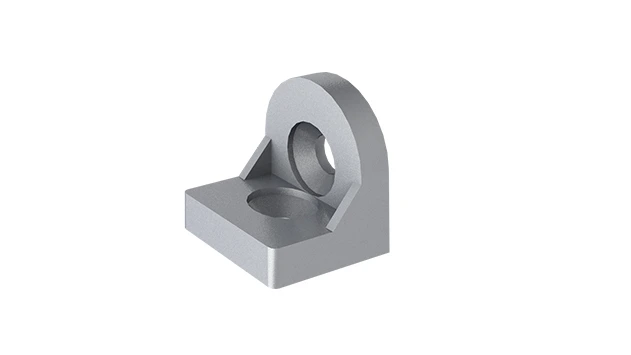
If you're knee-deep in designing custom lean solutions—whether it's a nimble workbench for a electronics assembly line or a high-flow rack system for a warehouse—you know the devil's in the details. Every component, no matter how small, plays a role in whether the final setup hums with efficiency or becomes a source of frustration. Today, we're zeroing in on one such unsung hero: the Turning Angle Code 2020. It might not have the flash of a sleek aluminum profile or the brute strength of a heavy-duty caster, but trust me—get this part right, and your entire lean system clicks into place. Get it wrong, and you'll be dealing with wobbly structures, wasted time, and compromised workflow. Let's dive in.
What Even Is a Turning Angle Code 2020?
First things first: Let's demystify the name. "Turning Angle Code 2020" might sound like industry jargon, but it's actually pretty straightforward. It's a specialized connector—think of it as a high-precision corner bracket—designed to join aluminum profiles at angles, typically 90 degrees, though it can handle slight adjustments for custom configurations. The "2020" refers to its compatibility with 20x20mm aluminum profiles, one of the most common sizes in lean system design for light to medium-duty applications. Unlike generic angle brackets you might pick up at a hardware store, this isn't a one-size-fits-all part. It's engineered specifically for the tight tolerances and modularity that lean systems demand.
Picture this: You're building a workbench where the frame needs to support a tool panel on one side and a material shelf on the other. The corners where the vertical and horizontal aluminum profiles meet? That's where the Turning Angle Code 2020 shines. It locks those profiles together with minimal play, ensuring the structure stays rigid even when tools are dropped, parts are stacked, or operators lean against it. But it's not just about strength—it's about flexibility, too. Unlike welded joints, which are permanent, this angle code lets you disassemble and reconfigure the setup if your production line needs to pivot (pun intended) to a new process. That's the lean philosophy in action: adaptability without sacrificing stability.
The Design Principles Behind It: Why It's Not Just a "Bracket"
To appreciate why the Turning Angle Code 2020 matters, let's step back and look at the design principles that make it tick. Lean systems thrive on three things: efficiency, repeatability, and waste reduction. The angle code checks all three boxes, but let's break down how.
Precision Engineering for Zero Slack
Ever assembled a bookshelf from a big-box store, only to find the shelves wobble because the screws don't quite fit the pre-drilled holes? That's the opposite of what we want in lean design. The Turning Angle Code 2020 is machined to tight tolerances—usually within 0.1mm—to ensure a snug fit with 2020 aluminum profiles. Its design includes recessed screw holes that align perfectly with the T-slots on the profiles, so when you tighten the bolts, the connection cinches down evenly. No gaps, no rattling, no need to over-tighten and strip threads. It's the kind of precision that turns a "good enough" structure into one that feels rock-solid.
Material Matters: Lightweight but Tough
Most Turning Angle Code 2020 parts are made from die-cast aluminum or reinforced nylon, both chosen for their balance of strength and weight. Aluminum versions are great for applications where durability and corrosion resistance matter—think food processing or cleanroom environments—while nylon is lighter and offers a bit of vibration dampening, which is handy for workbenches near sensitive equipment. Either way, the material is selected to avoid adding unnecessary heft to the system. Remember, lean is about streamlining, and a heavy bracket would defeat the purpose of using lightweight aluminum profiles in the first place.
Modularity at Its Core
Here's where the "turning" in the name really comes into play. Unlike fixed-angle brackets, the Turning Angle Code 2020 often features slotted holes or adjustable joints that let you tweak the angle by a few degrees—say, 85 or 95 degrees—if your design calls for a non-standard corner. This flexibility is a game-changer for custom solutions. Maybe you need a workbench with a slight incline to reduce operator strain, or a flow rack that angles gently to guide parts toward a pick station. With this connector, you don't have to redesign the entire profile layout; you just adjust the angle code. It's modularity in action, and modularity is the backbone of lean systems—allowing you to adapt quickly to changing production needs without starting from scratch.

Why It's a Non-Negotiable for Lean System Design
Now, you might be thinking: "Can't I just use a cheaper bracket or even weld the profiles together?" Let's address that. Welding is permanent, which violates the "flexibility" rule of lean. If the production line retools next quarter, that welded workbench becomes scrap metal. Cheaper brackets? They might save you a few dollars upfront, but they'll cost you in the long run. Loose connections lead to wobbly structures, which lead to parts sliding off shelves, tools vibrating out of place, and even safety risks. The Turning Angle Code 2020, on the other hand, is an investment in reliability—and in lean systems, reliability directly translates to efficiency.
Another angle (pun intended) is time. In lean design, setup and reconfiguration speed matters. A well-designed angle code lets you assemble and disassemble structures in minutes, not hours. No drilling custom holes, no wrestling with misaligned parts, no waiting for welds to cool. That means your team can prototype a new workbench layout in a morning, test it, and tweak it by lunch. In a world where production cycles get shorter by the day, that agility is priceless.

How It Plays Nice with Aluminum Profiles (Because Compatibility Matters)
Aluminum profiles are the building blocks of modern lean systems, and the Turning Angle Code 2020 is their perfect dance partner. Let's talk compatibility. 2020 aluminum profiles have T-slots running along their length—those grooves that let you slide in bolts, brackets, or accessories. The Turning Angle Code 2020 is designed to interface with these T-slots seamlessly. Its mounting holes align perfectly with the slot spacing, and its thickness is calibrated to sit flush against the profile's surface, so you don't end up with bulky, protruding connectors that get in the way of tools, parts, or operators.
But it's not just about fit—it's about material synergy. Aluminum profiles are lightweight yet strong; the Turning Angle Code 2020 matches that vibe. If you pair a flimsy plastic bracket with a robust aluminum profile, you're creating a weak link. Similarly, a heavy steel bracket would add unnecessary weight, making the structure harder to move or reconfigure. The Turning Angle Code 2020 (usually aluminum or reinforced nylon) complements the profile's properties, creating a balanced system where every component pulls its weight—no more, no less.
Turning Angle Code 2020 vs. Other Common Angle Codes
| Feature | Turning Angle Code 2020 | Turning Angle Code 3030 | Turning Angle Code 4040 |
|---|---|---|---|
| Compatible Profile Size | 20x20mm aluminum profiles | 30x30mm aluminum profiles | 40x40mm aluminum profiles |
| Typical Material | Die-cast aluminum, reinforced nylon | Die-cast aluminum, steel | Steel, heavy-duty aluminum alloy |
| Max Load Capacity (Per Joint) | 150-200 kg (static) | 300-400 kg (static) | 500-800 kg (static) |
| Primary Applications | Workbenches, small flow racks, turnover trolleys | Medium-duty material racks, assembly stations | Heavy-duty conveyor frames, industrial workbenches |
| Adjustability | ±5° angle adjustment | ±3° angle adjustment | Fixed 90° (some adjustable models) |
Real-World Applications: Where It Makes the Biggest Difference
Enough theory—let's get practical. Where does the Turning Angle Code 2020 really shine in the field? Let's walk through a few common scenarios.
1. Custom Workbenches: Stability Meets Flexibility
Workbenches are the heart of any assembly line, and they take a beating. Operators lean on them, tools are set down (and dropped), and parts are stacked from edge to edge. A wobbly workbench isn't just annoying—it's a safety hazard and a productivity killer. The Turning Angle Code 2020 ensures the bench's frame stays square and rigid, even under daily abuse. Take, for example, a "Workbench E (single deck-without caster)" setup—a common configuration for lightweight assembly tasks. The corners where the vertical legs meet the horizontal rails? Fitted with Turning Angle Code 2020s, those joints won't budge, even when the deck is loaded with 50kg of components. And if the team decides later to add a shelf underneath or a tool rail on the side? The angle codes make it easy to bolt on new profiles without weakening the existing structure.
2. Flow Racks: Keeping the "Flow" in Flow Racks
Flow racks are all about gravity—guiding parts from the loading end to the picking end with minimal friction. But for that to work, the rack's frame needs to be perfectly level (or slightly angled) and rock-solid. Imagine a "Material Rack B (3 row and 3 floor)" setup, where each level holds boxes of small parts. If the frame is even slightly (warped), the boxes might get stuck, or parts might slide too quickly and tip over. The Turning Angle Code 2020 ensures each vertical support and horizontal beam is aligned precisely, so the roller tracks (another key component!) can do their job. It's the difference between a flow rack that requires constant babysitting and one that runs like clockwork.
3. Turnover Trolleys: Maneuverability Without Compromise
Turnover trolleys are workhorses in lean environments—shuttling parts from storage to the line and back. They need to be lightweight enough for one person to push, but sturdy enough to handle a full load of parts. The Turning Angle Code 2020 helps here by keeping the trolley's frame tight. Loose joints would make the trolley rattle, causing parts to shift or fall off, and making it harder to steer. With properly secured angle codes, the trolley glides smoothly, even over uneven warehouse floors, and can take corners without wobbling. It's a small detail, but it adds up to fewer dropped parts, less operator fatigue, and faster material movement.
Case Study: How One Manufacturer Fixed Their Wobbly Workbench Problem
Let's ground this in a real story. A few years back, I worked with a small electronics manufacturer that was struggling with their assembly workbenches. They'd been using generic steel angle brackets to join their 2020 aluminum profiles, and within months, the benches were wobbling so badly that operators were complaining about tools sliding off. The maintenance team was constantly retightening bolts, but the brackets would just loosen again. Productivity was taking a hit, and there was even a near-miss when a shelf holding circuit boards collapsed.
The fix? Swapping out the generic brackets for Turning Angle Code 2020s. The difference was night and day. The new angle codes locked the profiles together with zero play, and their reinforced design meant the joints stayed tight, even with daily use. The maintenance team's retightening schedule went from weekly to quarterly, and the operators reported feeling much more confident working at the benches. Best of all, when the manufacturer retooled their line six months later to produce a new product, they were able to disassemble and reconfigure the workbenches in a fraction of the time—no cutting or welding required. That's the power of choosing the right component.
Tips for Choosing and Installing Turning Angle Code 2020
Now that you're sold on the importance of the Turning Angle Code 2020, let's make sure you get the most out of it. Here are some pro tips:
Match the Material to the Environment
Aluminum angle codes are great for general use, but if your lean system is in a damp environment (like a food processing plant) or needs ESD (electrostatic discharge) protection (like an electronics assembly line), opt for anodized aluminum or ESD-safe nylon. These materials resist corrosion and prevent static buildup, keeping both your parts and operators safe.
Don't Skimp on Fasteners
The best Turning Angle Code 2020 is only as good as the bolts holding it in place. Use high-quality T-slot bolts that fit the profile's slot size (usually M5 or M6 for 2020 profiles) and lock washers to prevent loosening from vibration. Trust me—spending an extra dollar on a quality bolt beats having to rebuild a wobbly structure later.
Pre-Drill (If Needed) and Measure Twice
Even though the Turning Angle Code 2020 is designed for precision, it never hurts to double-check measurements before drilling. Mark the hole positions on the profiles first, then test-fit the angle code to ensure alignment. A 1mm misalignment might not seem like much, but over the length of a workbench or rack, it can add up to a noticeable wobble.
Consider Load Capacity—Don't Guess
Every Turning Angle Code 2020 has a rated load capacity (usually listed by the supplier). Don't just eyeball it—calculate the maximum weight the joint will need to support (including dynamic loads, like parts being placed or dropped) and choose a code that exceeds that by 20-30% for safety. Remember: It's better to over-engineer a little than to risk failure.
Looking Ahead: The Future of Turning Angle Code 2020
Lean systems are evolving, and so are the components that power them. What does the future hold for the Turning Angle Code 2020? I'm seeing two trends emerge. First, smarter materials—think carbon fiber-reinforced nylon that's even lighter and stronger, or self-lubricating aluminum alloys that reduce friction in adjustable joints. Second, integration with digital tools: Some suppliers are already adding QR codes to their angle codes, linking to installation guides, load capacity charts, or even 3D models for CAD design. Imagine scanning a code with your phone and instantly pulling up a 3D rendering of how the angle code fits with your aluminum profile—no more flipping through catalogs.
Wrapping Up: Small Part, Big Impact
At the end of the day, the Turning Angle Code 2020 is a reminder that lean system design is a team sport. It's not just about the flashy, headline-grabbing components—it's about the quiet, reliable parts that hold everything together. For custom lean solution designers, mastering the ins and outs of this little connector isn't just a skill; it's a superpower. It lets you create systems that are not only efficient and flexible but also durable enough to keep up with the chaos of real-world production.
So the next time you're drafting a design, take a moment to appreciate the Turning Angle Code 2020. It might not make it into the project presentation slides, but your operators will thank you. Your maintenance team will thank you. And your bottom line? It'll thank you too. After all, in lean manufacturing, the smallest details often deliver the biggest returns.