- Company Articles
- Products and Technology
- Technology Sharing
- Turning Angle Code 2020 and IoT: Smart Lean Manufacturing Integration

Turning Angle Code 2020 and IoT: Smart Lean Manufacturing Integration
Related Product
Urning Angle Code 2020
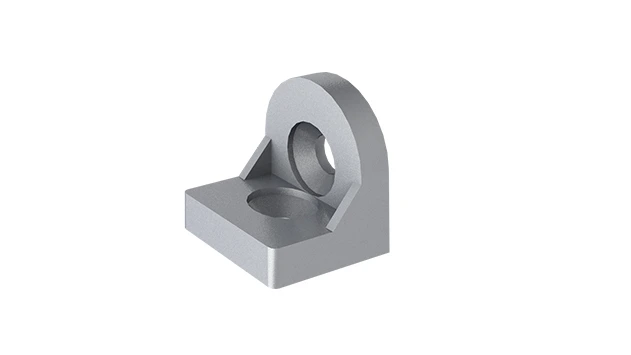
The turning angle aluminum profile connector provides a 90 degree hidden corner connection. 2020 it is means this size is used for 20 series aluminum profile.The corner code comes with set screws that allow for quick, easy connections.
Walk into any modern factory today, and you'll notice a quiet revolution unfolding. The clatter of assembly lines is now accompanied by the soft hum of sensors, and the once-static workbenches and roller tracks are starting to "talk"—sharing data, predicting bottlenecks, and even self-optimizing. At the heart of this transformation lies a powerful blend of two worlds: lean manufacturing, the decades-old philosophy of eliminating waste and boosting efficiency, and the Internet of Things (IoT), the network of smart devices that turn physical processes into data-driven insights. And while much attention goes to high-tech sensors and cloud platforms, it's often the smallest components that make the biggest difference. Take the Turning Angle Code 2020 , for example—a humble yet critical piece in the puzzle of aluminum profile assembly. In this article, we'll explore how this unassuming component, paired with IoT, is redefining what smart lean manufacturing looks like, and why it matters for the factories of tomorrow.
The Roots of Lean: Why Efficiency Still Matters
Before diving into the future, let's ground ourselves in the past. Lean manufacturing isn't just a buzzword—it's a mindset born from the need to do more with less. Coined by Toyota in the mid-20th century, the "Toyota Production System" (TPS) introduced principles like just-in-time production , jidoka (automation with a human touch), and kaizen (continuous improvement). The goal? Slash waste—whether it's excess inventory, idle time, or unnecessary movement—and create value for customers. Over time, lean evolved beyond automotive plants, spreading to electronics, pharmaceuticals, and even service industries. Today, it's the backbone of global manufacturing, and for good reason: companies that embrace lean report 20-30% improvements in productivity, not to mention happier workers and more resilient supply chains.
But here's the thing: traditional lean relies heavily on human observation. Workers spot bottlenecks, managers analyze spreadsheets, and improvements happen in monthly meetings. In a world where production lines run 24/7 and customer demands shift overnight, this approach can feel like driving with a rearview mirror. Enter IoT. By embedding sensors in equipment, tracking real-time data, and using AI to spot patterns, IoT turns lean from a reactive practice into a proactive one. Suddenly, a workbench isn't just a place to assemble parts—it's a data hub. A roller track isn't just moving materials; it's sending alerts when a roller jams. And yes, even components like the Turning Angle Code 2020 play a role, ensuring that the physical infrastructure supporting these smart systems is consistent, reliable, and ready to integrate with new technology.
Meet the Turning Angle Code 2020: Small Part, Big Impact
If you've ever walked through a factory, you've seen aluminum profiles —those sleek, modular metal rails that form the backbone of workbenches, material racks, and production lines. They're popular because they're lightweight, strong, and infinitely customizable. But to build anything with aluminum profiles, you need connectors—joints that hold the rails together at precise angles. That's where the Turning Angle Code 2020 comes in. Designed specifically for 2020-series aluminum profiles (named for their 20mm x 20mm cross-section), this small, unassuming bracket is engineered to connect profiles at 90-degree angles with zero play. It's not glamorous, but without it, the workbenches where operators assemble circuit boards, the roller tracks that shuttle components between stations, and the racks that store inventory would be wobbly, inefficient, and prone to failure.
What makes the Turning Angle Code 2020 special? Precision, for starters. Its design ensures that every connection is consistent—no more "good enough" joints that loosen over time or create uneven surfaces. This consistency is critical for lean manufacturing, where even a millimeter of misalignment can throw off an entire production line. But in the age of IoT, consistency matters for another reason: data accuracy. Imagine a smart workbench equipped with pressure sensors to track how long parts sit idle. If the workbench itself is wobbly because of a poor connection, the sensors might send false data, leading managers to misdiagnose a bottleneck. The Turning Angle Code 2020 eliminates that risk, creating a stable foundation for IoT devices to do their jobs.
Another advantage? Flexibility. Traditional manufacturing setups are often "set it and forget it"—reconfiguring a production line can take days, requiring new brackets, welding, or custom parts. The Turning Angle Code 2020, though, is part of a modular system. It screws into the T-slots of aluminum profiles, meaning workers can disassemble and reassemble workbenches or roller tracks in hours, not days. This agility is key for "lean 4.0," where factories need to pivot quickly to meet changing orders. Need to add a new station to your assembly line? Swap out a few profiles, reposition the Turning Angle Code 2020 brackets, and you're done. No downtime, no wasted materials—just pure lean efficiency, amplified by IoT's ability to adjust workflows in real time based on the new setup.
| Feature | Traditional Angle Brackets | Turning Angle Code 2020 |
|---|---|---|
| Alignment Precision | ±0.5mm (prone to loosening over time) | ±0.1mm (locks securely with T-slot screws) |
| Installation Time | 15-20 minutes per joint (requires tools, measuring) | 2-3 minutes per joint (tool-free adjustment possible) |
| Reusability | Low (prone to bending/damage during disassembly) | High (durable aluminum construction, no wear on threads) |
| IoT Compatibility | Limited (unstable base affects sensor accuracy) | Excellent (stable platform for mounting sensors, cameras) |

Bridging Lean and IoT: How It All Comes Together
So, how do components like the Turning Angle Code 2020, aluminum profiles, workbenches, and roller tracks fit into the IoT revolution? Let's walk through a real-world scenario: a mid-sized electronics manufacturer producing smartphone circuit boards. Their goal? Reduce assembly time by 15% and cut defects by 20% using smart lean principles.
First, they revamp their assembly line with modular aluminum profiles and Turning Angle Code 2020 brackets. The result? A set of workbenches that are not only sturdy but also easy to reconfigure. Each workbench is equipped with IoT sensors: temperature monitors (to prevent overheating of sensitive components), pressure pads (to track how long parts sit idle), and small cameras (to detect misaligned parts). The roller tracks connecting the workbenches get similar treatment: vibration sensors to spot jams, and RFID scanners to track the flow of circuit boards in real time.
Here's where the Turning Angle Code 2020 shines. Because each bracket ensures the workbenches and roller tracks are perfectly aligned, the sensors collect consistent data. No more skewed readings from a wobbly camera mount or false vibration alerts from a misaligned roller track. The data flows to a cloud dashboard, where AI algorithms analyze it for patterns. For example, the system notices that Circuit Board Model X takes 2 minutes longer to assemble at Workbench 3 than at Workbench 1. Why? The pressure pad data shows operators at Workbench 3 spend extra time reaching for tools stored on a rack that's 6 inches too far away. Thanks to the modular aluminum setup, the team reconfigures Workbench 3 in an hour, moving the tool rack closer. Within a week, assembly time for Model X drops by 1.5 minutes—exactly the kind of small, continuous improvement lean is all about, but accelerated by IoT insights.
But it doesn't stop there. The system also predicts maintenance needs. The vibration sensors on the roller track detect that a bearing is starting to wear out, sending an alert to the maintenance team before it jams. Because the roller track was built with standardized aluminum profiles and Turning Angle Code 2020 brackets, replacing the bearing takes 10 minutes instead of an hour—no custom parts needed. Downtime is minimized, and the line stays efficient. This is lean 4.0 in action: waste (downtime, excess motion) eliminated, value (faster assembly, fewer defects) created, all powered by the combination of physical precision and digital intelligence.

The Benefits: Why This Matters for Manufacturers
At this point, you might be thinking, "This sounds great, but is it worth the investment?" Let's break down the benefits—because they're not just about efficiency; they're about survival in a hyper-competitive market.
- Faster ROI on IoT Investments: IoT sensors and platforms aren't cheap. But if your physical infrastructure (workbenches, roller tracks) is unstable, the data they collect is unreliable—making your IoT investment a waste. The Turning Angle Code 2020 and modular aluminum profiles ensure you get accurate data from day one, so you can start seeing improvements faster.
- Agility to Meet Demand: Customer orders change overnight. A factory that can reconfigure a production line in hours (thanks to modular components) can take on rush orders that competitors can't. This agility is a competitive advantage, especially in industries like electronics or medical devices, where product lifecycles are short.
- Happier, More Productive Workers: No one likes working at a wobbly workbench or wrestling with jammed roller tracks. By investing in quality components, you reduce frustration and physical strain, leading to higher morale and lower turnover. Plus, when workers see that their feedback (e.g., "This tool rack is too far") leads to quick changes via IoT data, they feel empowered to contribute to continuous improvement.
- Sustainability: Lean and sustainability go hand in hand—both focus on reducing waste. By reusing aluminum profiles and Turning Angle Code 2020 brackets (instead of throwing away custom-built stations), you cut down on scrap metal. IoT helps too, by optimizing energy use (e.g., turning off lights on unused workbenches) and reducing overproduction.
Challenges and How to Overcome Them
Of course, integrating Turning Angle Code 2020, aluminum profiles, and IoT into lean systems isn't without challenges. Here are the most common ones—and how to tackle them:
Cost Concerns: Modular aluminum profiles and IoT sensors cost more upfront than traditional steel brackets or manual processes. But think long-term: the average factory saves 15-20% on maintenance and reconfiguration costs alone within the first year. Plus, grants and tax incentives for smart manufacturing investments are increasingly available in many countries.
Worker Resistance: Change is hard. Some operators might worry that IoT sensors are "spying" on them or that new technology will replace their jobs. The key is transparency: explain that IoT is a tool to make their jobs easier, not harder. Involve workers in the design process—ask them which sensors would help them do their jobs better. In the electronics factory example, operators were thrilled when the system identified the misplaced tool rack; it validated their daily frustrations and led to a solution.
Data Overload: IoT generates a lot of data. Without clear goals, it's easy to get overwhelmed. Start small: focus on 1-2 key metrics (e.g., assembly time, defect rate) instead of tracking everything at once. Use AI dashboards to highlight only the most important insights, so managers aren't drowning in spreadsheets.
The Future: Beyond the Factory Floor
As IoT and lean continue to merge, the possibilities are endless. Imagine a world where your factory's aluminum profile structures aren't just passive tools but active participants in the supply chain. For example, a workbench equipped with 5G-connected sensors could share real-time production data with your suppliers, who then adjust their deliveries to match your exact needs—eliminating excess inventory. Or, as augmented reality (AR) becomes more common, workers could wear AR glasses that overlay assembly instructions directly onto workbenches built with Turning Angle Code 2020 brackets, ensuring every step is followed precisely.
Even sustainability could get a boost. Smart aluminum profiles with embedded energy-harvesting technology could power small IoT sensors, reducing reliance on batteries. And as more factories adopt circular economy principles, modular components like the Turning Angle Code 2020 could be reused across multiple production lines or even sold to other manufacturers, extending their lifecycle and reducing waste.
Final Thoughts: The Power of Small Components in a Smart World
In the end, the integration of Turning Angle Code 2020, aluminum profiles, and IoT isn't just about technology—it's about reimagining what manufacturing can be. Lean taught us to value efficiency and continuous improvement; IoT teaches us to harness data and connectivity. Together, they create a system where every component, no matter how small, plays a role in building better products, happier workers, and more resilient businesses.
So the next time you walk through a factory, take a closer look at those aluminum profiles and brackets. That Turning Angle Code 2020 isn't just holding a workbench together—it's holding the future of manufacturing together. And that future? It's smart, it's lean, and it's just getting started.