- Company Articles
- Products and Technology
- Application Cases
- Turning Angle Code 2020 Application: 3C Assembly Line Optimization with Aluminum Joints

Turning Angle Code 2020 Application: 3C Assembly Line Optimization with Aluminum Joints
Related Product
Urning Angle Code 2020
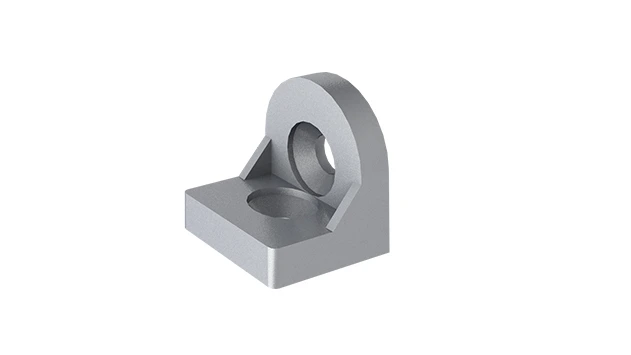
The turning angle aluminum profile connector provides a 90 degree hidden corner connection. 2020 it is means this size is used for 20 series aluminum profile.The corner code comes with set screws that allow for quick, easy connections.
Step into a typical 3C assembly line, and you'll likely be met with a flurry of activity: workers rushing to meet deadlines, parts stacked haphazardly on benches, and rigid workstations that seem more like obstacles than tools. In an industry where product cycles shrink by the month—new smartphones, laptops, and wearables launching faster than ever—manufacturers face a critical challenge: how to keep up with constant change without sacrificing efficiency, safety, or cost. This is where yet powerful components like the turning angle code 2020, aluminum profiles, and aluminum joints come into play. These small but mighty parts are quietly revolutionizing 3C assembly lines, turning rigid, one-size-fits-all systems into flexible, lean machines that adapt as quickly as the industry itself.
The Problem with Rigidity in 3C Manufacturing
Traditional 3C assembly lines often rely on fixed, welded steel structures or bulky wooden workbenches. While these might work for high-volume, low-mix production, they crumble under the demands of today's manufacturing landscape. Imagine a factory that produces three smartphone models a year suddenly needing to pivot to six—each with different component sizes, assembly steps, and tool requirements. A welded steel workbench designed for Model A can't simply "stretch" to fit Model B's taller components. A fixed material rack can't reconfigure its shelves overnight to accommodate smaller circuit boards. The result? Downtime, wasted materials, and frustrated workers stuck working around outdated equipment.
This rigidity also hurts lean manufacturing goals. Lean systems thrive on eliminating waste—whether it's time, space, or resources. But when reconfiguring a workstation takes days (or even weeks) of cutting, welding, and repainting, that's waste. When workers have to walk an extra 10 feet to retrieve parts because the material rack can't be moved closer, that's waste. And when a perfectly functional bench gets scrapped because it no longer fits a new product, that's waste of a different kind: financial and environmental.
What Is Turning Angle Code 2020? The Unsung Hero of Flexibility
Enter the turning angle code 2020. If aluminum profiles are the "bones" of a modern assembly system, think of this component as the "joints" that let those bones move. Designed specifically for 20x20mm aluminum profiles (a common size in light-duty manufacturing), the turning angle code 2020 is a compact, durable connector that allows for quick, tool-free adjustments. Unlike traditional corner brackets that lock profiles into a fixed 90-degree angle, this code lets operators pivot, rotate, and reposition profiles with minimal effort—no welding, no drilling, no specialized tools required.
At first glance, it might look like a simple metal bracket, but its design is cleverly engineered. Featuring pre-drilled holes that align with the T-slots of 2020 aluminum profiles, it uses bolts or clips to secure profiles in place while still allowing for rotation. Need to tilt a workbench surface by 15 degrees to reduce worker strain? Loosen the bolts, adjust the angle, retighten. Want to fold a temporary material rack flat for storage when not in use? The turning angle code 2020 makes it possible. It's this blend of stability and adaptability that makes it a game-changer for 3C lines, where even small adjustments can lead to big gains in efficiency.

Aluminum Profiles & Joints: The Perfect Partners for Turning Angle Code 2020
Of course, the turning angle code 2020 can't work alone. Its magic lies in its partnership with aluminum profiles and aluminum joints—two components that form the backbone of modern modular assembly systems.
Aluminum profiles, often referred to as "extruded aluminum," are long, slender bars with T-shaped slots running along their length. These slots are key: they allow accessories like brackets, shelves, and tools to be attached anywhere along the profile, no drilling required. In 3C manufacturing, common profiles range from 20x20mm (light-duty workbenches) to 40x80mm (heavy-duty material racks), but the 2020 size is particularly popular for its balance of strength and versatility. Lightweight yet surprisingly strong (aluminum alloys can withstand up to 30,000 psi of pressure), these profiles are resistant to corrosion—critical in factories where humidity or cleaning agents might damage steel.
Aluminum joints, on the other hand, are the connectors that link profiles together. From simple 90-degree elbows to complex multi-way connectors, they come in dozens of designs to suit every need. When paired with the turning angle code 2020, they create a system where almost any configuration is possible. For example, a basic workbench might use 2020 profiles for the frame, aluminum joints to connect the legs to the tabletop, and turning angle code 2020 brackets to attach a tilting tool holder. If the next product requires a taller bench, operators can swap out the leg profiles for longer ones, or use extendable joints—all without replacing the entire structure.

Practical Applications: How These Components Transform 3C Assembly Lines
To understand the impact of these components, let's look at their real-world applications in 3C assembly. From workbenches to material handling, they're reshaping every corner of the production floor.
1. Adaptive Workbenches
Workbenches are the heart of any assembly line, and here's where the turning angle code 2020 truly shines. Traditional wooden or steel benches are fixed in height, width, and layout—workers have to adapt to the bench, not the other way around. With aluminum profiles, aluminum joints, and turning angle code 2020 brackets, workbenches become customizable to each task and each worker.
Consider a smartphone assembly station where workers attach screens to housings. The ideal height for this task varies by worker, but a fixed bench forces everyone to hunch or stretch, leading to fatigue and errors. An aluminum profile workbench with adjustable legs (using height-adjustable aluminum joints) lets each worker set their station to elbow height. Add a turning angle code 2020 bracket, and you can attach a tool tray that tilts to keep screwdrivers and adhesives within easy reach. When the next phone model requires a larger screen, simply adjust the tray angle or swap out the profile length—no need for a new bench.
2. Flexible Material Racks
Material storage is another area where rigidity causes headaches. 3C parts come in all shapes and sizes: tiny screws, delicate circuit boards, bulky battery packs. Storing them efficiently means racks that can adjust shelf heights, add dividers, or even change orientation (vertical to horizontal) based on what's being produced that day.
Aluminum profile racks with aluminum joints excel here. Using 2020 or 3030 profiles for the frame, workers can slide shelf brackets into the T-slots at any height. Need to store taller battery packs? Move the brackets up. Switching to smaller SIM card trays? Add dividers using short profile segments and aluminum joints. For even more flexibility, use the turning angle code 2020 to create angled shelves that let parts slide gently to the front, reducing the need to reach deep into the rack—a small change that cuts down on retrieval time by 15-20% in busy lines.
3. Modular Conveyor Systems
Conveyors are the arteries of assembly lines, moving parts from one station to the next. Traditional belt conveyors are fixed in length and speed, making them hard to adapt when production flows change. Aluminum roller tracks, paired with aluminum joints and turning angle code 2020 brackets, offer a modular alternative.
Imagine a line where circuit boards need to move from soldering to testing. A straight roller track works for most days, but when a new product requires a detour through an inspection station, you can use aluminum joints to add a 90-degree turn. The turning angle code 2020 lets you adjust the track height to match the inspection table, ensuring parts glide smoothly without jamming. When production ramps up, simply add more track segments—no need to buy a whole new conveyor.
Benefits Over Traditional Systems: Why 3C Manufacturers Are Making the Switch
It's clear these components offer flexibility, but how do they stack up against traditional steel or wooden systems in terms of cost, durability, and ease of use? Let's break it down:
| Feature | Traditional Steel/Wood Systems | Aluminum Profile + Turning Angle Code 2020 + Aluminum Joints |
|---|---|---|
| Flexibility | Fixed; requires welding or sawing to modify | Tool-free adjustments; reconfigurable in hours |
| Installation Time | Days (welding, painting, curing) | Hours (bolt-together assembly) |
| Durability | Prone to rust (steel) or warping (wood) | Corrosion-resistant; aluminum alloys last 10+ years |
| Cost Over Time | High (frequent replacements, downtime) | Lower (reusable components, minimal downtime) |
| Worker Ergonomics | Poor (fixed heights/angles cause strain) | Excellent (adjustable to individual needs) |
The data speaks for itself. While aluminum systems may have a slightly higher upfront cost than wood, their reusability and durability make them cheaper over time. A steel bench might cost $500 but needs replacement every 3 years; an aluminum profile bench with turning angle code 2020 brackets costs $800 but can be reconfigured for 10+ years, saving thousands in replacements and downtime.
Case Study: How TechFlow Manufacturing Cut Downtime by 40% with These Components
To put these benefits into context, let's look at a hypothetical but realistic example: TechFlow Manufacturing, a mid-sized 3C contract manufacturer producing smartwatches and fitness trackers. In 2022, TechFlow struggled with frequent product launches—four new models a year—each requiring workstation and rack reconfigurations. Their old steel workbenches and wooden racks took 2 full days to modify, leading to 8 days of downtime annually. Workers complained of back pain from fixed-height benches, and material waste from scrapped racks hit $20,000 a year.
In early 2023, TechFlow switched to aluminum profiles (2020 and 3030 series), aluminum joints, and turning angle code 2020 brackets. The results were striking:
- Reconfiguration time: From 2 days to 4 hours per line. TechFlow now reconfigures during night shifts, with no production downtime.
- Worker fatigue: Reports of back pain dropped by 60% after adjusting workbench heights and adding tilting tool trays with turning angle code 2020.
- Material waste: Scrapped racks fell to $5,000 a year, as old profiles and joints were reused for new configurations.
- Cost savings: Total annual savings (downtime + waste + labor) reached $85,000—recouping the initial investment in under a year.
The Future of Lean Systems: Where These Components Are Headed
As 3C manufacturing continues to evolve—with trends like smaller batch sizes, more customization, and AI-driven automation—modular components like the turning angle code 2020, aluminum profiles, and aluminum joints will only grow in importance. Here's what to watch for:
Integration with smart tools: Imagine aluminum profiles with built-in sensors that track how often a workbench is reconfigured, or aluminum joints with RFID tags that log usage and predict maintenance needs. This data could help factories optimize layouts further, reducing waste even more.
Lighter, stronger materials: Aluminum alloys are already strong, but advances in extrusion technology could lead to profiles that are 20% lighter while maintaining the same load capacity—making reconfigurations even easier for workers.
3D-printed custom joints: For ultra-specific applications, 3D printing could allow factories to create one-off aluminum joints or turning angle code variants tailored to unique product needs—without the cost of mass production.
Conclusion: Small Components, Big Impact on Lean Manufacturing
In the fast-paced world of 3C manufacturing, success hinges on adaptability. Rigid systems can't keep up, but modular solutions built around turning angle code 2020, aluminum profiles, and aluminum joints can. These components may not grab headlines, but they're the unsung heroes of lean manufacturing—turning chaotic, wasteful lines into streamlined, flexible systems that grow with your business.
Whether you're building workbenches that adjust to every worker, racks that adapt to every part, or conveyors that reconfigure on the fly, these tools make it possible to do more with less. They reduce downtime, cut waste, and empower workers to focus on what matters: building high-quality products, not fighting with their equipment. In the end, that's the true power of lean manufacturing—and it all starts with the right components.