- Company Articles
- Products and Technology
- Product knowledge
- Turning Angle Code 2020 Application in Consumer Electronics: 3C Assembly Guide

Turning Angle Code 2020 Application in Consumer Electronics: 3C Assembly Guide
Related Product
Urning Angle Code 2020
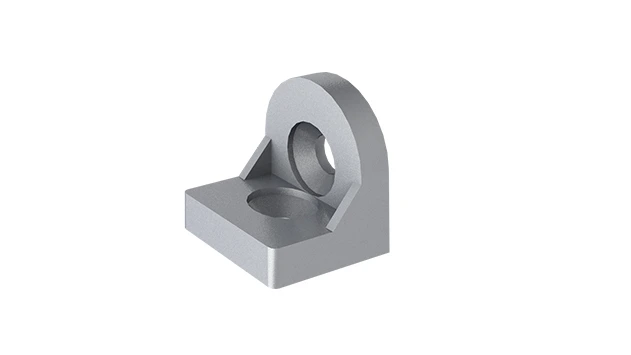
The turning angle aluminum profile connector provides a 90 degree hidden corner connection. 2020 it is means this size is used for 20 series aluminum profile.The corner code comes with set screws that allow for quick, easy connections.
Walk into any modern 3C (computers, communications, consumer electronics) factory, and you'll be hit by the hum of precision. Assembly lines zip with circuit boards, screens, and tiny components—each step a dance of speed and accuracy. In an industry where new models launch every few months and product lifecycles shrink by the day, manufacturers don't just need tools; they need flexibility . Rigid, one-size-fits-all setups slow things down, while imprecise components risk damaging delicate parts like smartphone motherboards or laptop hinges. That's where modular solutions step in—and today, we're zeroing in on a small but mighty player: the Turning Angle Code 2020. If you've ever wondered how factories reconfigure workbenches overnight or build custom material racks in days, this unassuming aluminum profile accessory might just be the secret.
The 3C Assembly Challenge: Why Precision and Flexibility Matter
Let's start with the basics: 3C assembly isn't just about putting parts together. It's about doing so at scale, with near-perfect consistency, and adapting fast when designs change. Think about a smartphone factory: one week, they're assembling a 6.7-inch model with a glass back; the next, a foldable device with entirely new internal components. Each shift, hundreds of workers rely on workbenches, material racks, and assembly stations to hold tools, parts, and (semi-finished products). If those stations are wobbly, misaligned, or hard to adjust, everything suffers—from production speed to product quality.
Traditional solutions often fall short. Welded steel frames are sturdy but permanent; if you need to raise a shelf by 5cm for a taller component, you're out of luck. Generic L-brackets? They slip, bend, or require custom drilling, leading to hours of rework. Even basic aluminum profiles—popular for their light weight and modularity—need reliable connectors to hold their shape. That's where profile accessories like angle codes come in. And among them, the Turning Angle Code 2020 has emerged as a go-to for 3C teams. But what is it, exactly?
What Is Turning Angle Code 2020? A Closer Look at the Component
At first glance, the Turning Angle Code 2020 looks simple: a small, L-shaped bracket made of aluminum alloy. But don't let its size fool you. This isn't just any bracket—it's engineered specifically for 2020 aluminum profiles, the workhorses of modular manufacturing. 2020 profiles, named for their 20mm x 20mm cross-section, are lightweight yet strong enough to support tools, parts bins, and even small assembly jigs. The Turning Angle Code 2020? It's the piece that locks these profiles together at a perfect 90-degree angle, turning raw aluminum extrusions into stable, functional structures.
Let's break down its design. The code itself is typically 30-40mm long on each arm, with pre-drilled holes that align with the T-slots of 2020 aluminum profiles. Made from 6063-T5 aluminum alloy—a material prized for its corrosion resistance and strength—it's built to handle the daily wear of factory life: workers leaning on workbenches, parts sliding onto racks, and the constant vibration of nearby machinery. Unlike generic brackets, its corners are reinforced with subtle ribbing, and the edges are deburred to avoid scratching profiles or components. But the real magic? How it balances precision and adaptability.

Key Features of Turning Angle Code 2020: Why It Stands Out
To understand why 3C factories swear by this angle code, let's dive into its standout features. Remember, in 3C assembly, even tiny details matter—like the difference between a workbench that stays level for 10,000 shifts and one that wobbles after 100.
1. Perfect 90-Degree Alignment, Every Time
Misalignment is the enemy of 3C work. A workbench surface tilted by just 1 degree might cause a small screw to roll off, or a circuit board to sit unevenly during soldering. The Turning Angle Code 2020 eliminates guesswork: its inner corner is machined to a precise 90-degree angle, with tight tolerances (±0.5 degrees) that ensure two connected 2020 profiles stay perpendicular. No more "eyeballing it" with a square tool—just drop the code into place, tighten the screws, and you're done.
2. Designed for the 2020 Aluminum Profile Ecosystem
Not all angle codes are created equal. Many generic brackets fit multiple profile sizes, but that "one-size-fits-all" approach often means loose fits or extra gaps. The Turning Angle Code 2020 is tailor-made for 2020 profiles: its arms are exactly 20mm wide, so they slide snugly into the profile's T-slots without play. This tight fit reduces vibration, which is critical when holding sensitive equipment like microscope stands for inspecting chip components.
3. Reinforced for Heavy-Duty Use (Without the Weight)
Aluminum is already lighter than steel, but the Turning Angle Code 2020 takes it further with a hollow-core design that cuts weight without sacrificing strength. The corners are thickened (2.5mm wall thickness) to handle vertical loads—think of a material rack stacked with 5kg boxes of screws or a workbench holding a 20kg soldering station. In tests, a single code can support up to 30kg of static weight, and when used in pairs (like on a shelf corner), that number jumps to 60kg. For 3C assembly, where most components are lightweight but tooling can get heavy, this balance is key.
4. Tool-Friendly Installation (No Special Skills Needed)
In a factory, time is money. Welding or custom drilling requires skilled labor and slows down setup. The Turning Angle Code 2020, though? It's designed for speed. Pre-drilled holes (usually 4.5mm for M5 screws) align with standard T-slot nuts in 2020 profiles, so workers can secure it with a simple hex key. No drilling, no measuring—just align, screw, and move on. A team of two can assemble a basic workbench frame with 12 angle codes in under an hour, compared to 3+ hours with welded steel.

Why 3C Factories Choose Turning Angle Code 2020 Over Other Connectors
By now, you might be thinking: "It's just an angle bracket—what makes it better than, say, a generic L-bracket or a 90-degree aluminum profile connector?" Let's put it to the test. Below is a comparison of the Turning Angle Code 2020 against two common alternatives in 3C assembly:
| Feature | Turning Angle Code 2020 | Generic L-Bracket (Steel) | Standard 90° Aluminum Connector |
|---|---|---|---|
| Profile Compatibility | Exclusively 2020 aluminum profiles (snug fit) | Universal (fits 15-30mm profiles, loose fit common) | Fits 2020/3030 profiles (gap for 2020) |
| Installation Time | 5 minutes per joint (pre-drilled holes) | 15+ minutes (requires drilling holes) | 8 minutes per joint (adjustments needed for 2020) |
| Max Load Capacity (Single) | 30kg static, 15kg dynamic | 40kg static (heavier, but steel rusts) | 25kg static (weaker due to universal design) |
| Reusability | High (can be disassembled and reused 50+ times) | Low (drilled holes damage profiles; steel bends) | Medium (prone to wear after 20+ reuses) |
| Best For | Precision workbenches, modular material racks, assembly jigs | Heavy, permanent setups (rare in 3C) | Multi-profile systems (3030/4040), low-precision use |
The verdict? For 3C factories prioritizing speed, precision, and adaptability, the Turning Angle Code 2020 outperforms alternatives. It's not the strongest (steel brackets win there), but in an industry where reconfiguration is constant, its reusability and ease of installation make it indispensable.
Step-by-Step Guide: Installing Turning Angle Code 2020 in 3C Assembly Setups
Ready to see how it works in practice? Let's walk through a common scenario: building a custom workbench for smartphone screen assembly. This workbench needs to hold a light (for inspecting screen defects), a tray for screws, and a small vacuum tool for picking up tiny glass shards. We'll use 2020 aluminum profiles for the frame and Turning Angle Code 2020 to connect the corners.
Note: Before starting, gather your tools: Turning Angle Code 2020 (4 per workbench corner), 2020 aluminum profiles (2m lengths, 4 for legs, 4 for the frame), M5x12mm socket head cap screws (16 total), M5 T-slot nuts (16 total), a hex key (2.5mm), measuring tape, and a rubber mallet (for gentle adjustments).
- Cut Profiles to Size : Measure and cut the 2020 profiles to your workbench dimensions. For a standard 120cm (length) x 60cm (width) x 80cm (height) bench, you'll need: 4 leg profiles (80cm each), 2 front/back frame profiles (120cm each), and 2 side frame profiles (60cm each). Deburr the cut edges with sandpaper to avoid sharp edges.
- Mark Screw Positions on Legs : On each 80cm leg profile, measure 5cm from the top and mark a line—this is where the frame will attach. Repeat for the bottom (to add a lower shelf, if needed). Use a center punch to mark the screw holes; this prevents the drill bit from slipping.
- insert T-Slot Nuts into Profiles : Slide M5 T-slot nuts into the 2020 profiles' T-slots at the marked positions. For the frame profiles (120cm and 60cm), place a nut every 30cm to ensure stability, but focus first on the corners where the Turning Angle Code 2020 will go.
- Attach the First Corner: Front Left Leg + Front Frame : Take one 80cm leg (front left) and one 120cm frame profile (front). Slide the Turning Angle Code 2020 onto the leg's T-slot, aligning its holes with the marked screw positions. Place the frame profile into the code's other arm, making sure it's flush with the leg's edge. insert an M5 screw through the code's hole and into the T-slot nut, then tighten with the hex key until snug (but not over-tightened—aluminum threads strip easily).
- Repeat for All Corners : Attach the front right leg to the front frame, then the back legs to the back frame. Once the two side frames (60cm) are connected to the front and back frames, you'll have a rectangular top frame. Stand the legs upright and attach the top frame to the legs using the remaining Turning Angle Code 2020s. Use a level to check if the frame is even—adjust by loosening screws slightly and tapping with the rubber mallet if needed.
- Add Cross-Bracing (Optional but Recommended) : For extra stability (especially if the bench will hold heavy tools), cut two 55cm 2020 profiles and attach them diagonally across the back legs using more Turning Angle Code 2020s. This "X-brace" reduces side-to-side wobble.
- Test the Setup : Place a 20kg weight (like a toolbox) on the frame and shake gently. No creaking or shifting? You're good to go. Add a plywood or aluminum top (screwed into the frame profiles) and your workbench is ready for action.
The whole process takes about 2 hours for a first-timer, and once you get the hang of it? Under an hour. Compare that to building a welded steel bench, which would take a day and require a welder. For a factory needing 50 workbenches for a new production line, that time difference translates to days saved.
Real-World Use Cases: How 3C Factories Are Using Turning Angle Code 2020
Theory is one thing, but real-world application tells the full story. Let's look at two examples of 3C manufacturers leveraging the Turning Angle Code 2020 to solve common challenges.
Case Study 1: Smartphone Assembly Workbenches at a Tier-1 Supplier
A major supplier for a top smartphone brand was struggling with workbench reconfiguration. Every time a new model launched, they needed to adjust bench heights by 10-15cm to accommodate different screen sizes. Their old setup used welded steel frames, which meant cutting and rewelding legs—a process that took 2 days per line. In 2023, they switched to 2020 aluminum profiles and Turning Angle Code 2020s. Now, reconfiguring a line of 20 workbenches takes just 4 hours: workers loosen the angle codes, slide the legs up/down, and retighten. The result? Setup time for new models dropped by 90%, and they've reused the same angle codes across 3 model launches—saving $15,000 in material costs alone.
Case Study 2: Modular Material Racks for Laptop Hinge Components
A laptop manufacturer produces 12 different hinge designs, each with unique parts (pins, springs, washers). Storing these parts in fixed racks meant workers wasted time walking to different shelves. They needed a rack system that could be rearranged weekly to group parts by the current production model. Using Turning Angle Code 2020s, they built 10 modular racks with adjustable shelves (spaced 15cm apart, adjustable in 5cm increments). Each shelf corner uses two angle codes for stability, and the entire rack can be disassembled in 30 minutes. "Before, a worker might spend 20 minutes a day hunting for parts," says the plant manager. "Now, it's 5 minutes—and the racks look neat enough for a showroom."
Maintaining Your Turning Angle Code 2020: Tips for Longevity
Like any tool, the Turning Angle Code 2020 works best with a little care. In 3C factories, where dust, oil, and occasional spills are part of daily life, these simple maintenance steps will keep your codes performing for years:
1. Inspect Screws Monthly (Tighten When Needed)
Vibration from assembly line machinery can loosen screws over time. Once a month, walk the floor with a hex key and gently tighten any loose M5 screws on the angle codes. Over-tightening can strip the aluminum threads, so stop when you feel resistance.
2. Clean with Compressed Air (Avoid Harsh Chemicals)
Dust and metal shavings (from cutting profiles) can build up in the angle code's T-slot grooves. Use compressed air (low pressure, 30-40 PSI) to blow out debris—avoid water or solvents, which can corrode the aluminum. For sticky residue (like tape adhesive), wipe with a dry microfiber cloth.
3. replace Damaged Codes Promptly
If a code's corner is bent (from a dropped tool) or the screw holes are stripped, replace it immediately. A damaged code can throw off alignment, leading to wobbly workbenches. Keep a few spares in the tool crib—they're cheap (around $2-3 per unit) and easy to swap out.
Why It's More Than Just a Bracket: The Lean System Connection
At its core, the Turning Angle Code 2020 is a lean manufacturing tool. Lean systems thrive on eliminating waste—whether it's time, materials, or space. By enabling quick reconfigurations, reducing setup time, and reusing components, this tiny accessory aligns with two key lean principles: flexible resource utilization and continuous improvement . In 3C assembly, where change is constant, that's not just useful—it's essential.
Think about it: a factory using fixed steel racks and welded workbenches is stuck with "one-and-done" setups. If demand for a product drops, those racks sit idle, wasting space. With modular setups built on Turning Angle Code 2020s, you can disassemble a material rack and rebuild it as a testing station overnight. That's lean in action—and it's why forward-thinking 3C manufacturers are making the switch.
Conclusion: Small Component, Big Impact
In the grand scheme of 3C manufacturing, the Turning Angle Code 2020 might seem. It's not as flashy as a robotic arm or as high-tech as a 3D printer. But ask any factory floor manager, and they'll tell you: the best innovations are often the ones that make the daily grind a little smoother. This unassuming aluminum bracket solves two of 3C's biggest headaches—precision and flexibility—with a design that's simple, affordable, and built to last.
So the next time you unbox a new smartphone or laptop, take a moment to appreciate the unseen heroes of its creation. Behind that sleek device is a network of workbenches, racks, and assembly lines—all held together, in part, by small components like the Turning Angle Code 2020. In a world where 3C innovation moves at the speed of light, sometimes the most important tools are the ones that help you keep up.