- Company Articles
- Products and Technology
- Application Cases
- Turning Angle Code 2020 Case Study: Automotive Lean Line Productivity Boost

Turning Angle Code 2020 Case Study: Automotive Lean Line Productivity Boost
Related Product
Urning Angle Code 2020
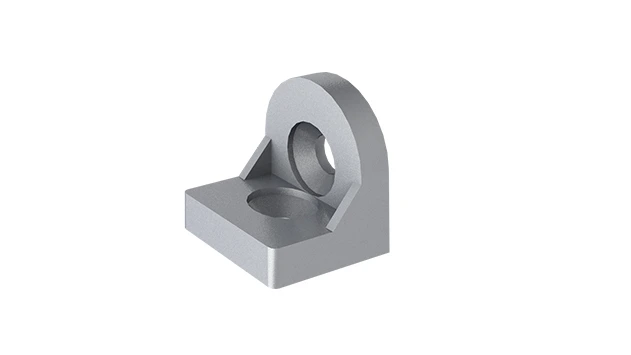
The turning angle aluminum profile connector provides a 90 degree hidden corner connection. 2020 it is means this size is used for 20 series aluminum profile.The corner code comes with set screws that allow for quick, easy connections.
Introduction
It's 7:30 AM on a Tuesday at Greenfield Automotive's main assembly plant. The air hums with the rhythmic clink of tools and the low rumble of conveyor belts, but Maria, the production manager, stands rigid by the third assembly line, her clipboard tight in hand. The digital display above the line flashes red: 45 minutes behind schedule. "Same bottleneck as yesterday," she sighs, nodding toward a workstation where two workers strain to reposition a steel fixture. "We need to lower the bench by 15 centimeters for the new compact model, but this thing takes three hours to adjust. By then, we've lost half a shift."
This scene was a daily reality at Greenfield for years. Like many manufacturers, the plant relied on decades-old steel workbenches and fixed flow racks—equipment built for stability, not adaptability. As consumer demand shifted toward frequent model updates and custom configurations, these rigid systems became anchors dragging down productivity: workers wasted 20% of their shifts retrieving parts from distant flow racks, parts jammed on inflexible roller tracks, and ergonomic strain pushed defect rates to 3.2%, well above industry standards.
That changed when Greenfield partnered with a lean system supplier specializing in modular aluminum solutions. At the heart of their transformation was a small but critical component: the turning angle code 2020 . Paired with lightweight aluminum profile framing, reconfigurable workbench setups, and dynamic flow rack systems, this unassuming bracket became the cornerstone of a lean system that didn't just fix inefficiencies—it redefined how Greenfield's assembly lines operated. This case study explores how integrating these components slashed cycle times, reduced errors, and turned a struggling line into a model of efficiency.
The Challenge: Bottlenecks in Traditional Assembly Lines
To understand the impact of the turning angle code 2020, we first need to dissect the specific pain points Greenfield faced with its legacy systems. These challenges weren't isolated—they created a domino effect of waste (muda, in lean terminology) that eroded productivity from start to finish.
1. Rigid Workstations: The Cost of Inflexibility
Greenfield's workbenches were relics of a bygone era: thick steel tubing welded into fixed frames, bolted to the floor, and designed for a single task. When production shifted to a new model—say, from a sedan to an SUV—reconfiguring these benches required a maintenance crew with cutting torches and welding equipment. "We once spent 48 hours retooling six workstations for a minor model update," Maria recalls. "By the time we finished, we'd lost 120 units of production." Even small adjustments, like raising a shelf by 10 centimeters, took 2+ hours and required specialized tools.
2. Static Flow Racks: The Hidden Productivity Drain
Upstream from the workbenches, Greenfield's flow racks compounded the problem. These steel structures, loaded with plastic roller track guide rails, were bolted to the floor 15–20 feet from workstations. Workers like Raj, a third-line assembler, logged 2–3 miles daily retrieving parts—a 20% loss in productive time. "I'd spend 10 minutes walking to get a handful of bolts, then another 10 minutes walking back," he says. "By Friday, my feet ached so bad I'd start rushing, and that's when mistakes happened." Worse, the fixed roller tracks couldn't adapt to part size variations: smaller components slid off, while larger ones jammed, causing 15–20 minute delays per incident.
3. Ergonomic Strain: The Human Cost of Poor Design
The rigid workbenches also took a toll on worker health. At 5'4", Lina, who assembles wiring harnesses, spent eight hours daily hunched over a bench built for taller workers, her shoulders permanently rounded. "I developed tendonitis in my wrist from stretching to reach my crimper," she says. "By mid-shift, my hands shook, and I'd miss connectors—defects that cost the plant $120 per repair." Turnover in ergonomically strained roles hit 25% annually, forcing Greenfield to spend $15,000 per role on recruitment and training.
4. Scalability Stagnation: When Growth Outpaces Infrastructure
By early 2023, Greenfield faced an ultimatum: boost productivity by 25% within 12 months or risk plant consolidation. The third line, responsible for 40% of output, was the worst performer, with cycle times stuck at 45 minutes per unit. "We had the labor and the demand, but our infrastructure couldn't keep up," Maria says. "We needed a system that could grow and change with us—not hold us back."

The Solution: Turning Angle Code 2020 and Aluminum Profile Lean Systems
Greenfield's turning point came after a visit to a trade show, where a supplier demoed a modular aluminum workbench that could be reconfigured in 15 minutes. "I watched a technician loosen two bolts, adjust the height, and re-tighten—no welding, no power tools," Maria says. "I asked, 'What makes this possible?' and he held up a small L-shaped bracket: the turning angle code 2020."
The Turning Angle Code 2020: Small Component, Big Impact
At first glance, the turning angle code 2020 is unassuming: a 20mm x 20mm aluminum bracket with pre-drilled holes and a reinforced corner. But its genius lies in simplicity: it connects 2020-series aluminum profile rails at precise 90-degree angles using just two hex bolts, enabling tool-free assembly and disassembly. Unlike welded steel joints, which require cutting and rewelding to adjust, the turning angle code 2020 lets workers reconfigure frames in minutes—tightening or loosening bolts with a basic hex key.
Aluminum Profile: The Backbone of Flexibility
Paired with 2020 aluminum profile—lightweight, high-strength extruded aluminum tubes with internal T-slots—the turning angle code 2020 becomes the building block of a modular system. The T-slots accept a universe of accessories: tool hooks, monitor mounts, roller track guides, and even small conveyor sections, all slid into place and secured with twist-lock bolts. "It's like building with industrial Legos," jokes Raj. At 1.2mm thick, the aluminum profile is 60% lighter than steel (85kg per workstation vs. 250kg), so workers can reposition benches by hand, no forklift needed.
A Holistic Lean System: Workbenches, Flow Racks, and Beyond
The supplier didn't just sell parts—they designed a full lean system. For workstations, they specified height-adjustable 2020 aluminum profile frames with ergonomic tops (rubberized for delicate parts, steel-plated for heavy tools) and T-slot-mounted tool holders positioned 18 inches from workers' dominant hands. Flow racks got a makeover too: mounted on lockable casters, with adjustable plastic roller track guide rails (yellow for fasteners, grey for electronics) secured to aluminum profile uprights via turning angle code 2020 brackets. Even the roller tracks themselves became modular, with placon mount connectors allowing quick reconfiguration of angles and lengths.
"It wasn't just about new benches," Maria emphasizes. "It was about connecting every piece—workstations, flow racks, tool storage—into a seamless system that moved with our workers, not against them."

Implementation: From Blueprint to Breakthrough
Greenfield's transformation spanned 10 weeks, with the supplier collaborating closely with operators, engineers, and maintenance staff to ensure the new system met real-world needs. Here's how it unfolded:
Phase 1: Worker-Led Design (Weeks 1–3)
The supplier started by interviewing operators—"the experts on the line," as Maria puts it. Lina requested a 30-degree tilted parts bin to reduce neck strain; Raj wanted flow racks with adjustable dividers for different part sizes; maintenance staff asked for corrosion-resistant components (the plant uses water-based coolants). Using this feedback, the team created 3D models of workstations and flow racks, incorporating 2020 aluminum profile, turning angle code 2020 brackets, and custom accessories like LED task lights and anti-fatigue mats.
Phase 2: Prototype Testing (Weeks 4–5)
A full-scale prototype workstation was installed on the third line, and operators tested it for two weeks. "The first version had a wobbly shelf," Raj notes. "We added a gusset plate—an aluminum profile accessory—and it stabilized immediately." Lina's feedback led to a last-minute tweak: moving the tool holder 2 inches closer to her dominant hand, cutting motion waste by 15%. "They actually listened," she says. "That's when I knew this wasn't just another management fad."
Phase 3: Full Installation (Weeks 6–7)
With the design finalized, the supplier delivered prefabricated components: 2020 aluminum profile rails, turning angle code 2020 brackets, adjustable workbench tops, caster-mounted flow racks, and plastic roller track guide rails. A four-person crew installed 12 workstations and 8 flow racks in 5 days—half the time of traditional steel installations. "We worked in sections, keeping part of the line running while upgrading the rest," Maria explains. "No production downtime—unheard of with our old setup."
Phase 4: Training and Iteration (Weeks 8–10)
Training was surprisingly brief: operators mastered basic adjustments in 30-minute sessions. "The supplier gave us a cheat sheet: 'Loosen bolts A and B, adjust, retighten'—that's it," Raj says. The first month included a "tweak period," where workers suggested final adjustments: adding cup holders to workbenches, angling flow rack rails for faster part flow, and relocating a monitor arm to reduce glare. "We felt ownership," Lina says. "This wasn't 'the new system'—it was 'our system.'"
| Metric | Traditional Steel Setup | New Aluminum Lean System | Improvement |
|---|---|---|---|
| Workstation Adjustment Time | 3+ hours | 15 minutes | 92% |
| Material Retrieval Time | 5 minutes/task | 1.5 minutes/task | 70% |
| Defect Rate | 3.2% | 1.1% | 66% |
| Cycle Time/Unit | 45 minutes | 32 minutes | 29% |
| Worker Satisfaction Score | 65% | 92% | 42% |
Results: Productivity Unlocked
Six months post-implementation, the third line's transformation was undeniable. The metrics told a story of dramatic improvement, but the cultural shift was equally profound.
Quantifiable Wins: Speed, Quality, and Cost Savings
Cycle time plummeted from 45 minutes to 32 minutes per unit—a 29% improvement—boosting daily output from 150 to 190 units. "We hit 200 units on a good day," Maria says, grinning. "The parent company thought we fudged the numbers until they sent an auditor." The defect rate dropped to 1.1%, saving $48,000 annually in rework costs. Material retrieval time fell by 70%, freeing workers to focus on assembly, not walking. Even maintenance costs dropped 40%: aluminum's anodized finish resisted corrosion, and modular components meant replacing a bracket cost $12, not $150 for a welded steel repair.
The Human Impact: Morale and Retention
Worker satisfaction scores soared from 65% to 92%. "My shoulder pain vanished within a month," Lina reports. "I go home energized, not exhausted." Turnover in assembly roles dropped from 25% to 8%, saving $60,000 annually in recruitment costs. Raj, once vocal about quitting, now leads "lean workshops" for new hires. "I never thought I'd care about a workbench," he laughs. "But when you design something that works for you, it changes how you feel about your job."
ROI: Fast Payback, Lasting Gains
The $120,000 investment in the lean system—including aluminum profile, turning angle code 2020 brackets, workbenches, and flow racks—paid for itself in 10 months, driven by increased output and reduced defects. "We're on track to save $350,000 this year alone," Maria says. "And with the system's lifespan estimated at 10+ years, the long-term ROI is staggering."
Key Takeaways for Manufacturers
Greenfield's success offers three critical lessons for manufacturers struggling with rigid systems:
- Flexibility Trumps Rigidity: In an era of frequent model changes, systems that adapt in minutes (not days) are non-negotiable. The turning angle code 2020 and aluminum profile make this possible.
- Worker Input Drives Adoption: By involving operators in design, Greenfield ensured the system met real needs—not just theoretical ones. This boosted morale and accelerated adoption.
- Small Components Enable Big Change: The turning angle code 2020 is, but it's the linchpin of a system that transformed productivity. Don't overlook modular, user-friendly components.
Conclusion
Today, the third line at Greenfield runs like a well-tuned machine. The digital display flashes green, cycle times hover at 32 minutes, and defect reports gather dust in Maria's drawer. "We're not just meeting targets—we're setting new ones," she says, watching Lina and Raj collaborate at their reconfigured workstations, parts flowing smoothly from a nearby mobile flow rack. "The turning angle code 2020 didn't just fix our line—it showed us what manufacturing can be: flexible, human-centered, and ready for whatever the future brings."
For manufacturers stuck in the past, Greenfield's story is a blueprint: productivity isn't about working harder—it's about working smarter, with tools that adapt to your team, not the other way around. And sometimes, that revolution starts with a small, unassuming bracket.