- Company Articles
- Products and Technology
- Product knowledge
- Turning Angle Code 2020: Critical for Reusable Lean Tube Components

Turning Angle Code 2020: Critical for Reusable Lean Tube Components
Related Product
Urning Angle Code 2020
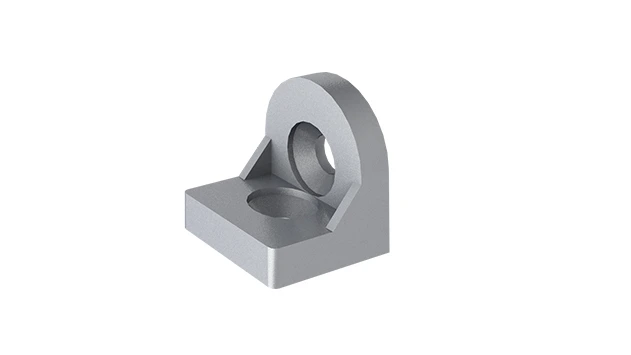
The turning angle aluminum profile connector provides a 90 degree hidden corner connection. 2020 it is means this size is used for 20 series aluminum profile.The corner code comes with set screws that allow for quick, easy connections.
In the fast-paced world of modern manufacturing, where agility and efficiency are the cornerstones of success, every component in a production line plays a silent yet pivotal role. Imagine walking through a bustling factory floor—conveyor belts hum softly, workbenches are organized with precision, and material racks glide smoothly as teams assemble products with synchronized focus. What if I told you that much of this seamless coordination hinges on a small, unassuming part? Enter the Turning Angle Code 2020 —a humble aluminum corner code that's quietly revolutionizing how lean systems are built, adapted, and sustained. In this article, we'll explore why this tiny component has become indispensable for reusable lean tube setups, how it integrates with aluminum profiles , and the tangible impact it brings to lean pipe workbenches , material racks, and beyond.
What Exactly Is the Turning Angle Code 2020?
Let's start with the basics. The Turning Angle Code 2020 is a specialized aluminum profile accessory designed to connect 2020 series aluminum profiles at precise angles—most commonly 90 degrees, though its versatility extends to other configurations with the right adjustments. Think of it as the "hinge" that holds the skeleton of a lean system together, but with a twist: unlike rigid welded joints or flimsy plastic clips, this angle code is engineered for both strength and adaptability.
Crafted from high-grade aluminum alloy, it inherits the material's best traits: lightweight yet surprisingly strong, resistant to corrosion, and easy to work with. Its design is deceptively simple: a compact, L-shaped bracket with pre-drilled holes that align perfectly with the T-slots of 2020 aluminum profiles. This T-slot compatibility is key—it means you can secure the angle code using standard bolts, nuts, or even quick-release fasteners, no welding or specialized tools required.
But what truly sets the Turning Angle Code 2020 apart is its focus on reusability. In traditional manufacturing setups, once a workbench or rack was bolted or welded together, changing its structure meant cutting, rewelding, or even replacing entire sections. The Turning Angle Code 2020 flips that script. Loosen a few bolts, reposition the profiles, retighten, and voilà—your setup is transformed. It's like building with advanced Lego bricks, but for grown-ups running factories.
Design & Materials: Why Aluminum Makes All the Difference
To understand why the Turning Angle Code 2020 works so well, let's dive into its construction. Aluminum isn't just a random choice here; it's a deliberate engineering decision. Aluminum alloys, particularly those used in extrusion profiles, offer an unbeatable balance of strength and weight. A typical Turning Angle Code 2020 weighs less than 50 grams, yet can support hundreds of pounds when paired with 2020 aluminum profiles—critical for structures like workbenches that need to hold tools, parts, or even heavy machinery.
Corrosion resistance is another big plus. Factories are tough environments—oils, coolants, and humidity can take a toll on metal components. Aluminum forms a natural oxide layer that protects it from rust, ensuring the angle code stays functional for years, even in less-than-ideal conditions. Compare that to steel, which would require regular painting or coating, or plastic, which can crack or warp under stress over time.
The T-slot design of the 2020 aluminum profile is the unsung hero here. These slots run along the length of the profile, allowing accessories like the Turning Angle Code 2020 to attach anywhere along the rail, not just at fixed points. This flexibility means you can customize the height of a shelf, the width of a workbench, or the angle of a material rack with pinpoint accuracy. Need to add a tool holder to your lean pipe workbench? Slide the angle code into place, secure it, and you're done. No drilling new holes, no guesswork.
Even the finish matters. Most Turning Angle Code 2020 components come with an anodized coating—a process that thickens the natural oxide layer, enhancing durability and giving it a sleek, professional look. This coating also reduces friction, making it easier to slide the angle code into position during assembly. It's these small details that turn a basic bracket into a cornerstone of lean manufacturing.

The Critical Role in Reusable Lean Components
Reusability is the heartbeat of lean systems . Lean manufacturing, at its core, is about eliminating waste—whether that's wasted time, materials, or effort. The Turning Angle Code 2020 embodies this philosophy by making it possible to reconfigure, repurpose, and reuse components instead of discarding them.
Let's paint a scenario. Suppose a electronics manufacturer needs to shift production from smartphones to tablets. Their existing lean pipe workbenches are set up for small, lightweight phone parts, but tablets require wider surfaces and taller shelving for larger components. With traditional welded workbenches, this would mean ordering new workbenches—a costly, time-consuming process. With Turning Angle Code 2020, though, the team can disassemble the old workbenches, reposition the 2020 aluminum profiles using the angle codes, and have new, tablet-ready workbenches up and running in a day. The angle codes? They're reused, no waste, no extra cost.
This reusability also extends to scaling. As a business grows, so do its needs. Maybe a small startup begins with a single material rack B (3 row and 3 floor) but soon needs to add more levels. With the Turning Angle Code 2020, they can simply add more 2020 profiles and angle codes to the existing rack, rather than buying an entirely new unit. It's modularity at its finest—build what you need today, expand tomorrow without starting over.
Sustainability is another layer here. The manufacturing industry is under increasing pressure to reduce its environmental footprint, and the Turning Angle Code 2020 aligns perfectly with that goal. By extending the lifespan of lean components, it cuts down on the need for raw materials and reduces waste sent to landfills. Aluminum itself is highly recyclable, so even if a component does reach the end of its life, it can be melted down and repurposed—unlike plastic accessories that degrade or steel that's often coated with non-recyclable materials.

Integration with Aluminum Profiles: A Match Made in Lean Heaven
The Turning Angle Code 2020 doesn't work in isolation—it's part of a larger ecosystem built around 2020 aluminum profiles. These profiles, named for their 20mm x 20mm cross-section, are the backbone of countless lean systems. They're lightweight, strong, and infinitely customizable, thanks to their T-slot design. When paired with the Turning Angle Code 2020, they become a dynamic duo capable of creating everything from simple workbenches to complex conveyor systems.
Let's take a closer look at how they integrate. A 2020 aluminum profile has four T-slots (one on each side), each running the full length of the profile. The Turning Angle Code 2020 has holes that align with these slots, allowing bolts to pass through the angle code and into the slot. Once tightened, the bolt's head locks into the T-slot, creating a secure connection. The beauty is that you can adjust the position of the angle code along the profile by simply sliding it—no need to drill new holes or modify the profile itself.
This integration also opens the door to mixing and matching with other aluminum profile accessories . Want to add a roller track to your workbench for easy material flow? Attach a roller track placon mount using the same T-slots and angle codes. Need a caster wheel for mobility? Bolt a caster installation base to the angle code. It's a plug-and-play system where components work together seamlessly, reducing the need for custom parts.
For example, consider the "Workbench E (single deck-without caster)" from many lean system suppliers. This basic workbench relies on 2020 aluminum profiles connected by Turning Angle Code 2020 at each corner. If the user later decides they need mobility, they can add casters by attaching caster accessories to the existing angle codes—no need to buy a whole new workbench. That's the power of integration: your initial investment grows with your needs.
Real-World Benefits: Why Manufacturers Can't Get Enough
Theory is great, but let's talk about real results. Manufacturers who switch to Turning Angle Code 2020-equipped systems report three key benefits: cost savings, time efficiency, and adaptability.
Cost Savings: The upfront cost of aluminum profiles and angle codes might be slightly higher than basic steel or plastic, but the long-term savings are staggering. A study by a leading manufacturing consultancy found that companies using reusable lean components like the Turning Angle Code 2020 reduced their equipment replacement costs by 40% over five years. When you can reconfigure a $500 workbench instead of buying a new $1,200 one every time your needs change, those savings add up fast.
Time Efficiency: Traditional setup or reconfiguration of workbenches/racks could take days—waiting for welders, sourcing new parts, or troubleshooting misalignments. With the Turning Angle Code 2020, a team of two can assemble a basic workbench in under an hour and reconfigure it in 30 minutes. One automotive parts supplier shared that they used to shut down a production line for a full day to retool; now, they do it during a lunch break. That's downtime transformed into productive time.
Adaptability: In today's market, product lifecycles are shorter than ever. A consumer electronics company might launch a new device every 6-12 months, each with different assembly requirements. The Turning Angle Code 2020 lets them pivot quickly. One day, they're assembling smartwatches on a compact workbench; the next, they're building fitness trackers with a wider surface and extra shelving—all with the same base components.
Perhaps the most unexpected benefit? Employee satisfaction. Workers on the factory floor appreciate tools that work with them, not against them. A production supervisor at a medical device plant put it best: "Before, when we needed to adjust a rack, we'd have to ask maintenance for help with welding. Now, the team can do it themselves. It makes them feel more in control, and that boosts morale."
How Does It Stack Up Against Traditional Joints? Let's Compare
To truly appreciate the Turning Angle Code 2020, let's see how it compares to common alternatives. Below is a table breaking down key factors:
| Feature | Turning Angle Code 2020 (Aluminum) | Welded Steel Joints | Plastic Corner Clips |
|---|---|---|---|
| Reusability | High (easily disassembled/reused) | None (permanent once welded) | Low (prone to breaking when reused) |
| Installation Time | 5-10 minutes per joint (no special tools) | 30+ minutes per joint (requires welding equipment) | 5 minutes per joint (but less secure) |
| Strength | High (supports heavy loads) | Very high (but rigid) | Low (only for light loads) |
| Corrosion Resistance | High (anodized aluminum) | Low (prone to rust without coating) | High (but degrades in UV light/heat) |
| Cost Over Time | Low (reusable, no replacement needed) | High (requires replacement when reconfiguring) | Medium (cheap upfront, but frequent replacement) |
| Flexibility | High (adjustable angles, positions) | None (fixed angles) | Medium (limited angle options) |
The table speaks for itself. Welded joints are strong but permanent, plastic clips are cheap but flimsy, and the Turning Angle Code 2020 hits the sweet spot of strength, flexibility, and cost-effectiveness.
Real-World Applications: Where You'll Find It Hard at Work
The Turning Angle Code 2020 isn't just a theoretical win—it's hard at work in factories, warehouses, and workshops around the world. Let's explore a few common applications:
1. Lean Pipe Workbenches
The most common application is, of course, lean pipe workbenches . Whether it's a simple single-deck workbench (like Workbench E) or a multi-tiered station with tool hooks, lighting, and storage, the Turning Angle Code 2020 holds the frame together. Workers can adjust the height of the bench by repositioning the legs (connected via angle codes), add side shelves for parts, or even attach a small conveyor using roller track accessories—all without modifying the core structure.
2. Material Racks & Storage Systems
Material Rack B (3 row and 3 floor) is a perfect example. These racks need to be sturdy enough to hold boxes of parts but flexible enough to reconfigure when inventory changes. The Turning Angle Code 2020 allows users to adjust shelf heights, add dividers, or even expand the rack's width by adding more profiles. It's not uncommon to see these racks repurposed entirely—from holding electronic components one month to automotive parts the next.
3. Conveyor & Roller Track Systems
Even conveyor systems benefit from the Turning Angle Code 2020. Roller tracks, which rely on smooth, precise alignment, use angle codes to connect aluminum guide rails (like Aluminum Guide Rail A or B). If a section of the track gets damaged, you can replace just that section instead of the entire conveyor—saving time and money.
4. Turnover Trolleys
Trolleys used to move materials around the factory need to be lightweight yet durable. The Turning Angle Code 2020 connects the trolley's frame, while caster wheels (attached via caster installation bases) provide mobility. When the trolley isn't needed for one task, it can be reconfigured into a small parts cart by adjusting the shelves—all thanks to the angle code's reusability.
Looking Ahead: The Future of Lean Systems & the Turning Angle Code 2020
As manufacturing continues to evolve, one trend is clear: agility will only become more important. With the rise of small-batch production, custom orders, and Industry 4.0, factories need systems that can adapt in real time. The Turning Angle Code 2020 is perfectly positioned to meet this demand.
We're already seeing innovations built around this concept. Some suppliers are developing smart angle codes with built-in sensors that monitor tension or vibration, alerting maintenance teams if a joint is loose. Others are experimenting with 3D-printed aluminum alloys to create even lighter, stronger angle codes. And as sustainability becomes a bigger priority, we'll likely see more recycled aluminum used in production, reducing the environmental footprint even further.
Another trend is the democratization of lean manufacturing. Small and medium-sized enterprises (SMEs) often struggle to adopt lean systems due to high upfront costs. The Turning Angle Code 2020 and modular aluminum profiles lower that barrier, making lean principles accessible to businesses that couldn't afford custom welded setups in the past. This could lead to a wave of innovation as more companies can now experiment with flexible production lines.
Perhaps most exciting is the potential for "digital twins"—virtual replicas of physical production lines. With modular components like the Turning Angle Code 2020, manufacturers can simulate reconfigurations in a digital space before making changes in the real world, reducing trial and error. Imagine designing a new workbench layout on a computer, testing it virtually, then using the same Turning Angle Code 2020 components to build it exactly as planned—no surprises, no delays.
Wrapping Up: Small Component, Big Impact
The Turning Angle Code 2020 might be small in size, but its impact on lean manufacturing is enormous. It's a testament to the idea that sometimes, the most powerful innovations are the ones that make complex things simple. By prioritizing reusability, strength, and ease of use, it empowers manufacturers to build systems that grow with them, reduce waste, and adapt to an ever-changing market.
Whether you're running a massive automotive plant or a small workshop, the message is clear: the future of manufacturing isn't about rigid, one-size-fits-all setups. It's about flexibility, sustainability, and making every component count. And in that future, the Turning Angle Code 2020 will be right there, quietly holding it all together—one angle at a time.