- Company Articles
- Products and Technology
- Solution
- Turning Angle Code 2020: Enabling Sustainable Material Reuse in Lean Lines

Turning Angle Code 2020: Enabling Sustainable Material Reuse in Lean Lines
Related Product
Urning Angle Code 2020
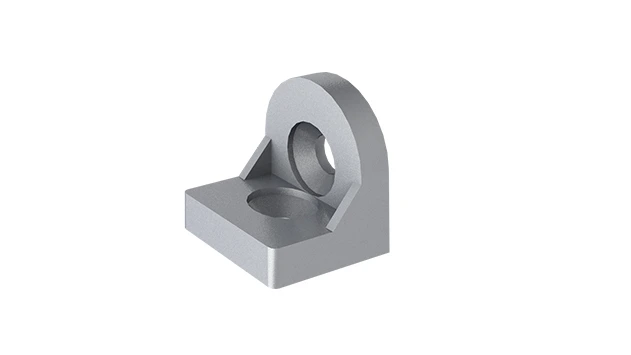
The turning angle aluminum profile connector provides a 90 degree hidden corner connection. 2020 it is means this size is used for 20 series aluminum profile.The corner code comes with set screws that allow for quick, easy connections.
Walk into any modern manufacturing facility, and you'll likely hear two phrases repeated like mantras: "lean" and "sustainable." On one hand, lean systems demand efficiency—cutting waste, streamlining workflows, and maximizing productivity. On the other, sustainability pushes for minimizing environmental impact, reducing resource consumption, and reusing materials wherever possible. For years, these two goals have felt like distant cousins in the industrial world: lean focused on speed and cost, sustainability on planet and purpose. But what if there was a component that bridged the gap? Enter the Turning Angle Code 2020, a small but mighty innovation in aluminum profile systems that's quietly revolutionizing how factories build, adapt, and reuse their workspaces.
In this article, we'll dive into how this unassuming connector is becoming the backbone of sustainable lean lines, making it easier than ever for manufacturers to adapt to changing needs without scrapping entire structures. We'll explore its role in aluminum profile systems, its impact on workbench design, roller track configurations, and even caster wheel integration—all while keeping material reuse at the forefront. Because in today's manufacturing landscape, the most efficient lines aren't just lean; they're designed to last, adapt, and leave a lighter footprint.
1. The Lean-Sustainability Puzzle: Why Rigid Systems Fail Both
To understand why Turning Angle Code 2020 matters, let's first unpack the challenges of traditional manufacturing setups. Lean systems, at their core, are about eliminating "muda"—the Japanese term for waste. This includes overproduction, waiting, unnecessary movement, and yes, waste from inflexible infrastructure. Think about a typical factory workbench: welded steel frames, fixed shelves, permanent roller tracks bolted to the floor. It works great… until production needs change. Maybe a new product line requires a taller bench, or a roller track needs to be rerouted to accommodate a new machine. Suddenly, that "durable" steel structure becomes a liability. To adapt, teams often end up cutting, welding, or even scrapping the entire setup—wasting materials, time, and money.
Sustainability goals only amplify this problem. The manufacturing industry is under increasing pressure to reduce its carbon footprint, and material waste is a big part of that equation. The EPA estimates that manufacturing accounts for over 20% of global waste, with a significant portion coming from discarded equipment and infrastructure. Traditional fixed systems are designed for longevity, but not for adaptability. They're built to last "forever," but in reality, production lines evolve far faster than that. So those "forever" structures often end up in landfills long before their material lifespan is up—hardly sustainable.
This is where modularity comes in. Lean systems thrive on flexibility; sustainability thrives on reusability. A modular setup—one where components can be easily assembled, disassembled, and repurposed—hits both targets. And that's exactly where aluminum profiles and connectors like Turning Angle Code 2020 step in.
2. What Is Turning Angle Code 2020? The Unsung Hero of Modular Design
At first glance, Turning Angle Code 2020 might look like just another metal bracket. But its design is deceptively clever. Part of the aluminum profile accessory family, this small connector is engineered to join aluminum profiles at precise angles—typically 90 degrees, but with adjustability that allows for custom configurations. Made from high-grade aluminum alloy, it's lightweight yet surprisingly strong, capable of supporting the weight of workbenches, roller tracks, and even heavy-duty material racks.
What sets it apart from older connectors (think bulky steel clamps or permanent welds) is its simplicity and versatility. Unlike welded joints, which require specialized labor and are impossible to adjust without cutting, Turning Angle Code 2020 uses a combination of bolts and internal grooves to lock onto standard aluminum profiles (like the 2020 or 3030 series). This means assembly takes minutes, not hours, and disassembly is just as easy. No welding, no cutting, no power tools required beyond a basic hex key.
But its real superpower? Reusability. Once a workbench or roller track is no longer needed in one area, the Turning Angle Code 2020 can be loosened, the aluminum profiles disassembled, and the entire setup reconfigured elsewhere. A workbench in the electronics assembly line today can become a material rack in the packaging area tomorrow—all without a single piece of material going to waste.

3. How Turning Angle Code 2020 Enables Sustainable Material Reuse
Let's break down the mechanics of how this connector drives sustainability in lean lines. It all boils down to three key principles: modularity, durability, and material efficiency.
Modularity: The Foundation of Reuse
Modularity is the ability to build systems from interchangeable parts, and Turning Angle Code 2020 is modularity personified. Aluminum profiles, by design, are standardized—same grooves, same dimensions across series (like 2020, 3030, 4040). This means a profile used in a workbench can just as easily be used in a roller track or a caster wheel base, as long as the connectors match. Turning Angle Code 2020 acts as the universal translator, ensuring different profiles can be joined securely, even when repurposed.
Consider a scenario: A factory needs to downsize a production line for a seasonal product. With traditional steel workbenches, those benches would likely sit idle, taking up space, until the next season (if they're not scrapped entirely). With aluminum profiles and Turning Angle Code 2020, those benches can be broken down into individual profiles and connectors. The profiles might then be reassembled into smaller workstations for a new product line, while the connectors are reused to build a roller track for material transport. Nothing is wasted—everything is repurposed.
Durability: Aluminum's Role in Longevity
Aluminum is a game-changer here. Unlike steel, which can rust or corrode over time, aluminum is naturally resistant to corrosion, thanks to its oxide layer. This means aluminum profiles and Turning Angle Code 2020 connectors hold up to the wear and tear of factory environments—spills, humidity, repeated assembly/disassembly—without degrading. A study by the Aluminum Association found that aluminum components can maintain structural integrity through hundreds of assembly cycles, making them ideal for long-term reuse.
Compare that to plastic connectors, which can crack under heavy loads, or low-grade steel clamps that rust and seize up. Turning Angle Code 2020's aluminum construction ensures it doesn't just enable reuse once or twice—it enables reuse over years, even decades. That's sustainability in action: materials that outlast multiple production cycles, reducing the need for constant replacements.
Material Efficiency: Less Waste, More Value
Every time a traditional fixed structure is scrapped, it's not just the metal that's wasted—it's the energy and resources that went into producing it. Aluminum production is energy-intensive, but aluminum is also 100% recyclable with no loss in quality. However, recycling still requires energy. Reusing aluminum profiles and connectors? That's even better. By extending the lifespan of each component through repurposing, Turning Angle Code 2020 reduces the need for new aluminum production and recycling, cutting both costs and carbon emissions.
For example, a single 2020 aluminum profile (1 meter long) used in a workbench today, then repurposed into a roller track tomorrow, and later into a material rack, avoids the energy cost of producing three separate profiles. Multiply that across an entire factory, and the savings—both environmental and financial—add up quickly.

4. Real-World Impact: Turning Angle Code 2020 in Action
To see how this plays out on the factory floor, let's look at three common applications: workbenches, roller tracks, and caster wheel bases. These are the workhorses of manufacturing, and where Turning Angle Code 2020 makes its most tangible difference.
Workbenches: From Single-Use to Multi-Life
Workbenches are the heart of any assembly line, and they're also one of the most frequently reconfigured tools. A workbench for assembling small electronics might need a flat surface and built-in storage, while one for heavy machinery assembly needs a reinforced top and higher weight capacity. With Turning Angle Code 2020, a basic aluminum profile frame can be adapted to both.
Take the "Workbench E (Single Deck-Without Caster)" from many lean system suppliers. Its frame is built using 2020 or 3030 aluminum profiles joined by Turning Angle Code 2020 connectors. If the factory switches to a taller product, workers can simply loosen the connectors, add extension profiles to the legs, and re-tighten—no new bench needed. If the bench is no longer needed in assembly, it can be disassembled, and the profiles used to build a smaller inspection station or a mobile cart (by adding caster wheels via, you guessed it, Turning Angle Code 2020).
Roller Tracks: Rerouting Without Rebuilding
Roller tracks are critical for material flow in lean lines, moving parts from one station to the next. Traditional roller tracks are often bolted to the floor or welded to steel frames, making rerouting a nightmare. With aluminum roller tracks and Turning Angle Code 2020, that changes. Roller track components like "Plastic Roller Track Guide Rail Yellow" or "Aluminum Guide Rail A" can be mounted to aluminum profiles using the same connectors, allowing for quick adjustments.
Imagine a factory that needs to shift its roller track from a straight line to a 90-degree turn to accommodate a new robotic arm. With Turning Angle Code 2020, workers can disconnect the straight track sections, add a corner section using the connector, and reattach—all in an hour. No cutting, no welding, no waste. Even better, if the robotic arm is moved later, the track can be disassembled and reused elsewhere.
Caster Wheels: Mobility Without Compromise
Mobility is key in lean systems—workstations and material racks that can move with production needs reduce unnecessary transportation waste. Caster wheels make this possible, but attaching them securely to frames has traditionally required welding or drilling, which limits reuse. Turning Angle Code 2020 solves this by providing a standardized mounting point for caster wheel accessories.
For example, "Flat Adjustable Swivel Caster Wheel" or "360° Swivel Expanding Stem Casters Wheel with Brake" can be bolted directly to aluminum profiles using Turning Angle Code 2020 brackets. If a mobile cart is no longer needed, the casters can be removed, and the frame repurposed as a stationary shelf—no damage to the profiles, no wasted caster components.
5. The Numbers Speak: A Comparison of Traditional vs. Modular Systems
To quantify the impact of Turning Angle Code 2020, let's compare traditional fixed systems with modular aluminum profile systems using this connector. The table below highlights key metrics for a typical factory setup (10 workbenches, 5 roller tracks, 3 material racks) over a 5-year period.
| Metric | Traditional Fixed Systems (Steel/Welded) | Modular Aluminum Systems (w/ Turning Angle Code 2020) |
|---|---|---|
| Initial Setup Cost | Lower (steel is cheaper upfront) | Higher (aluminum profiles/connectors cost more initially) |
| Number of Reconfigurations Possible | 1-2 (requires cutting/welding; structural integrity declines) | 5+ (easy disassembly/reassembly; no loss of integrity) |
| Material Waste Over 5 Years | ~60% (scrapped structures after reconfigurations) | ~5% (minimal waste from occasional lost small parts) |
| Energy Used for Replacements | High (new steel production, welding energy) | Low (reuse of existing profiles; minimal new material) |
| Total Cost Over 5 Years | Higher (repeated purchases of new structures) | Lower (initial investment offset by reuse; no replacement costs) |
The data is clear: while modular systems have a higher upfront cost, their ability to be reused and reconfigured drives long-term savings—both financial and environmental. For manufacturers committed to lean and sustainability, this isn't just a "nice to have"—it's a competitive advantage.
6. Beyond the Factory Floor: Turning Angle Code 2020 and the Circular Economy
The circular economy—an economic model that aims to eliminate waste and keep resources in use for as long as possible—is gaining traction in manufacturing. Turning Angle Code 2020 aligns perfectly with this model by enabling "closed-loop" material flows. Aluminum profiles and connectors aren't just reused within a single factory; they can be resold, repurposed across industries, or eventually recycled into new profiles with minimal energy loss.
Consider a small contract manufacturer that specializes in short-run productions. With modular systems, they can take on diverse projects without investing in new infrastructure for each. A workbench used for medical device assembly one month can be disassembled and sold to a furniture maker the next, who reuses the profiles to build custom shelves. The Turning Angle Code 2020 connectors, being standardized, remain valuable across these use cases. This kind of material mobility is impossible with fixed steel structures, which are too heavy, too custom, and too prone to damage during disassembly.
7. The Future of Lean Lines: Turning Angle Code 2020 as a Catalyst for Innovation
As manufacturing continues to evolve—with trends like Industry 4.0, customization, and shorter product lifecycles—the need for adaptable infrastructure will only grow. Turning Angle Code 2020 isn't just solving today's problems; it's enabling tomorrow's innovations. Imagine "smart" lean lines where aluminum profiles with embedded sensors (for tracking material flow or monitoring weight) are connected via Turning Angle Code 2020, allowing for real-time adjustments. Or modular clean rooms for pharmaceutical production, where walls and workstations can be reconfigured in hours to meet changing regulatory requirements.
Suppliers are already building on this foundation, offering compatible accessories like "Internal Rotary Aluminum Joints" or "Parallel Fixation Aluminum Pipe Joints" that work seamlessly with Turning Angle Code 2020. This ecosystem of modular components means the possibilities for reuse are expanding every year.
Conclusion: Small Connector, Big Impact
Turning Angle Code 2020 might be small in size, but its impact on lean systems and sustainability is enormous. By enabling easy assembly, disassembly, and reuse of aluminum profiles, it bridges the gap between lean efficiency and environmental responsibility. It turns rigid, wasteful infrastructure into flexible, adaptable tools that grow with production needs—reducing material waste, cutting costs, and helping factories meet their sustainability goals.
In a world where "lean" and "sustainable" are no longer optional, but essential, innovations like Turning Angle Code 2020 are more than just accessories. They're the building blocks of the factories of the future—factories that do more with less, waste nothing, and thrive in an ever-changing market. So the next time you walk into a manufacturing facility, take a closer look at those aluminum workbenches and roller tracks. Chances are, there's a Turning Angle Code 2020 holding them together—and quietly changing the way we build, work, and reuse.