- Company Articles
- Products and Technology
- Product knowledge
- Turning Angle Code 2020: Essential for Lean Tube System Scalability

Turning Angle Code 2020: Essential for Lean Tube System Scalability
Related Product
Urning Angle Code 2020
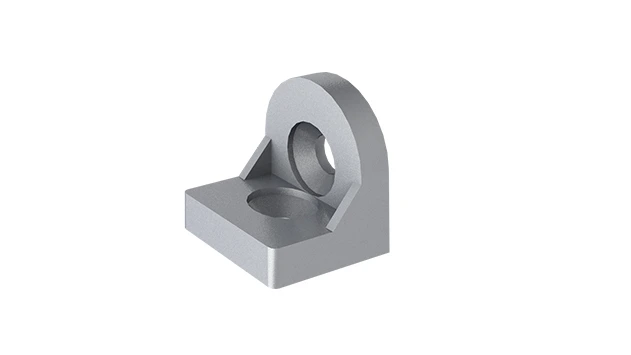
The turning angle aluminum profile connector provides a 90 degree hidden corner connection. 2020 it is means this size is used for 20 series aluminum profile.The corner code comes with set screws that allow for quick, easy connections.
In the fast-paced world of modern manufacturing, where production lines shift overnight and customer demands change by the hour, the ability to adapt isn't just a luxury—it's survival. For years, businesses have turned to lean tube systems to streamline workflows, reduce waste, and keep operations agile. These systems, built from interconnected tubes, joints, and accessories, promise flexibility, but all too often, they hit a wall: scalability. Fixed joints that require welding, components that don't play well with new additions, and rigid structures that resist reconfiguration can turn a "lean" system into a bottleneck. Enter the Turning Angle Code 2020—a small, unassuming component that's quietly revolutionizing how lean tube systems grow and adapt. In this article, we'll explore why this humble connector has become indispensable for manufacturers aiming to build truly scalable, future-ready production environments.
The Scalability Problem: Why Traditional Lean Systems Fall Short
Before diving into the solution, let's first understand the problem. Lean manufacturing thrives on continuous improvement—eliminating waste, optimizing flow, and responding to change. Lean tube systems, which use modular pipes (like aluminum or stainless steel) and joints to build workbenches, material racks, and conveyor lines, were designed to embody this philosophy. But in practice, many teams find themselves stuck with systems that are anything but flexible. Consider a scenario where a small electronics manufacturer decides to expand its product line. Their existing assembly workbench, built with standard fixed joints, was perfect for assembling smartphones, but now needs to accommodate larger tablet components. The legs are too short, the shelving is too narrow, and the attached roller track can't handle the new product's weight. To reconfigure, they'd need to cut pipes, weld new joints, or even buy an entirely new workbench—wasting time, money, and defeating the "lean" purpose.
The root cause? Many traditional lean tube components prioritize stability over adaptability. Welded joints or one-size-fits-all connectors lock the system into a fixed layout, making even minor adjustments a hassle. This rigidity becomes especially problematic as businesses grow. A startup might begin with a single workbench, but within a year, need to add a material rack, extend a conveyor line, or reposition a turnover trolley. Without scalable components, each expansion becomes a project of its own, diverting resources from core operations.
What Is Turning Angle Code 2020? The Unsung Hero of Lean Systems
At first glance, the Turning Angle Code 2020 might look like just another metal bracket. But its design tells a different story. Part of the "angle code" family—connectors used to join aluminum profiles at specific angles—this component is engineered specifically for 2020 aluminum profiles (a common, lightweight profile size measuring 20mm x 20mm). Made from high-grade aluminum alloy, it's both lightweight and surprisingly strong, capable of supporting loads up to 50kg per joint without bending or warping. But what truly sets it apart is its focus on flexibility.
Unlike fixed joints that lock tubes into 90-degree angles, the Turning Angle Code 2020 features a unique pivot mechanism. It uses two precision-machined plates that bolt onto 2020 aluminum profiles, with a central screw that tightens to lock the angle in place—or loosens to allow rotation. This means it can adjust from 0 to 180 degrees, making it possible to create everything from straight lines to gentle slopes (ideal for roller tracks) or even custom angles for specialized workbenches. And because it's designed for T-slot aluminum profiles, it integrates seamlessly with other accessories: think cable management clips, tool holders, or even LED light mounts. No welding, no drilling, no guesswork—just a few turns of a hex key, and the system transforms.

How Turning Angle Code 2020 Solves Scalability: 3 Key Advantages
To understand why the Turning Angle Code 2020 is a game-changer, let's break down its impact on three critical areas of scalability: adaptability, cost-efficiency, and compatibility.
1. Adaptability: Grow Without Starting Over
The most obvious benefit is adaptability. Let's return to our electronics manufacturer example. With Turning Angle Code 2020 connectors, their workbench isn't a fixed structure—it's a blank canvas. Need to raise the height by 10cm? Loosen the angle codes, adjust the legs, and retighten. Want to add a sloped roller track for tablet cases? Rotate the codes to a 15-degree angle, attach the roller track (using compatible "roller track placon mount for aluminum profile flat" accessories), and the materials glide smoothly into place. Even better, if next month they switch to smartwatches, they can disassemble the entire setup, reuse the pipes and angle codes, and build a smaller, more compact workbench. The system grows with the business, not against it.
This adaptability extends beyond workbenches. Material racks, for instance, often need to evolve as inventory changes. A "material rack b (3 row and 3 floor)" (a common configuration) might start with 30cm shelves for small parts, but as stock grows, those shelves need to be deeper. With traditional fixed joints, this would require new side panels and crossbars. With Turning Angle Code 2020, operators can simply adjust the angle of the shelf supports, swap in longer crossbars, and the rack is ready for larger bins—all in under an hour.
2. Cost-Efficiency: Save on Labor and Materials
Scalability isn't just about physical growth—it's about doing more with less. Traditional reconfiguration often requires skilled labor (like welders) or new components, driving up costs. The Turning Angle Code 2020 eliminates both. Since it installs with basic hand tools (no welding or specialized training needed), even line operators can make adjustments. A recent case study from a automotive parts supplier found that using angle codes reduced reconfiguration time by 70% compared to traditional welded joints. What used to take a full day (and a $500 welding service) now takes two hours with a hex key and a team member from the production line.
Material costs drop too. Instead of buying new pipes or workbenches, teams reuse existing components. A 2022 survey by the Lean Manufacturing Association found that companies using adjustable angle codes reduced their annual spending on lean system upgrades by 40%. One food packaging plant reported reusing 80% of their original aluminum pipes and angle codes when expanding from a single to a dual-shift operation—saving over $12,000 in new equipment costs.
3. Compatibility: Play Well With Others
A component is only as good as its ability to work with the rest of the system. The Turning Angle Code 2020 shines here, thanks to its design for 2020 aluminum profiles—the industry standard for lightweight, versatile lean systems. This means it pairs seamlessly with a wide range of accessories, from "lean pipe joints" and "caster wheels" to "aluminum guide rail a" and "swivel roller balls 1 inch." For example, adding a caster to the bottom of a workbench? Use a "caster install base" that bolts directly to the angle code. Need to connect a roller track to the workbench surface? The "roller track placon mount for rail connection" fits perfectly into the T-slot of the 2020 profile, secured by the angle code's stable base.
This compatibility also future-proofs investments. As manufacturers adopt newer technologies—like automated guided vehicles (AGVs) or IoT sensors—they can easily integrate these into existing systems using the angle codes. A pharmaceutical manufacturer, for instance, added IoT-enabled weight sensors to their material racks by attaching sensor mounts to the angle codes, avoiding the need to rebuild the entire rack.

Turning Angle Code 2020 vs. Other Angle Codes: A Comparison
You might be wondering: Are there other angle codes? Why 2020 specifically? While 3030 and 4040 angle codes exist (designed for larger profiles), the 2020 model strikes a sweet spot for scalability. Let's compare the three to see why:
| Feature | Turning Angle Code 2020 | Angle Code 3030 | Angle Code 4040 |
|---|---|---|---|
| Compatible Profile Size | 20mm x 20mm aluminum profiles | 30mm x 30mm aluminum profiles | 40mm x 40mm aluminum profiles |
| Material | Lightweight aluminum alloy (6063-T5) | Heavy-duty aluminum alloy (6061-T6) | Industrial-grade steel/aluminum mix |
| Load Capacity (per joint) | Up to 50kg | Up to 100kg | Up to 200kg |
| Adjustment Range | 0–180 degrees (continuous) | 0–90 degrees (fixed increments) | Fixed angles only (90/180 degrees) |
| Scalability Rating (1–5) | 5/5 (highly adaptable, low cost) | 3/5 (sturdy but less flexible) | 2/5 (best for heavy loads, minimal changes) |
| Best For | Small to medium workbenches, roller tracks, mobile trolleys | Heavy-duty material racks, assembly lines | Industrial conveyor systems, static storage |
The 2020 model's advantage lies in its balance of strength and flexibility. While 3030 and 4040 codes handle heavier loads, they sacrifice adjustability—most only lock into fixed angles (like 90 or 180 degrees) and are bulkier, making them harder to reconfigure. For businesses focused on scalability—especially small to mid-sized operations—the 2020 code offers the adaptability needed to grow without overinvesting in heavy-duty components they don't yet require.
Real-World Applications: How Manufacturers Are Using Turning Angle Code 2020
To truly appreciate the Turning Angle Code 2020's impact, let's look at how real businesses are using it today.
Case Study 1: A Furniture Manufacturer's Roller Track Revolution
A mid-sized furniture company in Michigan was struggling with material flow on their chair assembly line. Their existing roller track, built with fixed steel joints, was set at a 10-degree angle—perfect for small chair legs but too steep for larger armrests, which would slide too quickly and get damaged. Workers had to slow down, manually guiding each armrest, leading to bottlenecks. The team considered buying a new roller track, but with 12 stations, the cost was prohibitive. Instead, they retrofitted their existing aluminum roller track with Turning Angle Code 2020 connectors. By adjusting the angle to 5 degrees (using a protractor to ensure precision), the armrests now glide smoothly, reducing damage by 75% and speeding up production by 20%. Best of all, if they switch to sofas next year, they can adjust the angles again—no new track needed.
Case Study 2: A Bakery's Seasonal Workbench Makeover
A family-owned bakery in Oregon faces extreme seasonal demand: quiet winters, then a flood of orders for holiday cookies and cakes in Q4. For years, they stored extra workbenches in a warehouse, hauling them out in October and storing them again in January—a process that took two full days and risked damaging the equipment. When they switched to a lean tube system built with Turning Angle Code 2020 connectors, everything changed. Their "workbench e (single deck-without caster)" (a simple, lightweight model) now transforms into a double-decker bench by adding a second deck using angle codes. In winter, they use the single deck for daily operations. In October, they loosen the codes, attach extra legs and a second deck, and have double the workspace in under an hour. No more storage hassle, no more damage—just a system that flexes with the seasons.
Choosing the Right Turning Angle Code 2020: Key Considerations
Not all Turning Angle Code 2020 connectors are created equal. To ensure scalability, look for these features when sourcing from a lean pipe supplier:
- Material Quality: Opt for 6063-T5 aluminum alloy, which offers a balance of strength and corrosion resistance—critical for factories with high humidity or frequent cleaning.
- Adjustment Mechanism: Look for a smooth, incremental adjustment (not just preset angles) and a locking screw that won't slip under load. Nylon-coated screws are ideal, as they prevent stripping during repeated adjustments.
- Compatibility: Ensure the code fits standard 2020 T-slot aluminum profiles and works with common accessories like caster mounts, roller track brackets, and shelf supports.
- Load Rating: Check the load capacity (typically 40–60kg per joint) to match your needs. A workbench for small parts might need 40kg, while a material rack could require 60kg.
The Future of Lean Systems: Small Components, Big Impact
In the end, the Turning Angle Code 2020 is more than a connector—it's a symbol of what lean manufacturing should be: adaptable, efficient, and focused on the future. In a world where change is constant, scalability isn't just about growing bigger; it's about growing smarter. By choosing components that prioritize flexibility, businesses can build lean systems that evolve with their needs, reduce waste, and stay competitive for years to come.
So, the next time you look at your lean tube system, don't just see pipes and joints—see potential. And remember: the smallest components often hold the biggest keys to scalability. For manufacturers ready to stop fighting their systems and start growing with them, the Turning Angle Code 2020 isn't just essential—it's revolutionary.