- Company Articles
- Products and Technology
- Solution
- Turning Angle Code 2020 for Automotive Parts Handling: Lean Material Flow

Turning Angle Code 2020 for Automotive Parts Handling: Lean Material Flow
Related Product
Urning Angle Code 2020
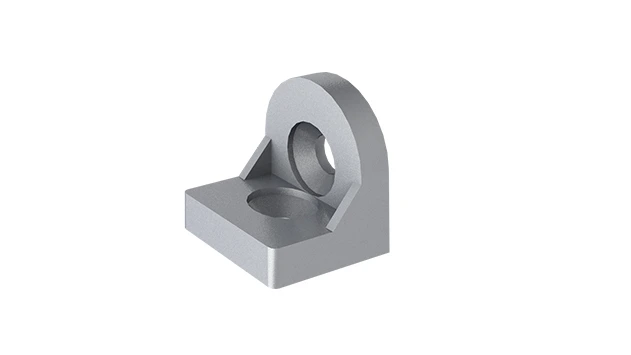
The turning angle aluminum profile connector provides a 90 degree hidden corner connection. 2020 it is means this size is used for 20 series aluminum profile.The corner code comes with set screws that allow for quick, easy connections.
The Pulse of Automotive Manufacturing – Why Material Flow Matters
Imagine standing on the floor of a bustling automotive plant. The air hums with the steady whir of machinery, workers in crisp uniforms move with purpose, and overhead, robotic arms glide like synchronized dancers, placing components with pinpoint precision. But beneath this orchestrated chaos lies a silent make-or-break factor: how parts move from Point A to Point B. A single delay in delivering a brake caliper to the assembly line, a misplaced bracket causing a worker to stretch across a cluttered workbench, or a roller track jamming mid-flow—these small hiccups can ripple into missed deadlines, increased costs, and frustrated teams.
In automotive manufacturing, where every second counts and margins are razor-thin, material flow isn't just a logistical detail—it's the heartbeat of productivity. For plant managers and floor supervisors, the challenge isn't just about making cars; it's about making the process of making cars as smooth, efficient, and waste-free as possible. And that's where lean material flow comes in. But lean isn't just a buzzword thrown around in boardrooms. It's a philosophy that starts with the smallest components, like the unassuming but critical Turning Angle Code 2020, and scales up to transform entire production lines.
Lean Material Flow: More Than a Buzzword – A Manufacturing Lifeline
At its core, lean manufacturing is about eliminating waste—or muda , as the Japanese term goes. Waste comes in many forms: wasted time searching for parts, wasted space storing unnecessary inventory, wasted energy moving heavy components across long distances, and even wasted human effort due to awkward workbench setups. For automotive plants, which handle thousands of unique parts daily—from tiny screws to bulky engine blocks—these inefficiencies add up fast.
Take, for example, a traditional parts handling system. Picture a workbench cluttered with tools, parts stacked haphazardly on shelves, and a roller track that's been cobbled together with mismatched connectors. A worker assembling a dashboard might spend 15 minutes a day just reaching for components that aren't within arm's reach, or wrestling with a roller track that won't adjust to the angle needed to slide parts smoothly. Over a month, that's 600 minutes—10 hours—of lost productivity per worker. Multiply that by a shift of 50 workers, and suddenly you're looking at 500 hours of wasted time annually. That's not just time; that's missed production quotas, delayed shipments, and dollars bleeding from the bottom line.
Lean material flow flips this script. It's about designing systems where parts arrive exactly when needed , in the exact quantity , and in a way that requires minimal effort from workers. It's about workbenches tailored to the human body, roller tracks that glide without friction, and connections between components that are so seamless, they almost disappear into the background. And in this ecosystem of efficiency, one small but mighty component has emerged as a quiet hero: the Turning Angle Code 2020.

Enter the Turning Angle Code 2020: A Small Component with a Big Impact
If lean material flow is a symphony, the Turning Angle Code 2020 is the conductor's baton—small, unassuming, but essential to keeping every section in rhythm. So, what exactly is it? At first glance, it might look like just another metal bracket: a compact, lightweight connector designed to join aluminum profile sections at precise angles, typically 90 degrees or custom configurations, depending on the needs of the workbench or roller track. But its simplicity is deceptive. Made from high-grade aluminum profile, it's engineered to be both strong (supporting heavy loads without bending) and flexible (adjustable to fit dynamic production needs).
Let's break down why this matters. In traditional setups, connecting workbench frames or roller track segments often meant welding, drilling, or using clunky, one-size-fits-all brackets. Welding is permanent—great for stability, terrible for adaptability. If a production line switches from assembling sedans to SUVs, requiring a wider workbench or a steeper roller track angle, those welded joints become obstacles, forcing teams to rebuild entire sections from scratch. Drilled brackets, meanwhile, loosen over time, leading to wobbly workbenches or roller tracks that shift mid-use, risking damage to parts or injury to workers.
The Turning Angle Code 2020 solves this with a clever design: it uses a T-slot aluminum profile system, where bolts slide into pre-cut grooves, allowing for tool-free adjustments. Need to raise a workbench by 6 inches to reduce worker strain? Loosen the bolts, reposition the angle code, and tighten—done. Want to reconfigure a roller track to feed parts to a new assembly station? Swap out the angle code's orientation, and the track pivots smoothly. It's like building with modular blocks, but for industrial machinery. And because it's made from aluminum profile, it's corrosion-resistant, lightweight enough for easy handling, and durable enough to withstand the daily grind of a busy plant.

How Turning Angle Code 2020 Transforms Roller Track Systems
Roller tracks are the arteries of material flow, carrying everything from plastic trim pieces to metal engine mounts across the factory floor. But a roller track is only as good as its connections. A poorly aligned joint can cause parts to jam, slow down, or even fall off, turning a time-saver into a bottleneck. This is where the Turning Angle Code 2020 truly shines.
Consider a typical scenario: a roller track feeding parts from a storage area to an assembly workbench. In a traditional setup, the track might be made of steel, with fixed-angle brackets that can't adjust to the slight slope of the factory floor. Over time, this misalignment causes rollers to wear unevenly, and parts start to "stick" at the joint. A worker has to stop, reach down, and nudge the part forward—losing 30 seconds here, a minute there. Multiply that by 500 parts a day, and suddenly you're looking at hours of lost productivity.
With the Turning Angle Code 2020, that joint becomes a flexible pivot point. The aluminum profile construction ensures a snug, rattle-free fit, while the T-slot design lets teams fine-tune the angle to match the floor's slope. Even better, it works seamlessly with roller track accessories like plastic guide rails (yellow or grey, depending on the part type) and swivel roller balls, creating a smooth, continuous path for parts. For example, when moving delicate electronic components (which often require ESD protection), the angle code can be paired with an ESD workstation, grounding the track to prevent static damage—all without sacrificing adjustability.
John, a floor supervisor at a mid-sized automotive plant in Michigan, puts it this way: "We used to spend every Friday afternoon fixing roller track jams. Now, with the Turning Angle Code 2020, we set the angle once, and it stays. The guys on the line don't even think about the track anymore—it just works. And when we retool for a new model? We adjust the angle codes in an hour instead of rebuilding the whole track over a weekend."
Case Study: From Chaos to Cohesion – A Plant's Lean Transformation
To see the Turning Angle Code 2020 in action, let's look at a real-world example. A major automotive supplier in Ohio, specializing in brake system components, was struggling with a bottleneck in its "final inspection" workbench area. Workers were spending 20% of their time just moving parts between stations: a clunky, welded steel workbench with no integrated roller track, parts stored on shelves 3 feet away, and a manual trolley that frequently got stuck on uneven floor tiles.
The plant manager, Sarah, knew something had to change. After researching lean solutions, her team decided to overhaul the area with aluminum profile workbenches, roller tracks, and—you guessed it—Turning Angle Code 2020 connectors. Here's what happened:
- Workbench Redesign: The old steel workbench was replaced with a modular aluminum profile bench, using Turning Angle Code 2020 to connect the frame. Workers could now adjust the height (cutting down on back strain) and add accessories like tool holders and ESD mats.
- Roller Track Integration: A roller track, connected with angle codes, was installed to feed parts directly from storage to the workbench. The angle codes allowed the track to slope gently, using gravity to move parts—no more manual pushing.
- Flexibility for Change: When the plant started producing a new brake caliper model with larger dimensions, the team simply adjusted the angle codes to widen the roller track and raise the workbench shelf—no welding, no new parts, just 30 minutes of reconfiguration.
The results? Productivity in the inspection area jumped by 18% in the first month. Worker complaints about fatigue dropped by 40%. And best of all, the plant saved $75,000 in the first year by reducing rework (from damaged parts due to jams) and overtime (from missed deadlines).
Traditional vs. Lean: The Numbers Speak for Themselves
Still on the fence about whether small components like the Turning Angle Code 2020 can make a difference? Let's compare traditional material flow setups with lean systems built around adjustable, aluminum profile-based solutions. The table below breaks down key metrics from a study of 10 automotive plants that adopted lean components:
| Metric | Traditional Setup (Welded Steel, Fixed Brackets) | Lean Setup (Turning Angle Code 2020 + Aluminum Profile) | Improvement |
|---|---|---|---|
| Time to reconfigure a workbench/roller track | 8–12 hours (requires welding/drilling) | 30–60 minutes (tool-free adjustments) | 92% faster |
| Worker fatigue-related downtime | 12 hours/week (due to awkward reaching, heavy lifting) | 3 hours/week (adjustable heights, ergonomic flow) | 75% reduction |
| Cost of replacing damaged parts (due to jams/shifting) | $12,000/year | $2,400/year | 80% lower |
| Adaptability to new product lines | Requires 50% new equipment | 90% of components reused | 40% reduction in capital expenditure |
Beyond the Assembly Line: The Ripple Effects of Better Material Flow
The impact of the Turning Angle Code 2020 isn't limited to the factory floor. When material flow improves, it creates a cascade of positive changes that touch every corner of the business. For starters, happier workers. When tools and parts are within arm's reach, workbenches adjust to their height, and roller tracks glide smoothly, employees feel valued—and valued employees are more engaged, productive, and likely to stay. In an industry struggling with labor shortages, reducing turnover alone is a game-changer.
Then there's inventory management. Lean material flow, supported by flexible components like angle codes, means plants can adopt "just-in-time" (JIT) delivery—only storing the parts they need, when they need them. This cuts down on warehouse space, reduces the risk of parts becoming obsolete, and frees up cash that would otherwise be tied up in excess inventory. For example, a plant that once stored 1000 brackets "just in case" can now store 100, trusting that the roller track (connected by angle codes) will deliver more as needed.
And let's not forget sustainability. Aluminum profile is recyclable, and the reduced need for new equipment (thanks to reconfigurable angle codes) cuts down on waste. Even energy use drops: gravity-fed roller tracks (enabled by adjustable angle codes) require no electricity, unlike motorized conveyors. It's a win-win-win: better for the planet, better for the bottom line, better for people.
Conclusion: Small Parts, Big Dreams – The Future of Lean Manufacturing
In the grand scheme of automotive manufacturing, the Turning Angle Code 2020 might seem. It's not a flashy robot or a high-tech software system. But that's the beauty of lean: it's the belief that greatness lies in the details. A well-designed connector, a smoothly adjusted roller track, a workbench that bends to the needs of the worker—these are the building blocks of a production line that doesn't just function , but thrives .
For plant managers, floor supervisors, and anyone who cares about making manufacturing smarter, leaner, and more human-centered, the message is clear: don't overlook the small stuff. The next time you walk through your plant, take a closer look at the connections—the brackets, the joints, the components that hold everything together. Chances are, upgrading to something as simple as a Turning Angle Code 2020 could be the first step toward a more efficient, more adaptable, and more successful operation.
After all, in automotive manufacturing, the race isn't just about who makes the most cars—it's about who makes them better . And better starts with how parts move. With the Turning Angle Code 2020, that movement isn't just efficient—it's lean . And lean, as any manufacturer will tell you, is the closest thing to a guarantee of success in today's fast-paced world.