- Company Articles
- Products and Technology
- Product knowledge
- Turning Angle Code 2020 for Beginners: Learning the Basics of Aluminum Joint Angles

Turning Angle Code 2020 for Beginners: Learning the Basics of Aluminum Joint Angles
Related Product
Urning Angle Code 2020
The turning angle aluminum profile connector provides a 90 degree hidden corner connection. 2020 it is means this size is used for 20 series aluminum profile.The corner code comes with set screws that allow for quick, easy connections.
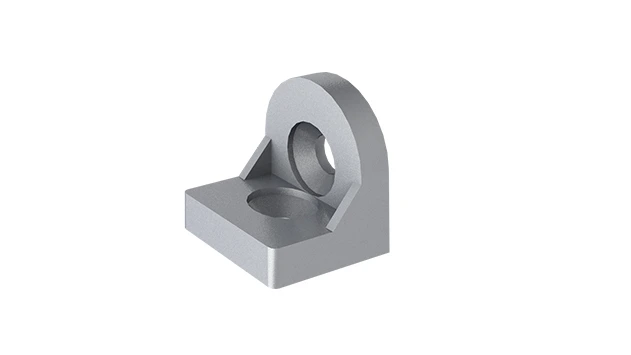
If you've ever dabbled in DIY projects, set up a home workshop, or walked through a factory floor, you've probably noticed something important: the sturdiest structures—whether a simple shelf or a complex assembly line—often rely on tiny, unassuming components. Today, we're zooming in on one such unsung hero: the Turning Angle Code 2020 . If you're new to working with aluminum profiles, this guide will break down what it is, why it matters, and how it fits into the world of building strong, flexible structures. Think of it as your first step toward mastering the art of connecting aluminum profiles with confidence.
First Things First: What Are Aluminum Profiles, Anyway?
Before we dive into the Turning Angle Code 2020, let's get familiar with its "partner in crime": aluminum profiles . These are lightweight, durable, and versatile extruded aluminum pieces, usually with T-shaped slots running along their length. You've seen them in everything from workbenches and material racks to 3D printer frames and industrial conveyor systems. What makes them special? Their T-slots let you attach accessories—like joints, brackets, and panels—without welding or drilling, making them perfect for modular, customizable projects.
But here's the catch: even the best aluminum profile is just a piece of metal without the right joints. Joints are the glue (literally and figuratively) that hold profiles together at angles, allowing you to build everything from a 90-degree corner on a workbench to a multi-level storage rack. And that's where the Turning Angle Code 2020 comes in.
So, What Exactly Is the Turning Angle Code 2020?
The Turning Angle Code 2020 is a type of aluminum profile accessory designed specifically for 2020 series aluminum profiles. Let's break that down: "2020" refers to the profile's cross-section dimensions—typically 20mm by 20mm (hence the name). These are some of the smallest and most commonly used profiles, ideal for lightweight to medium-duty projects like small workbenches, shelving units, or mobile carts.
At its core, the Turning Angle Code 2020 is a compact, L-shaped joint that connects two 2020 aluminum profiles at a 90-degree angle. It's usually made of aluminum alloy (same as the profiles, for compatibility and strength) and often comes with a smooth, anodized finish to resist corrosion. Think of it as a tiny, super-strong hinge that locks two profiles together without the need for messy adhesives or permanent welding.

Key Features That Make Turning Angle Code 2020 Essential
Why should beginners care about this specific joint? Let's look at its standout features:
- Compact Size: Measuring just a few centimeters in length, it fits perfectly with 2020 profiles, avoiding bulky connections that add unnecessary weight or take up space.
- Easy Installation: No special tools required! Most models slide into the T-slots of 2020 profiles and secure with a hex screw (Allen key included in many kits). Tighten the screw, and the joint grips the profile tightly—no drilling, no welding, no hassle.
- Load Capacity: Don't let its small size fool you. A well-made Turning Angle Code 2020 can support surprisingly heavy loads, often up to 50-80kg per joint (depending on the profile thickness and installation). That's more than enough for a home workbench holding tools or a factory shelf stacked with small parts.
- Reusability: Unlike welded joints, this angle code is removable and reusable. If you want to reconfigure your project later—say, turn a shelf into a cart—simply loosen the screws, take it apart, and rebuild. Modularity at its finest!
- Corrosion Resistance: Thanks to its aluminum alloy construction and anodized finish, it holds up well in humid garages, workshops, or even light industrial environments where moisture might be a concern.

How Does It Actually Work? Let's Demystify the Connection
You might be thinking, "Okay, it's a joint—but how does it really hold two profiles together?" Let's walk through the process step by step, like you're setting it up for the first time:
- Prep Your Profiles: Start with two 2020 aluminum profiles. Make sure their T-slots are clean (no dust or debris) so the joint can slide in smoothly.
- Position the Angle Code: Slide the Turning Angle Code 2020 into the end of one profile's T-slot. The L-shape should stick out, ready to connect to the second profile.
- Align the Second Profile: Hold the second profile perpendicular (90 degrees) to the first, so their ends meet at the angle code. Slide the second profile's T-slot over the other arm of the L-shaped joint.
- Tighten the Screw: Most angle codes have a pre-threaded hole for a hex screw. insert the screw and tighten it with an Allen key. As you turn, the screw presses against the inside of the T-slot, creating friction that locks everything in place. It's like a clamp that never loosens on its own (unless you want it to).
- Check for Stability: Give the connection a gentle shake. If it wobbles, tighten the screw a bit more. When done right, it should feel solid—like the two profiles are one piece.
Pro tip: For extra strength, use two Turning Angle Codes per corner (one near the top, one near the bottom) if your project needs to support heavier loads. This distributes weight evenly and prevents twisting.
Turning Angle Code 2020 vs. Other Angle Codes: When to Choose Which?
Not all angle codes are created equal. Aluminum profiles come in different sizes (2020, 3030, 4040, etc.), and each has its own matching angle code. To help you pick the right one for your project, here's a quick comparison table:
| Angle Code Series | Compatible Profile Size | Typical Load Capacity (Per Joint) | Best For |
|---|---|---|---|
| Turning Angle Code 2020 | 20mm x 20mm profiles | 50-80kg | Small workbenches, DIY shelves, mobile carts, 3D printer frames |
| 3030 Angle Code | 30mm x 30mm profiles | 100-150kg | Medium-duty workbenches, material racks, workshop storage |
| 4040 Angle Code | 40mm x 40mm profiles | 150-250kg | Industrial workstations, heavy shelving, conveyor systems |
Notice a pattern? The bigger the profile, the beefier the angle code—and the more weight it can handle. For beginners, the Turning Angle Code 2020 is a great starting point because 2020 profiles are affordable, easy to cut (with a hacksaw or miter saw), and perfect for small-scale projects.
What Accessories Pair Well With Turning Angle Code 2020?
No joint works alone! To build a complete project with your Turning Angle Code 2020, you'll need a few other aluminum profile accessories . Here are the most common ones to keep in your toolkit:
- Hex Screws & T-Nuts: These are the "glue" that secures the angle code to the profile. Most angle codes come with screws, but it's smart to have extras on hand (look for M5 or M6 sizes, depending on your profile).
- End Caps: These plastic or aluminum caps snap onto the ends of 2020 profiles to cover sharp edges—great if you're building something you'll touch often, like a workbench.
- Gussets: Small, triangular brackets that reinforce corners (pair them with your angle code for extra stability on heavier projects).
- Workbench Tops: Once you've built the frame with angle codes and profiles, add a plywood, MDF, or aluminum honeycomb panel top to create a functional work surface (hello, perfect home workshop bench!).
- Casters: Attach these to the bottom of your frame (using, you guessed it, more angle codes!) to turn a stationary shelf into a mobile cart—ideal for moving tools or materials around.
Real-World Projects: Where You'll Actually Use This Joint
Enough theory—let's talk about practical uses. Here are three common projects where the Turning Angle Code 2020 shines, even for beginners:
1. A Compact Home Workbench
Building a workbench doesn't have to mean spending hundreds on a pre-made one. With 2020 profiles, Turning Angle Codes, and a plywood top, you can make a sturdy, customizable bench in an afternoon. Use four vertical profiles for legs, connected with angle codes to horizontal profiles for the frame. Add a shelf halfway up for tool storage, and you're ready to tinker.
2. A Small Parts Storage Rack
If you're into electronics, crafting, or model building, you know how easy it is to lose small parts. Build a multi-shelf rack using 2020 profiles and angle codes: connect vertical posts with horizontal shelves (spaced 12-18 inches apart), and use dividers (more profiles!) to separate screws, nuts, or beads. Mount it on the wall or make it freestanding—your call.
3. A Mobile Tool Cart
Need to roll tools from your garage to your backyard? Build a cart with a 2020 frame, Turning Angle Codes at the corners, and casters on the bottom. Add a handle (made from a short profile) and a top shelf for your drill, saw, or gardening tools. It's lightweight, easy to move, and way cheaper than store-bought carts.
Troubleshooting: Common Mistakes Beginners Make (and How to Fix Them)
Even pros make mistakes—here's how to avoid (or fix) the most common ones when using Turning Angle Code 2020:
- Mistake: The joint feels loose after tightening. Fix: Check if the T-slot is clean—dust or debris can prevent a tight grip. If that's not it, try a slightly longer screw (or add a T-nut) to get better traction.
- Mistake: The profiles don't line up at 90 degrees. Fix: Use a carpenter's square to align the profiles before tightening the angle code. If they're still off, loosen the screw, adjust, and retighten.
- Mistake: Overloading the joint (e.g., putting 100kg on a 50kg-rated angle code). Fix: Check the load capacity specs before building! If you need more strength, add extra angle codes or upgrade to a 3030 profile with a beefier joint.
Wrapping Up: Why Turning Angle Code 2020 Is a Beginner's Best Friend
At the end of the day, the Turning Angle Code 2020 is more than just a metal joint—it's a gateway to building. It's proof that you don't need fancy tools or years of experience to create something sturdy, functional, and uniquely yours. Whether you're setting up a home workshop, organizing your garage, or even prototyping a small business idea, this little angle code will be there, quietly holding everything together.
So, what's next? Grab a few 2020 profiles, a pack of Turning Angle Codes, and start small. Build a shelf, a cart, or that workbench you've been daydreaming about. You'll be surprised how quickly those tiny joints turn into something you're proud to show off. Happy building!