- Company Articles
- Products and Technology
- Product knowledge
- Turning Angle Code 2020 for Material Rack B: Load Capacity and Safety

Turning Angle Code 2020 for Material Rack B: Load Capacity and Safety
Related Product
Urning Angle Code 2020
The turning angle aluminum profile connector provides a 90 degree hidden corner connection. 2020 it is means this size is used for 20 series aluminum profile.The corner code comes with set screws that allow for quick, easy connections.
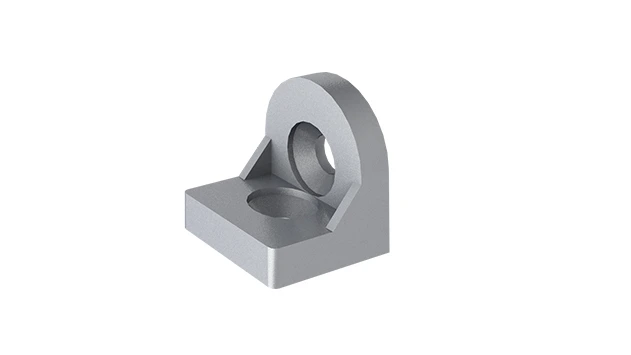
Walk into any manufacturing facility, warehouse, or distribution center, and you'll notice an unsung hero quietly holding everything together: the material rack. These structures are the backbone of efficient operations, organizing parts, streamlining workflows, and ensuring that every component—from tiny screws to bulky assemblies—has a secure place. Among the many types of material racks, Material Rack B (3 row and 3 floor) stands out for its versatility, especially in settings where space is precious and organization is key. But what makes this rack reliable? What ensures it can bear the weight of daily operations without faltering? The answer lies in the details—in components like the Turning Angle Code 2020 .
At first glance, the Turning Angle Code 2020 might seem like just another small metal piece, easy to overlook amid the larger beams and shelves of Material Rack B. But in reality, it's the glue that holds the rack's structure together. This unassuming aluminum profile accessory connects vertical and horizontal aluminum extrusion profiles , distributing weight, resisting stress, and turning a collection of parts into a stable, load-bearing system. In this article, we'll dive deep into how the Turning Angle Code 2020 shapes the performance of Material Rack B, focusing on two critical factors: load capacity and safety. Whether you're a warehouse manager, a facility engineer, or simply curious about the mechanics of industrial storage, understanding this tiny but mighty component will give you a new appreciation for the engineering that keeps our supply chains moving.
What Is the Turning Angle Code 2020?
Before we explore its role in Material Rack B, let's start with the basics: What exactly is the Turning Angle Code 2020? In the world of industrial aluminum profiles, "angle codes" are specialized connectors designed to join aluminum extrusions at corners—typically 90-degree angles, though some can handle other angles like 45 or 135 degrees. They're the silent architects of structure, ensuring that vertical posts and horizontal beams don't just touch, but integrate into a unified framework.
The "2020" in its name is no accident. It refers to the size of the aluminum extrusion profile it's designed for: a 20mm x 20mm (or roughly 0.8" x 0.8") square profile. This makes the Turning Angle Code 2020 part of a family of accessories tailored to smaller aluminum profiles, distinct from larger counterparts like the 3030 or 4040 angle codes (which pair with 30mm x 30mm or 40mm x 40mm profiles, respectively). While larger angle codes are built for heavy-duty applications—think industrial workbenches or large-scale shelving—the 2020 angle code shines in scenarios where space, weight, and precision matter most. Its compact size makes it ideal for lighter to medium-weight racks, like Material Rack B, where every millimeter of space and gram of weight counts.
But don't let its small stature fool you. The Turning Angle Code 2020 is engineered for strength. Made from high-grade aluminum alloy (often 6063-T5, a material prized for its balance of strength, corrosion resistance, and machinability), it features a reinforced design with internal ribs that distribute stress evenly. Unlike cheap plastic connectors or flimsy steel brackets, it won't crack under pressure or rust in humid environments. Its surface is usually anodized, adding a protective layer that resists scratches and wear—a small detail that extends its lifespan in busy warehouses where carts and equipment might bump into the rack.
Another key feature of the Turning Angle Code 2020 is its compatibility with T-slot aluminum extrusion profiles. T-slots are the grooves running along the length of aluminum profiles, allowing accessories like angle codes, brackets, and shelves to be attached using bolts or screws without drilling into the profile itself. This design makes assembly and disassembly quick and tool-friendly—no need for welding or specialized equipment. For Material Rack B, which often needs to be reconfigured as inventory or workflows change, this flexibility is a game-changer.
Material Rack B: A Closer Look at the 3 Row and 3 Floor Design
To understand why the Turning Angle Code 2020 matters, we first need to understand the structure it supports: Material Rack B (3 row and 3 floor). Picture a freestanding rack with three vertical columns (rows) and three horizontal shelves (floors), each floor divided into sections to separate different materials. This design is popular in electronics assembly, automotive parts storage, and small-parts warehousing because it maximizes vertical space while keeping items accessible. A typical Material Rack B might stand 6-8 feet tall, with each floor spanning 3-4 feet in width—plenty of room to store bins, boxes, or even small equipment.
But with great storage capacity comes great responsibility. Each floor of Material Rack B must support not just the weight of the items on it, but also the cumulative stress of items above it. For example, if the top floor holds 50kg of components, the middle floor must support its own 50kg plus the 50kg from above, and the bottom floor must handle 150kg total (plus the weight of the shelves themselves). This stack-up of weight means the rack's frame—specifically, the joints between its vertical and horizontal aluminum extrusion profiles—must be rock-solid. Enter the Turning Angle Code 2020.
In Material Rack B, the Turning Angle Code 2020 is used at every corner where a vertical profile meets a horizontal shelf beam. For a 3-row, 3-floor rack, that's dozens of connections: each of the three rows has vertical posts, and each floor has horizontal beams connecting the rows. Every one of those intersections relies on an angle code to keep the beam from pulling away from the post, even under load. Without a strong, reliable connector here, the rack could flex, sway, or even collapse—a disaster that risks damaged inventory, downtime, or worse, injury to workers.
What makes Material Rack B's design unique is its balance of size and strength. It's not as massive as industrial pallet racks, which are built for tons of weight, but it's sturdier than lightweight wire shelving. This middle ground is why the 2020 angle code is the perfect match: it's strong enough to handle the rack's typical load (we'll get to numbers later) but lightweight enough to keep the rack easy to assemble and reposition. In short, Material Rack B and the Turning Angle Code 2020 are engineered to work in harmony—each component's design complementing the other's strengths.

Load Capacity: How the Turning Angle Code 2020 Determines What Material Rack B Can Hold
Load capacity is the maximum weight a structure can safely support without deforming or failing. For Material Rack B, this number isn't arbitrary—it's determined by every component, from the thickness of the aluminum extrusion profiles to the quality of the shelf boards. But the Turning Angle Code 2020 plays a starring role here, acting as the "weakest link" test: if the angle code fails, the entire connection fails, and the rack's load capacity plummets.
So, how much weight can the Turning Angle Code 2020 actually handle? To answer that, we need to look at two types of load: static load and dynamic load. Static load is the weight of items placed on the rack and left undisturbed—think bins of screws sitting on a shelf for weeks. Dynamic load, on the other hand, is the stress from movement: workers loading/unloading items, vibrations from nearby machinery, or even the occasional bump from a forklift or pallet jack. The Turning Angle Code 2020 must resist both.
Manufacturers typically rate the Turning Angle Code 2020 for static loads of 150-200kg per connection, depending on the aluminum alloy and the tightness of the fasteners. For Material Rack B, which uses multiple angle codes per shelf (one at each corner), this adds up quickly. A single floor with four connections (two per row, three rows) could theoretically support 600-800kg—more than enough for most small to medium parts. But real-world performance depends on how the angle code is installed and the quality of the aluminum extrusion profiles it's connecting.
Let's break down the factors that influence the Turning Angle Code 2020's load capacity:
- Material Quality: As mentioned earlier, the angle code is made from aluminum alloy 6063-T5, which has a tensile strength of about 180 MPa (megapascals). This means it can withstand 180 million newtons of force per square meter before stretching or breaking. Cheaper angle codes might use lower-grade alloys or thinner walls, cutting this strength by 30% or more.
- Design Geometry: The Turning Angle Code 2020's internal ribs and curved edges aren't just for looks—they're engineered to distribute stress. When weight pushes down on a shelf, the horizontal beam tries to pivot away from the vertical post, creating shear stress at the joint. The angle code's ribs act like reinforcements, redirecting that stress along the aluminum extrusion profile's T-slots instead of concentrating it at a single point.
- Installation Torque: Even the strongest angle code will fail if it's not tightened properly. Most manufacturers recommend tightening the M5 or M6 bolts (used to attach the angle code to the profile) to 2.5-3 Nm (newton-meters) of torque. Too loose, and the connection will wobble, reducing load capacity. Too tight, and you risk stripping the T-slot or warping the angle code.
- Profile Compatibility: The Turning Angle Code 2020 is designed for 20x20mm aluminum extrusion profiles. Using it with larger profiles (like 30x30mm) or non-standard T-slot spacing can create uneven stress, as the angle code won't fully seat in the profile's grooves. This is why matching the angle code to the profile size is critical.
To put this in perspective, let's consider a real-world example. A electronics manufacturing plant uses Material Rack B to store printed circuit boards (PCBs), each bin weighing about 10kg. With 10 bins per floor, that's 100kg per floor. Over three floors, the total load on the rack's frame is 300kg (plus 50kg for the shelves and profiles themselves, totaling 350kg). With 12 Turning Angle Code 2020 connections across all floors (4 per floor x 3 floors), each angle code29kg—well below its 150kg static load rating. This margin of safety is intentional: engineers design racks to handle 1.5-2x their expected load to account for unexpected stress, like a worker accidentally dropping a heavy bin or a seismic tremor.

Safety: How the Turning Angle Code 2020 Prevents Rack Failure
Load capacity is about how much weight a rack can hold, but safety is about ensuring it holds that weight without incident . In warehouses and factories, rack failure isn't just a costly inconvenience—it's a safety hazard. A collapsing rack can crush inventory, damage equipment, or injure nearby workers. The Turning Angle Code 2020 plays a critical role in preventing these disasters by addressing three key safety risks: structural instability, fatigue failure, and human error.
Structural Instability: A rack's worst enemy is sway. When shelves are loaded unevenly or pushed/pulled during loading, the frame can rock from side to side, putting extra stress on joints. The Turning Angle Code 2020 resists this by "locking" the vertical and horizontal profiles together. Unlike flexible plastic connectors, which bend under lateral stress, the aluminum angle code stays rigid, keeping the rack square and stable. This is especially important for Material Rack B, which is often placed in high-traffic areas where carts or workers might brush against it.
Fatigue Failure: Even if a rack never exceeds its load capacity, repeated stress—like daily loading/unloading—can weaken materials over time. This is called fatigue failure, and it's a common cause of sudden, unexpected breaks. The Turning Angle Code 2020's aluminum alloy is resistant to fatigue because it's ductile (it bends slightly under stress instead of snapping). Its design also minimizes stress concentration points, where tiny cracks can start. For example, the rounded edges of the angle code reduce "notch stress," a phenomenon where sharp corners act like starting lines for cracks.
Human Error: No matter how well a rack is engineered, it's only as safe as the people installing and using it. The Turning Angle Code 2020 mitigates human error in two ways: first, its simple, tool-friendly design (it uses standard hex bolts) makes proper installation easier. There's no guesswork—just align the angle code with the profile's T-slots, insert the bolt, and tighten to the recommended torque. Second, its visible design makes inspections straightforward. A quick visual check can spot loose bolts, bent edges, or corrosion—red flags that might otherwise go unnoticed with hidden connectors.
To ensure safety, most industrial standards (like those from the RMI, or Rack Manufacturers Institute) recommend regular inspections of components like the Turning Angle Code 2020. This includes checking for: loose bolts, cracks in the aluminum, deformation (like bending or warping), and corrosion (common in humid environments). Catching these issues early can prevent catastrophic failure.
Turning Angle Code 2020 vs. Other Angle Codes: A Comparison
You might be wondering: Why use the Turning Angle Code 2020 for Material Rack B? Why not a larger angle code, like the 3030 or 4040, which can handle more weight? The answer lies in balancing strength, weight, and cost. While larger angle codes offer higher load capacities, they're also bulkier, heavier, and more expensive—overkill for a rack designed for small to medium parts. Let's compare the Turning Angle Code 2020 with two common alternatives to see why it's the best fit for Material Rack B.
| Feature | Turning Angle Code 2020 | 3030 Angle Code | 4040 Angle Code |
|---|---|---|---|
| Profile Size | 20x20mm aluminum extrusion profiles | 30x30mm aluminum extrusion profiles | 40x40mm aluminum extrusion profiles |
| Max Static Load (per connection) | 150-200kg | 300-350kg | 500-600kg |
| Weight (per unit) | 35-40g | 70-80g | 120-140g |
| Cost (per unit) | $1.50-$2.50 | $3.00-$4.50 | $5.00-$7.00 |
| Best For | Light to medium racks (e.g., Material Rack B), workbenches, small shelving | Heavy-duty racks, industrial workstations, machine frames | Pallet racks, large storage systems, automated conveyor frames |
As the table shows, the Turning Angle Code 2020 is the lightest, most affordable option, with enough load capacity for Material Rack B's typical use case. Using a 3030 angle code would double the rack's weight and cost without providing meaningful benefits—unless the rack was storing car engines or other ultra-heavy items. For most warehouses and factories, the 2020 angle code hits the sweet spot: strong enough, light enough, and cost-effective enough to keep operations running smoothly.
Installation Tips for Turning Angle Code 2020 on Material Rack B
Even the best components perform poorly if installed incorrectly. To get the most out of the Turning Angle Code 2020 and ensure Material Rack B's load capacity and safety, follow these installation best practices:
- Prep the Profiles: Before installing the angle code, clean the aluminum extrusion profiles' T-slots to remove dust, oil, or debris. A quick wipe with a dry cloth or a blast of compressed air will ensure the bolts seat properly.
- Align Carefully: Place the Turning Angle Code 2020 at the corner where the vertical and horizontal profiles meet, making sure its holes line up with the profile's T-slots. Misalignment can create uneven stress—imagine trying to fit a square peg into a round hole, but with metal.
- Use the Right Bolts: Most 2020 angle codes use M5 x 12mm bolts with T-slot nuts. Using longer bolts can bottom out in the profile, preventing a tight fit. Shorter bolts might not engage the nut fully, leading to loosening over time.
- Tighten to Torque: As mentioned earlier, aim for 2.5-3 Nm of torque. A small torque wrench (available at most hardware stores) is worth the investment here—guessing can lead to under or over-tightening.
- Check for Square: After installing all angle codes for a shelf, use a carpenter's square to ensure the frame is 90 degrees. A rack that's "out of square" will put extra stress on the angle codes, reducing load capacity and safety.
- Test Before Loading: Once the rack is assembled, do a quick load test with empty boxes or light weights. Gently push and pull on the shelves to check for wobbling. If something feels loose, recheck the angle code bolts.
By following these steps, you'll ensure the Turning Angle Code 2020 performs at its best, keeping Material Rack B stable and reliable for years to come.
Real-World Impact: A Case Study
To illustrate the Turning Angle Code 2020's role in real operations, let's look at a case study from a mid-sized electronics manufacturer in the Midwest. The company produces circuit boards for medical devices, and their warehouse uses 12 Material Rack B units (3 row, 3 floor) to store components like resistors, capacitors, and semiconductors. A few years ago, they experienced a minor incident: a shelf on one rack collapsed, spilling bins of tiny capacitors across the floor. The cause? A failed angle code on the middle shelf—a cheap, off-brand alternative to the Turning Angle Code 2020.
After the incident, the company replaced all their angle codes with genuine Turning Angle Code 2020 units and retrained their maintenance team on proper installation and inspection. The results were clear: over the next two years, there were zero rack failures. Even better, the new angle codes reduced shelf wobble by 60%, making it easier for workers to load and unload bins without spilling. The maintenance team also reported that inspections were faster, thanks to the angle code's visible design—they could check 10 racks in the time it used to take to check 5 with the old hidden connectors.
This case study highlights a simple truth: investing in quality components like the Turning Angle Code 2020 isn't just about avoiding failures—it's about improving efficiency, reducing downtime, and creating a safer workplace. When every component works as designed, the entire operation runs smoother.
Conclusion: The Small Component That Makes a Big Difference
Material Rack B (3 row and 3 floor) is more than just a storage solution—it's a critical part of the infrastructure that keeps manufacturing and logistics moving. And at the heart of that infrastructure is the Turning Angle Code 2020, a small but essential aluminum profile accessory that ensures the rack can handle its load safely and reliably. From its high-grade aluminum alloy to its stress-distributing design, every aspect of the angle code is engineered to turn a collection of aluminum extrusion profiles into a system you can trust.
As we've explored, the Turning Angle Code 2020's impact is measured in two key ways: load capacity and safety. It distributes weight across the rack's frame, allowing Material Rack B to support hundreds of kilograms of parts. It resists stress, fatigue, and human error, preventing the kind of failures that disrupt operations and put workers at risk. And it does all this while remaining affordable, lightweight, and easy to install—proof that great engineering doesn't have to be complicated.
So the next time you walk through a warehouse or factory, take a moment to look at the material racks. Behind the shelves and bins, you'll see the Turning Angle Code 2020, quietly doing its job. It's a reminder that in the world of industrial design, the smallest components often have the biggest stories to tell—and the most important roles to play.