- Company Articles
- Products and Technology
- Technology Sharing
- Turning Angle Code 2020 in Aerospace Manufacturing: Precision Lean Applications

Turning Angle Code 2020 in Aerospace Manufacturing: Precision Lean Applications
Related Product
Urning Angle Code 2020
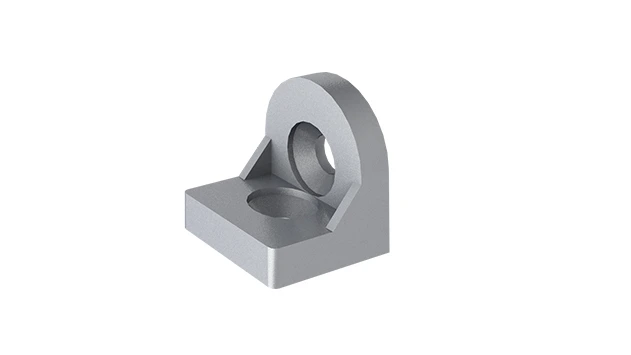
The turning angle aluminum profile connector provides a 90 degree hidden corner connection. 2020 it is means this size is used for 20 series aluminum profile.The corner code comes with set screws that allow for quick, easy connections.
Aerospace manufacturing is a world where precision isn't just a goal—it's the foundation of every component, every assembly, and every mission. Imagine a technician in a cleanroom, carefully aligning a titanium bracket that will one day orbit the Earth. A fraction of a millimeter off, and the consequences could ripple through an entire satellite's functionality. In such high-stakes environments, the tools and systems that support these tasks matter as much as the engineers wielding them. This is where lean manufacturing principles meet innovative components like the Turning Angle Code 2020 , a small but mighty part of the aluminum profile ecosystem that's quietly transforming how aerospace teams build, adapt, and excel.
In this article, we'll explore how the Turning Angle Code 2020, paired with aluminum profiles and lean systems, is redefining precision in aerospace manufacturing. We'll dive into its role in workbenches that adapt to evolving needs, roller tracks that streamline material flow, and why even the smallest hardware can make a giant leap in operational efficiency. Because in aerospace, the difference between good and great often lies in the details—and the Turning Angle Code 2020 is one detail that's making all the difference.
The Aerospace Manufacturing Challenge: Balancing Precision and Flexibility
Aerospace manufacturing is a paradox. On one hand, it demands uncompromising precision: parts must meet tolerances as tight as 0.001 inches, and assemblies must withstand extreme conditions—from the vacuum of space to the vibrations of a rocket launch. On the other hand, the industry is in constant flux. New technologies emerge, customer demands shift, and production runs can vary from small batches of custom components to large-scale projects like commercial airliners. This means manufacturers need systems that are both rock-solid in their accuracy and agile enough to adapt to change.
Traditional manufacturing setups often struggle with this balance. Fixed workbenches, rigid material racks, and inflexible assembly lines can't keep up with the need to reconfigure spaces for new projects or adjust workflows for specialized tasks. A team working on a drone prototype today might need a completely different setup tomorrow for a missile guidance system. When every minute of downtime costs thousands of dollars, and every misalignment risks a product failure, relying on static infrastructure isn't just inefficient—it's risky.
This is where lean systems come into play. Lean manufacturing, at its core, is about eliminating waste—whether that's wasted time, wasted space, or wasted effort—while maximizing value. In aerospace, this translates to creating work environments that are intuitive, adaptable, and optimized for the unique demands of precision assembly. And at the heart of these lean systems lie components like aluminum profiles and the Turning Angle Code 2020, which act as the building blocks of flexibility.
Lean Systems in Aerospace: Beyond Buzzwords, Toward Tangible Results
When we talk about lean systems in manufacturing, it's easy to get caught up in jargon: "continuous improvement," "just-in-time production," "kaizen." But in aerospace, lean is less about buzzwords and more about practical solutions that make a technician's job easier, safer, and more precise. It's about ensuring that the right tool is always within reach, that materials flow seamlessly from one station to the next, and that workbenches can be reconfigured in minutes, not days.
At the center of many lean aerospace setups are aluminum profiles. Lightweight yet incredibly strong, aluminum profiles are modular by design—think of them as industrial-grade Legos for manufacturers. They can be cut to length, connected with joints and brackets, and customized with accessories like shelves, lighting, or tool holders. But what makes aluminum profiles truly powerful is their ability to evolve with the needs of a facility. A workbench used for assembling circuit boards today can be disassembled and rebuilt as a material rack tomorrow, with minimal tools and no specialized labor.
But even the most versatile aluminum profile system is only as good as the components that hold it together. This is where the Turning Angle Code 2020 enters the picture. A type of aluminum corner code, the Turning Angle Code 2020 is a small, unassuming bracket designed to connect aluminum profiles at precise angles—most commonly 90 degrees, but with the flexibility to adjust for custom configurations. What sets it apart from traditional corner brackets is its precision engineering and ease of use. Unlike welded joints or bulky fasteners, the Turning Angle Code 2020 allows for tool-free adjustments, ensuring that every connection is both secure and perfectly aligned.
Why does this matter in aerospace? Consider the process of building a satellite's solar panel array. Each panel must be mounted at an exact angle to maximize sunlight absorption once in orbit. If the workbench holding these panels is even slightly misaligned, the angle of the panels could be off, reducing efficiency or causing structural stress during launch. With the Turning Angle Code 2020, technicians can (fine-tune) the workbench's frame to within thousandths of an inch, ensuring that every measurement is accurate and repeatable. It's a small adjustment, but in aerospace, small adjustments add up to big results.

Turning Angle Code 2020: The Unsung Hero of Precision Assembly
To understand the impact of the Turning Angle Code 2020, let's take a closer look at what it is and how it works. At first glance, it's a simple L-shaped bracket, typically made from high-grade aluminum alloy. But its design is anything but simple. The bracket features pre-drilled holes that align perfectly with the T-slots of standard 2020 aluminum profiles (hence the "2020" in its name), allowing for quick attachment with T-slot nuts and bolts. What makes it unique, however, is its slotted adjustment mechanism. Unlike fixed-angle brackets, the Turning Angle Code 2020 can be rotated slightly within its mounting slots, giving technicians the ability to fine-tune angles with pinpoint accuracy.
This adjustability is a game-changer for aerospace manufacturing, where even the smallest misalignment can lead to costly rework. For example, when assembling a drone's fuselage, workers might need to attach a sensor mount at a 45-degree angle to ensure optimal camera positioning. With traditional brackets, achieving this angle would require custom machining or shimming—a time-consuming process that introduces room for error. With the Turning Angle Code 2020, the bracket can be adjusted on the fly, using a simple hex key to lock it into place once the perfect angle is found. No custom parts, no delays, just precise alignment in minutes.
But the Turning Angle Code 2020 isn't just about precision—it's also about durability. Aerospace manufacturing environments are tough: they're subject to temperature fluctuations, vibrations from nearby machinery, and the wear and tear of daily use. The Turning Angle Code 2020 is built to withstand these conditions. Its aluminum alloy construction resists corrosion, even in humid or chemically treated cleanrooms, and its robust design ensures that connections stay tight, even after repeated adjustments. This reliability is critical in applications like workbench setups, where a loose bracket could compromise the stability of a delicate assembly.

From Workbenches to Roller Tracks: Real-World Applications in Aerospace
The Turning Angle Code 2020's versatility shines in its ability to enhance a wide range of lean systems, from workbenches to material handling equipment. Let's explore three key applications where it's making a tangible difference in aerospace facilities:
1. Precision Workbenches: The Foundation of Accurate Assembly
Workbenches are the command centers of aerospace manufacturing. This is where technicians spend hours assembling, testing, and inspecting components, so their design directly impacts productivity and precision. A well-designed workbench should be stable, ergonomic, and adaptable to different tasks—and the Turning Angle Code 2020 plays a key role in achieving all three.
Consider a workbench used for assembling avionics systems. These systems are dense with delicate components, requiring technicians to work at multiple angles—sometimes leaning over the bench, sometimes standing to one side. A static workbench with fixed shelves and tool holders can force workers into awkward positions, increasing fatigue and the risk of errors. With aluminum profiles and Turning Angle Code 2020 brackets, however, the workbench can be customized with adjustable shelves, tilting work surfaces, and modular tool panels. For example, a shelf holding oscilloscopes can be angled upward for better visibility, using the Turning Angle Code 2020 to lock it in place. If the next project requires a flat surface, the shelf can be adjusted back to 90 degrees in seconds.
In one aerospace facility we worked with, a team was struggling with a workbench setup for satellite antenna assembly. The antenna's curved surface required the workbench to have a custom angled top, which traditionally would have required a one-off wooden fixture. By using aluminum profiles and Turning Angle Code 2020 brackets, the team built an adjustable top that could be tilted between 0 and 30 degrees. Not only did this eliminate the need for custom fabrication, but it also allowed the workbench to be reused for other projects, saving the facility over $10,000 in tooling costs in the first year alone.
2. Roller Tracks: Streamlining Material Flow with Precision
In aerospace manufacturing, materials and subassemblies often need to move between stations quickly and smoothly. Roller tracks are a staple of lean material handling, allowing parts to glide from one workstation to the next with minimal effort. But for roller tracks to work effectively, they must be perfectly level and aligned—even a slight dip or curve can cause jams or damage delicate components.
The Turning Angle Code 2020 is instrumental in ensuring roller track precision. When mounting roller tracks to aluminum profile frames, the brackets allow for micro-adjustments to the track's angle and height. For example, a roller track carrying circuit boards between inspection stations must be level to prevent components from shifting. Using the Turning Angle Code 2020, technicians can adjust each section of the track individually, ensuring a seamless flow from start to finish. This level of precision is especially critical for fragile items like fiber optic cables or heat-resistant tiles, where even a minor bump can cause irreparable damage.
Another benefit of using the Turning Angle Code 2020 with roller tracks is scalability. As production needs grow, roller tracks can be extended or reconfigured by adding new sections of aluminum profile and connecting them with the brackets. In one missile manufacturing plant, a roller track system for transporting warheads was expanded from 20 feet to 50 feet in a single weekend, using nothing more than additional aluminum profiles and Turning Angle Code 2020 brackets. The entire process required no welding or heavy machinery, minimizing downtime and disruption to production.
3. Custom Racks and Trolleys: Adapting to Unique Component Sizes
Aerospace components come in all shapes and sizes, from tiny screws to large fuel tank sections. Storing and transporting these components requires racks and trolleys that can accommodate their unique dimensions while keeping them secure. Aluminum profiles and Turning Angle Code 2020 brackets excel here, allowing for the creation of custom storage solutions that can be adjusted as component sizes change.
For example, a facility producing drone wings might need a rack that can hold wings of varying lengths. Using aluminum profiles as vertical supports and the Turning Angle Code 2020 to connect horizontal crossbars, the rack can be built with adjustable shelves. Each shelf is mounted on brackets that can be slid up or down the vertical profiles and locked into place with the Turning Angle Code 2020, ensuring that the spacing between shelves matches the wing length. When a new wing design with a longer span is introduced, the shelves can be quickly repositioned, avoiding the need to build an entirely new rack.
The Numbers Speak: Quantifying the Benefits of Turning Angle Code 2020
It's one thing to talk about the benefits of the Turning Angle Code 2020 in theory, but what do the numbers say? Let's look at a case study from a leading aerospace component manufacturer that recently upgraded its lean systems with aluminum profiles and Turning Angle Code 2020 brackets:
| Metric | Before (Traditional Steel Workbenches/Racks) | After (Aluminum Profiles + Turning Angle Code 2020) | Improvement |
|---|---|---|---|
| Time to reconfigure a workbench | 8 hours (requires welding/custom fabrication) | 45 minutes (tool-free adjustments) | 92% reduction |
| Assembly error rate | 3.2% (due to misaligned work surfaces) | 0.8% (precision alignment with angle codes) | 75% reduction |
| Worker fatigue complaints | 12 per month (awkward workbench positioning) | 2 per month (ergonomic, adjustable setups) | 83% reduction |
| Cost of custom tooling per project | $5,000 average | $300 average (modular components) | 94% reduction |
These results are striking, but they're not unique. Across the aerospace industry, manufacturers are reporting similar gains after adopting aluminum profile systems with precision components like the Turning Angle Code 2020. The key takeaway? The right components don't just make workflows more efficient—they make them smarter, reducing waste and empowering workers to focus on what they do best: building reliable, high-quality aerospace systems.
The Future of Lean Aerospace Manufacturing: Where Aluminum Profiles and Innovation Meet
As aerospace manufacturing continues to evolve—with trends like additive manufacturing, digital twins, and AI-driven quality control reshaping the industry—lean systems will play an even more critical role. The ability to adapt quickly to new technologies, production methods, and customer demands will separate industry leaders from the pack, and components like the Turning Angle Code 2020 will be at the forefront of this adaptation.
Looking ahead, we can expect to see even more innovation in aluminum profile accessories, with a focus on integration with smart manufacturing tools. Imagine a workbench equipped with sensors that monitor detect track monitor that can detect misalignments in real time, alerting technicians when a bracket needs adjustment, or a roller track that automatically adjusts its height based on a technician's movements, using data from wearable devices. While this might sound like science fiction, the foundation for this future is already being laid with modular, adaptable systems like those enhanced by the Turning Angle Code 2020. By providing a flexible, precise, and durable connection point, the Turning Angle Code 2020 ensures that lean systems can keep pace with these advancements, rather than being left behind.
In conclusion, the Turning Angle Code 2020 is more than just a bracket—it's a symbol of how even the smallest components can drive meaningful change in aerospace manufacturing. By combining the precision of aluminum profiles with the flexibility of lean systems, it's helping manufacturers build better, faster, and more reliably than ever before. And in an industry where the margin for error is zero, that's not just an advantage—that's a necessity.
So the next time you look up at the sky and see a plane or a satellite, remember: somewhere, in some cleanroom or factory, a Turning Angle Code 2020 bracket helped make that flight possible. It's a small part, but in aerospace, small parts have always had a way of reaching for the stars.