- Company Articles
- Products and Technology
- Solution
- Turning Angle Code 2020 in Medical Device Manufacturing: Lean Solutions Guide

Turning Angle Code 2020 in Medical Device Manufacturing: Lean Solutions Guide
Related Product
Urning Angle Code 2020
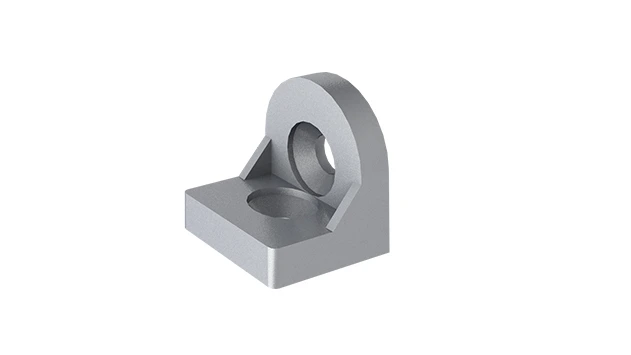
The turning angle aluminum profile connector provides a 90 degree hidden corner connection. 2020 it is means this size is used for 20 series aluminum profile.The corner code comes with set screws that allow for quick, easy connections.
The Heartbeat of Precision: Why Medical Device Manufacturing Can't Afford to Stand Still
Walk into any medical device manufacturing facility, and you'll feel it immediately—the quiet hum of purpose. Every component, from a tiny sensor in a pacemaker to the casing of an MRI machine, carries a weight far beyond its physical size. A single misalignment, a hairline crack, or a static charge could compromise a device meant to save a life. In this high-stakes environment, precision isn't just a goal; it's a moral obligation. But here's the challenge: the industry is also under relentless pressure to innovate faster, reduce costs, and meet ever-tightening regulatory standards. How do you balance speed and safety? How do you build a production line that's both rigid enough to ensure compliance and flexible enough to adapt to new technologies?
For many manufacturers, the answer lies in lean systems —a methodology built on eliminating waste, streamlining flow, and empowering teams. But lean isn't just a set of principles; it's a physical ecosystem of tools and components working in harmony. And at the center of that ecosystem, often overlooked but critically important, is the Turning Angle Code 2020. This unassuming component, paired with modular building blocks like aluminum profiles, ergonomic workbenches, smooth roller tracks, and specialized ESD workstations, is redefining what's possible in medical device production. Let's dive into how these elements come together to create a lean system that doesn't just meet standards—it sets them.
Lean Systems in Medical Manufacturing: More Than Just Efficiency—It's About Trust
When we talk about lean systems in medical device manufacturing, we're not just talking about cutting costs or speeding up production. We're talking about building trust—trust that every device leaving the facility is consistent, reliable, and safe. Traditional manufacturing setups in the medical field often struggle with rigidity: fixed production lines that take weeks to reconfigure, siloed workstations that slow communication, and one-size-fits-all tools that ignore the unique needs of delicate components. These inefficiencies don't just waste time; they create gaps where errors can slip through.
Lean systems flip this script by focusing on three core pillars: flow , flexibility , and human-centric design . Flow ensures that materials and components move seamlessly from one stage to the next, eliminating bottlenecks. Flexibility allows teams to adapt quickly to new product designs or regulatory changes. Human-centric design prioritizes the workers who build these life-saving devices, ensuring their tools and workspaces reduce fatigue and errors. And at the heart of making this possible? Modular components that can be reconfigured, upgraded, or repurposed without overhauling the entire line. This is where Turning Angle Code 2020, aluminum profiles, and their counterparts shine.

Turning Angle Code 2020: The Unsung Hero of Modular Lean Systems
At first glance, Turning Angle Code 2020 might seem like just another piece of hardware—a small, unassuming connector used in assembling aluminum profiles. But in reality, it's the linchpin that holds modular lean systems together. Let's break it down: aluminum profiles are the backbone of modern lean setups, prized for their lightweight strength, corrosion resistance, and adaptability. But to turn these profiles into functional workbenches, material racks, or production cells, you need connectors that are strong, precise, and easy to adjust. That's where Turning Angle Code 2020 comes in.
Designed specifically for 2020 aluminum profiles (a common size in medical manufacturing for its balance of strength and versatility), this angle code acts as a bridge between profiles, allowing for 90-degree connections that are both rigid and reconfigurable. Unlike traditional welding or permanent fasteners, which lock a setup in place, Turning Angle Code 2020 lets teams adjust the height of a workbench, reposition a material rack, or modify a roller track in minutes—not days. For medical device manufacturers, this flexibility is game-changing. Imagine a production line that can switch from assembling insulin pumps to glucose monitors in hours, not weeks, by simply reconfiguring the aluminum profile frames using Turning Angle Code 2020. Or a workstation that can be adjusted to fit a taller worker one day and a shorter one the next, reducing strain and improving focus.
But the benefits go beyond flexibility. Turning Angle Code 2020 also ensures precision. In medical manufacturing, even a millimeter of misalignment can throw off a component's fit, leading to leaks, malfunctions, or non-compliance with FDA regulations. The code's tight tolerances and secure locking mechanism eliminate play between profiles, ensuring that workbenches stay level, material racks stay stable, and roller tracks maintain consistent spacing. This precision is especially critical when paired with sensitive tools like ESD workstations, where even the smallest vibration can disrupt delicate electronics.

Building the Lean Ecosystem: Key Components That Work Hand-in-Hand
Turning Angle Code 2020 doesn't work alone. It's part of a larger ecosystem of components, each playing a vital role in creating a lean, efficient, and compliant medical manufacturing environment. Let's explore the stars of this ecosystem and how they collaborate:
Aluminum Profile: The Backbone of Modularity
Aluminum profiles are the foundation upon which lean medical setups are built. Unlike heavy steel or rigid plastic, aluminum offers a rare combination of strength, lightness, and corrosion resistance—critical in medical environments where cleanliness and durability are non-negotiable. Medical device manufacturers often opt for 2020, 3030, or 4040 aluminum profiles (named for their width and height in millimeters), with 2020 being a favorite for smaller, precision-focused workstations. What makes aluminum profiles so indispensable? Their T-slot design. These slots run the length of the profile, allowing for easy attachment of accessories like shelves, tool holders, or monitors using bolts, brackets, or—you guessed it—Turning Angle Code 2020. This means a single aluminum profile frame can be transformed from a workbench to a material rack to a testing station with minimal tools and no permanent modifications.
In medical manufacturing, where compliance with ISO 13485 and FDA regulations is mandatory, aluminum profiles also offer a clean, non-porous surface that's easy to sanitize—unlike wood or painted steel, which can harbor bacteria or chip over time. This makes them ideal for environments where sterility is paramount, such as assembling surgical instruments or implantable devices.
Workbench: Where Precision Meets Ergonomics
Every medical device starts with a worker at a workbench. But not all workbenches are created equal. In traditional setups, workbenches are often fixed-height, cluttered with tools, and poorly lit—recipe for fatigue and errors. Lean workbenches, built with aluminum profiles and Turning Angle Code 2020, change that. These workbenches are designed to be ergonomic , customizable , and integrated with the rest of the production flow.
Take, for example, a workbench used to assemble printed circuit boards (PCBs) for a heart rate monitor. The PCB is small, delicate, and sensitive to static electricity. A lean workbench here would feature an ESD (Electrostatic Discharge) top to protect the PCB from static damage, adjustable height to fit workers of different statures, and built-in tool holders and bins (attached via T-slots) to keep essential tools within arm's reach. The frame, constructed from 2020 aluminum profiles connected by Turning Angle Code 2020, can be easily adjusted if the team switches to a larger PCB or needs to add a microscope arm. Even the lighting—LED strips mounted to the profile frame—can be repositioned to reduce glare on the tiny components.
But the real magic is how these workbenches integrate with the rest of the lean system. A well-designed lean workbench isn't an island; it's part of a continuous flow. Materials arrive via roller tracks (more on that next) directly to the bench, and finished components move on without the worker having to reach, bend, or twist. This seamless integration reduces wasted motion, cuts down on errors, and keeps the production line moving smoothly.
Roller Track: Keeping the Flow Alive
In lean systems, flow is everything. Materials and components should move from one stage to the next with minimal human intervention, reducing the risk of damage or delays. Roller tracks, often built using aluminum profiles and plastic or steel rollers, are the arteries that keep this flow alive. In medical device manufacturing, where components can be fragile (like glass vials or delicate sensors), roller tracks must be smooth, reliable, and gentle.
Imagine a production line for IV fluid pumps. The pump's plastic casing arrives at the first workstation via a roller track, where a worker assembles the internal components. Once done, the casing is pushed onto another roller track, which carries it to the next station for wiring. From there, it moves to testing, packaging, and shipping—all via roller tracks. Each track is built with aluminum profiles (using Turning Angle Code 2020 for support brackets) and plastic roller track guide rails (often yellow or grey for visibility and to signal "active" flow paths). The rollers themselves are designed to move smoothly with minimal friction, ensuring components glide gently without jostling or tipping.
What makes these roller tracks lean? Their modularity. If the production line needs to add a new testing station, teams can extend the roller track by adding more aluminum profiles and rollers, connected via Turning Angle Code 2020 and roller track connectors. If a bottleneck forms at a particular stage, the track can be reconfigured to create a bypass or add a parallel line—all without shutting down production for days. In medical manufacturing, where downtime can cost thousands of dollars and delay critical devices, this adaptability is invaluable.
ESD Workstation: Protecting the Most Sensitive Components
Many medical devices, from pacemakers to neurostimulators, rely on tiny electronic components that are highly sensitive to electrostatic discharge (ESD). A single static shock—too small for a human to feel—can destroy a microchip or disrupt a circuit, rendering the device useless (or worse, dangerous). This is where ESD workstations come in. These specialized workbenches are designed to dissipate static electricity, protecting sensitive components from damage.
Built on aluminum profile frames (you guessed it, connected with Turning Angle Code 2020), ESD workstations feature conductive surfaces, grounding straps for workers, and even ionizers to neutralize static in the air. The aluminum profiles themselves play a role here: aluminum is a conductor, so the entire frame can be grounded, ensuring any static charge is safely dissipated to the floor. This is critical in environments where workers are handling PCBs, sensors, or other electronic parts.
But ESD workstations aren't just about protection—they're also about integration. Like standard lean workbenches, they can be customized with tool holders, monitor arms, and integrated lighting, all attached via the T-slots in the aluminum profiles. And because they're built with the same modular components, they can be reconfigured alongside the rest of the production line. For example, if a manufacturer starts producing a new, larger ESD-sensitive device, the workstation's height, width, or accessories can be adjusted using Turning Angle Code 2020 and additional aluminum profiles—no need to buy a whole new bench.
Traditional vs. Lean: A Side-by-Side Comparison
To truly understand the impact of Turning Angle Code 2020, aluminum profiles, workbenches, roller tracks, and ESD workstations, let's compare a traditional medical device manufacturing setup with a lean setup built using these components. The difference is striking:
| Aspect | Traditional Manufacturing Setup | Lean Setup (with Turning Angle Code 2020, Aluminum Profile, Workbench, Roller Track, ESD Workstation) |
|---|---|---|
| Flexibility | Fixed production lines; reconfiguring takes 2–4 weeks and requires specialized labor (welders, electricians). | Modular design allows reconfiguration in hours/days using basic tools; Turning Angle Code 2020 and aluminum profiles enable quick adjustments to workbenches, roller tracks, and ESD workstations. |
| Error Rate | Higher (3–5% on average) due to manual material handling, cluttered workspaces, and static damage to components. | Lower (0.5–1%) due to ergonomic workbenches, ESD protection, and roller tracks that reduce human error in material flow. |
| Compliance | Harder to document changes; fixed setups may struggle to meet new FDA/ISO standards without costly overhauls. | Easier to track and adjust; modular components allow for quick updates to meet regulatory changes (e.g., adding ESD protection or sanitization features). |
| Worker Ergonomics | Static-height workbenches, awkward material reaching, and poor lighting lead to fatigue and repetitive strain injuries. | Adjustable-height workbenches, integrated tool storage, and roller tracks that bring materials to the worker reduce fatigue and injuries. |
| Cost Over Time | Higher long-term costs due to downtime for reconfigurations, error-related rework, and replacement of damaged components. | Lower long-term costs due to reduced downtime, fewer errors, and reusable components (aluminum profiles and Turning Angle Code 2020 can be repurposed for new setups). |
Real-World Impact: How a Medical Device Manufacturer Transformed Production with Lean Components
Let's put this into context with a real-world example (names have been changed for confidentiality). MedTech Innovations, a mid-sized manufacturer of diagnostic devices, was struggling with production bottlenecks and high error rates on their glucose monitor assembly line. Their traditional setup relied on fixed steel workbenches, manual material carts, and no ESD protection for the delicate sensors in the monitors. Workers often had to reach across cluttered benches to grab tools, and reconfiguring the line for a new monitor model took 3 weeks—delaying product launches.
In 2023, MedTech decided to implement a lean system centered on aluminum profiles, Turning Angle Code 2020, ergonomic workbenches, roller tracks, and ESD workstations. Here's what happened:
- Week 1: The team disassembled the fixed steel workbenches and replaced them with aluminum profile frames connected via Turning Angle Code 2020. Workbenches were adjusted to match the average height of workers, and ESD tops were added to protect the sensors.
- Week 2: Roller tracks were installed to connect workstations, allowing sensors and components to glide from one stage to the next without manual carrying. Plastic roller track guide rails (yellow for visibility) were chosen to reduce noise and prevent component damage.
- Week 3: Tool holders, monitor arms, and integrated lighting were added to the workbenches via the T-slots in the aluminum profiles, reducing clutter and keeping essential tools within arm's reach.
The results were dramatic: Within 6 months, MedTech saw a 40% reduction in production time, a 75% drop in sensor damage (thanks to ESD workstations), and a 30% improvement in worker satisfaction scores. When a new FDA regulation required additional testing for the monitors, the team reconfigured the roller track and workbench setup in just 2 days using Turning Angle Code 2020—something that would have taken 3 weeks with the old system. "It's like night and day," said Maria, a lead assembler at MedTech. "I don't strain my back reaching for parts anymore, and I feel confident that the sensors I'm handling are safe from static. We're not just building better monitors—we're building them smarter."
The Future of Lean in Medical Manufacturing: Beyond the Bench
As medical device technology continues to evolve—with smaller, more complex components and stricter regulations—the need for flexible, precise lean systems will only grow. Turning Angle Code 2020, aluminum profiles, workbenches, roller tracks, and ESD workstations are no longer "nice-to-haves"; they're essential tools for staying competitive and compliant. But the future holds even more promise. Imagine AI-powered roller tracks that predict bottlenecks before they happen, or smart ESD workstations that monitor static levels in real time and alert workers to risks. These innovations will build on the modular foundation laid by components like Turning Angle Code 2020, making lean systems even more adaptive and intelligent.
At the end of the day, though, the most important impact of these lean components isn't measured in production time or error rates—it's measured in lives. Every device built with precision, every error prevented, every worker supported by an ergonomic setup brings us closer to a world where medical technology is not just advanced, but reliable . And in that world, Turning Angle Code 2020 and its lean counterparts will continue to be the quiet force making it all possible.