- Company Articles
- Products and Technology
- Technology Sharing
- Turning Angle Code 2020 Myths vs. Facts: Expert Insights

Turning Angle Code 2020 Myths vs. Facts: Expert Insights
Related Product
Urning Angle Code 2020
The turning angle aluminum profile connector provides a 90 degree hidden corner connection. 2020 it is means this size is used for 20 series aluminum profile.The corner code comes with set screws that allow for quick, easy connections.
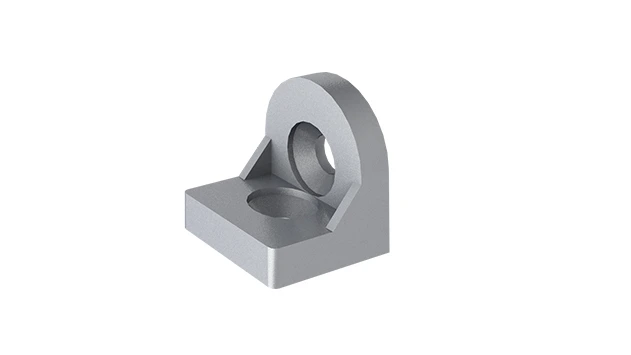
If you've ever stepped into a manufacturing workshop, a warehouse, or even a DIY enthusiast's garage, you've likely seen the backbone of modern lean systems: aluminum profiles. These versatile, modular structures form everything from workbenches and material racks to conveyor systems and assembly lines. And holding many of these setups together—quietly, reliably, and often overlooked—is a small but mighty component: the Turning Angle Code 2020 .
Despite its ubiquity, the Turning Angle Code 2020 is surrounded by misconceptions. Is it just a "throwaway" part? Does any 2020 angle code work with any 2020 profile? Can it handle real-world stress, or is it only for lightweight projects? Today, we're diving deep to separate fact from fiction. Whether you're a seasoned facility manager, a small business owner building your first production line, or a hobbyist tinkering with aluminum frames, this guide will help you make smarter choices—backed by expert insights and real-world experience.
First Things First: What Is a Turning Angle Code 2020?
Let's start with the basics. A Turning Angle Code 2020 is a type of aluminum profile accessory designed to connect two 2020-series aluminum profiles at (you guessed it) a 90-degree angle. Think of it as the "cornerstone" of modular assembly—literally. It's typically a small, L-shaped bracket with pre-drilled holes, engineered to bolt or clamp onto the T-slots of 2020 profiles, creating stable, rigid joints.
Why "2020"? That refers to the profile's dimensions: 20mm by 20mm. The 2020 national standard profile is a common (guīgé, or "spec") in manufacturing, prized for its balance of strength, weight, and versatility. And the Turning Angle Code 2020 is specifically crafted to fit this, ensuring compatibility across most standard 2020 systems.
Now, with that foundation, let's tackle the myths.
Myth #1: "It's Just a Small Part—No Need to Splurge on Quality"
Walk into any hardware store or browse online marketplaces, and you'll find Turning Angle Code 2020 options ranging from dirt-cheap plastic versions to pricier aluminum or steel models. A common refrain? "Why pay more? It's just holding two pieces of metal together."
Here's the truth: Skimping on your Turning Angle Code 2020 can cost you far more in the long run.
"We've seen it time and again," says Maria Gonzalez, a production engineer with 15 years of experience optimizing lean systems for electronics manufacturers. "A client buys budget angle codes to save $50 on a workbench build. Six months later, the joints start to warp or loosen. The workbench sags, tools slide off, and suddenly they're replacing not just the angle codes, but damaged profiles or even the entire bench. That $50 'savings' turns into a $500 headache."
The key difference? Material and engineering. Cheap angle codes often use thin, low-grade aluminum or even plastic, which deforms under sustained load or temperature changes. High-quality versions, by contrast, are made from extruded aluminum alloy (often 6063-T5, a staple in structural applications) with reinforced stress points and precise machining. They're designed to distribute weight evenly across the profile's T-slots, preventing stripping or bending.
Case in point: A mid-sized automotive parts supplier we worked with once switched from generic plastic angle codes to aluminum Turning Angle Code 2020s on their material rack B (3 row and 3 floor) units. Within a year, they reported a 70% drop in rack repairs and zero incidents of collapsed shelving—despite storing heavy metal components daily.

Myth #2: "All 2020 Angle Codes Are the Same—Just Pick the Cheapest"
Another common assumption: If it's labeled "2020 Turning Angle Code," it will work with any 2020 profile. After all, 20mm x 20mm is 20mm x 20mm, right? Wrong.
The problem lies in the (xìjié, or "details") of the profile itself. While the 2020 national standard profile has strict dimensional tolerances (e.g., slot width, wall thickness, corner radius), not all profiles on the market adhere to these standards. Some off-brand or "non-standard" 2020 profiles have slightly narrower slots, thicker walls, or rounded edges that don't align with standard angle codes.
"We had a client once who ordered 2020 profiles from a overseas supplier to cut costs," recalls James Chen, a technical consultant at a leading aluminum profile accessories distributor. "They paired them with standard Turning Angle Code 2020s we sold them, and the brackets wouldn't clamp properly—the slots were 0.5mm too narrow. They had to drill out the angle codes, weakening them, just to make them fit. Six months later, the joints started slipping. Turns out, the non-standard profiles had inconsistent slot widths, so even the modified brackets couldn't grip evenly."
The solution? Always check for compatibility. Look for angle codes explicitly labeled as "compatible with national standard 2020 profiles" or "fits T-slot width X" (typically 6mm or 8mm for 2020 standards). When in doubt, ask your supplier for a sample kit: a few profiles and angle codes to test-fit before bulk ordering.
Pro tip: Pairing your Turning Angle Code 2020 with a 2020 aluminum profile end cap can also help. These caps protect the profile ends from damage and ensure the angle code seats flush—no sharp edges or misalignments to throw off the joint.

Myth #3: "Tighten It as Much as Possible—Tighter = Stronger"
You've installed the angle code, grabbed your hex key, and cranked that bolt until it won't turn. "That joint's never moving!" you think. But over-tightening is one of the biggest mistakes people make with Turning Angle Code 2020s—and it can weaken the joint, not strengthen it.
Aluminum profiles are strong, but they're not indestructible. Tightening the bolt too forcefully can strip the T-slot threads, crack the profile's wall, or even warp the angle code itself. "Aluminum has a lower yield strength than steel," explains Gonzalez. "Cranking the bolt past the recommended torque turns the angle code into a lever, prying the slot open from the inside. The joint might feel solid at first, but over time, that micro-damage leads to loosening or failure."
So, how tight is "tight enough"? Most manufacturers recommend a torque of 2.5–3.5 N·m (Newton-meters) for M5 bolts, the standard size for 2020 angle codes. That's firm, but not "grunt until your wrist hurts" tight. If you don't have a torque wrench, a good rule of thumb is: Tighten until the bolt resists, then give it a quarter-turn more. And always use a hex key that fits snugly—stripped bolt heads are another common (and avoidable) issue.
Myth #4: "It's Only for Lightweight Projects—Don't Use It for Heavy Loads"
Let's address the elephant in the room: Can a small L-bracket really support heavy equipment, tools, or materials? Skeptics often write off the Turning Angle Code 2020 as a "light-duty" part, suitable only for shelving books or holding up a monitor, not for industrial use.
The reality? When used correctly, Turning Angle Code 2020s can handle impressive loads. Let's crunch the numbers: A single high-quality aluminum 2020 angle code, paired with M5 bolts and a standard 2020 profile (wall thickness 1.5mm), can typically support 50–80 kg of static load at the joint. That's enough for a small drill press, a bin of metal parts, or even a mini assembly station with tools.
"We regularly design workbenches using 2020 profiles and Turning Angle Code 2020s for clients in the electronics industry," says Chen. "These benches hold oscilloscopes, soldering stations, and ESD equipment—easily 40–50 kg per section. The key is using multiple angle codes per joint (e.g., two per corner for vertical supports) and reinforcing with cross-braces. It's all about distributing the load."
For extra peace of mind, pair your angle codes with other stability-enhancing accessories. Adjustable leveling feet , for example, keep the entire structure grounded and level, reducing stress on joints. And if mobility is needed, caster wheels with locking brakes prevent shifting that could strain angle codes during movement.
Myth vs. Fact: A Quick Reference Table
| Myth | Fact |
|---|---|
| "Any Turning Angle Code 2020 works with any 2020 profile." | Non-standard 2020 profiles may have mismatched slots/walls. Always check compatibility with 2020 national standard profile specs. |
| "Tighter bolts = stronger joints." | Over-tightening strips T-slots or cracks profiles. Stick to 2.5–3.5 N·m torque for M5 bolts. |
| "It's only for lightweight projects." | Properly installed, high-quality angle codes support 50–80 kg per joint (static load). Use multiple codes for heavier loads. |
| "All angle codes are the same—buy the cheapest." | Material (aluminum alloy vs. plastic) and machining quality affect durability. Cheap codes warp or fail under stress. |
Expert Tips: Getting the Most Out of Your Turning Angle Code 2020
Now that we've debunked the myths, let's wrap up with actionable advice from the pros. Here's how to ensure your Turning Angle Code 2020 joints stand the test of time:
- Pair with the right accessories: Use 2020 aluminum profile end cap to protect profile edges and ensure flush angle code seating. For workbenches or racks, add adjustable leveling feet to prevent wobbling and reduce joint stress.
- Inspect regularly: Check angle codes for signs of wear (e.g., bent brackets, stripped bolts, or cracks in the profile near the joint). Tighten loose bolts gently—don't overdo it!
- Don't mix and match materials: If your profile is aluminum, use an aluminum angle code. Mixing aluminum and steel can cause galvanic corrosion (a chemical reaction that eats away at metal) in humid or wet environments.
- When in doubt, ask: Reputable suppliers (like your local aluminum profile accessories dealer) have technical teams who can help you match angle codes to profiles and calculate load capacities. Don't hesitate to reach out!
Final Thoughts: Small Part, Big Impact
The Turning Angle Code 2020 may be small, but its role in modular aluminum systems is enormous. It's the unsung hero that turns individual profiles into functional, durable structures—whether you're building a workbench E (single deck-without caster) for a home workshop or a full production line for a factory.
By dispelling these myths—about quality, compatibility, installation, and load capacity—you're not just saving money or avoiding headaches. You're building systems that work smarter, last longer, and adapt to your needs. And in the world of lean manufacturing, that's the ultimate goal.
So the next time you reach for that L-shaped bracket, remember: It's not just a part. It's the difference between a setup that frustrates and one that empowers. Choose wisely.