- Company Articles
- Products and Technology
- Technology Sharing
- Turning Angle Code 2020: Supporting Continuous Improvement in 3C Assembly

Turning Angle Code 2020: Supporting Continuous Improvement in 3C Assembly
Related Product
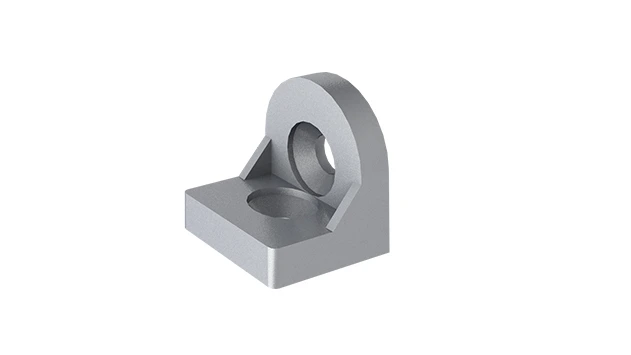
Urning Angle Code 2020
The turning angle aluminum profile connector provides a 90 degree hidden corner connection. 2020 it is means this size is used for 20 series aluminum profile.The corner code comes with set screws that allow for quick, easy connections.
Walk into any 3C (Computer, Communication, Consumer Electronics) manufacturing facility, and you'll feel the buzz immediately. Conveyor belts hum with circuit boards, workers in blue smocks maneuver tiny components with tweezers, and digital displays flash production targets that seem to shift as quickly as the latest smartphone model. In this world, where a new tablet design can render last month's assembly line obsolete, one thing is non-negotiable: flexibility . The ability to reconfigure workstations, adapt flow racks, and scale up (or down) at a moment's notice isn't just a nice-to-have—it's the difference between meeting a launch deadline and watching competitors steal the market.
But here's the catch: traditional manufacturing setups weren't built for this pace. Welded steel workbenches that take days to modify, bolted-together flow racks that crack under the weight of redesigns, and connectors that rust or seize up after one too many adjustments—these are the silent productivity killers on the factory floor. They turn "we need to switch to the new model next week" into a panic-inducing scramble, not a seamless transition. So, what if there was a better way? What if the tools holding your assembly line together were as adaptable as the products you're building?
The Lean System: More Than Just a Buzzword
You've probably heard of "lean manufacturing"—the philosophy of minimizing waste while maximizing value. But in 3C assembly, lean isn't just a poster on the break room wall; it's a daily survival strategy. Every second spent hunting for a misplaced component, every inch of unused space on a workbench, every hour wasted retooling a station for a new part—these add up to lost profits and missed opportunities. And at the heart of any effective lean system? Modularity . The ability to build, break down, and rebuild without starting from scratch.
This is where aluminum profile steps into the spotlight. Lightweight yet surprisingly strong, aluminum profiles have become the backbone of modern lean systems. Unlike rigid steel, they're easy to cut, drill, and customize. But even the best aluminum profile is only as good as the connectors holding it together. Enter the unsung hero of modular assembly: the Turning Angle Code 2020 .
Turning Angle Code 2020: Small Part, Big Impact
Let's get up close with the Turning Angle Code 2020. At first glance, it might look like just another metal bracket—but that's where appearances deceive. This small, unassuming component is engineered to solve one of the biggest headaches in 3C assembly: fast, reliable, and repeatable connections . Traditional methods? Welding takes skilled labor and hours of setup; bolts require tools and risk stripping threads; glue… well, glue has no place in a world where you might need to take a workstation apart next month.
The Turning Angle Code 2020 changes the game with a simple, genius design. Imagine a connector that snaps into the T-slot of an aluminum profile, locks securely with a quarter-turn of a hex key, and holds firm under the weight of circuit boards, batteries, or even heavy tooling. No welding, no drilling, no guesswork. It's like building with advanced LEGO blocks—except these blocks support the livelihoods of your team and the success of your products.
What really sets it apart, though, is reusability . Let's say your R&D team just greenlit a new smartwatch with a slimmer chassis. Overnight, your old workbench—built with fixed steel brackets—suddenly has too much depth, wasting space and forcing workers to stretch awkwardly. With the Turning Angle Code 2020? Loosen the hex key, slide the aluminum profiles to the new dimensions, retighten, and you're done. That's a 2-hour reconfiguration instead of a 2-day rebuild. For a 3C plant churning out 50+ product variants a year, that's a revolution.

From Parts to Productivity: Building with Purpose
The Turning Angle Code 2020 doesn't work alone. It's part of a ecosystem that includes aluminum profiles, workbenches, flow racks, and accessories—all designed to work in harmony. Let's break down how these pieces come together to transform a chaotic factory floor into a lean, mean, 3C-producing machine.
Workbenches: Your Team's Second Home
A 3C assembly worker spends 8+ hours a day at their workbench. It's where they sort components, solder connections, and inspect finished parts. If that workbench is cluttered, too tall, or missing a shelf for tools, productivity tanks—and so does morale. With aluminum profiles and Turning Angle Code 2020, workbenches become personalized . Need a shelf for your ESD (Electrostatic Discharge) mat? Snap on a profile. Want to add a tool rail above the surface? Turn a few angle codes and it's done. Even better, when a new hire joins or a veteran moves to a different station, the bench adapts to their height and workflow in minutes, not days.
Flow Racks: Keeping Components Moving
In 3C assembly, "flow" isn't just a buzzword—it's the lifeblood of production. Components need to move from storage to assembly to testing without bottlenecks. Flow racks are the arteries here, and they need to keep up with the tiny, varied parts that make up smartphones, laptops, and wearables. A flow rack built with aluminum profiles and Turning Angle Code 2020 can be adjusted to fit everything from 0.5-inch microchips to 6-inch display panels. Add roller tracks (another modular accessory) and suddenly, gravity does the work—components glide smoothly to the front of the rack, reducing the need for workers to bend or reach. It's small touches like this that cut down on fatigue and errors.
| Aspect | Traditional Assembly Setups | Lean Setups with Aluminum Profile & Turning Angle Code 2020 |
|---|---|---|
| Setup Time for a New Workstation | 2–3 days (welding, drilling, painting) | 2–3 hours (snap-and-lock assembly) |
| Flexibility for Redesigns | Low (requires cutting/welding; parts often damaged) | High (reusable components, no damage during reconfiguration) |
| Waste Reduction | High (scrap metal, excess labor, unused space) | Low (modular parts, custom-fit layouts, minimal scrap) |
| Worker Satisfaction | Variable (fixed setups may cause discomfort) | High (customizable workspaces, reduced physical strain) |
| Long-Term Cost | High (frequent replacements, downtime during retools) | Low (durable materials, reusable components, faster ROI) |
The Day the Line Stopped (and Then Got Better)
Let's paint a picture: A mid-sized 3C manufacturer in Guangdong gets a rush order for a new wireless earbud model. The catch? The design is slightly bulkier than the previous version, and the existing flow racks—built with welded steel—can't accommodate the larger packaging. The production manager, Li Wei, stares at the calendar: the order is due in 10 days, and retooling with traditional methods would take a week. Panic sets in.
But Li's team had recently invested in aluminum profiles and Turning Angle Code 2020. That afternoon, they pulled the old steel racks apart (scrapping them, unfortunately) and started fresh. Using pre-cut aluminum profiles and angle codes, they assembled 12 new flow racks in 6 hours . They added adjustable dividers to separate left and right earbuds, and attached roller tracks to let packages slide gently to the picking area. By the next morning, the line was running again—this time, 15% faster than before, because the new racks reduced the time workers spent reaching for packages.
"We used to dread product changes," Li later said. "Now? We see them as a chance to improve. The Turning Angle Code 2020 didn't just save us on this order—it changed how we think about problem-solving. We're not stuck with what we have; we can build what we need."

Beyond the Basics: Accessories That Elevate the System
The Turning Angle Code 2020 and aluminum profiles are powerful on their own, but when paired with the right accessories, they become unstoppable. Let's talk about the unsung sidekicks that make your lean system truly shine:
- Casters & Wheels: Add these to a workbench or trolley, and suddenly your "fixed" station becomes mobile. Need to move a workstation to the testing area? Just roll it—no heavy lifting required.
- Roller Tracks: As we saw in Li's story, these turn static flow racks into dynamic feeding systems. Available in materials like aluminum or plastic (with ESD-safe options for sensitive components), they ensure parts move smoothly and safely.
- ESD Workbench Tops: 3C components are delicate—static electricity can fry a circuit board in seconds. Pairing ESD-safe tops with modular workbenches (secured with Turning Angle Code 2020) keeps both parts and workers protected.
- Adjustable Feet: Factory floors aren't always perfectly level. These small, threaded feet screw into aluminum profile bases, letting you stabilize workbenches or racks on uneven surfaces—no shims or makeshift fixes needed.
Choosing Quality: Why the Right Components Matter
Here's a truth that's easy to overlook: not all aluminum profiles or angle codes are created equal. A cheap, poorly made Turning Angle Code might save you a few yuan upfront, but it'll loosen after a month of use, leaving your workbench wobbly or your flow rack misaligned. In 3C assembly, where precision is measured in millimeters, that's a disaster waiting to happen.
That's why partnering with a reliable supplier matters. Look for components that meet industry standards—aluminum profiles with consistent T-slot dimensions, angle codes made from high-grade alloys that resist corrosion, and accessories tested for durability. A good supplier won't just sell you parts; they'll help you design a system that fits your specific needs, whether you're assembling smartwatches or server motherboards.
The Future of 3C Assembly: Lean, Adaptable, and Human-Centric
As 3C products get smaller, smarter, and more complex, the factories building them need to evolve too. The days of one-size-fits-all assembly lines are gone. What's replacing them? Systems that put people and flexibility at the center. Systems where a single worker can reconfigure a workstation during a lunch break, where a flow rack adapts to a new component size in minutes, and where waste is measured in seconds, not tons.
The Turning Angle Code 2020 might not be the star of the show, but it's the quiet enabler. It's the reason your team can pivot when a new order comes in, the reason your workbenches feel like they were built for your hands, and the reason your factory floor doesn't just produce products—it produces progress .
In the end, continuous improvement isn't about grand gestures. It's about the small, smart choices that add up: a better connector, a more adaptable workbench, a flow rack that keeps up with your pace. And in 3C assembly, that's the difference between keeping up with the industry—and leading it.