- Company Articles
- Products and Technology
- Technology Sharing
- Turning Angle Code 2020: Technical Training for Lean Manufacturing Teams

Turning Angle Code 2020: Technical Training for Lean Manufacturing Teams
Related Product
Urning Angle Code 2020
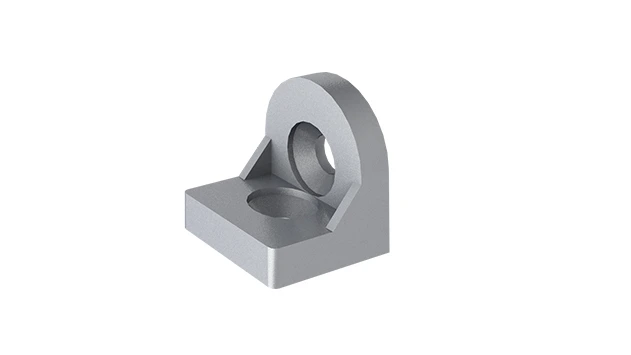
The turning angle aluminum profile connector provides a 90 degree hidden corner connection. 2020 it is means this size is used for 20 series aluminum profile.The corner code comes with set screws that allow for quick, easy connections.
In the world of lean manufacturing, where every second counts and waste is the enemy, it's often the smallest components that make the biggest difference. Walk into any efficient production floor, and you'll see a symphony of tools, workstations, and material flows working in harmony—but behind that harmony lies a network of precision parts designed to keep things moving. Today, we're zooming in on one such unsung hero: the Turning Angle Code 2020. While it might not grab headlines like a high-tech conveyor or a custom workbench, this unassuming aluminum profile accessory plays a critical role in building the flexible, durable structures that power lean systems. Whether you're assembling a lightweight workbench for electronics assembly or a sturdy material rack for automotive parts, understanding how to use the Turning Angle Code 2020 correctly can transform your team's productivity, reduce errors, and make your workflows smoother than ever. Let's dive in.
1. The Basics: Why Lean Manufacturing Relies on Precision Components
Lean manufacturing isn't just a philosophy—it's a practice built on the idea that every element of the production process should add value. That means eliminating unnecessary steps, reducing downtime, and creating systems that adapt quickly to change. To do that, teams need tools and structures that are both robust and flexible. Enter aluminum profiles and their accessories: these modular building blocks allow manufacturers to design everything from workstations to flow racks that can be reconfigured in hours, not weeks. But none of this works without the right connectors. That's where angle codes come in.
Angle codes, including the Turning Angle Code 2020, are the glue that holds aluminum profiles together. They join profiles at specific angles (90 degrees, 45 degrees, etc.), ensuring stability while maintaining the modularity that makes lean systems so powerful. For teams on the floor, this translates to less time wrestling with ill-fitting parts, fewer accidents from wobbly structures, and more confidence that the workbench or rack they're using can handle the day's demands. Think of it this way: if aluminum profiles are the bones of your lean system, angle codes are the joints that let those bones move and support weight without breaking.
But not all angle codes are created equal. The Turning Angle Code 2020 is specifically designed for use with 2020 aluminum profiles—a popular choice for lightweight, high-precision applications like electronics manufacturing, lab setups, or small-part assembly. Its compact size, precise engineering, and compatibility with standard 2020 profile slots make it a go-to for teams that need both strength and versatility. In the next sections, we'll break down exactly what makes this component tick and how your team can master its use.
2. What Is the Turning Angle Code 2020? Design, Specs, and How It Stacks Up
Let's start with the basics: the Turning Angle Code 2020 is a specialized connector used to join two 2020 aluminum profiles at a 90-degree angle. Made from high-grade aluminum alloy (typically 6063-T5, known for its strength and corrosion resistance), it's designed to fit snugly into the T-slots of 2020 profiles—those narrow, groove-like channels that run along the length of the profile. Unlike generic brackets, which might require drilling or welding, the Turning Angle Code 2020 uses bolts or screws inserted through the T-slot to create a secure, tool-free connection that can be disassembled and reused.
So, what makes the 2020 model unique? Let's compare it to other common angle codes, like the Turning Angle Code 3030 and 4040, which are designed for larger profiles (30mm x 30mm and 40mm x 40mm, respectively). The table below breaks down the key differences:
| Feature | Turning Angle Code 2020 | Turning Angle Code 3030 | Turning Angle Code 4040 |
|---|---|---|---|
| Compatible Profile Size | 20mm x 20mm aluminum profiles | 30mm x 30mm aluminum profiles | 40mm x 40mm aluminum profiles |
| Material | Aluminum alloy 6O63-T5 | Aluminum alloy 6O63-T5 | Aluminum alloy 6O63-T5 |
| Max Load Capacity (Vertical) | Up to 50kg per joint | Up to 120kg per joint | Up to 200kg per joint |
| Weight | Approx. 25g per unit | Approx. 45g per unit | Approx. 70g per unit |
| Common Applications | ESD workstations, small material racks, lab benches | Medium-duty workbenches, assembly lines, tool racks | Heavy-duty conveyor frames, industrial shelving, machine guards |
As you can see, the Turning Angle Code 2020 is the lightweight champion of the bunch. Its lower weight and load capacity make it ideal for applications where precision and portability matter more than brute strength. For example, in electronics manufacturing, where ESD workstations need to be both static-safe and easy to adjust for different circuit board sizes, the 2020 angle code shines. It allows teams to build work surfaces that are sturdy enough to hold sensitive components but light enough to reposition when production needs change.
Another key feature of the Turning Angle Code 2020 is its precision machining. The holes for bolts are pre-drilled to align perfectly with the T-slots of 2020 profiles, reducing the risk of misalignment during assembly. This might seem like a small detail, but on a busy production floor, even a 1mm misalignment can lead to a wobbly workbench or a flow rack that jams—costing time and frustration. By using a well-engineered angle code, your team can skip the guesswork and get structures right the first time.

3. Step-by-Step Installation: How to Use the Turning Angle Code 2020 Like a Pro
Installing a Turning Angle Code 2020 might look simple, but doing it correctly requires attention to detail. Follow these steps to ensure a secure, long-lasting connection:
3.1 Gather Your Tools and Materials
Before you start, make sure you have everything you need:
- Turning Angle Code 2020 (quantity depends on your project)
- 20mm x 20mm aluminum profiles (cut to your desired length)
- M5 or M6 bolts (typically 10-12mm long; check the angle code specs for exact size)
- T-slot nuts (compatible with 2020 profile slots)
- Hex key (Allen wrench) or torque wrench
- Measuring tape and pencil (for marking profile positions)
- Level (to ensure profiles are straight)
Pro tip: Always use bolts and nuts from the same supplier as your angle codes and profiles. Mixing brands can lead to compatibility issues—for example, a nut that's slightly too wide for the T-slot might get stuck, or a bolt that's too short won't tighten properly.
3.2 Prepare the Aluminum Profiles
Start by cutting your 2020 aluminum profiles to the required length using a saw or miter cutter. If your profiles have rough edges from cutting, smooth them with a file or deburring tool—sharp edges can damage T-slot nuts or cause injuries during assembly. Once the profiles are cut, wipe them down with a clean cloth to remove dust, oil, or debris; this ensures the T-slot nuts slide easily into the slots.
3.3 Position the Angle Code
Lay the two aluminum profiles on a flat surface, positioned at a 90-degree angle where they will join (e.g., the corner of a workbench frame). Place the Turning Angle Code 2020 over the intersection, ensuring that the code's flanges fit snugly against the sides of both profiles. The angle code should have two arms (one for each profile), each with a hole for a bolt. Use your pencil to mark the position of these holes on the profiles—this helps you align the T-slot nuts later.
3.4 insert T-Slot Nuts and Bolts
Slide a T-slot nut into the T-slot of each profile, aligning it with the marks you made. Then, place the Turning Angle Code 2020 back over the intersection, lining up its bolt holes with the T-slot nuts. insert a bolt through each hole and into the nut, hand-tightening until the bolt is snug but not fully tightened.
3.5 Align and Tighten
Use your level to check that both profiles are straight and at a perfect 90-degree angle. If they're misaligned, loosen the bolts slightly and adjust the profiles until they're level. Once aligned, tighten the bolts with a hex key or torque wrench. Be careful not to overtighten—aluminum is strong but can strip if bolts are cranked too hard. A good rule of thumb: tighten until you feel resistance, then give the hex key a quarter-turn more. This ensures a secure hold without damaging the profile or angle code.
3.6 Test the Connection
After tightening, give the connected profiles a gentle shake or apply light pressure to the joint. It should feel solid, with no wobbling or creaking. If the joint moves, check if the bolts are loose or if the T-slot nuts have shifted. If everything feels stable, you're good to go!
Common Mistake to Avoid:
Skipping the alignment step. Even if the angle code "looks" straight, a slight misalignment can cause stress on the joint over time, leading to loosening or failure. Always use a level—your future self (and your team's productivity) will thank you.

4. Integrating with Other Lean Components: Building More Than Just Joints
The Turning Angle Code 2020 rarely works alone. To build fully functional lean structures, it needs to play well with other components like aluminum profile accessories, lean pipe joints, and roller tracks. Let's look at two common scenarios where the 2020 angle code shines:
4.1 Building a Lightweight Workbench
Workbenches are the heart of many production processes, and with the Turning Angle Code 2020, you can build one that's tailored to your team's needs. Here's how it comes together:
- Frame: Use 2020 aluminum profiles for the legs and rails, connected with Turning Angle Code 2020s at each corner. For extra stability, add cross-braces (also connected with angle codes) between the legs.
- Worktop: Attach a plywood, laminate, or aluminum honeycomb panel to the frame using brackets or directly via T-slot nuts. The angle codes ensure the frame is square, so the worktop lies flat with no gaps.
- Accessories: Add a small shelf under the worktop using more 2020 profiles and angle codes, or mount tools holders to the side rails. Since the angle codes are modular, you can add or remove accessories as needed.
Example: A team assembling small electronic components might use this workbench with an ESD mat on top. The lightweight frame makes it easy to move the bench closer to the assembly line during peak hours, and the stable joints ensure the mat stays flat—critical for preventing static damage to sensitive parts.
4.2 Constructing a Mini Flow Rack with Roller Tracks
Flow racks are essential for lean material handling, allowing parts to glide from storage to the production line via gravity. For small parts (like screws, washers, or circuit boards), a mini flow rack built with 2020 profiles and Turning Angle Code 2020s is perfect:
- Frame: Build a simple A-frame using 2020 profiles and angle codes, with the front legs slightly shorter than the back legs to create a gentle slope (about 5-10 degrees).
- Roller Tracks: Attach roller tracks to the frame using brackets connected via angle codes. The angle codes ensure the tracks are aligned, so parts flow smoothly without jamming.
- Bins: Add bins or dividers to the roller tracks, using additional 2020 profiles and angle codes to create compartments for different parts.
Example: A automotive parts supplier uses this setup to feed small fasteners to the assembly line. The flow rack is compact enough to fit next to the line, and the angle-code joints ensure the roller tracks stay aligned even when bins are loaded—reducing the risk of parts spilling or getting stuck.
5. Troubleshooting: Solving Common Turning Angle Code 2020 Issues
Even with careful installation, issues can pop up. Here's how to diagnose and fix the most common problems:
5.1 Loose Joints
If a joint starts to wobble after a few weeks of use, the culprit is usually loose bolts or worn T-slot nuts. Tighten the bolts first—if that doesn't work, check the T-slot nuts. Over time, the threads on plastic or low-quality nuts can wear down, making them unable to hold the bolt. replace worn nuts with new ones, and consider upgrading to metal T-slot nuts for heavy-use applications.
5.2 Misaligned Profiles
Misalignment often happens when the angle code isn't positioned correctly during installation. If the profiles are crooked, loosen the bolts, realign with a level, and retighten. For persistent issues, check if the angle code itself is bent (this can happen if the joint was overloaded). If the code is bent, replace it—using a damaged angle code is a safety risk.
5.3 Corrosion
Aluminum is naturally corrosion-resistant, but in humid or chemical-heavy environments (like a factory with frequent cleaning), angle codes can develop white, powdery corrosion (oxidation). To fix this, clean the angle code with a soft cloth and a mild detergent, then dry thoroughly. For long-term protection, apply a thin coat of anti-corrosion spray or wax.
Pro Maintenance Tip:
Add a monthly "joint check" to your team's routine. Walk around the production floor and inspect all angle code joints, tightening bolts and replacing worn parts as needed. This takes 15-20 minutes and can prevent costly breakdowns later.
6. Real-World Impact: How One Team Improved Productivity with the Turning Angle Code 2020
Let's hear from a real team to see how mastering the Turning Angle Code 2020 made a difference. PrecisionTech, a manufacturer of medical devices, was struggling with their assembly workstations. The old workbenches were custom-built wood frames that took hours to adjust when production needs changed. Workers often complained about wobbly surfaces, and reconfiguring a single bench for a new product could take half a day—wasting valuable time.
The team decided to switch to aluminum profiles and modular accessories, including the Turning Angle Code 2020. At first, some workers were skeptical: "How can a little metal bracket make that much difference?" But after training, they quickly saw the benefits. Using 2020 profiles and angle codes, they built lightweight workstations that could be disassembled and reconfigured in under an hour. The precision joints meant no more wobbly surfaces, reducing errors in delicate medical device assembly. And because the angle codes were easy to install, even new team members could help build or modify workstations—freeing up senior technicians for more skilled tasks.
Within three months, PrecisionTech reported a 20% reduction in setup time for new products and a 15% drop in assembly errors. "The Turning Angle Code 2020 might not be flashy," said Maria, a production supervisor, "but it's made our jobs so much easier. We're not fighting with tools or waiting for maintenance to fix wobbly benches anymore. We just grab the angle codes, tighten the bolts, and get back to work."
7. Best Practices: Getting the Most Out of Your Turning Angle Code 2020
To maximize the benefits of the Turning Angle Code 2020, follow these best practices:
7.1 Train the Whole Team
Don't limit training to just maintenance or engineering teams. Everyone who works with lean structures—from assembly line workers to supervisors—should know how to install and inspect angle codes. A 15-minute demo during a team meeting can go a long way in preventing mistakes and empowering workers to troubleshoot small issues on the spot.
7.2 Use the Right Angle Code for the Job
While the Turning Angle Code 2020 is versatile, it's not meant for every application. For heavy loads (over 50kg per joint), upgrade to a 3030 or 4040 angle code. Using an undersized angle code is a recipe for failure.
7.3 Source from Reputable Suppliers
Cheap, knockoff angle codes might save money upfront, but they're often poorly machined, with misaligned holes or weak materials. Invest in quality components from suppliers who specialize in lean manufacturing accessories—this reduces the risk of breakdowns and ensures compatibility with other parts.
7.4 Document Your Designs
Keep a library of blueprints or photos of successful structures built with the Turning Angle Code 2020. This gives new team members a reference and helps standardize builds across shifts. For example, if the night shift needs to rebuild a workbench, they can follow the same angle code placement as the day shift—no guesswork required.
8. Conclusion: Small Parts, Big Results
In lean manufacturing, success lies in the details. The Turning Angle Code 2020 might be small, but its impact is huge. By mastering this simple yet critical component, your team can build stronger, more flexible structures, reduce downtime, and focus on what really matters: adding value to the product. Remember, lean isn't about perfection—it's about continuous improvement. And improving how you use tools like the Turning Angle Code 2020 is a step toward a more efficient, more productive, and more satisfying work environment.
So, the next time you walk past a workbench or flow rack, take a closer look. Chances are, there's a Turning Angle Code 2020 holding it together—quietly, reliably, and essential to keeping your lean system running like a well-oiled machine. Now go out there and build something great.