- Company Articles
- Products and Technology
- Product knowledge
- Turning Angle Code 3030: A Key Component in Modular Production Systems

Turning Angle Code 3030: A Key Component in Modular Production Systems
Related Product
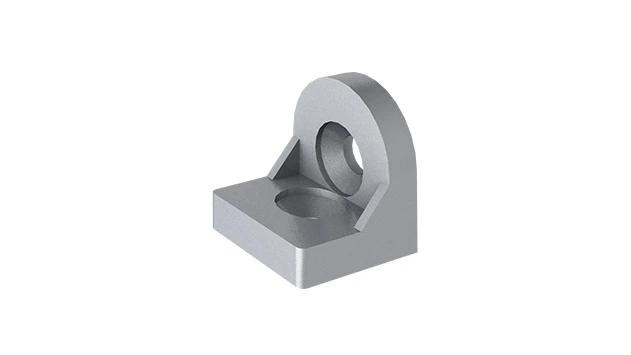
Turning Angle Code 3030
The turning angle aluminum profile connector provides a 90 degree hidden corner connection. 3030 it is means this size is used for 30 series aluminum profile.The corner code comes with set screws that allow for quick, easy connections.
How a small, unassuming part keeps modern manufacturing agile, efficient, and ready for whatever comes next
The Hidden Backbone of Modern Factories
Walk into any modern manufacturing facility today, and you'll likely notice something different from the factories of 30 years ago: flexibility. Lines that can shift from assembling smartphones in the morning to medical devices in the afternoon. Workbenches that reconfigure in hours, not weeks. Racks that grow or shrink with inventory demands. This isn't magic—it's modular production systems at work. And at the heart of these systems, holding everything together (quite literally), are small but mighty components like the Turning Angle Code 3030 .
Modular production systems are the unsung heroes of today's fast-paced manufacturing world. They replace rigid, one-size-fits-all setups with building blocks—think industrial-grade Legos—that can be rearranged, expanded, or repurposed as needs change. This adaptability isn't just convenient; it's critical. In an era where consumer demands shift overnight and product lifecycles shrink from years to months, factories can't afford to be stuck with fixed infrastructure. They need to pivot quickly, and modular systems make that possible.
But what makes these systems tick? It's the connections—the parts that link beams, panels, and rails into sturdy, functional structures. And among these connections, angle codes stand out. Designed to join aluminum profiles at precise angles (usually 90 degrees, but often adjustable), angle codes are the glue that turns individual pieces into cohesive workbenches, conveyors, or material racks. And when it comes to versatility, few angle codes compare to the Turning Angle Code 3030.
Why does this matter? Imagine a factory that needs to retool its assembly line for a new product. With traditional welded steel structures, this could take weeks of downtime, costing tens of thousands of dollars. With modular systems built on components like the Turning Angle Code 3030, that same retooling might take a single day. That's the difference between falling behind the competition and staying ahead.
What Is the Turning Angle Code 3030, Anyway?
Let's start with the basics. The Turning Angle Code 3030 is a specialized connector designed to join 3030 aluminum profiles —those square or rectangular tubes you see forming the frames of workbenches, shelving, and machine guards. The "3030" refers to the profile's dimensions: 30mm by 30mm, a common size for medium-duty applications. The "turning" in its name hints at its flexibility; while many angle codes lock profiles into a fixed 90-degree angle, the Turning Angle Code 3030 often includes features that allow for slight adjustments, making it easier to align profiles perfectly during assembly.
At first glance, it might look like a simple metal bracket. But don't let its simplicity fool you. The Turning Angle Code 3030 is engineered with precision. Most are made from high-grade aluminum alloy (typically 6063-T5, known for its strength and corrosion resistance) or sometimes steel for heavier loads. Its design includes pre-drilled holes that align with the T-slots on 3030 profiles, allowing it to be secured with bolts or screws without the need for welding or drilling. This "drill-free" installation is a game-changer, cutting assembly time from hours to minutes.
But what really sets the Turning Angle Code 3030 apart is its balance of strength and adaptability. It's strong enough to support the weight of tools, products, and even small machinery on a workbench, yet lightweight enough that workers can handle it without heavy equipment. Its compact size (usually around 30mm x 30mm x 10mm, depending on the design) means it doesn't add unnecessary bulk, keeping structures streamlined and space-efficient.
Let's break down its key features:
- Precision alignment: T-slots and pre-threaded holes ensure profiles fit together with minimal gaps, reducing wobble and improving stability.
- Adjustability: Some models include slotted holes or swivel mechanisms, letting assemblers tweak angles by a few degrees to correct for minor measurement errors.
- Load capacity: A typical Turning Angle Code 3030 can handle 50-100 kg of vertical load per joint, depending on the material and fasteners used—more than enough for most workbench or shelving applications.
- Corrosion resistance: Anodized aluminum finishes protect against rust and wear, even in humid or oily factory environments.
Think of it as the perfect middle child in the angle code family. Smaller than 4040 angle codes (used for heavy-duty applications like industrial racks) and more robust than 2020 angle codes (ideal for lightweight structures like display shelves), the Turning Angle Code 3030 hits the sweet spot for most day-to-day manufacturing needs.

How It Works: The Art of the Connection
To understand why the Turning Angle Code 3030 is so effective, let's walk through a typical assembly process. Suppose a factory wants to build a new workbench for its electronics assembly line. The frame will use 3030 aluminum profiles, and the corners will be joined with Turning Angle Code 3030s. Here's how it comes together:
First, the assembler cuts the 3030 profiles to the desired length (say, 120cm for the workbench legs and 180cm for the top frame). Next, they slide the Turning Angle Code 3030s onto the ends of the profiles. The angle code's T-slot design fits snugly into the profile's grooves, and bolts are inserted through the angle code's holes and tightened into the profile's pre-threaded channels. No drilling, no welding—just a few turns of a hex key.
What makes this process so efficient is the angle code's design. Unlike traditional brackets that require precise hole alignment (and often result in stripped threads or misaligned parts), the Turning Angle Code 3030's slotted holes and T-slot compatibility allow for minor adjustments. If a profile is slightly longer than intended, the angle code can shift a few millimeters to compensate. This flexibility reduces frustration during assembly and ensures the final structure is square and stable.
Once the frame is assembled, accessories like 3030 aluminum profile end caps are added. These simple plastic or metal caps snap onto the ends of the profiles, covering sharp edges to prevent cuts and giving the workbench a clean, finished look. They might seem like an afterthought, but end caps are critical for safety—factory workers spend hours at these benches, and even a small exposed edge can lead to injuries over time. Plus, they protect the profiles from dust and debris, extending their lifespan.
Real-World Example: A Day in the Life of a Modular Workbench
Let's meet Maria, a production supervisor at a small electronics manufacturer. Last month, her team was assembling smart home sensors on a fixed wooden workbench. The bench was sturdy but unadjustable—too low for taller workers, too narrow to hold all the tools needed for the new sensor model. Productivity was dropping, and complaints were piling up.
Maria decided to switch to a modular workbench built with 3030 aluminum profiles and Turning Angle Code 3030s. The assembly took her team just 4 hours: cutting the profiles, attaching the angle codes, adding a plywood top, and installing shelves. The best part? They could adjust the height by swapping out leg lengths and repositioning the angle codes. Now, each worker can tweak their section of the bench to their comfort, and the team has added extra shelves for tools. Productivity is up 15%, and Maria hasn't heard a single complaint since.
"It's like night and day," she says. "Before, we were stuck with what we had. Now, if we need to add a bin for screws or raise the bench by an inch, we just loosen a few bolts, adjust the angle codes, and we're done. No waiting for maintenance, no downtime."

How Does It Compare? Turning Angle Code 3030 vs. Other Angle Codes
Not all angle codes are created equal. To appreciate the Turning Angle Code 3030's strengths, it helps to see how it stacks up against similar components. Below is a comparison of common angle codes used in modular manufacturing:
| Angle Code Type | Profile Size (mm) | Material | Max Load per Joint (kg) | Adjustability | Ideal Use Case |
|---|---|---|---|---|---|
| Turning Angle Code 2020 | 20x20 | Aluminum | 30-50 | Low (fixed 90°) | Light-duty: display racks, small shelving |
| Turning Angle Code 3030 | 30x30 | Aluminum/Steel | 50-100 | Medium (slight angle adjustment) | Medium-duty: workbenches, material racks, conveyor frames |
| Turning Angle Code 4040 | 40x40 | Steel/Heavy Aluminum | 100-200 | Low (fixed 90°) | Heavy-duty: industrial machinery frames, large storage racks |
As the table shows, the Turning Angle Code 3030 shines in medium-duty applications. It's stronger than 2020 angle codes (which struggle with heavier tools or materials) but more flexible and lightweight than 4040 codes (which are overkill for most workbenches). This balance makes it the go-to choice for factories that need versatility without sacrificing strength.
Another key advantage is cost. 4040 angle codes and profiles are more expensive, and their weight makes shipping and handling pricier too. For small to medium manufacturers, the 3030 system offers the best return on investment—enough strength for daily use, at a price that won't break the budget.
The Turning Angle Code 3030 and the Lean Manufacturing Revolution
Modular systems and lean system principles go hand in hand. Lean manufacturing, which focuses on eliminating waste (time, materials, space, etc.), thrives on flexibility—and that's exactly what the Turning Angle Code 3030 delivers. Let's break down how this small component supports lean goals:
Reducing Downtime: In lean terms, downtime is a form of waste (called "waiting"). Traditional setups require extensive retooling, leading to hours or days of waiting. Modular systems with Turning Angle Code 3030s cut retooling time to a fraction, keeping production moving.
Optimizing Space: Factories pay for every square foot, so wasted space is a major cost. Modular structures can be built to fit exact needs—no more oversized racks taking up unused space. When a product line is retired, the components can be disassembled and reused elsewhere, rather than being scrapped.
Minimizing Material Waste: Welding steel structures often results in scrap metal from cutoffs and mistakes. Aluminum profiles and angle codes are precision-cut, and excess materials can be saved for future projects. Plus, aluminum is 100% recyclable, aligning with sustainability goals.
Empowering Workers: Lean manufacturing emphasizes employee engagement, and modular systems put control in workers' hands. If a machine operator notices a better way to arrange their workbench, they can adjust the angle codes themselves, without waiting for maintenance. This sense of ownership boosts morale and leads to continuous improvement.
It's no coincidence that factories embracing lean principles are among the biggest adopters of modular systems. The Turning Angle Code 3030 isn't just a connector; it's a tool for cultural change—one that encourages adaptability, problem-solving, and efficiency at every level.
Looking Ahead: The Future of Modular Manufacturing
As manufacturing evolves, so too will modular systems and components like the Turning Angle Code 3030. Here are a few trends to watch:
Smart Connections: Imagine angle codes with built-in sensors that monitor load levels or alert maintenance when bolts loosen. While this is still in the prototype stage, Industry 4.0 (the rise of smart factories) could turn these "dumb" connectors into data-collecting tools. A workbench with sensor-equipped angle codes might detect when it's overloaded and automatically slow down the production line to prevent accidents.
Eco-Friendly Materials: Manufacturers are already experimenting with recycled aluminum and bio-based plastics for components like end caps. In the future, we might see angle codes made from 100% recycled materials without sacrificing strength—a win for sustainability.
3D-Printed Customization: For small-batch or specialized applications, 3D-printed angle codes could allow factories to create one-of-a-kind connectors tailored to unique profiles or angles. This would open up new possibilities for modular design, especially in industries like aerospace or medical device manufacturing, where precision is critical.
But even with these advancements, the core appeal of the Turning Angle Code 3030 will remain: simplicity, reliability, and adaptability. Sometimes, the best innovations are the ones that do their job quietly, making complex tasks feel easy. And in a world where manufacturing never stops evolving, that's more valuable than ever.
The next time you walk through a factory, take a closer look at the workbenches, the conveyors, the material racks. Chances are, you'll see 3030 aluminum profiles joined by Turning Angle Code 3030s—small, unassuming parts that make big things possible. They might not get the attention of robots or AI-powered machines, but they're the backbone of the flexible, efficient factories that power our economy.
So here's to the Turning Angle Code 3030: the quiet connector that keeps manufacturing moving forward. It's proof that even the smallest components can have the biggest impact—one bolt, one profile, one reconfigured workbench at a time.