- Company Articles
- Products and Technology
- Technology Sharing
- Turning Angle Code 3030 and Lean Management: Tools for Continuous Improvement

Turning Angle Code 3030 and Lean Management: Tools for Continuous Improvement
Related Product
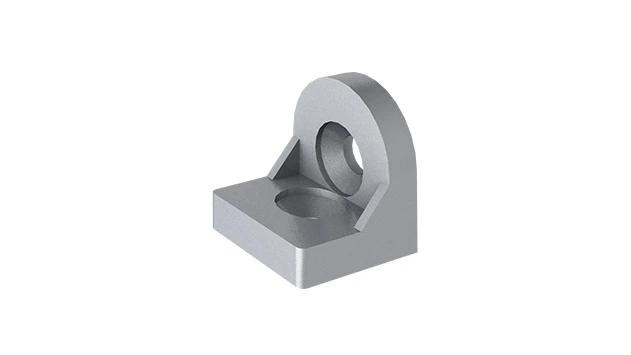
Turning Angle Code 3030
The turning angle aluminum profile connector provides a 90 degree hidden corner connection. 3030 it is means this size is used for 30 series aluminum profile.The corner code comes with set screws that allow for quick, easy connections.
In the world of manufacturing and operations, the phrase "continuous improvement" gets thrown around a lot—but what does it really take to turn that buzzword into a daily reality? For many teams, the answer lies not just in big-picture strategies, but in the small, often overlooked tools that shape how work gets done. Today, we're diving into one such tool: the Turning Angle Code 3030. It might sound like just another part in a long list of industrial components, but this unassuming piece of aluminum profile hardware is quietly revolutionizing how businesses build flexible, efficient workspaces that grow with their needs. Let's unpack how this tiny but mighty accessory, paired with principles of lean management, becomes a catalyst for lasting improvement.
Understanding Lean Management: More Than Just a Methodology
Before we get into the nuts and bolts of Turning Angle Code 3030, let's ground ourselves in what lean management really means. At its core, lean is about stripping away waste—whether that's wasted time, materials, or effort—to focus on creating value for the customer. It's not a one-and-done project; it's a mindset that asks, "How can we do this better tomorrow than we did today?"
Think about a typical production floor. Maybe there's a workbench that's too low for tall operators, forcing them to hunch over and slow down. Or a flow rack that can't adjust to a new product size, leading to clunky workarounds. These might seem like minor annoyances, but over time, they add up to bottlenecks, frustrated teams, and missed deadlines. Lean management says: Fix the system, not just the symptom . And that's where flexible tools come into play.
Meet the Turning Angle Code 3030: The Unsung Hero of Flexible Workspaces
If lean management is the philosophy, then the Turning Angle Code 3030 is one of the hands-on tools that brings it to life. Let's start by demystifying the name. "Turning Angle Code 3030" refers to a specific type of connector used in aluminum profile systems—those modular, T-slot aluminum rails you've probably seen in factories, labs, or workshops. These profiles are the building blocks of everything from workbenches and flow racks to material carts and assembly stations. And the Turning Angle Code 3030? It's the piece that lets you join these profiles at (you guessed it) a 30-degree angle, but more importantly, it's designed for quick, tool-free adjustments.
Unlike traditional welded or bolted joints, which require time, tools, and sometimes even a professional to modify, the Turning Angle Code 3030 clicks into the T-slot of an aluminum profile and locks into place with a simple twist or lever. Need to reposition a shelf on a workbench? Loosen the angle code, slide it to the new spot, and lock it down—done. Want to add a crossbar to a flow rack to separate smaller parts? Just attach the angle code to the vertical profile, align the horizontal rail, and secure it. No drilling, no welding, no waiting.
But why does this matter for lean management? Because flexibility is the backbone of continuous improvement. When your workspace can adapt as quickly as your needs change, you eliminate the "we can't do that because the setup is fixed" excuse. You turn "maybe next quarter" into "we can try it this afternoon."

Aluminum Profile Systems: The Foundation of Adaptability
The Turning Angle Code 3030 doesn't work in isolation, of course. It's part of a larger ecosystem of aluminum profile and accessories that together create modular workspaces. Aluminum profiles themselves are lightweight yet surprisingly strong, making them ideal for everything from small workbenches to heavy-duty material racks. Their T-slot design—those grooves running along the length of the profile—means you can attach not just angle codes, but also shelves, hooks, tool holders, and even conveyor tracks with ease.
Let's say you run a small electronics assembly line. Your team assembles two products: a compact smartwatch and a larger tablet. The watch requires tiny components and precision tools, while the tablet needs more surface area and different testing equipment. With a traditional wooden workbench, you'd either need two separate stations (wasting space) or spend 30 minutes swapping out tools and rearranging every time you switch products (wasting time). But with an aluminum profile workbench built using Turning Angle Code 3030 and other accessories? You can have a single bench that transforms. Add a detachable shelf for the watch's micro-tools using angle codes, then remove it and lower the main surface for the tablet. All in under five minutes.
This adaptability directly targets two key types of waste in lean management: transportation (moving materials or people between fixed stations) and waiting (delays while reconfiguring setups). By making the workspace itself flexible, you cut down on both.

From Workbenches to Flow Racks: Real-World Applications
To really see the impact of Turning Angle Code 3030, let's look at two common workplace setups: workbenches and flow racks. These are the workhorses of production and warehousing, and their design can make or break efficiency.
Workbenches: Where Ergonomics Meets Efficiency
A workbench isn't just a table—it's where operators spend 8+ hours a day assembling, testing, or packaging products. If it's not tailored to their needs, productivity plummets, and injury risks rise. The Turning Angle Code 3030 shines here because it lets teams customize height, layout, and accessories on the fly.
Take a team assembling medical devices, where precision is critical. One operator might prefer a bench height of 36 inches to keep their elbows at a comfortable 90-degree angle, while another (taller) team member needs 40 inches. With a traditional bench, you'd have to choose one height and compromise. With an aluminum profile bench using Turning Angle Code 3030, the legs are made of adjustable aluminum profiles. Loosen the angle codes at the base, slide the legs up or down, and lock them—each operator can set their own height in minutes. No more one-size-fits-all discomfort.
But it's not just height. Think about tool placement. A soldering iron needs to be within arm's reach, but a torque wrench might need a dedicated holder. Using angle codes, teams can add side shelves, tool hooks, or even small drawers exactly where they need them. And when a new tool is introduced? Just attach a new bracket with the Turning Angle Code 3030—no need to drill holes or call maintenance.
Flow Racks: Keeping Materials Moving (Without the Clutter)
Flow racks are another area where flexibility pays off. These racks use gravity to feed materials from the back (where they're stocked) to the front (where operators pick them), reducing the need to bend, reach, or walk to retrieve parts. But what happens when you switch from a small component (like a 2-inch widget) to a larger one (a 6-inch assembly)? A fixed flow rack either leaves gaping empty spaces (wasting capacity) or forces materials to get stuck (causing delays).
Enter the Turning Angle Code 3030. By using angle codes to attach dividers and rails to the aluminum profile frame of the flow rack, teams can adjust the width of each lane in seconds. Need to split a lane into two for smaller parts? Add a divider using angle codes. Have a bulkier item that needs more space? Remove a divider and reposition the angle codes to widen the lane. This adaptability ensures the flow rack always matches the current product mix, keeping materials moving smoothly and reducing the "hunt and fetch" time that eats into productivity.
| Feature | Traditional Fixed Workspace | Aluminum Profile Workspace (with Turning Angle Code 3030) |
|---|---|---|
| Setup Time for New Configuration | 4–8 hours (requires tools, welding, or professional help) | 15–30 minutes (tool-free adjustments with angle codes) |
| Adaptability to Product Changes | Limited—often requires replacing entire stations | High—easily reconfigure with new angles, heights, or accessories |
| Ergonomic Customization | One-size-fits-all; no operator-specific adjustments | Operator-specific adjustments (height, tool placement) in minutes |
| Cost Over Time | High—frequent replacements for new needs | Lower—reusable components; only replace what's needed |
| Waste Reduction | High—wasted space, time, and materials from rigid setups | Low—optimized space, reduced setup time, minimal material waste |
The Ripple Effect: How Small Adjustments Drive Big Improvements
At this point, you might be thinking, "Okay, so the Turning Angle Code 3030 makes it easier to adjust a workbench or flow rack—so what?" Here's the thing: those small adjustments add up to a cultural shift. When teams realize they have the power to tweak their workspace to fit their needs, they stop tolerating inefficiencies and start owning improvement.
Let's take a real-world example. A automotive parts manufacturer we worked with recently was struggling with a bottleneck in their brake assembly line. The issue? Their flow rack was designed for their standard brake caliper, but a new, larger model meant parts were getting stuck between the rails. For weeks, operators were manually lifting the calipers over the rails—a time-consuming, error-prone process. When we suggested using Turning Angle Code 3030 to adjust the rack's lane width, the team was skeptical at first. "We've had this rack for 10 years; we can't just change it," one supervisor said.
But they tried it. In 20 minutes, they repositioned the angle codes, widened the lanes, and tested the new setup. The result? No more stuck calipers, and operators reported saving 15 minutes per hour. Over a full shift, that added up to 2+ hours of extra production time. But the bigger win? The team started asking, "What else can we fix?" Within a month, they'd adjusted three more workstations using angle codes and other aluminum profile accessories, cutting down on wasted motion and reducing errors by 12%.
That's the magic of lean management paired with flexible tools: it empowers frontline teams to be problem-solvers. They don't have to wait for a manager's approval or a maintenance crew's schedule—they can identify a waste, grab a Turning Angle Code 3030, and make the fix themselves. Over time, this builds a culture where continuous improvement isn't a top-down mandate, but a daily habit.
Beyond the Angle Code: Building a Lean Ecosystem
Of course, the Turning Angle Code 3030 doesn't work alone. It's part of a broader family of aluminum profile accessories that together create a fully lean system. Take aluminum profile end caps, for example—these simple plastic covers snap onto the ends of profiles to prevent snags and injuries, turning a functional workspace into a safe one. Or roller track guide rails, which can be attached to aluminum profiles using angle codes to create custom conveyor systems for moving materials between stations.
Even small touches, like plastic roller track guide rails (available in yellow or grey, depending on your color-coding system), play a role. By using angle codes to mount these rails at the optimal angle, teams can control the speed of materials as they flow through the workspace, preventing jams and ensuring a steady, predictable pace—key for balancing workloads in lean environments.
The point is: lean management isn't about replacing every tool you own with the latest gadget. It's about choosing tools that work together to create a system that's adaptable, efficient, and centered on your team's needs. The Turning Angle Code 3030 is a linchpin in that system because it makes the "adaptable" part possible without overcomplicating things.
The Future of Lean: Why Flexibility Matters More Than Ever
In today's fast-paced market, customer demands change overnight. A product that's hot this quarter might be obsolete next, and production teams need to pivot quickly. Rigid workspaces can't keep up. That's why forward-thinking businesses are investing in flexible infrastructure—and components like the Turning Angle Code 3030 are at the heart of that investment.
Consider the rise of small-batch manufacturing and customization. A clothing brand that once produced 10,000 identical shirts now makes 100 unique designs in small runs. Their production line can't afford to be fixed; it needs to reconfigure for different fabric types, sizes, and printing methods. With aluminum profile workstations and angle codes, they can adjust cutting tables, sewing stations, and packaging racks on the fly, keeping up with demand without sacrificing quality.
Or take the growth of remote and hybrid work in industrial settings. Even factory floors are seeing more collaborative, cross-functional teams that need shared workspaces. A single aluminum profile bench with Turning Angle Code 3030 can transform from a solo assembly station in the morning to a team meeting area in the afternoon—no need for separate tables or wasted space.
Wrapping Up: The Turning Angle Code 3030—Small Tool, Big Impact
At the end of the day, lean management is about people. It's about giving teams the tools they need to do their best work, every single day. The Turning Angle Code 3030 might be small, but it sends a big message: "We trust you to make things better." It turns the abstract idea of "continuous improvement" into something tangible—something you can touch, adjust, and see working right away.
So, the next time you walk through a production floor or workshop, take a closer look at the workbenches and flow racks. If they're built with aluminum profiles and accessories like the Turning Angle Code 3030, chances are you're looking at a team that's not just talking about lean management—they're living it. And that's where the real magic happens: not in spreadsheets or mission statements, but in the daily, incremental improvements that add up to a more efficient, more engaged, and more successful operation.
In the end, it's clear: the Turning Angle Code 3030 isn't just a connector. It's a bridge between lean principles and real-world action—a reminder that sometimes, the smallest tools are the ones that help us build the biggest improvements.