- Company Articles
- Products and Technology
- Product knowledge
- Turning Angle Code 3030 Compatibility: Pairing with Lean Pipe Workbenches

Turning Angle Code 3030 Compatibility: Pairing with Lean Pipe Workbenches
Related Product
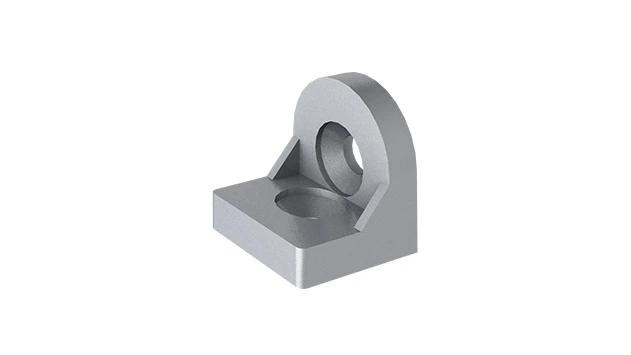
Turning Angle Code 3030
The turning angle aluminum profile connector provides a 90 degree hidden corner connection. 3030 it is means this size is used for 30 series aluminum profile.The corner code comes with set screws that allow for quick, easy connections.
How a Small Component Elevates Efficiency in Modern Manufacturing
The Unsung Hero of Lean Workspaces: Why Compatibility Matters
Walk into any manufacturing facility that's embraced lean principles, and you'll notice something right away: order. Tools are within arm's reach, materials flow smoothly from station to station, and every square inch of space feels intentional. At the heart of this order often sits a humble yet critical element: the workbench. Not just any workbench, though—lean pipe workbenches, built to adapt, evolve, and keep pace with the ever-changing demands of production lines.
But here's the thing about lean pipe workbenches: their magic lies in their modularity. They're not one-size-fits-all pieces of furniture; they're systems. And like any system, they're only as strong as their weakest link. That's where components like the turning angle code 3030 come into play. It might sound like a part—just a small connector, really—but get its compatibility wrong, and suddenly that "adaptable" workbench becomes a rigid, frustrating obstacle. Get it right, though, and you unlock a level of flexibility that can transform how your team works.
Today, we're diving deep into the world of turning angle code 3030 and its partnership with lean pipe workbenches. We'll break down what this component is, why it matters, and how ensuring they work together seamlessly can turn a good workbench into a great one. Whether you're a production manager looking to optimize your line, a small business owner building your first lean workspace, or just curious about the nuts and bolts of efficient manufacturing, this is for you.
What Even Is a Turning Angle Code 3030?
Let's start with the basics. If you're new to the world of aluminum profiles and lean manufacturing components, terms like "turning angle code 3030" can feel like industry jargon. Let's demystify it. At its core, a turning angle code 3030 is a type of connector—specifically, a bracket designed to join aluminum profiles at (you guessed it) a 90-degree angle. The "3030" refers to the size of the profiles it's meant to pair with: 30mm by 30mm, a common dimension in lightweight yet sturdy aluminum extrusion profiles.
Picture this: you're building a frame for a workbench. You've got lengths of aluminum profile—straight, strong, with those signature T-slots running along their edges. To connect two profiles at a corner, you need something to hold them together securely. That's where the turning angle code 3030 steps in. It's shaped like a right angle, with holes that align with the T-slots on the 3030 profiles. Slide a bolt through the slot, thread it into the angle code, tighten, and suddenly those two separate pieces become a rigid corner. Simple, right? But simple doesn't mean insignificant.
What sets the turning angle code 3030 apart from generic brackets? For one, it's engineered for precision. Aluminum profiles are manufactured to tight tolerances, and the angle code matches that precision. The holes are positioned exactly to line up with standard 3030 profile T-slots, ensuring a snug fit that won't wobble or loosen over time. Most are made from die-cast aluminum alloy, which strikes a balance between strength and weight—important when you're building workbenches that need to support tools, materials, and daily use without becoming cumbersome.
Another key feature? Versatility. While it's designed for 90-degree angles, many turning angle code 3030 models have slotted holes or adjustable joints, letting you tweak the angle slightly if needed (though 90 degrees is the sweet spot). They also come in different finishes—anodized, powder-coated—to resist corrosion, which is a big deal in factories where spills, humidity, or chemicals might be present.
Pro Tip: Not All 3030s Are Created Equal
Double-check the profile dimensions before buying! Some manufacturers label profiles as "3030" but measure the outer width, while others measure the inner. A 30mm outer profile might have a 28mm inner dimension, which could throw off compatibility with your turning angle code. Always confirm the exact specs with your supplier.

Lean Pipe Workbenches: More Than Just a Table
Before we dive into compatibility, let's make sure we're on the same page about lean pipe workbenches. What makes them "lean," anyway? It all goes back to the principles of lean manufacturing: eliminating waste, optimizing flow, and continuous improvement. Traditional workbenches are often fixed—built for a specific task, and if your needs change (say, you start producing a larger product or need to add a tool rack), you're out of luck. You either live with inefficiency or shell out for a new bench.
Lean pipe workbenches, by contrast, are modular. They're built using a combination of pipes (often aluminum or steel), joints, and accessories—like shelves, tool hooks, and lighting mounts—that can be added, removed, or rearranged as needed. Think of them as the Lego sets of manufacturing furniture: same basic pieces, endless configurations. Need a longer surface? Add another pipe section. Want to mount a monitor arm? Screw it into a T-slot. Staff complaining about back strain? Adjust the height by swapping out leg pipes. It's flexibility built into the design.
But here's the catch: for this modularity to work, every component needs to play nice with the others. The pipes need to fit the joints, the joints need to attach to the accessories, and the whole system needs to stay stable and secure, even when you're reconfiguring it. That's where components like the turning angle code 3030 become critical. They're the glue that holds the modular dream together—literally.
Let's take a real-world example. Imagine a small electronics assembly line. Their lean pipe workbench starts simple: a flat surface, a few shelves for components, and a bin for waste. A few months later, they introduce a new product that requires a microscope. No problem—they add a vertical aluminum profile to the back of the bench, mount the microscope on an adjustable arm, and secure the profile to the bench using a turning angle code 3030. Six months after that, they need to add a static-dissipative mat to protect sensitive circuit boards. They remove the top shelf, attach the mat, and reattach the shelf using the same angle codes. No new bench, no downtime—just adaptation.
That's the power of lean pipe workbenches, and it all hinges on components that work together seamlessly. Which brings us back to the question: how does the turning angle code 3030 fit into this ecosystem?

Compatibility 101: Why Turning Angle Code 3030 and Lean Pipe Workbenches Click
Let's cut to the chase: why is the turning angle code 3030 such a good match for lean pipe workbenches? It boils down to three key factors: shared design philosophy, material synergy, and practical functionality. Let's break them down.
1. Shared Design Philosophy: Modularity First
Both lean pipe workbenches and turning angle code 3030 are built around the idea of modularity. Lean pipe systems (sometimes called "flexible pipe systems") were invented to let manufacturers build custom workstations without welding or specialized tools. The turning angle code 3030 embodies that same spirit. It's a component that doesn't lock you into a permanent setup—you can unscrew it, move it, or repurpose it whenever your needs change. This shared focus on adaptability means they're natural partners.
For example, if you decide to add a second level to your workbench, you'll need vertical supports connected to the horizontal frame. Using turning angle code 3030s at each corner ensures those vertical supports are perfectly aligned and securely attached. Later, if you want to remove that second level and use the vertical supports for a hanging tool rack instead? Just loosen the angle codes, reposition the supports, and retighten. No cutting, no drilling new holes—just quick, tool-free adjustments (well, maybe a hex key, but that's it).
2. Material Synergy: Aluminum on Aluminum
Most lean pipe workbenches today use aluminum profiles (often called "aluminum lean pipe" or "t-slot aluminum pipe") rather than traditional steel pipes wrapped in plastic. Aluminum is lighter, resists rust, and has those handy T-slots for attaching accessories. The turning angle code 3030 is also typically made of aluminum. Why does this matter? Because aluminum and aluminum play well together.
First, they have similar thermal expansion rates. In a factory where temperatures can fluctuate (think summer heat or winter AC), materials expand and contract. If your bench frame is aluminum and your brackets are steel, their different expansion rates can cause stress, leading to loose joints or even cracks over time. With aluminum angle codes, that risk is minimized. They expand and contract together, keeping the connection tight.
Second, aluminum is non-magnetic and non-sparking, which is crucial in industries like electronics or chemical manufacturing where magnetic interference or sparks could be dangerous. Using aluminum angle codes ensures the entire workbench system maintains these safety features.
3. Practical Functionality: Load Capacity and Stability
At the end of the day, a workbench is only useful if it can support the weight of what's on it. A flimsy bench that wobbles when you set down a heavy tool isn't just annoying—it's a safety hazard. Turning angle code 3030s are designed with load capacity in mind. Most can handle anywhere from 50kg to 200kg of vertical or horizontal load, depending on the model and how many are used per joint.
Let's put that in context. A typical electronics assembly workbench might have a 10kg monitor, a 5kg soldering station, a 3kg toolbox, and 2kg of components—total around 20kg. A single turning angle code 3030 could handle that easily, but in reality, you'd use four (one at each corner of the frame), distributing the load and adding redundancy. That means even if one angle code were to fail (unlikely, but possible), the others would pick up the slack.
Stability is another win. The snug fit between the angle code and the 3030 profile eliminates "play" in the joint. There's no rattling, no shifting, and no need to constantly retighten bolts. This stability is key for precision work—imagine trying to solder a tiny wire on a wobbly bench, or measure parts on a surface that moves. The turning angle code 3030 ensures the workbench stays rock-solid, so your team can focus on the task, not the tools.
Beyond the Basics: Comparing Turning Angle Code 3030 with Other Connectors
You might be thinking, "Okay, turning angle code 3030 sounds great, but aren't there other connectors out there?" The short answer: yes. The long answer: not all connectors are created equal, especially when it comes to pairing with lean pipe workbenches. Let's compare the turning angle code 3030 with two common alternatives to see why it often comes out on top.
| Feature | Turning Angle Code 3030 | Generic Steel L-Bracket | Plastic Snap-On Joint |
|---|---|---|---|
| Material | Aluminum alloy (die-cast) | Mild steel | ABS plastic |
| Weight | Light (≈50-80g per unit) | Heavy (≈150-200g per unit) | Very light (≈20-30g per unit) |
| Load Capacity | High (50-200kg per joint) | High (100-300kg per joint) | Low (10-30kg per joint) |
| Compatibility with 3030 Aluminum Profiles | Perfect (engineered for T-slots) | Poor (requires drilling holes in profiles) | Limited (fits only specific profile designs) |
| Reusability | High (easily removed and repositioned) | Low (holes drilled in profiles are permanent) | Medium (can wear out with repeated use) |
| Corrosion Resistance | High (anodized/powder-coated finishes) | Low (prone to rust without coating) | Medium (resists rust but can degrade in chemicals) |
| Best For | Lean pipe workbenches, modular racks, assembly stations | Heavy-duty, permanent structures | Light-duty, temporary setups (e.g., labs, offices) |
Looking at the table, it's clear why the turning angle code 3030 is a favorite for lean pipe workbenches. Generic steel L-brackets might be strong, but they require drilling holes in your aluminum profiles—destroying the modularity that makes lean workbenches so valuable. Once you drill a hole, you can't move that bracket without leaving a gaping hole behind. Plastic snap-on joints are cheap and easy, but they lack the load capacity and durability needed for industrial use. A plastic joint might hold a few lightweight tools, but try setting a 20kg toolbox on a shelf held by plastic joints, and you're asking for trouble.
The turning angle code 3030 hits that sweet spot: strong enough for industrial use, lightweight enough to keep the bench mobile (if it has casters), compatible with standard 3030 profiles, and reusable. It's not the cheapest option, but in lean manufacturing, the cost of downtime or inefficiency far outweighs the savings from skimping on components.
Real-World Impact: How Compatibility Drives Efficiency
Let's step out of the theory and into the factory. To really understand why turning angle code 3030 compatibility with lean pipe workbenches matters, let's look at a case study. Meet "Acme Electronics," a fictional (but realistic) small manufacturer of printed circuit boards (PCBs) with about 50 employees. A year ago, Acme was struggling with inefficiency. Their old workbenches were a hodgepodge of wooden tables and metal shelves—none of which matched, all of which were fixed in place.
When they decided to go lean, their first step was investing in lean pipe workbenches. They ordered a batch of 3030 aluminum profiles, thinking they'd save money by pairing them with generic steel brackets they found online. The result? Disaster. The steel brackets didn't line up with the T-slots, so they had to drill holes in the profiles. When they wanted to add a second level to one bench, the holes didn't match, so they had to buy new profiles. Within months, the steel brackets started rusting from occasional coolant spills, and the wooden tops began to warp. Employee morale dipped—no one likes working at a wobbly, mismatched bench.
That's when Acme brought in a lean consultant, who pointed out the obvious: they were using the wrong components. The consultant recommended switching to turning angle code 3030s specifically designed for their 3030 aluminum profiles. The difference was night and day.
First, setup time plummeted. What used to take 2 hours to assemble a single bench (drilling holes, aligning brackets) now took 30 minutes. The angle codes slotted right into the T-slots, and with a quick turn of a hex key, the joints were tight. Second, reconfiguration became a breeze. When Acme landed a contract for a larger PCB, they needed wider workbenches. Instead of buying new ones, they took apart two smaller benches, added longer profile sections, and reused the angle codes to create two wider benches. Total cost? Just the price of the extra profiles—no new brackets needed.
Employee feedback improved, too. The aluminum benches were lighter, so they could be moved around the factory floor with ease (thanks to caster wheels attached via—you guessed it—turning angle code 3030s). The rust-free brackets meant no more unsightly stains on the work surfaces, and the stability of the joints eliminated the wobble that used to throw off precision work. Within six months, Acme reported a 15% increase in assembly line efficiency and a 20% reduction in workplace errors—all traced back, in part, to better workbenches held together by the right connectors.
Acme's story isn't unique. In manufacturing, small inefficiencies add up. A wobbly bench here, a misplaced tool there—they eat into productivity and morale. The turning angle code 3030 might seem like a tiny piece of the puzzle, but when it's paired with compatible lean pipe workbenches, it becomes a catalyst for big change.
Installation Tips: Getting the Most Out of Your Turning Angle Code 3030
So, you've decided to upgrade your lean pipe workbench with turning angle code 3030s—great choice! Now, how do you ensure you install them correctly to maximize compatibility and performance? Let's walk through the basics, from tools you'll need to common pitfalls to avoid.
Tools You'll Need (Spoiler: It's Not a Lot)
One of the perks of working with modular aluminum systems is that you don't need a workshop full of tools. For installing turning angle code 3030s, you'll need:
- A hex key (usually 4mm or 5mm, depending on the bolt size—check the angle code specs)
- A level (to ensure your corners are square)
- A tape measure (for aligning profiles)
- Optional: Thread locker (like Loctite) for bolts that might vibrate loose in high-movement areas
Step-by-Step Installation
Let's say you're building a basic lean pipe workbench with a frame made of 3030 aluminum profiles. Here's how to attach the turning angle code 3030s:
- Layout your profiles: On a flat surface, arrange the profiles in the shape of your bench frame (usually a rectangle for the top, plus four legs). Measure twice to ensure the lengths are even—an uneven frame will lead to a wobbly bench.
- Position the angle codes: For each corner, slide a turning angle code 3030 onto the end of one profile. The code should sit flush against the end of the profile, with the holes aligned with the T-slots.
- Join the profiles: Take the second profile (the one that will form the corner) and slide it into the other side of the angle code. Make sure the ends of both profiles meet at the corner of the angle code—no gaps, no overlaps.
- insert bolts and tighten: drop a T-slot bolt into the T-slot of each profile, aligning it with the hole in the angle code. Screw a nut onto the bolt (most angle codes have captive nuts, so you just need to tighten the bolt). Use the hex key to tighten until snug, but don't overdo it—aluminum can strip if you crank too hard.
- Check for square: Once all four corners are connected, place the level on top of the frame. If it's not level, loosen the angle codes slightly, adjust the profiles, and retighten. A square frame is a stable frame.
- Add legs and accessories: Attach the leg profiles to the bottom corners using more angle codes, then add shelves, tool hooks, or other accessories by sliding them into the T-slots and securing with bolts.
Avoid This Common Mistake
Don't overtighten the bolts! Aluminum is softer than steel, and stripping the threads in the angle code or profile T-slot is easy to do. Tighten until the joint is firm and doesn't wobble—you'll feel when it's tight enough. If you're unsure, start with a lighter touch and test stability before tightening more.
Maintaining Your Angle Codes
Like any component, turning angle code 3030s need a little love to last. Every few months, give them a quick check: tighten any bolts that might have loosened from vibration, wipe off dirt or grime with a damp cloth, and inspect for cracks or corrosion (though aluminum's resistance to rust makes this rare). If you do notice a damaged angle code, replace it immediately—one weak joint can compromise the entire bench.
The Future of Lean Workbenches: Why Compatibility Will Only Grow in Importance
Manufacturing isn't standing still. Factories are getting smarter, production runs are getting shorter, and customization is becoming the norm. In this fast-paced environment, lean principles are more critical than ever—and with them, the need for adaptable workspaces. The turning angle code 3030 might seem like a small piece of this puzzle, but its role in enabling modular, compatible lean pipe workbenches is only going to grow.
Consider the rise of "lights-out manufacturing" and cobots (collaborative robots). These technologies require workbenches that can integrate with sensors, robotic arms, and smart tools—all of which might need to be repositioned as production needs change. A rigid, fixed workbench can't keep up, but a modular one held together by compatible components like the turning angle code 3030 can. Add a sensor mount here, a cobot arm bracket there—all without rebuilding the entire bench.
Sustainability is another trend driving the demand for compatible components. Lean manufacturing has always been about eliminating waste, and that now includes material waste. Modular systems let manufacturers reuse components instead of throwing them away when needs change. A turning angle code 3030 from a disassembled workbench can find new life in a material rack or a turnover trolley—reducing the need for new raw materials and cutting down on landfill waste.
Finally, there's the human element. As younger workers enter the manufacturing workforce, they bring expectations for flexibility and adaptability—both in their jobs and their tools. A workspace that feels outdated or restrictive is less likely to attract and retain talent. Lean pipe workbenches, with their endless configurations enabled by compatible connectors, create workspaces that feel modern, efficient, and responsive to the user's needs. That's not just good for productivity—it's good for company culture, too.
Conclusion: Small Component, Big Impact
At the end of the day, the turning angle code 3030 is more than just a bracket. It's a bridge between the vision of lean manufacturing—efficiency, adaptability, continuous improvement—and the reality of the factory floor. It's the reason a lean pipe workbench isn't just a table, but a system that grows with your business, adapts to new challenges, and keeps your team working at their best.
Compatibility might not be the sexiest topic in manufacturing, but it's the backbone of modularity. And in a world where change is constant, modularity is king. So the next time you walk into a lean manufacturing facility and admire the order, the efficiency, the seamless flow of work—take a closer look at those workbenches. Chances are, holding them together, quietly and reliably, are turning angle code 3030s. Small components, but ones that make a world of difference.
Whether you're building your first lean workspace or upgrading an existing one, remember: the right connectors matter. Choose wisely, pair them with compatible lean pipe workbenches, and watch as inefficiency gives way to productivity, frustration gives way to focus, and your factory takes a big step toward true lean excellence.