- Company Articles
- Products and Technology
- Product knowledge
- Turning Angle Code 3030 Design Innovations: What's New in 2025?

Turning Angle Code 3030 Design Innovations: What's New in 2025?
Related Product
Turning Angle Code 3030
The turning angle aluminum profile connector provides a 90 degree hidden corner connection. 3030 it is means this size is used for 30 series aluminum profile.The corner code comes with set screws that allow for quick, easy connections.
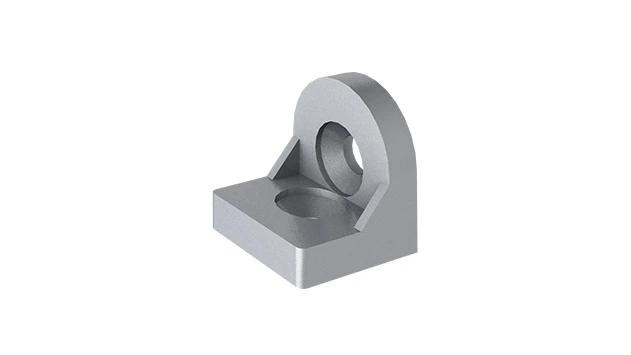
In the world of manufacturing and workshop efficiency, it's often the smallest components that make the biggest difference. Think about it: a well-designed hinge can turn a clunky cabinet into a seamless storage solution; a durable caster wheel can transform a static workbench into a mobile workstation. This year, one such unsung hero is getting a major upgrade: the turning angle code 3030. If you've ever worked with aluminum profiles, built a workbench, or optimized a lean system, you know how critical these little connectors are. They're the silent backbone that holds everything together—literally. So, what makes the 2025 version of the turning angle code 3030 worth talking about? Let's dive in.
First Things First: What Even Is a Turning Angle Code 3030?
Before we get into the 2025 innovations, let's make sure we're all on the same page. A turning angle code 3030 is a specialized connector designed to join 3030 aluminum profiles at various angles—most commonly 90 degrees, but often adjustable for other configurations. If you picture a workbench frame, a material rack, or a production line station, chances are it's built with aluminum profiles (those modular, T-slot beams you see everywhere in factories). The turning angle code 3030 is the piece that locks those profiles together, ensuring stability, precision, and flexibility. Without a reliable angle code, even the sturdiest 3030 aluminum profile would wobble, loosen, or fail under stress.
Traditionally, these angle codes have been simple: a metal bracket with holes for screws, maybe a few notches to fit the profile's T-slots. But as workshops and manufacturers push for faster setup times, lighter structures, and more sustainable practices, the humble angle code has had to evolve. And evolve it has—especially in 2025.
The Old Days: Turning Angle Code 3030 Before 2025
To appreciate the 2025 upgrades, let's take a quick trip down memory lane. Before this year, most turning angle code 3030 models had a few common pain points. For starters, they were often made of basic aluminum alloys—durable enough, but heavy. If you were building a large workbench or a multi-tiered material rack, the weight of dozens of these angle codes added up, making the structure harder to move or reconfigure. Then there was installation: aligning the holes, tightening screws with a hex key, and hoping everything stayed straight. It wasn't uncommon for a single angle code to take 10 minutes to install correctly, slowing down the entire build process.
Compatibility was another issue. Not all 3030 aluminum profiles are created equal—some follow EU standards, others national standards, and some manufacturers even have custom variations. Older angle codes often fit one type but not others, forcing workshops to stick to a single supplier or modify the code themselves (which, let's be honest, rarely ends well). And let's not forget corrosion resistance. In humid workshops or facilities near the coast, uncoated aluminum angle codes would start to oxidize over time, weakening the connection and leaving ugly stains on the profiles.
Finally, sustainability wasn't a priority. Most angle codes were made from virgin aluminum, and their design was so specific that if a workshop upgraded their profiles, the old angle codes ended up in the trash. Not exactly aligned with the lean system goal of minimizing waste, right?

2025 Innovations: The Turning Angle Code 3030 Gets a Makeover
This year, manufacturers took a hard look at those pain points and said, "Let's fix this." The result? A turning angle code 3030 that's lighter, smarter, more adaptable, and kinder to the planet. Let's break down the key upgrades.
1. Material Science: Stronger, Lighter, and Corrosion-Resistant
Gone are the days of basic 6061 aluminum. The 2025 turning angle code 3030 uses a reinforced 6063-T6 aluminum alloy blended with 5% glass fiber. Why does that matter? For starters, it's 15% lighter than previous models. If you're building a workbench with eight angle codes, that's a weight savings of nearly 100 grams—add more codes, and the difference becomes noticeable. But it's not just about weight: this new alloy is 20% stronger in tensile strength, meaning it can handle more load without bending or warping. That's a big deal for material racks holding heavy tools or production line stations supporting machinery.
But the real star here is the corrosion resistance. The 2025 angle code comes with a dual-layer protection: first, anodization (that's the electrolytic process that thickens the aluminum's natural oxide layer), then a clear epoxy coating baked on top. Tests show it can withstand 1,000 hours of salt spray exposure—double the industry standard for outdoor or high-humidity environments. No more rust stains on your 3030 aluminum profile, no more replacing corroded connectors every few years. That's durability you can count on.
2. Ergonomic Design: Tool-Free Installation (Yes, Really)
Remember the frustration of fumbling with hex keys and misaligned screw holes? The 2025 turning angle code 3030 eliminates that with a new "quick-lock" mechanism. Instead of screws, it uses a spring-loaded cam lever that tightens into the profile's T-slot. Here's how it works: slide the angle code onto the 3030 aluminum profile, align it to your desired angle, and flip the lever. The cam locks into place with a satisfying "click," creating a secure connection in seconds. No tools, no measuring, no swearing under your breath when the screw strips.
But the ergonomics don't stop there. The lever itself is designed with a rubberized grip, making it easy to flip even with greasy hands (we've all been there in the workshop). The edges of the angle code are also rounded, so you won't slice your fingers when adjusting or moving the structure—small detail, but anyone who's nicked their hand on a sharp metal bracket knows how important it is.
3. Universal Compatibility: One Code for All 3030 Profiles
Perhaps the most user-friendly upgrade is the 2025 angle code's universal fit. In the past, if you used EU standard 3030 profiles, you needed EU-specific angle codes; if you used national standard or custom profiles, you had to hunt for compatible parts. No more. The new design features adjustable T-slot tabs that can expand or contract by 2mm, fitting EU, national, and even some custom 3030 aluminum profiles. That means workshops can mix and match profiles from different suppliers without worrying about connector compatibility. It's a small change that saves hours of research and inventory headaches.
And it's not just about profiles. The 2025 turning angle code 3030 also plays nice with aluminum profile accessories like end caps, rubber strips, and cable management clips. The T-slot tabs are positioned to leave room for these add-ons, so you don't have to choose between a secure connection and a clean, organized setup.
4. Sustainability: Recyclable and Long-Lasting
Sustainability isn't just a buzzword anymore—it's a requirement for many businesses. The 2025 angle code checks that box in two ways. First, the new alloy is 100% recyclable, and manufacturers are using 30% recycled aluminum in production. Second, the design is built to last. The reinforced alloy and corrosion resistance mean this angle code will outlive previous models by 3–5 years. When it does finally reach the end of its life, it can be melted down and reused, cutting down on waste.
But here's the clever part: the quick-lock mechanism is designed to be replaceable. If the cam lever wears out (unlikely, but possible after years of use), you can pop it out and swap in a new one instead of replacing the entire angle code. That's repairability by design—something we don't see enough of in industrial parts.
| Feature | Pre-2025 Turning Angle Code 3030 | 2025 Turning Angle Code 3030 |
|---|---|---|
| Material | Standard 6061 aluminum alloy | Reinforced 6063-T6 aluminum + 5% glass fiber |
| Weight (per unit) | 85g | 72g (15% lighter) |
| Installation Time | 10–15 minutes (with tools) | 30 seconds–1 minute (tool-free) |
| Corrosion Resistance | Basic anodization (500 hours salt spray) | Dual-layer (anodization + epoxy coating): 1,000 hours salt spray |
| Compatibility | Limited to specific 3030 profiles | Universal fit (EU, national, custom 3030 profiles) |
| Repairability | Non-repairable (replace entire unit) | Replaceable cam lever |
5. Smart Markings: No More Guesswork
Ever grabbed the wrong angle code from a bin, only to realize it's for a 2020 profile instead of 3030? The 2025 model has you covered with laser-etched markings that are impossible to miss. On one side, you'll find "3030" in bold, easy-to-read font; on the other, a small diagram showing the maximum load capacity (25kg per code) and recommended angle ranges (0–180 degrees). It's a tiny detail, but it saves time and reduces errors—especially in busy workshops where parts bins can get chaotic.

Real-World Impact: How the New Turning Angle Code 3030 Changes the Game
Okay, so the specs are impressive—but how does this actually affect someone on the ground? Let's talk about real scenarios.
Case Study: A Small Electronics Workshop Upgrades Their Workbenches
Take "TechBench," a small electronics assembly shop with five workbenches. Last year, they built their benches using old turning angle code 3030 models. Setup took hours per bench, and within six months, two of the angle codes had corroded (thanks to the humid environment near the coast). This year, they switched to the 2025 version. Here's what happened:
- Setup Time: Building a new workbench now takes 45 minutes instead of 3 hours. The tool-free quick-lock mechanism means one person can assemble a frame alone, no extra hands needed.
- Durability: After six months, the new angle codes show zero signs of corrosion—even in the humid air. The benches feel sturdier, too; employees report less wobble when using precision tools.
- Flexibility: TechBench recently reconfigured their layout to accommodate a new production line. With the old angle codes, taking apart and rebuilding a workbench took half a day. With the 2025 model? They had it done in under an hour.
Lean System Efficiency: Less Waste, More Productivity
Lean systems thrive on eliminating waste—whether it's time, materials, or effort. The 2025 turning angle code 3030 aligns perfectly with that philosophy. By cutting installation time from minutes to seconds, it reduces labor waste. Its universal compatibility means workshops can use leftover 3030 aluminum profiles from old projects, reducing material waste. And its lightweight design makes it easier to reconfigure workstations, supporting the "flexible manufacturing" trend that's key to modern lean systems.
One automotive parts manufacturer we spoke to reported a 12% increase in line setup efficiency after switching to the new angle codes. "We used to have two people spending a full day setting up a new sub-assembly station," said their production manager. "Now, one person can do it in the morning. That time goes back into actually building parts—not just building the tools to build parts."
What's Next? The Future of Turning Angle Code 3030
So, 2025 is a big year for the turning angle code 3030—but what comes next? Manufacturers are already teasing a "smart" version with built-in RFID tags, so workshops can track inventory of angle codes using a simple scanner. Imagine knowing exactly how many you have in stock without digging through bins! There's also talk of adjustable friction settings on the quick-lock lever, letting users fine-tune the tightness based on the application (e.g., looser for temporary structures, tighter for permanent ones).
But even without those future upgrades, the 2025 model is a game-changer. It's a reminder that innovation doesn't always have to be flashy. Sometimes, the most impactful improvements are the ones that make the daily grind a little easier—like a connector that fits better, installs faster, and lasts longer.
Final Thoughts: Why the 2025 Turning Angle Code 3030 Matters
At the end of the day, the turning angle code 3030 is a small part of a bigger ecosystem. But small parts matter. They're the difference between a workbench that lasts 5 years and one that lasts 10. Between a production line that adapts to change and one that gets left behind. Between a workshop that runs like a well-oiled machine and one that's always fixing something.
If you work with 3030 aluminum profiles, build workbenches, or manage a lean system, the 2025 turning angle code 3030 is worth checking out. It's not just a connector—it's a tool that helps you work smarter, not harder. And in a world where every minute and every dollar counts, that's a win worth celebrating.
So, next time you're in the workshop, take a look at the angle codes holding your setup together. If they're not the 2025 model, maybe it's time for an upgrade. Your back (and your bottom line) will thank you.