- Company Articles
- Products and Technology
- Product knowledge
- Turning Angle Code 3030 for Automated Production: Compatibility with Robotic Systems

Turning Angle Code 3030 for Automated Production: Compatibility with Robotic Systems
Related Product
Turning Angle Code 3030
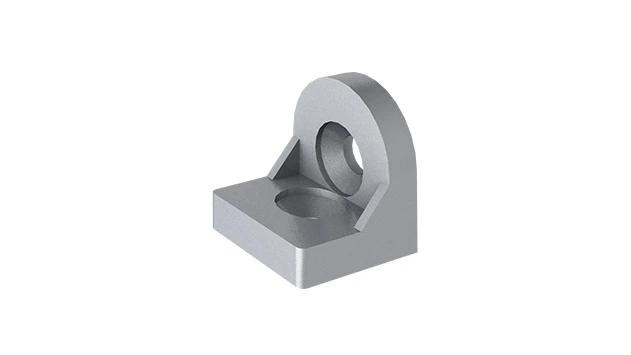
The turning angle aluminum profile connector provides a 90 degree hidden corner connection. 3030 it is means this size is used for 30 series aluminum profile.The corner code comes with set screws that allow for quick, easy connections.
The Hidden Heroes of Modern Manufacturing Lines
Walk into any automated production facility today, and your eyes will likely be drawn to the big players: the towering robotic arms with their precise, sweeping motions, the conveyor belts humming with products, the LED screens displaying real-time data. These are the stars of the show, the ones that make headlines about "Industry 4.0" and "smart factories." But if you ask a seasoned production manager what truly keeps their lines running smoothly, they'll probably nod toward something far less glamorous: the small, unassuming components that hold everything together. Things like brackets, connectors, and yes—angle codes.
It's easy to overlook these "hidden heroes." After all, they don't move, they don't flash, and they rarely get their own feature in a tech demo. But anyone who's dealt with a misaligned workbench causing robotic arm errors, or a flimsy connector leading to hours of downtime, knows better. In the high-stakes world of automated production, where milliseconds and millimeters matter, the difference between a line that hums and one that sputters often comes down to these tiny, critical parts. And among them, one component has been quietly earning a reputation as a game-changer for robotic system compatibility: the turning angle code 3030 .
What Exactly Is a Turning Angle Code 3030?
Let's start with the basics. At its core, a turning angle code is a type of connector used to join two pieces of material—typically aluminum profile —at a specific angle, usually 90 degrees. The "3030" refers to its dimensions, aligning with the 30mm x 30mm aluminum profiles common in industrial setups. But to call it just a "connector" would be selling it short. Think of it as a precision-engineered bridge between structure and function, designed not just to hold things together, but to do so with the kind of accuracy that robotic systems demand.
Made from high-grade aluminum alloy, the turning angle code 3030 is lightweight yet surprisingly strong. Its sleek, anodized finish resists corrosion, making it suitable for everything from cleanrooms to dusty warehouses. But what really sets it apart is its design: pre-drilled holes that align perfectly with standard 3030 aluminum profiles, a snug fit that eliminates wobble, and a modularity that lets it adapt to different configurations. It's the kind of part that, when installed, fades into the background—until you realize how much chaos it's preventing.

The Compatibility Crisis: Why Robotic Systems Struggle with Traditional Components
To understand why the turning angle code 3030 matters, let's talk about the elephant in the room for many manufacturers: compatibility. Robotic systems are marvels of precision, but they're also notoriously finicky. A robotic arm programmed to pick a component from a workbench expects that workbench to be in exactly the right position—down to the millimeter. If the bench shifts even slightly, the arm might misgrab, drop, or even damage the part. Over time, those small errors add up: wasted materials, missed deadlines, frustrated technicians.
Traditional angle codes and connectors often fall short here. Many are made from steel, which is strong but heavy—making adjustments cumbersome. Others have loose tolerances, meaning two "identical" connectors might fit differently, leading to inconsistent alignment. Worse, some use complex fastening systems that require tools and time to adjust, making it hard to reconfigure lines quickly when production needs change. In a world where robotic systems are getting smarter and more agile, their supporting components have struggled to keep up.
Take Maria, a production supervisor at a mid-sized electronics plant I visited last year. Her team had recently invested in a new robotic assembly cell to handle circuit boards. The workbench, fitted with generic steel angle codes, kept shifting under the weight of the boards. "The robot would work fine for an hour, then start missing picks," she told me. "We'd adjust the bench, tighten the bolts, and it would happen again the next day. The techs were spending more time fixing the bench than programming the robot." Sound familiar? It's a story repeated in factories worldwide.

How Turning Angle Code 3030 Solves the Compatibility Puzzle
Enter the turning angle code 3030. Designed with robotic systems in mind, it addresses the three biggest compatibility pain points: precision, flexibility, and durability.
Precision: Millimeter-Perfect Alignment
Aluminum profile manufacturing has come a long way, and modern 3030 profiles are extruded with accuracy—tolerances as tight as ±0.1mm. The turning angle code 3030 matches that precision. Its holes are drilled using CNC machines, ensuring they line up exactly with the T-slots on 3030 profiles. When you bolt it down, there's no "play"—no wiggle room that could throw off a robotic arm's calibration. This means once a workbench or rack is assembled with these angle codes, it stays in place, even under the repetitive stress of robotic operations.
Back at Maria's plant, switching to turning angle code 3030 made an immediate difference. "We rebuilt the workbench with aluminum profiles and these angle codes," she recalled. "That was six months ago, and we haven't had to adjust it once. The robot hits its marks every time. The techs? They're finally focusing on optimizing the cell, not fixing it."
Flexibility: Adapt Fast, Stay Agile
Automated production lines aren't static. A product design changes, a new order comes in, or a robot is reprogrammed—and suddenly, the line needs to adapt. Traditional steel connectors make this a hassle: you need wrenches, maybe even cutting tools, and downtime adds up. The turning angle code 3030, though, is modular by design. Its T-slot compatibility means you can loosen a few bolts, reposition the profile, and tighten it back up—all in minutes, with basic hand tools. No cutting, no welding, no waiting for a maintenance crew.
Consider a scenario where a manufacturer needs to reconfigure a material rack to accommodate a new product size. With traditional angle codes, this might take half a day. With turning angle code 3030 and aluminum profiles? An hour, tops. That kind of agility is gold in today's fast-paced manufacturing landscape, where being first to market often means the difference between profit and loss.
Durability: Built to Outlast the Robots
Robotic systems are built to run 24/7, and their support structures need to keep up. The turning angle code 3030's aluminum alloy construction strikes the perfect balance: it's light enough to keep profiles from sagging under their own weight, yet strong enough to handle the vibrations and impacts of daily operation. Unlike steel, aluminum doesn't rust, so it holds up in humid or dusty environments. And because it's resistant to wear, the connections stay tight for years—no more.
Beyond Compatibility: Fitting into the Lean System Mindset
Manufacturers don't just care about whether a part works with robots—they care about whether it makes their operations better . That's where the turning angle code 3030's alignment with lean system principles comes into play. Lean manufacturing is all about eliminating waste: waste of time, waste of materials, waste of effort. And this little angle code? It's a waste-fighting machine.
Take "motion waste," for example—the unnecessary movement of workers or equipment. With traditional connectors, adjusting a workbench might require two people, a toolbox, and 30 minutes. With the turning angle code 3030, one person can do it in 10 minutes with a single Allen wrench. Multiply that by dozens of adjustments a year, and you're looking at hundreds of hours saved. Then there's "defect waste": fewer misalignments mean fewer defective products, which means less scrap and rework. And let's not forget "inventory waste": because the turning angle code 3030 is standardized, manufacturers can stock fewer variations, reducing storage costs.
John, a lean coordinator at an automotive parts plant, put it this way: "Lean isn't just about big processes—it's about the small, daily wins. When your workbenches and racks stay aligned, your robots run smoothly, your workers don't get frustrated, and your numbers improve. The turning angle code 3030 is one of those small wins that adds up to big results."
From Workbenches to Whole Lines: Real-World Applications
It's one thing to talk about specs and principles, but let's get concrete. Where exactly is the turning angle code 3030 making an impact? The answer: just about everywhere you find aluminum profiles and robots working together.
Workbenches: The Front Line of Robotic Interaction
The most common spot? Workbenches . Whether it's a assembly station where a robot places components, a inspection area where a vision system checks for defects, or a packing station where a collaborative robot (cobot) hands off products to a human worker, workbenches are the interface between robots and the physical world. And they rely heavily on angle codes to maintain their structure.
A typical 3030 aluminum profile workbench uses four turning angle codes at the corners, plus additional ones to support shelves or tool holders. Because the angle codes ensure the bench is square and level, the robot can rely on consistent positioning. For example, a cobot tasked with placing screws into a circuit board on a 3030-based workbench knows exactly where the board will be, every single time. No guesswork, no errors, no delays.
Material Racks and Conveyors: Keeping the Flow Smooth
Beyond workbenches, turning angle code 3030 is a staple in material racks and conveyor systems. Imagine a rack holding bins of parts that a robotic arm needs to access. If the rack is wobbly or the shelves are misaligned, the arm might struggle to reach the bins, or the bins could slide off. With 3030 angle codes, the rack stays rigid, and the shelves stay level—ensuring a steady flow of materials to the line.
Conveyors, too, benefit. Many modern conveyors use aluminum profiles for their frames, and the turning angle code 3030 helps keep the conveyor bed straight. A crooked conveyor can cause products to jam or tip, but with precise angle codes, the belt runs true, and the robot at the end can reliably pick items off without issues.
Why Aluminum Profile? The Material Behind the Magic
We've mentioned aluminum profile several times, and for good reason: the turning angle code 3030's performance is deeply tied to the material it's designed to work with. Aluminum profiles have become the backbone of modern industrial setups for a few key reasons:
- Weight vs. Strength: Aluminum is about one-third the weight of steel, making it easier to handle and less likely to sag under load. This is crucial for large structures like workbenches or racks, where excess weight can lead to misalignment over time.
- Precision Extrusion: Modern aluminum extrusion processes create profiles with incredibly tight tolerances. This means every 3030 profile is virtually identical, ensuring consistent fits with angle codes.
- Corrosion Resistance: Unlike steel, aluminum forms a natural oxide layer that protects it from rust. This makes it ideal for wet or humid environments, like food processing or pharmaceutical plants.
- Recyclability: Aluminum is 100% recyclable, aligning with the sustainability goals many manufacturers now prioritize.
When paired with the turning angle code 3030, aluminum profile becomes more than just a building material—it becomes a foundation for reliability. Together, they create structures that are strong enough to last, light enough to adjust, and precise enough to keep robots happy.
Comparing the Old and the New: Traditional vs. Turning Angle Code 3030
| Feature | Traditional Steel Angle Codes | Turning Angle Code 3030 (Aluminum Profile) |
|---|---|---|
| Weight | Heavy (hard to adjust, increases profile sag) | Lightweight (easy to reconfigure, reduces sag) |
| Precision | Loose tolerances (inconsistent alignment) | Tight ±0.1mm tolerances (robot-friendly consistency) |
| Installation Time | 30-60 minutes (requires tools, multiple people) | 10-15 minutes (basic tools, single person) |
| Corrosion Resistance | Poor (rusts in humid environments) | Excellent (anodized finish resists corrosion) |
| Lean System Compatibility | Low (high waste in adjustment and maintenance) | High (reduces waste, supports quick changes) |
Choosing the Right Turning Angle Code: What to Look For
Not all turning angle codes are created equal. When shopping for a 3030 model, keep these key factors in mind:
Load Capacity
How much weight will the angle code need to support? Most 3030 angle codes are rated for 50-100kg per connection, but if you're building a heavy-duty rack, look for reinforced models with thicker walls.
Environment
Will it be used in a cleanroom, a warehouse, or a damp area? Look for anodized finishes for corrosion resistance, or even stainless steel variants if hygiene is critical (though these are less common for 3030 profiles).
Compatibility with Your Profiles
Not all 3030 profiles are identical—some have different slot sizes or wall thicknesses. Ensure the angle code's hole spacing and bolt size match your profiles. Most reputable suppliers will list compatible profile types.
Supplier Support
A good supplier isn't just a seller—they're a partner. Look for suppliers who offer technical support, replacement parts, and even custom solutions if you need something unique. After all, even the best angle code won't help if you're not sure how to use it.
The Future: Where Turning Angle Code 3030 Fits in Tomorrow's Factories
As robotic systems become more advanced—with AI-driven adaptability, vision systems that can "see" and adjust for minor variations, and collaborative robots that work side-by-side with humans—the demand for precise, flexible support structures will only grow. The turning angle code 3030 is already evolving to meet these needs. Some manufacturers are adding built-in sensors to detect looseness or wear, sending alerts before a connection fails. Others are experimenting with composite materials to make them even lighter or stronger.
But perhaps the biggest trend is integration. In the factories of the future, angle codes, aluminum profiles, robots, and software will work together seamlessly. Imagine a scenario where a robot detects a misalignment in a workbench and automatically sends a notification to a tablet, guiding a technician to the exact angle code that needs tightening. Or where digital twins of production lines use data from angle code sensors to predict maintenance needs before failures occur. It's not science fiction—it's the next step in the journey of making manufacturing smarter, more efficient, and more human-centric.
Final Thoughts: Building the Future, One Angle at a Time
At the end of the day, the turning angle code 3030 is more than just a piece of metal. It's a reminder that in manufacturing, the smallest details often have the biggest impact. It's the difference between a robotic system that frustrates and one that empowers, between a production line that struggles and one that thrives, between a team that's stuck fixing problems and one that's free to innovate.
So the next time you walk through an automated factory, take a moment to look beyond the robots. Look at the workbenches, the racks, the frames. Chances are, you'll spot a turning angle code 3030 holding it all together—quietly, reliably, and with the kind of precision that makes modern manufacturing possible. And if you're a manufacturer looking to take your automated systems to the next level, maybe it's time to give those hidden heroes the attention they deserve.