- Company Articles
- Products and Technology
- Product knowledge
- Turning Angle Code 3030 for Electronic Component Assembly: Precision Requirements

Turning Angle Code 3030 for Electronic Component Assembly: Precision Requirements
Related Product
Turning Angle Code 3030
The turning angle aluminum profile connector provides a 90 degree hidden corner connection. 3030 it is means this size is used for 30 series aluminum profile.The corner code comes with set screws that allow for quick, easy connections.
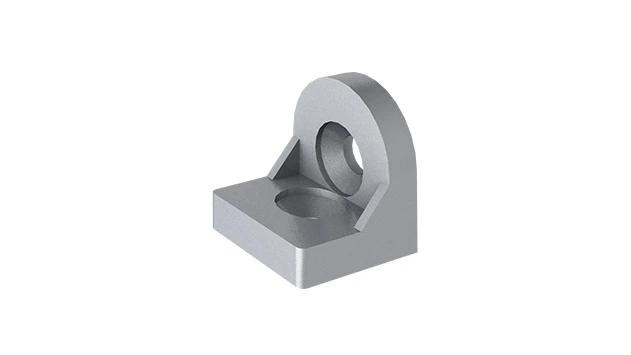
In the fast-paced world of electronic component assembly, where every millimeter counts and efficiency is non-negotiable, the unsung heroes of the production line often lie in the smallest details. Take, for example, the structural components that hold workbenches together, guide materials along conveyor tracks, or secure delicate circuit boards in place. Among these, the turning angle code 3030 stands out as a critical link in ensuring stability, precision, and reliability. Designed to connect 3030 EU standard aluminum profiles at precise angles, this unassuming accessory plays a pivotal role in maintaining the integrity of assembly systems—especially when working with sensitive electronics that demand zero margin for error. Let's dive into why precision matters here, what specific requirements this component must meet, and how it shapes the future of lean, efficient manufacturing.
What Exactly Is a Turning Angle Code 3030?
Before we unpack its precision requirements, let's clarify what a turning angle code 3030 is and why it's indispensable. At its core, this is a specialized aluminum profile accessory engineered to join 3030-series aluminum extrusions at fixed or adjustable angles (most commonly 90°, 45°, or 135°). Think of it as the "cornerstone" of modular assembly systems—whether you're building a workbench for soldering PCBs, a material rack for storing components, or a lightweight conveyor frame.
Crafted from high-grade aluminum alloys (typically 6063-T5, known for its excellent strength-to-weight ratio and corrosion resistance), the turning angle code 3030 features pre-drilled holes, T-slot compatibility, and a sleek, anodized finish. Its design is deceptively simple: two or more arms (depending on the angle) that clamp onto the grooves of 3030 profiles, secured by screws or bolts. But don't let its simplicity fool you—every curve, hole, and millimeter of thickness is meticulously engineered to meet the rigorous demands of electronic manufacturing.
Why Precision Matters in Electronic Assembly
In industries like automotive or construction, minor structural variances might be overlooked. But in electronic component assembly, where components can be as small as a grain of rice (think microchips or surface-mount resistors), even a 0.1mm misalignment can have cascading consequences. Here's why precision in components like the turning angle code 3030 is non-negotiable:
- Component Protection: Misaligned workbenches or racks can cause PCBs to wobble during assembly, leading to soldering errors, bent pins, or cracked circuits.
- Workflow Efficiency: A loosely fitted angle code might result in uneven conveyor tracks, slowing down material flow and disrupting lean manufacturing principles.
- Safety: Electronic assembly lines often house sensitive equipment and heavy tools. A weak or imprecise angle code could compromise structural stability, risking operator injury or equipment damage.
- Cost Savings: Precision reduces waste—fewer defective products, less downtime for repairs, and longer-lasting assembly systems mean lower operational costs over time.

Key Precision Requirements for Turning Angle Code 3030
So, what specific standards must a high-quality turning angle code 3030 meet? Let's break down the critical precision requirements, from dimensional accuracy to material performance.
1. Dimensional Accuracy: The Foundation of Fit
The most obvious (yet most critical) requirement is dimensional precision. 3030 EU standard aluminum profiles have strict dimensions: 30mm in width and height, with T-slot openings typically 6mm or 8mm. The turning angle code 3030 must align perfectly with these specs to ensure a snug, rattle-free fit. Key metrics include:
- Hole Position Tolerance: The distance between mounting holes must be accurate to ±0.05mm. Even a tiny (deviation) here can prevent screws from seating properly, leading to loose joints.
- Arm Thickness: Typically 3-5mm, with a tolerance of ±0.1mm. Too thin, and the code may bend under load; too thick, and it won't fit into the profile's T-slot.
- Angle Deviation: For a 90° angle code, the angle between arms must be 90° ±0.1°. A skewed angle would twist the entire assembly, throwing off workbench levels or conveyor alignment.
To put this in perspective: A 0.1° angle error over a 1-meter workbench translates to a vertical misalignment of ~1.7mm at the far end—enough to cause a PCB to slide off a tilted surface.
2. Load-Bearing Capacity: Strength Without Compromise
Electronic assembly workbenches aren't just for placing tools—they often support heavy equipment, like automated pick-and-place machines (which can weigh 50kg or more) or stacks of component trays. The turning angle code 3030 must withstand these loads without deforming. Manufacturers test this by measuring yield strength (the point at which the material permanently bends) and ultimate tensile strength (the maximum load before breaking). For 3030 angle codes, a typical requirement is a yield strength of ≥110 MPa and a max load capacity of 50-80kg per joint, depending on the design.
How is this achieved? Through material selection (6063-T5 aluminum's tempering process enhances strength) and design features like ribbed reinforcements or thicker walls at stress points. Some high-end models even include gussets (triangular support plates) for added rigidity.
3. Corrosion Resistance: Protecting Against Harsh Environments
Electronic manufacturing facilities are often climate-controlled, but they're not immune to moisture, dust, or chemical exposure (e.g., cleaning solvents). The turning angle code 3030's surface finish is thus a critical precision requirement. Most suppliers use anodization—a process that creates a protective oxide layer (10-15μm thick) on the aluminum surface. This layer resists rust, prevents oxidation, and ensures the code remains smooth (no flaking or pitting that could trap dust, which is lethal for sensitive electronics).
Some applications (e.g., cleanrooms or outdoor assembly lines) demand even higher resistance, so suppliers may offer additional treatments like powder coating or chromate conversion coating. The key here is consistency: the anodized layer must be uniform across the entire component—no thin spots that could become corrosion hotspots.
4. Compatibility: Playing Well With Others
A turning angle code 3030 doesn't work in isolation—it's part of a larger ecosystem of aluminum profiles, screws, end caps, and other accessories. Precision here means seamless compatibility with these components. For example:
- T-Slot Fit: The code's clamping arms must slide smoothly into 3030 profile T-slots without gaps. A poor fit could cause the joint to loosen over time, especially with vibration from nearby machinery.
- Screw Compatibility: Pre-drilled holes must match standard screw sizes (often M5 or M6). Threads must be clean and precise to avoid stripping during installation.
- Accessory Integration: If the angle code is used with gusset plates or cross-braces (common for high-load applications), its design must accommodate these additions without requiring modifications.

Real-World Impact: The Workbench Case Study
To see these precision requirements in action, consider a typical electronic assembly workbench built with 3030 profiles and turning angle codes. Let's say this workbench is used for inspecting tiny surface-mount devices (SMDs) under a microscope. Here's how each precision requirement plays out:
- Dimensional Accuracy: The angle codes ensure the workbench frame is perfectly square. A 0.05mm hole misalignment would make leveling the microscope stage impossible, leading to blurry inspections and missed defects.
- Load Capacity: The microscope (15kg) plus a monitor (8kg) and tool tray (5kg) rest on the bench. The angle codes distribute this 28kg load evenly across the frame, preventing sagging that could strain the operator's neck or back.
- Corrosion Resistance: Daily cleaning with isopropyl alcohol (common in electronics) won't degrade the anodized finish, ensuring the workbench remains contamination-free for years.
Now, imagine using a low-precision angle code in this setup: the frame wobbles, the microscope drifts out of focus, and over time, the joints loosen. Defect rates rise, operators grow frustrated, and the workbench needs frequent repairs. The cost of cutting corners on precision becomes clear.
Selecting the Right Supplier: What to Look For
Meeting these precision requirements isn't easy—it demands advanced manufacturing equipment, strict quality control, and expertise in aluminum extrusion. When sourcing turning angle code 3030, look for a lean system supplier with a track record of excellence. Here are key criteria:
- Certifications: ISO 9001 certification is a must—it ensures the supplier follows standardized quality management processes. For electronics, IATF 16949 (for automotive electronics) or ISO 13485 (for medical devices) may also be required.
- Testing Reports: Ask for dimensional inspection reports (using CMM—Coordinate Measuring Machines) and load-test data. Reputable suppliers will provide these without hesitation.
- Material Traceability: The aluminum alloy should come with a mill certificate, confirming its grade and mechanical properties.
- Customization Options: While standard angle codes work for most applications, some projects need unique angles or reinforced designs. A flexible supplier can accommodate these needs without sacrificing precision.
Comparing Angle Codes: 2020 vs. 3030 vs. 4040
Not all angle codes are created equal. To highlight the uniqueness of the 3030 variant, let's compare it with two common alternatives: 2020 and 4040 angle codes. This table underscores why the 3030 is the sweet spot for many electronic assembly applications.
| Feature | Turning Angle Code 2020 | Turning Angle Code 3030 | Turning Angle Code 4040 |
|---|---|---|---|
| Profile Compatibility | 20x20mm profiles | 30x30mm profiles | 40x40mm profiles |
| Material Thickness | 2-3mm | 3-5mm | 5-7mm |
| Max Load Capacity (per joint) | 20-30kg | 50-80kg | 100-150kg |
| Typical Application | Light-duty shelving, small enclosures | Workbenches, material racks, conveyor frames | Heavy machinery frames, industrial workstations |
| Weight (per unit, approx.) | 50-80g | 120-180g | 250-350g |
As the table shows, the 3030 strikes a balance between strength and weight—powerful enough for most electronic assembly tasks without adding unnecessary bulk. This makes it ideal for applications where mobility (e.g., rolling workbenches) or ceiling-mounted systems are required.
Future Trends: Where Precision Meets Innovation
As electronic components shrink further (think 2nm semiconductors) and assembly lines become more automated, the precision requirements for turning angle code 3030 will only grow stricter. Suppliers are already exploring innovations like:
- Smart Angle Codes: Integrating RFID tags for asset tracking, allowing manufacturers to monitor joint stress or wear in real time.
- Advanced Alloys: Adding trace elements like magnesium to aluminum to boost strength without increasing weight.
- 3D-Printed Prototypes: Using additive manufacturing to test custom angle code designs faster, ensuring precision before mass production.
These advancements will not only enhance precision but also make modular assembly systems more adaptable—critical in an industry where product lifecycles are shorter than ever.
Conclusion: Precision as a Competitive Edge
The turning angle code 3030 may seem like a small part of the electronic assembly puzzle, but its precision requirements are a reflection of the industry's uncompromising standards. From dimensional accuracy to corrosion resistance, every detail ensures that assembly lines run smoothly, products are defect-free, and operators can work efficiently and safely.
For manufacturers, investing in high-precision angle codes isn't just about avoiding downtime—it's about gaining a competitive edge. In a world where "good enough" no longer cuts it, the right aluminum profile accessories, sourced from a trusted supplier, can transform a standard assembly line into a lean, innovative powerhouse.
So, the next time you walk through an electronic manufacturing facility, take a moment to look at the workbenches and racks. Chances are, the turning angle code 3030 is there, quietly ensuring that every component, every process, and every product meets the precision the world demands.