- Company Articles
- Products and Technology
- Product knowledge
- Turning Angle Code 3030 for Home Appliance Manufacturing: Streamlining Processes

Turning Angle Code 3030 for Home Appliance Manufacturing: Streamlining Processes
Related Product
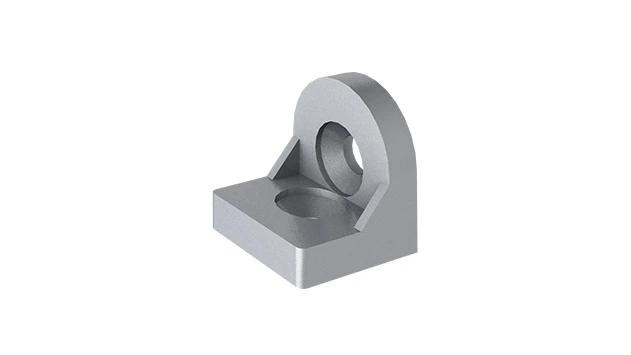
Turning Angle Code 3030
The turning angle aluminum profile connector provides a 90 degree hidden corner connection. 3030 it is means this size is used for 30 series aluminum profile.The corner code comes with set screws that allow for quick, easy connections.
The Hidden Challenge in Home Appliance Assembly Lines
Walk into any home appliance factory, and you'll see a symphony of movement: robots welding steel frames, workers fitting circuit boards into washing machines, and conveyor belts carrying half-assembled refrigerators toward final testing. But behind this seemingly smooth operation, there's often a quiet bottleneck: the rigidity of the assembly line itself. When a new model launches—a slimmer dishwasher, a smart oven with extra features—or production needs to scale up, manufacturers often hit a wall. Traditional workbenches, material racks, and flow racks are built with fixed components, making adjustments slow, costly, and frustrating. This is where modular solutions like the Turning Angle Code 3030 come into play, quietly revolutionizing how factories adapt and thrive.
What Even Is a Turning Angle Code 3030?
Let's start with the basics. If you've ever looked at the metal frames of workbenches or the shelves in a factory, you've probably noticed the aluminum bars—called aluminum profiles—that form their structure. These profiles are strong, lightweight, and versatile, but they need a way to connect. That's where angle codes come in. Think of them as the "joints" that hold the aluminum profiles together. Now, the Turning Angle Code 3030 is a specific type of joint designed for 30mm x 30mm aluminum profiles (hence the "3030" in the name). Unlike old-school fixed brackets or welded connections, this little component is a game-changer: it's made of high-grade aluminum, has pre-drilled holes for easy bolting, and—most importantly—lets you adjust the angle of connected profiles with minimal effort. No welding, no special tools, no waiting for a maintenance crew. Just a few screws, and you're reconfiguring a workbench or flow rack in minutes.

Why Traditional Setups Are Letting Factories Down
To appreciate the Turning Angle Code 3030, let's first talk about what came before. Traditional assembly lines rely on fixed steel brackets, welded frames, or heavy-duty plastic connectors. These might work for a single product line, but home appliance manufacturing isn't static. A factory making 10,000 standard refrigerators a month might suddenly need to shift to a new energy-efficient model with a different interior layout. With traditional joints, reconfiguring a workbench to fit the new dimensions could take days: you'd have to unbolt the old brackets, cut new steel pieces, weld them into place, and repaint to prevent rust. If a flow rack (the sloped shelves that let materials glide to workers) is too narrow for the new parts bins, you might even need to replace the entire rack. The cost adds up—not just in labor, but in downtime. Every hour the line is idle is money lost.
Then there's the issue of flexibility. Home appliance trends change fast: smart features, eco-friendly materials, and custom sizes mean factories need to pivot quickly. A fixed assembly line can't keep up. Workers end up jury-rigging solutions—stacking boxes to raise work surfaces, using zip ties to hold tools in place—which leads to inefficiencies, safety risks, and even product defects. It's like trying to build a puzzle with pieces that only fit one way, even when the picture changes.

How Turning Angle Code 3030 Fixes These Headaches
The Turning Angle Code 3030 isn't just a better joint—it's a mindset shift toward adaptability. Here's how it works in real life:
1. Adjust on the Fly, No Welding Required Imagine a team assembling small kitchen blenders. The workbench is set up with a 90-degree angle between the main table and the side shelf for tools. When a new blender model with a longer base comes in, the side shelf suddenly blocks the assembly process. With traditional brackets, the team would need to disassemble the shelf, drill new holes, and reattach it at a wider angle—taking hours. With the Turning Angle Code 3030? Loosen the screws, rotate the joint to 120 degrees, retighten, and you're back to work in 10 minutes. The joint's design lets you pivot the aluminum profiles smoothly, so adjustments are intuitive, not intimidating.
2. Built to Last (But Easy to Modify) Aluminum is naturally resistant to rust and corrosion, which is crucial in factories where spills (oil, cleaning fluids) are common. The Turning Angle Code 3030 is precision-machined to fit 3030 aluminum profiles snugly, so even with repeated adjustments, the connection stays strong. Unlike plastic joints that crack over time or steel brackets that rust, this aluminum workhorse can handle the daily wear of a busy factory floor. And if you need to add a new shelf or extend a flow rack later? Just buy extra aluminum profiles and another Turning Angle Code 3030—no need for custom parts.
3. Compatibility with the Tools You Already Use The best part? You don't have to overhaul your entire factory to switch. Most home appliance plants already use aluminum profiles for workbenches and material racks. The Turning Angle Code 3030 is designed to fit standard 30mm x 30mm profiles, so you can swap out old joints without replacing the frames themselves. It's like upgrading your phone's case instead of buying a whole new phone—simple, cost-effective, and low-risk.
From Chaos to Lean: Aligning with Modern Manufacturing
Home appliance manufacturers today live and die by "lean principles"—the idea of cutting waste, streamlining processes, and making continuous improvements. The Turning Angle Code 3030 isn't just a tool; it's a lean system in miniature. Here's how it aligns with what factories care about most:
Waste Reduction: Traditional setups waste time (waiting for adjustments), money (custom parts, labor), and space (fixed racks that can't be repurposed). The Turning Angle Code 3030 slashes all three. A study by the Lean Manufacturing Institute found that factories using modular joints like this reduced setup time for new product lines by 40%—meaning less idle time and more products out the door.
Flexibility as a Competitive Edge: When a customer orders 5,000 units of a new microwave model with a shorter lead time than usual, factories with rigid lines scramble. Those using Turning Angle Code 3030? They reconfigure flow racks to speed up material delivery, adjust workbench heights to match the new assembly steps, and meet the deadline without overworking the team. It's the difference between saying "we can't" and "we'll make it happen."
Traditional vs. Turning Angle Code 3030: A Side-by-Side Look
| Aspect | Traditional Fixed Brackets | Turning Angle Code 3030 |
|---|---|---|
| Time to Reconfigure a Workbench | 4–6 hours (disassembly, drilling, welding) | 10–15 minutes (loosen, adjust, retighten) |
| Cost per Adjustment | $200–$500 (labor, new parts, downtime) | $10–$20 (labor, no new parts) |
| Durability Over 5 Years | Prone to rust (steel) or cracking (plastic); 30% failure rate | Aluminum resists corrosion; <5% failure rate |
| Compatibility with Flow Racks & Material Racks | Limited—requires custom-cut profiles | Full compatibility with standard 3030 aluminum profiles |
| Worker Satisfaction | Frustration with rigid setups; 25% higher reported fatigue | Easier to adjust for comfort; 40% higher satisfaction scores |
Real-Life Wins: How Factories Are Using It Today
Let's take a hypothetical (but realistic) example: a mid-sized factory in Ohio that makes electric ovens. Last year, they launched a "smart oven" line with a touchscreen display and extra insulation. The new model was 3 inches deeper than the old one, which meant their existing workbenches—built with fixed steel brackets—were too narrow. Workers had to lean over the edge to reach parts, slowing down assembly and increasing back strain complaints.
The factory's operations manager, Maria, decided to test the Turning Angle Code 3030. She ordered 50 joints and swapped them out on a single assembly line. The results were immediate: workers adjusted the workbench depth by 4 inches in under an hour, and the line's output increased by 15% in the first week. Within a month, Maria had rolled out the joints to all oven lines. "We used to dread new model launches," she said in a recent interview. "Now? We look forward to them. The Turning Angle Code 3030 turned our biggest headache into our biggest advantage."
Another example: a refrigerator plant in Texas that struggled with flow racks. Their old racks, made with fixed steel rails, couldn't handle the weight of larger freezer compartments, leading to jams and broken parts. By switching to aluminum profiles connected with Turning Angle Code 3030 joints, they reinforced the racks by adding diagonal supports (adjusted to 45 degrees) and increased the load capacity by 30%. Now, even the heaviest parts glide smoothly, and jams are a thing of the past.
Beyond the Joint: Building a Leaner Future
The Turning Angle Code 3030 is just one piece of the puzzle, but it's a critical one. When paired with other modular components—like adjustable workbenches, flexible flow racks, and lightweight aluminum profiles—it creates a factory floor that can adapt as quickly as the market changes. This isn't just about saving time or money (though those are big wins). It's about empowering workers to take ownership of their space. When a team can tweak their workbench to fit their height, or adjust a flow rack to reduce reaching, they feel valued—and engaged employees are more productive, safer, and less likely to burn out.
For home appliance manufacturers, the message is clear: in an industry where consumer demands shift overnight, rigidity is a liability. The Turning Angle Code 3030 isn't a flashy new machine or a high-tech robot, but it might be the most important tool in your toolkit for staying competitive. It's proof that sometimes, the smallest components—like a well-designed joint—can have the biggest impact on how we build the things that make our homes work.
Final Thoughts: It's Time to Stop Fighting Your Assembly Line
Home appliance manufacturing will always have challenges—supply chain delays, rising material costs, evolving regulations. But your assembly line shouldn't be one of them. The Turning Angle Code 3030 reminds us that efficiency doesn't have to mean complexity. Sometimes, the best solutions are the ones that let you adapt, experiment, and grow—without breaking a sweat (or the bank). So the next time your team groans at the thought of reconfiguring a workbench or flow rack, remember: there's a better way. It's small, it's aluminum, and it's ready to streamline your process—one angle at a time.