- Company Articles
- Products and Technology
- Product knowledge
- Turning Angle Code 3030 for Medical Device Packaging Lines: Hygiene & Compliance

Turning Angle Code 3030 for Medical Device Packaging Lines: Hygiene & Compliance
Related Product
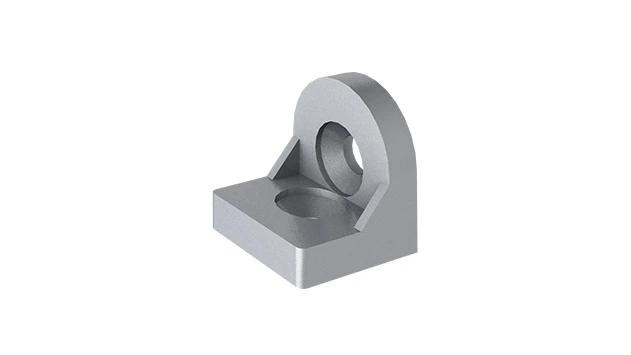
Turning Angle Code 3030
The turning angle aluminum profile connector provides a 90 degree hidden corner connection. 3030 it is means this size is used for 30 series aluminum profile.The corner code comes with set screws that allow for quick, easy connections.
Introduction: The Critical Role of Packaging Lines in Medical Device Manufacturing
When we think about medical devices—whether it's a surgical instrument, a diagnostic tool, or a life-saving implant—we often focus on their functionality, precision, and innovation. But what happens after these devices are manufactured? Before they reach hospitals, clinics, or patients, they must go through a packaging process that's just as critical as the manufacturing itself. Medical device packaging lines are the unsung heroes here, ensuring that products remain sterile, intact, and compliant with the strictest global regulations from the factory floor to the point of use.
In this high-stakes environment, even the smallest component can make a world of difference. One such component, often overlooked but indispensable, is the Turning Angle Code 3030 . This unassuming piece of hardware plays a pivotal role in constructing the workbenches, material racks, and conveyor systems that power medical device packaging lines. But why does it matter so much? Because in medical manufacturing, hygiene isn't just a preference—it's a legal requirement. Compliance isn't a box to check; it's the foundation of patient safety. And the Turning Angle Code 3030, when paired with compatible aluminum profiles and integrated into lean systems , becomes a silent guardian of both.
Over the next few thousand words, we'll dive deep into what makes the Turning Angle Code 3030 uniquely suited for medical device packaging lines. We'll explore its design, materials, and how it addresses the dual challenges of hygiene and compliance. We'll also look at real-world applications, compare it to other angle codes, and explain why it's become a go-to choice for manufacturers who can't afford to compromise on quality or regulatory adherence.
What is the Turning Angle Code 3030, Anyway?
Let's start with the basics. The Turning Angle Code 3030 is a type of connector used to join aluminum profiles at 90-degree angles, creating sturdy, modular structures like workbenches, material racks, and assembly stations. If you've ever seen a modern manufacturing facility, you've probably encountered aluminum profile systems—those sleek, silver frames that form the backbone of everything from production lines to lab benches. The Turning Angle Code 3030 is the "glue" that holds these profiles together, but not in a messy, permanent way. Its design allows for quick assembly, disassembly, and reconfiguration, which is a game-changer in dynamic environments like medical device packaging.
But what sets the "3030" apart? The numbers refer to the dimensions of the aluminum profile it's designed to fit: 30mm x 30mm. This size strikes a sweet spot between strength and versatility. It's robust enough to support the weight of packaging materials, tools, and even semi-assembled devices, yet compact enough to fit into tight spaces—essential in facilities where every square inch counts. Unlike bulkier angle codes (we'll compare it to 4040 and 2020 models later), the 3030 balances load capacity with maneuverability, making it ideal for the intricate workflows of medical packaging.
At first glance, it might look like just another metal bracket, but the devil is in the details. The Turning Angle Code 3030 is typically made from high-grade aluminum alloy, chosen for its lightweight properties, resistance to corrosion, and ease of cleaning—three attributes that are non-negotiable in medical settings. Its surface is often anodized, creating a smooth, non-porous finish that repels moisture and prevents the buildup of bacteria, dust, or debris. Unlike some plastic or low-grade steel connectors, it doesn't rust, chip, or harbor crevices where contaminants can hide. For anyone tasked with maintaining a sterile packaging line, these features aren't just convenient—they're critical.

Hygiene First: Why Turning Angle Code 3030 Stands Out in Cleanroom Environments
Medical device packaging lines operate in environments where even a single microbial contaminant can render a batch of products unsafe for use. Cleanrooms, where many of these lines are housed, have strict standards for air quality, surface cleanliness, and personnel protocols. Every component in these spaces must be designed to minimize the risk of contamination, and the Turning Angle Code 3030 excels here for three key reasons: material science, design precision, and ease of maintenance.
1. Material Science: Aluminum vs. Other Metals
Aluminum is the material of choice for the Turning Angle Code 3030, and for good reason. Unlike carbon steel, which can rust if not properly coated, aluminum forms a natural oxide layer when exposed to air, protecting it from corrosion. This layer is self-healing—if scratched, it reforms quickly, ensuring the connector remains resistant to moisture and chemicals. In medical packaging, where regular cleaning with disinfectants (like isopropyl alcohol or hydrogen peroxide) is mandatory, this resistance is invaluable. Imagine wiping down a workbench frame and having to worry about the angle codes corroding over time—that's a problem the 3030 eliminates.
Compare this to plastic angle codes, which might warp under repeated exposure to harsh cleaners, or low-grade steel, which can trap bacteria in scratches. Aluminum's inherent properties make the Turning Angle Code 3030 a hygienic workhorse, even in the most demanding cleanroom conditions.
2. Design Precision: No Crevices, No Contaminant Traps
One of the biggest challenges in maintaining hygiene in manufacturing is eliminating "harborages"—tiny crevices, gaps, or rough surfaces where bacteria, dust, or residue can accumulate. Traditional angle brackets, with their welded seams or bolt heads that protrude, are notorious for this. But the Turning Angle Code 3030 is engineered to avoid these pitfalls.
Its design features smooth, rounded edges and a flush fit with 3030 aluminum profiles. When installed correctly, there are no gaps between the angle code and the profile—no place for water, cleaning solutions, or debris to hide. Even the fasteners used to secure it (typically hex bolts or T-slot nuts) sit recessed within the profile, preventing snags and reducing the risk of contamination. This attention to detail might seem minor, but in a cleanroom audit, it's the difference between passing with flying colors and facing costly delays.
3. Ease of Maintenance: Quick to Clean, Quick to Reassemble
Medical device manufacturers don't have time for complicated cleaning processes. Downtime is expensive, and every minute a packaging line is offline translates to lost productivity. The Turning Angle Code 3030's modular design makes maintenance a breeze. If a section of the line needs deep cleaning or repair, the angle codes can be loosened, and the aluminum profiles disassembled in minutes—no welding torches or specialized tools required. Once cleaned, the system can be reassembled just as quickly, minimizing disruption.
Contrast this with fixed steel structures, which often require heavy machinery to move or modify, or glued plastic components that can't be disassembled without damage. The 3030's flexibility isn't just about efficiency; it's about keeping the line clean and operational when it matters most.

Compliance: Meeting the Strictest Standards in Medical Manufacturing
Hygiene is about preventing contamination, but compliance is about proving you've prevented it. Medical device manufacturers are subject to a labyrinth of regulations, from the FDA's Current Good Manufacturing Practices (cGMP) to ISO 13485, the international standard for medical device quality management systems. These regulations don't just apply to the devices themselves—they extend to the equipment and components used in their production and packaging. The Turning Angle Code 3030, when integrated properly, helps manufacturers meet these standards in tangible ways.
ISO 13485 and Material Traceability
ISO 13485 requires manufacturers to have full traceability of all materials used in their processes. This means knowing where every component came from, its specifications, and its compliance with relevant standards. Reputable suppliers of Turning Angle Code 3030 provide detailed material certificates, confirming that the aluminum alloy meets industry benchmarks for purity and safety. For example, many 3030 angle codes are made from 6063-T5 aluminum, a grade known for its strength and corrosion resistance, and suppliers can trace each batch back to the original aluminum ingot. This level of traceability is critical during audits, where regulators may ask for proof that components don't introduce harmful substances into the packaging process.
FDA cGMP: Equipment Design and Maintenance
The FDA's cGMP regulations (21 CFR Part 820) emphasize that equipment used in medical device manufacturing must be "designed to facilitate cleaning, maintenance, and sanitization." As we discussed earlier, the Turning Angle Code 3030's smooth, crevice-free design directly addresses this requirement. But compliance goes further: manufacturers must also document that their equipment is maintained according to a schedule, and that cleaning procedures are effective. The 3030's modularity makes it easier to implement and document these procedures. For example, if a workbench using 3030 angle codes is cleaned daily, the disassembly process can be standardized, and records can be kept of each cleaning—evidence that regulators look for during inspections.
Biocompatibility and Non-Toxicity
While the Turning Angle Code 3030 doesn't come into direct contact with medical devices (that's the job of the packaging materials), it's still part of the "environment" in which devices are packaged. Regulators want to ensure that no harmful substances leach from equipment into the air or onto surfaces that might indirectly affect the product. Aluminum, being inert and non-toxic, poses no such risk. Unlike some plastics that can off-gas volatile organic compounds (VOCs) or low-grade metals that might corrode and release particles, the 3030 angle code is chemically stable, even under the harsh conditions of a busy packaging line.
Integration with Lean Systems: Efficiency Meets Hygiene
Medical device manufacturers don't just need to be compliant—they need to be efficient. That's where lean systems come in. Lean manufacturing principles focus on eliminating waste, streamlining workflows, and maximizing value. The Turning Angle Code 3030, with its modular design, is a natural fit for lean packaging lines. Here's how it contributes:
1. Quick Reconfiguration for Changing Needs
Medical device packaging lines rarely stay the same for long. New products are introduced, packaging designs evolve, and production volumes fluctuate. A lean system must adapt quickly, and the Turning Angle Code 3030 makes this possible. Need to add a new shelf to a material rack to accommodate larger packaging boxes? Loosen the 3030 angle codes, adjust the aluminum profiles, and tighten them back up—no need for a custom fabrication. Want to reposition a workbench to reduce bottlenecks in the packaging flow? The lightweight aluminum structure, held together by 3030 angle codes, can be moved and reassembled in hours, not days.
This flexibility reduces "waste of waiting" and "waste of overprocessing," two key lean principles. Instead of waiting for a contractor to build a new structure, teams can modify existing ones themselves, keeping the line running smoothly.
2. Reducing Downtime During Maintenance
Lean systems prioritize uptime, and maintenance is a necessary evil. But with the Turning Angle Code 3030, maintenance becomes less evil and more efficient. For example, if a roller track (another common component in packaging lines) needs repair, the 3030 angle codes holding it to the frame can be quickly removed, allowing access to the damaged part. Once repaired, the track is reattached, and production resumes. Compare this to a welded steel frame, where cutting and re-welding would be required, leading to hours or even days of downtime. The 3030's design turns maintenance from a major disruption into a minor hiccup.
3. Standardization Across the Line
Lean systems thrive on standardization—using the same components across different parts of the line to reduce complexity and training time. The Turning Angle Code 3030, paired with 30x30 aluminum profiles, can be used to build everything from workbenches and material racks to conveyor supports and inspection stations. This standardization means teams only need to learn one system for assembly, disassembly, and maintenance. It also reduces inventory costs, as spare parts (like extra angle codes or bolts) can be shared across multiple line components.
Turning Angle Code 3030 vs. Other Angle Codes: A Comparative Analysis
To truly appreciate the value of the Turning Angle Code 3030, it helps to see how it stacks up against other common angle codes. Let's compare it to two popular alternatives: the smaller 2020 (20mm x 20mm) and the larger 4040 (40mm x 40mm). This will highlight why the 3030 is often the best choice for medical device packaging lines.
| Feature | Turning Angle Code 2020 | Turning Angle Code 3030 | Turning Angle Code 4040 |
|---|---|---|---|
| Profile Size | 20mm x 20mm | 30mm x 30mm | 40mm x 40mm |
| Material | Aluminum alloy | Aluminum alloy (6063-T5 common) | Aluminum alloy |
| Max Load Capacity (per joint) | Up to 50kg | Up to 150kg | Up to 300kg |
| Hygiene Features | Smooth surface, but smaller profiles may require more joints (potential crevices) | Optimized smooth edges, minimal joints, anodized finish | Smooth surface, but bulkier design may create hard-to-clean gaps in tight spaces |
| Compliance Support | Meets basic standards, but lower load capacity limits use cases | Full traceability, ISO 13485 compliant materials, cGMP-friendly design | Meets standards, but overkill for most packaging line loads |
| Best For | Light-duty tasks (e.g., small parts storage, lab benches for lightweight tools) | Medical device packaging lines, medium-load workbenches, material racks, conveyor supports | Heavy-duty manufacturing (e.g., automotive, industrial machinery) |
As the table shows, the 3030 hits the sweet spot for medical packaging. The 2020 is too lightweight for many packaging tasks—imagine trying to support a rack of sterilized device trays on 20mm profiles; the risk of bending or failure is too high. The a4040, while strong, is overkill. Its larger size takes up valuable space in cleanrooms, and its higher load capacity is unnecessary for most packaging line components, leading to wasted material and increased costs. The 3030, with its 150kg load capacity, is more than enough for typical packaging needs (like holding boxes, tools, or semi-assembled devices) while remaining compact and easy to clean.
Another key advantage of the 3030 is its compatibility with a wide range of aluminum profile accessories. From roller tracks to caster wheels, manufacturers can find off-the-shelf components designed to work seamlessly with 30x30 profiles and Turning Angle Code 3030. This compatibility reduces the need for custom parts, which can be costly and delay production—another win for lean systems.
Case Study: How a Leading Medical Device Manufacturer Improved Compliance with Turning Angle Code 3030
Names have been changed for confidentiality, but the scenario is based on a real-world application.
MedTech Innovations, a manufacturer of surgical sutures and wound care devices, was facing challenges with its packaging line workbenches. Their existing setup used welded steel frames with bolt-on angle brackets, which had developed rust spots in hard-to-reach areas despite regular cleaning. During a routine FDA inspection, inspectors noted these spots as potential contamination risks, issuing a Form 483 with observations that needed addressing.
The team at MedTech knew they needed a solution that would improve hygiene and simplify compliance. After researching options, they decided to replace their steel workbenches with aluminum profile systems using Turning Angle Code 3030. Here's what happened next:
- Immediate Hygiene Improvements: The anodized aluminum surfaces of the 3030 angle codes and profiles were easier to wipe down, and the crevice-free design eliminated rust spots. A post-installation microbial test showed a 90% reduction in surface bacteria compared to the old steel benches.
- Faster Audits: During their next FDA inspection, auditors were impressed by the traceability documentation provided for the aluminum materials and the standardized cleaning procedures made possible by the modular design. The inspection was completed in half the usual time, with no new observations.
- Flexibility for New Product Launches: When MedTech introduced a new line of sterile dressings, they needed to reconfigure their packaging workbenches to accommodate larger boxes. Using the Turning Angle Code 3030, the team repositioned the profiles and added shelves in a single shift, avoiding production delays.
Today, MedTech has expanded the use of Turning Angle Code 3030 to other parts of their facility, including material racks and conveyor supports. "It's not just a bracket," says their Production Manager. "It's a tool that helps us keep patients safe while running an efficient operation."
Maintenance Tips for Maximizing Performance
To get the most out of your Turning Angle Code 3030 and ensure it continues to support hygiene and compliance, proper maintenance is key. Here are some practical tips:
1. Regular Cleaning with Compatible Agents
Stick to mild detergents or disinfectants recommended for aluminum surfaces. Avoid abrasive cleaners or steel wool, which can scratch the anodized finish and create crevices for bacteria. A soft cloth or sponge is usually sufficient. For stubborn residue, a 50/50 mix of water and isopropyl alcohol works well and evaporates quickly, leaving no streaks.
2. Inspect Fasteners Periodically
The bolts and nuts securing the Turning Angle Code 3030 to aluminum profiles can loosen over time due to vibration from packaging machinery. Check them monthly (or more often in high-vibration areas) and tighten as needed. Use a torque wrench to avoid over-tightening, which can strip the threads or damage the profile.
3. Address Damage Promptly
While aluminum is durable, it's not indestructible. If a Turning Angle Code 3030 becomes bent, cracked, or deeply scratched, replace it immediately. A damaged angle code can compromise structural integrity and create hygiene risks. Most suppliers offer quick replacement parts, so keeping a few spares on hand is a smart idea.
4. Document Everything
In compliance-driven environments, documentation is king. Keep records of cleaning schedules, inspections, and replacements for your Turning Angle Code 3030 components. This not only helps during audits but also allows you to track the lifespan of each part and plan for maintenance proactively.
Conclusion: The Unsung Hero of Medical Device Packaging
Medical device packaging lines are a symphony of precision, where every component must play its part flawlessly to ensure patient safety. The Turning Angle Code 3030 may not be the most glamorous instrument in this orchestra, but it's one of the most reliable. Its combination of hygienic design, compliance support, and lean-friendly flexibility makes it an indispensable tool for manufacturers who refuse to compromise.
From its corrosion-resistant aluminum construction to its crevice-free edges, from its compatibility with 30x30 aluminum profiles to its role in streamlining maintenance, the Turning Angle Code 3030 addresses the unique challenges of medical device packaging head-on. It's a component that doesn't just meet standards—it raises them, helping manufacturers not only comply with regulations but also operate more efficiently and adapt to changing needs.
So the next time you see a medical device on a hospital shelf, take a moment to appreciate the journey it took to get there. Behind that sterile package is a packaging line, and behind that line is a network of components like the Turning Angle Code 3030—quietly working to ensure that what's inside is safe, sterile, and ready to save lives.