- Company Articles
- Products and Technology
- Product knowledge
- Turning Angle Code 3030 for Small-Batch Production: Adaptability Advantages

Turning Angle Code 3030 for Small-Batch Production: Adaptability Advantages
Related Product
Turning Angle Code 3030
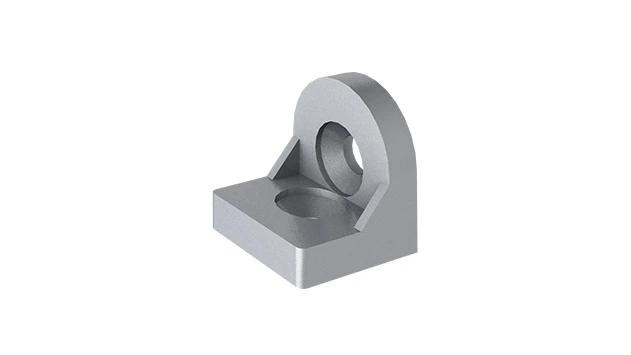
The turning angle aluminum profile connector provides a 90 degree hidden corner connection. 3030 it is means this size is used for 30 series aluminum profile.The corner code comes with set screws that allow for quick, easy connections.
The Small-Batch Manufacturing Challenge: Rigidity vs. Agility
Small-batch production is the heartbeat of innovation in today's manufacturing landscape. Whether you're a startup prototyping a new gadget, a niche workshop crafting custom parts, or a mid-sized factory pivoting between seasonal product lines, the ability to adapt quickly isn't just a luxury—it's survival. But here's the catch: traditional manufacturing setups are often built for the opposite. Welded steel frames, fixed workbenches, and custom tooling that take weeks to reconfigure can turn a promising small-batch run into a logistical nightmare. When your production line can't keep up with shifting product specs, customer demands, or market trends, you're left with wasted time, money, and opportunities.
This is where components like the
Turning Angle Code 3030
start to shine. At first glance, it might look like just another piece of hardware—small, metal, with a few holes and a angular shape. But in the context of small-batch production, it's a game-changer. Designed to work seamlessly with
3030 aluminum profile
systems, this unassuming accessory unlocks a level of adaptability that traditional setups can't match. Let's dive into why it's become a secret weapon for manufacturers who refuse to be tied down by rigidity.
What Exactly Is a Turning Angle Code 3030?
Before we explore its advantages, let's clarify what a Turning Angle Code 3030 is. In simple terms, it's a connector—specifically engineered to join lengths of
3030 aluminum profile
, a common building block in modular manufacturing setups. Unlike fixed welds or permanent bolts, this angle code uses a clever design of slots, screws, and a pivoting mechanism to secure profiles at precise angles (often 90°, 45°, or custom degrees) while allowing for easy disassembly and reconfiguration. Think of it as a "universal joint" for your production line: strong enough to support tools, materials, and workbenches, but flexible enough to let you rearrange components in hours, not days.
Made from high-grade aluminum alloy, it's lightweight yet surprisingly durable—capable of handling the daily wear and tear of factory floors without bending or corroding. And because it's part of the broader ecosystem of
aluminum profile accessories
, it plays well with other components: casters for mobile workstations, shelves for material storage, even conveyor tracks for automated workflows. This compatibility is key. In small-batch production, you rarely need just one tool—you need a system. The Turning Angle Code 3030 isn't just a part of that system; it's the glue that holds its adaptability together.

Adaptability Advantage #1: Flexibility That Keeps Up With Your Ideas
Let's say you run a small electronics workshop. One month, you're assembling smart home sensors—small, lightweight components that need a low workbench with tight shelving for tiny parts. The next month, a client orders a batch of industrial control panels: larger, heavier, and requiring more surface area for wiring and testing. With a traditional welded steel workbench, you'd face a dilemma: spend days (and money) hiring a welder to modify the setup, or invest in an entirely new workbench. Both options drain resources better spent on production.
Real-World Scenario:
A furniture maker in Portugal specializes in custom wooden chairs. Each chair design has unique dimensions, requiring different jig setups for cutting and assembling. Using
3030 aluminum profile
frames joined by Turning Angle Code 3030, they reconfigure their workbench in under 2 hours: adjusting the height of clamping rails, adding temporary shelves for tools, and even tilting the work surface for angled cuts. No welders, no downtime—just a few Allen keys and a team that stays focused on production.
The Turning Angle Code 3030 eliminates this problem. Since it's designed to pivot and lock at multiple angles, you can adjust your
workbench
height, shelf spacing, or rack configuration with basic hand tools. Need to add a side shelf for a new tool? Loosen the angle code, slide the profile into place, and retighten. Want to tilt a material rack to feed parts into a conveyor? Reposition the angle code to 15° or 30°—no custom machining required. This flexibility means your production line evolves with your products, not the other way around.

Adaptability Advantage #2: Cost-Effectiveness That Boosts Your Bottom Line
Small-batch production already operates on tight margins. Every dollar spent on unnecessary tools or downtime eats into profits. Traditional setups are notorious for this: a custom steel frame might cost $500 to weld, but if your product line changes in 3 months, that frame becomes scrap metal. The Turning Angle Code 3030 flips this script by prioritizing reusability. Since it's modular, you're not buying a "one-and-done" setup—you're investing in a toolkit of components that can be repurposed for years.
Let's break it down. A basic
3030 aluminum profile
workbench with Turning Angle Code 3030 connectors costs roughly 30% less upfront than a welded steel equivalent. But the real savings come later. When you need to reconfigure, you're not paying for new materials—just rearranging what you already have. Over time, this adds up: a 2023 study by the Lean Manufacturing Institute found that small manufacturers using modular setups with angle codes reduced equipment costs by 40% over 3 years compared to those using fixed systems.
There's also the hidden cost of downtime. In small-batch production, a single day of halted work can delay a client order or miss a market window. With Turning Angle Code 3030, reconfiguring a workbench or material rack takes 2–3 hours instead of 2–3 days. For a workshop producing 50 units per day at $20 profit per unit, that's $2,000 in avoided losses—just from one quick adjustment.
Adaptability Advantage #3: No Expertise? No Problem—Ease of Assembly for Small Teams
Welding steel requires certified professionals. Machining custom brackets needs skilled engineers. But with Turning Angle Code 3030, your existing team can become their own setup crew. The design is intentionally user-friendly: slot the angle code onto the
3030 aluminum profile
, align the holes, and tighten with an Allen key. No specialized training, no expensive equipment—just a basic toolkit and a little common sense.
This is a game-changer for small operations with limited staff. Imagine you're a startup with 5 employees: 2 assemblers, 1 designer, 1 logistics coordinator, and you. You don't have the budget for a dedicated maintenance team, but you need to reconfigure your production line for a new prototype next week. With Turning Angle Code 3030, your assemblers can handle the setup during their lunch breaks. No need to outsource, no need to halt production—just a quick, collaborative effort that keeps your team focused on what they do best: making products.
Adaptability Advantage #4: Fitting Seamlessly Into Lean Systems
Small-batch production and
lean system
principles go hand in hand. Lean manufacturing is all about minimizing waste—whether it's excess inventory, unnecessary movement, or idle time. The Turning Angle Code 3030 aligns perfectly with this mindset by letting you build "just-in-time" setups that evolve with your workflow.
Lean in Action:
A medical device manufacturer in Canada uses
3030 aluminum profile
racks joined by Turning Angle Code 3030 to organize components for their small-batch IV pump assemblies. Instead of a fixed 5-shelf rack that holds 1000 parts (most of which sit unused), they adjust the shelf height and spacing weekly to match the exact number of components needed for that week's production run. This cuts down on inventory waste, reduces the time assemblers spend searching for parts, and keeps their workspace clutter-free—all core tenets of lean manufacturing.
Even better, the modularity of Turning Angle Code 3030 supports continuous improvement (kaizen), a key lean practice. If an assembler notices that a workbench is too low, or a material rack is too far from the conveyor, they can suggest a tweak—and the team can implement it that same day. This empowers employees to own their workspace, leading to happier teams and more efficient workflows.
How Turning Angle Code 3030 Stacks Up: A Comparison With Other Solutions
To truly appreciate the adaptability of Turning Angle Code 3030, it helps to see how it compares to other common connectors used in small-batch setups. Let's look at three alternatives: traditional welded joints, fixed bolt-on brackets, and plastic snap-fit connectors.
| Feature | Turning Angle Code 3030 + 3030 Aluminum Profile | Welded Steel Joints | Fixed Bolt-On Brackets | Plastic Snap-Fit Connectors |
|---|---|---|---|---|
| Reconfigurability | High (adjust angles/positions in minutes) | None (permanent, requires cutting/welding to modify) | Low (bolts must be drilled out; risk of damaging profiles) | Medium (snap-fit can wear over time; limited load capacity) |
| Load Capacity | High (supports up to 200kg per joint with 3030 profile) | Very High (but overkill for most small-batch needs) | High (but rigidity limits practical use) | Low (only suitable for lightweight applications) |
| Assembly Time (Basic Workbench) | 2–3 hours (small team, basic tools) | 2–3 days (requires certified welder) | 4–5 hours (drilling, bolting, alignment) | 1–2 hours (but weakens with repeated use) |
| Cost (5-Year Lifespan) | Low (reusable; minimal replacement parts) | Very High (custom welding + replacement costs) | Medium (high upfront, moderate replacement costs) | Low upfront, High long-term (plastic degrades; frequent replacements) |
| Compatibility With Lean Systems | Excellent (supports just-in-time adjustments) | Poor (rigid setups lead to waste) | Fair (possible but time-consuming to adjust) | Limited (low durability limits long-term lean implementation) |
Beyond Workbenches: Unexpected Applications of Turning Angle Code 3030
While workbenches and material racks are the most common uses, the adaptability of Turning Angle Code 3030 opens up creative solutions for small-batch challenges. Here are a few examples:
1. Custom Jigs and Fixtures
Machining small-batch parts often requires custom jigs to hold pieces steady. With Turning Angle Code 3030, you can build a jig in hours that matches your exact part dimensions—then disassemble it when the run is done. A toolmaker in Germany uses this approach to create jigs for prototype automotive parts, cutting setup time from 2 weeks to 2 days.
2. Mobile Testing Stations
Quality control in small-batch production often means moving testing equipment to the product (not the other way around). By attaching casters to a
3030 aluminum profile
frame joined with Turning Angle Code 3030, you can build a mobile testing station that rolls to the assembly line. Add adjustable shelves for meters, probes, or cameras, and you've got a QC setup that adapts to whatever you're testing that day.
3. Temporary Storage for Seasonal Runs
If your small-batch production spikes during the holidays (e.g., custom gift items), you don't need a permanent warehouse expansion. Use Turning Angle Code 3030 to build temporary racks that fold flat or disassemble when the season ends. A toy manufacturer in the US does this annually, saving $10,000+ on storage rental costs.
Choosing the Right Turning Angle Code 3030: Key Considerations
Not all Turning Angle Code 3030 connectors are created equal. To maximize adaptability, keep these factors in mind:
- Material Quality: Look for angle codes made from 6061-T6 aluminum alloy—this grade offers the best balance of strength and lightweight performance, crucial for small-batch setups where portability matters.
- Adjustment Range: Opt for angle codes that lock at multiple angles (0°–180°) rather than fixed 90° only. The more flexibility in angles, the more setups you can create.
- Compatibility: Ensure the angle code fits standard 3030 aluminum profile (30mm x 30mm with T-slot grooves). Some off-brand codes have slightly different slot spacing, which can limit compatibility with other aluminum profile accessories .
- Load Rating: Check the manufacturer's specs—most quality angle codes support 150–200kg per joint. For heavier tools or materials, look for reinforced designs with extra screw holes.
Final Thoughts: Adaptability as Your Competitive Edge
In small-batch production, your greatest asset isn't just the products you make—it's how quickly you can evolve to make new ones. Turning Angle Code 3030, paired with
3030 aluminum profile
systems, isn't just a connector; it's a declaration that your production line will never be left behind. It turns rigidity into agility, waste into efficiency, and downtime into opportunity.
So, whether you're building your first workshop or upgrading an existing line, don't underestimate the power of adaptable components. The next time you're stuck staring at a fixed workbench that can't keep up with your ideas, remember: the solution might be as simple as a small, angular piece of aluminum. After all, in manufacturing, the most adaptable systems aren't the ones with the biggest machines—they're the ones built on the right connections.