- Company Articles
- Products and Technology
- Product knowledge
- Turning Angle Code 3030 for Warehousing Logistics: Material Racks & Workstations

Turning Angle Code 3030 for Warehousing Logistics: Material Racks & Workstations
Related Product
Turning Angle Code 3030
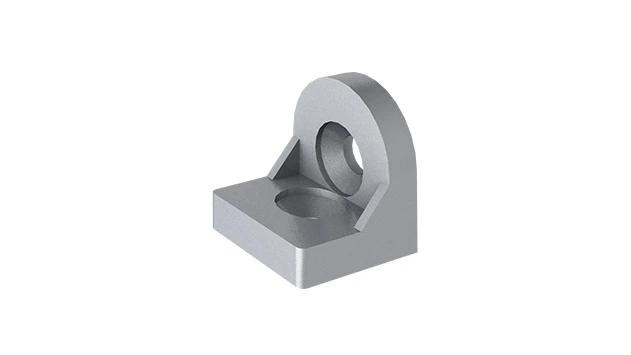
The turning angle aluminum profile connector provides a 90 degree hidden corner connection. 3030 it is means this size is used for 30 series aluminum profile.The corner code comes with set screws that allow for quick, easy connections.
The Pulse of Modern Warehousing: Why Flexibility Matters
Walk into any thriving warehouse, and you'll feel it immediately—the hum of efficiency. Forklifts glide past neatly stacked pallets, workers retrieve items with practiced ease, and every square foot of space seems to pull its weight. But behind that seamless rhythm lies a critical truth: warehousing logistics isn't just about storing goods—it's about adapting . Customer demands shift, product lines expand, and seasonal spikes test even the most carefully planned operations. Rigid, one-size-fits-all setups? They're the equivalent of trying to dance in concrete boots.
This is where the unsung heroes of modular systems step in—components designed not just to hold things together, but to hold possibilities together. Today, we're zeroing in on one such hero: the Turning Angle Code 3030 . It might sound like just another part in a long list of hardware, but in reality, it's the quiet force reshaping how we build material racks, workstations, and entire lean systems. Let's dive into how this small but mighty component is turning static warehouses into dynamic, future-ready hubs.
What Even Is a Turning Angle Code 3030?
First things first: let's demystify the name. The Turning Angle Code 3030 is a specialized connector, typically made from durable aluminum, designed to join aluminum profiles—those sleek, T-slot rails you've seen in modern workbenches and racks. But it's not just any connector. Its magic lies in its design: a compact, L-shaped bracket with precision-drilled holes that lock into the T-slots of 30mm x 30mm aluminum profiles (hence the "3030" in its name). Think of it as a universal translator for your warehouse's structure—letting profiles "talk" to each other at angles, adapt, and reconfigure without the hassle of welding or permanent fasteners.
Unlike clunky steel brackets or one-time-use plastic connectors, the Turning Angle Code 3030 is built for movement . It's lightweight (thanks to aluminum), corrosion-resistant, and surprisingly strong—able to handle the daily bumps and heavy loads of warehouse life. But its real superpower? Versatility. Whether you're building a three-tier material rack, a custom workstation, or a mobile trolley, this little bracket ensures that every connection is secure and adjustable. No more tearing down entire structures to add a shelf or reposition a beam. With Turning Angle Code 3030, change becomes a matter of loosening a few screws and reimagining what's possible.

Material Racks That Grow With Your Needs: Meet Material Rack B
Let's get practical. Take a staple of any warehouse: the material rack. Traditional racks are often like stubborn roommates—they refuse to change. Welded steel frames, fixed shelves, and a "set it and forget it" attitude might work for a static inventory, but in today's fast-paced logistics world, they're a liability. Enter Material Rack B (3 row and 3 floor) —a modular solution that leans hard on the Turning Angle Code 3030 to deliver flexibility without sacrificing strength.
Picture this: You need a rack to hold small electronic components, but next quarter, you'll be shifting to bulkier packaging materials. With a traditional welded rack, you'd either cram the new items in (risking damage) or buy a whole new rack (wasting money and space). With Material Rack B and Turning Angle Code 3030? It's a different story. The 3-row, 3-floor design starts as a compact unit, but those rows and floors? They're not fixed. Using the Turning Angle Code 3030, you can adjust shelf heights in minutes to accommodate taller boxes, add extra rows for expanding SKUs, or even reconfigure the entire rack into a two-tier setup if floor space gets tight.
But it's not just about adjustability—it's about speed . Assembling Material Rack B with Turning Angle Code 3030 is a one-person job, no welding torch required. Slide the aluminum profiles into the brackets, tighten the screws with a standard hex key, and you're done. Compare that to traditional steel racks, which often need a team, power tools, and hours of labor. And when it's time to relocate the rack? No need for heavy machinery. The lightweight aluminum frame and modular connections mean two people can disassemble, move, and reassemble it in under an hour. That's downtime turned into uptime.
| Feature | Traditional Welded Steel Rack | Material Rack B (with Turning Angle Code 3030) |
|---|---|---|
| Assembly Time | 4-6 hours (team of 2, power tools required) | 1-2 hours (single person, hand tools only) |
| Shelf Adjustability | Fixed (welded); no changes possible | Tool-free height adjustments; reconfigurable rows/floors |
| Durability | High, but prone to rust if scratched | High (aluminum resists corrosion); brackets won't loosen over time |
| Cost Over Time | High (replacement needed for changes) | Low (adapts to new needs; no replacement cost) |
| Space Efficiency | Static; wastes space during slow seasons | Scalable; shrinks or expands with inventory |
The numbers speak for themselves. Material Rack B, paired with Turning Angle Code 3030, isn't just a rack—it's a long-term investment in adaptability. And in warehousing, adaptability equals profitability.

Workstations That Work With Your Team, Not Against Them
Warehouse workstations are where the rubber meets the road. They're where pickers sort orders, packers prepare shipments, and quality control teams inspect goods. A poorly designed workstation? It leads to fatigue, errors, and slowdowns. A great one? It feels like an extension of the worker—ergonomic, intuitive, and tailored to the task at hand. Here again, the Turning Angle Code 3030 shines, turning generic workbenches into custom productivity hubs.
Take the Workbench E (single deck-without caster) as an example. At first glance, it's a simple setup: a single deck, sturdy legs, no wheels. But with the Turning Angle Code 3030, it becomes a blank canvas. Need a shelf for tools? Attach aluminum profiles to the side using the angle code. Want to add a monitor arm for digital pick lists? The T-slots and brackets make it a 10-minute upgrade. Even height adjustments are a breeze—no more forcing workers to hunch over or strain to reach; just loosen the angle codes, raise or lower the legs, and lock them in. Ergonomics? Solved.
But the real beauty is in how these workstations integrate into a larger lean system . Lean principles teach us to eliminate waste—whether it's time, motion, or space. A workstation built with Turning Angle Code 3030 supports this by keeping everything within arm's reach (reducing motion waste), adapting to new tasks (reducing downtime from retooling), and using lightweight materials (reducing energy waste from moving heavy equipment). It's not just a workstation; it's a lean tool in disguise.
Imagine a team of assembly workers switching from small parts to larger components. With a traditional workstation, they'd need to switch to a different bench entirely. With Workbench E and Turning Angle Code 3030? They adjust the shelf heights, reposition the tool holders, and keep working. No lost time, no frustration—just seamless productivity. That's the power of a system built to bend, not break.
Aluminum Profiles and Turning Angle Code 3030: A Match Made in Modularity Heaven
We can't talk about Turning Angle Code 3030 without mentioning its perfect partner: aluminum profiles . These T-slot rails are the backbone of modular systems, and the angle code is the glue that holds their versatility together. Aluminum profiles are lightweight yet strong, corrosion-resistant, and infinitely customizable—thanks in large part to their T-slot design, which lets you slide in brackets, shelves, and accessories with ease. But without a reliable way to connect them at angles? Their potential is capped.
The Turning Angle Code 3030 unlocks that potential. It's designed specifically for 30mm x 30mm aluminum profiles, creating secure 90-degree connections (and beyond, with some adjustments) that feel solid but never permanent. This synergy is what makes lean systems possible. Need a flow rack for order picking? Combine aluminum profiles, Turning Angle Code 3030, and roller tracks, and you've got a gravity-fed system that speeds up picking times. Want a mobile trolley for moving goods between stations? Add casters to an aluminum frame connected with angle codes, and you've got a nimble solution that can be reconfigured as needs change.
What's more, aluminum profiles and Turning Angle Code 3030 are built for the long haul. Unlike plastic components that degrade in sunlight or steel that rusts, aluminum stands up to warehouse conditions—humidity, temperature swings, and the occasional bump from a pallet jack. And when a component does wear out (it happens!), replacing a single Turning Angle Code 3030 is far cheaper than replacing an entire welded structure. It's sustainability meets practicality, and in today's logistics world, that's a win-win.
From Good to Great: Real-World Impact of Turning Angle Code 3030
Let's ground this in reality with a hypothetical (but all-too-common) scenario. A mid-sized e-commerce warehouse was struggling with seasonal spikes. During the holidays, they needed extra material racks for overflow inventory, but during slower months, those racks collected dust, taking up valuable space. Their workstations, too, were a mishmash of old wooden benches and rigid steel tables—workers complained of back pain, and retooling for new products took hours.
Then they switched to a modular system centered on aluminum profiles and Turning Angle Code 3030. They replaced static racks with Material Rack B units, which they could disassemble and store during slow months. Workstations were upgraded to customizable setups, with adjustable heights and tool holders. The results? A 30% reduction in assembly time for new racks, a 25% drop in worker-reported fatigue, and a 15% increase in order processing speed during peak seasons. And when they expanded their product line the following year? They didn't buy new racks—they just reconfigured the ones they had.
This isn't just a success story; it's a preview of what's possible when we stop building warehouses around rigid structures and start building them around people and change . The Turning Angle Code 3030 isn't the star of the show—but it's the supporting actor that makes the stars (your team, your processes) shine brighter.
The Future of Warehousing: Small Parts, Big Impact
In the end, warehousing logistics is a puzzle. Every component, every process, every square foot is a piece. The Turning Angle Code 3030 is a small piece, but it's a versatile one—able to connect, adapt, and reimagine how those other pieces fit together. Whether you're building a Material Rack B to hold tomorrow's inventory, a workstation that grows with your team, or a lean system that eliminates waste, this little bracket reminds us that great change often starts with the smallest tools.
So the next time you walk through a warehouse, take a closer look at the racks and workstations. Chances are, you'll spot the Turning Angle Code 3030 hard at work—quietly, reliably, and relentlessly turning static spaces into dynamic, future-ready hubs. And that's the real magic of modular systems: they don't just store goods—they store the potential for whatever comes next.