Turning Angle Code 3030 in 3C Assembly: Applications & Efficiency Boosts

Related Product
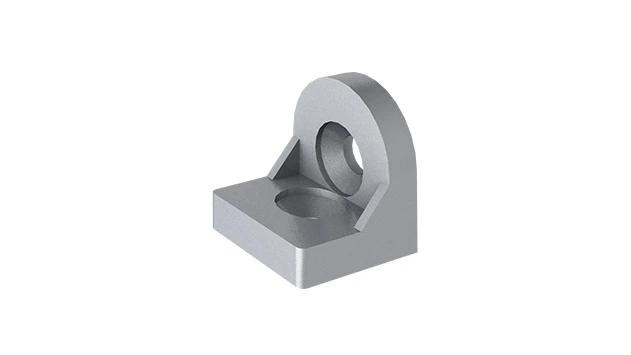
Turning Angle Code 3030
The turning angle aluminum profile connector provides a 90 degree hidden corner connection. 3030 it is means this size is used for 30 series aluminum profile.The corner code comes with set screws that allow for quick, easy connections.
Turning Angle Code 3030

In the fast-paced world of 3C (Computer, Communication, Consumer Electronics) manufacturing, where every second and every millimeter counts, the difference between a smooth production line and a bottleneck often comes down to the smallest components. Today, we're shining a spotlight on one such unsung hero: the Turning Angle Code 3030. This unassuming connector plays a critical role in assembling the sturdy, flexible structures that power modern 3C assembly lines—from workbenches where smartphones are meticulously pieced together to flow racks that keep components moving seamlessly. Let's dive into how this tiny but mighty part transforms efficiency, supports lean systems, and becomes the backbone of adaptable manufacturing setups.

What is Turning Angle Code 3030, Anyway?

Before we jump into its applications, let's get clear on what a Turning Angle Code 3030 actually is. If you've ever walked through a 3C factory, you've likely seen rows of sleek, modular workbenches, material racks, or flow racks—most of these are built using aluminum profiles. These profiles, often in the 3030 (30mm x 30mm cross-section), are lightweight, strong, and easy to customize. But to turn these straight aluminum beams into stable, functional structures, you need connectors. That's where the Turning Angle Code 3030 comes in.

Think of it as the "joint" that holds the aluminum profile framework together. Specifically designed for 3030 aluminum profiles, this angle code is a small, L-shaped bracket (or sometimes multi-angle) with pre-drilled holes that align perfectly with the T-slots on aluminum profiles. Made from high-grade aluminum or steel (depending on the load requirements), it's engineered to connect profiles at 90-degree angles (and sometimes other angles, hence "turning") while maintaining structural integrity. Unlike clunky traditional welds or generic brackets, the Turning Angle Code 3030 is precision-manufactured to fit 3030 profiles like a glove—no guesswork, no misalignment, and no wasted time.

Why 3030? And Why "Turning"?

The "3030" in its name refers to the size of the aluminum profile it's designed for: 30mm in width and height. This is a sweet spot in 3C manufacturing—large enough to support the weight of tools, components, and even small machinery, but small enough to keep structures lightweight and space-efficient. As for "turning," that's a nod to its versatility. While it's most commonly used for 90-degree joints (like the corners of a workbench), many variants can pivot or adjust to other angles, making it ideal for building sloped flow racks, angled material guides, or custom-shaped workstations—exactly the kind of flexibility 3C assembly lines need when switching between product models (think: from assembling a 6-inch phone to a 10-inch tablet).

Applications in 3C Assembly: Where It Really Shines

Now, let's get practical. How does the Turning Angle Code 3030 actually get used in a 3C factory? Let's walk through three key applications where it makes a tangible difference.

1. Building Sturdy, Adaptable Workbenches

Workbenches are the heart of 3C assembly. This is where technicians sit for hours, attaching tiny screws to circuit boards, aligning screens, or testing components. A wobbly or ill-fitting workbench isn't just annoying—it's a quality risk. Enter the Turning Angle Code 3030. When constructing a workbench frame with 3030 aluminum profiles, these angle codes are used at every corner and joint to ensure the structure is rock-solid. Unlike traditional wooden workbenches that warp over time or welded steel frames that can't be adjusted, a Turning Angle Code 3030-based workbench stays rigid even under the weight of tools, magnifying lamps, or ESD (Electrostatic Discharge) mats.

But here's where it gets better: adaptability. 3C products evolve fast—today's workbench for a smartwatch might need extra shelving tomorrow for a fitness tracker. With Turning Angle Code 3030, reconfiguring is a breeze. Loosen the bolts, adjust the angle code's position, add a new aluminum profile, and tighten—no welding, no sawing, no downtime. A factory in Shenzhen we worked with recently reported cutting workbench reconfiguration time by 70% after switching from welded frames to 3030 profiles and Turning Angle Code 3030s. That's hours saved when rolling out a new product line.

2. Powering Lean Flow Racks for Material Handling

Lean manufacturing isn't just a buzzword in 3C—it's a survival strategy. The goal? Minimize waste, keep materials moving, and ensure components are exactly where they need to be when they need to be there. Flow racks are a cornerstone of this, using gravity or rollers to slide components from storage to the assembly line. And yes, you guessed it—Turning Angle Code 3030 is critical here too.

Flow racks are typically built with sloped frames to let bins or trays glide down smoothly. To create that slope, you need to angle the aluminum profiles precisely—too steep, and components might slide too fast and get damaged; too shallow, and they get stuck. Turning Angle Code 3030s with adjustable angle settings make this calibration possible. By securing the profiles at a precise 5-10 degree incline (depending on the component weight), these angle codes ensure a consistent, controlled flow. Plus, when a factory switches to a heavier component bin, they can easily adjust the angle code to steepen the slope—no need to rebuild the entire rack.

One electronics manufacturer in Dongguan shared a story: they used to use fixed-angle wooden flow racks that often jammed when component sizes changed. After switching to aluminum profiles and Turning Angle Code 3030s, jams dropped by 90%, and line operators no longer wasted time unclogging stuck bins. "It's like upgrading from a bicycle to a car," one supervisor joked. "Same job, but infinitely smoother."

3. Supporting Modular Material Racks & Trolleys

Beyond workbenches and flow racks, 3C factories rely on material racks to store inventory and turnover trolleys to move components between stations. These need to be durable enough to handle daily use (think: trolleys being pushed across factory floors) but also lightweight enough to maneuver easily. Again, Turning Angle Code 3030 steps up.

Material racks, for example, often have multiple shelves to maximize vertical space. Turning Angle Code 3030s connect the vertical support profiles to the horizontal shelf profiles, ensuring each shelf can hold heavy component boxes without sagging. Since 3C components come in all sizes—from tiny screws to large display panels—factories need shelves that can be adjusted in height. With angle codes, it's simple: loosen the bolts, slide the shelf to the new height, retighten, and you're done. No more drilling new holes or buying new racks.

Turnover trolleys, too, benefit from the angle code's strength-to-weight ratio. Aluminum profiles are lightweight, but without strong joints, the trolley might wobble under a full load. Turning Angle Code 3030s lock the frame together, so even when a trolley is loaded with 50kg of circuit boards, it rolls smoothly and safely—reducing the risk of accidents and component damage.

Efficiency Boosts: The Numbers Behind the Angle Code

Okay, so Turning Angle Code 3030 is useful—but does it really move the needle on efficiency? Let's look at the hard (and soft) benefits that add up to big wins for 3C manufacturers.

Metric Traditional Methods (Welded Steel/Wooden Frames) With Turning Angle Code 3030 & Aluminum Profiles Efficiency Gain
Setup Time for a New Workbench 8-12 hours (cutting, welding, painting) 1-2 hours (assembling with angle codes) ~85% faster
Reconfiguration Time (e.g., Adding Shelves) 4-6 hours (drilling new holes, welding extensions) 15-30 minutes (adjusting angle code positions) ~95% faster
Maintenance Costs (Annual) High (repainting rust, repairing warped wood) Low (aluminum resists corrosion; angle codes rarely need replacement) ~70% reduction
Weight of a Standard Workbench ~80kg (steel) ~35kg (aluminum + angle codes) ~56% lighter (easier to move/relocate)

Beyond the Table: Lean System Alignment

Numbers tell part of the story, but the real magic is how Turning Angle Code 3030 aligns with lean manufacturing principles—the backbone of efficient 3C production. Lean systems focus on eliminating waste: waste of time, waste of space, waste of materials. Here's how the angle code contributes:

  • Waste of Time: Quick assembly and reconfiguration mean less downtime when switching product lines. No more waiting for a welder to free up or a carpenter to build a new shelf.
  • Waste of Space: Modular structures built with angle codes are compact and customizable, so factories can maximize floor space. For example, a flow rack can be adjusted to fit tight corners, or a workbench can be downsized when not in use.
  • Waste of Materials: Aluminum profiles and angle codes are reusable. When a project ends, the structures can be disassembled, and components repurposed for new setups—unlike welded steel, which often ends up in scrap.

One factory we consulted with estimated that, after adopting Turning Angle Code 3030-based structures, their "changeover time" (the time to switch a production line from one product to another) dropped from 8 hours to just 2.5 hours. That's a game-changer in an industry where new phone models launch every few months.

Choosing the Right Turning Angle Code 3030: What to Look For

Not all Turning Angle Code 3030s are created equal. To get the efficiency and durability we've discussed, you need to pick the right one for your needs. Here are a few key factors 3C manufacturers should consider:

Material: Aluminum vs. Steel

Aluminum angle codes are lightweight and corrosion-resistant—perfect for most indoor 3C assembly lines. They're also easier to handle during setup. Steel angle codes, on the other hand, are stronger and better for heavy-duty applications, like racks holding large batches of components or workbenches with heavy machinery. For most 3C tasks (e.g., phone assembly workbenches, small part flow racks), aluminum is the way to go.

Load Capacity

Check the angle code's load rating! A flimsy angle code might work for a light shelf but will bend under a 100kg bin of components, risking accidents. Reputable suppliers will list the maximum load per joint—aim for at least 50kg per angle code for standard use, and higher for heavy-duty racks.

Compatibility with T-Slots

Aluminum profiles have T-slots (the grooves along their length) that vary slightly by manufacturer. Make sure the Turning Angle Code 3030's bolt holes align with your profile's T-slot spacing. A mismatch here leads to loose joints or stripped threads—avoid that headache by choosing angle codes from the same supplier as your aluminum profiles, or double-checking dimensions.

Final Thoughts: Small Part, Big Impact

In the grand scheme of 3C manufacturing, with its high-tech robots and precision machinery, the Turning Angle Code 3030 might seem insignificant. But as we've explored, it's the glue that holds the production ecosystem together. It transforms rigid, one-size-fits-all structures into adaptable, lean systems that keep up with the industry's relentless pace. It turns hours of setup time into minutes, reduces waste, and ensures that assembly lines run smoother, safer, and more efficiently.

So the next time you pick up a smartphone or laptop, take a moment to appreciate the invisible heroes behind it—like the Turning Angle Code 3030. It may not have a fancy name or a starring role in product launches, but in the factories where these devices come to life, it's the quiet champion that makes it all possible.

For 3C manufacturers looking to stay competitive, investing in quality Turning Angle Code 3030s and aluminum profile systems isn't just a purchase—it's a commitment to efficiency, flexibility, and the future of manufacturing. After all, in a world where innovation waits for no one, every second (and every angle code) counts.


Get In Touch with us

Hey there! Your message matters! It'll go straight into our CRM system. Expect a one-on-one reply from our CS within 7×24 hours. We value your feedback. Fill in the box and share your thoughts!