- Company Articles
- Products and Technology
- Product knowledge
- Turning Angle Code 3030 in 3C Product Testing Stations: Stability & Precision

Turning Angle Code 3030 in 3C Product Testing Stations: Stability & Precision
Related Product
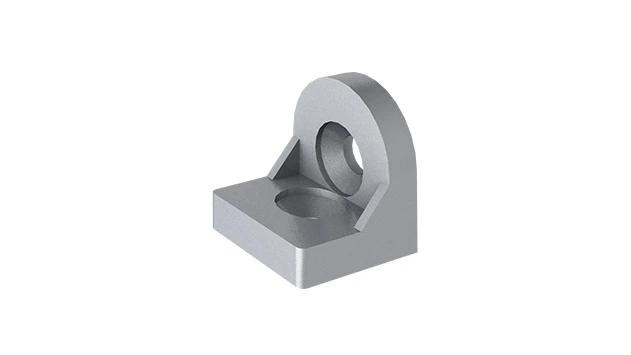
Turning Angle Code 3030
The turning angle aluminum profile connector provides a 90 degree hidden corner connection. 3030 it is means this size is used for 30 series aluminum profile.The corner code comes with set screws that allow for quick, easy connections.
Walk into any 3C manufacturing plant—those buzzing hubs where smartphones, laptops, and smartwatches come to life—and you'll notice a quiet but critical corner: the testing station. It's here that every device undergoes a battery of checks before it reaches your hands. A smartphone's touchscreen is prodded thousands of times, a laptop's hinge is bent to its limits, a smartwatch is dropped onto concrete (gently, but firmly) to test durability. These tests aren't just routine—they're make-or-break for brands. A single glitch in a camera sensor or a loose charging port can lead to returns, bad reviews, and lost trust. But what if the problem isn't the device itself? What if the testing station itself is the culprit?
In the high-stakes world of 3C product testing, precision and stability aren't just buzzwords—they're the foundation of reliable results. And while flashy testing equipment gets the spotlight, the unsung heroes often lie in the station's structural bones: the aluminum profiles that form its frame, the workbenches that hold the devices, and the tiny but mighty components that hold it all together. Today, we're shining a light on one such hero: the Turning Angle Code 3030. This unassuming aluminum profile accessory plays a pivotal role in keeping testing stations steady, aligned, and ready to deliver the accurate data manufacturers depend on. Let's dive in.
The Pressure of Perfection: Why 3C Testing Stations Can't Afford to Wobble
First, let's set the stage. 3C products—computers, communications, and consumer electronics—are marvels of miniaturization. A modern smartphone packs more computing power than the laptops of a decade ago, all into a device thinner than a stack of credit cards. But that compactness comes with a catch: every millimeter, every gram, and every connection matters. When a manufacturer tests a device, they're looking for flaws that might not be visible to the naked eye. For example, a smartwatch's heart rate sensor needs to detect a pulse accurately within 1-2 beats per minute. A laptop's keyboard must register keystrokes with 99.9% reliability, even after 10 million presses. A wireless earbud's Bluetooth signal must stay strong at 30 feet, not 29.9.
To test these metrics, testing stations rely on specialized gear: robotic arms that mimic human touches, sensors that measure force down to the gram, cameras that track movement at 1000 frames per second. But here's the thing: all this high-tech equipment is only as good as the structure holding it. Imagine a robotic arm tasked with pressing a phone's power button 10,000 times to test durability. If the workbench holding the phone wobbles by just 0.5mm with each press, the arm might miss the button occasionally, skewing the test results. Or worse, the inconsistent movement could damage the arm itself over time. In a industry where even a 0.1% error rate can cost millions in recalls, stability isn't optional—it's essential.
This is where structural components like aluminum profiles and their accessories come into play. Aluminum profiles are the backbone of most modern testing stations. Lightweight yet strong, they're easy to assemble and reconfigure, making them ideal for the ever-changing needs of 3C manufacturing (after all, a station testing foldable phones needs a different setup than one testing wireless earbuds). But aluminum profiles alone are just beams—they need connectors to form rigid frames, workbenches, and racks. And that's where angle codes, like the Turning Angle Code 3030, step in. These small, L-shaped brackets might not look like much, but they're the glue that turns a collection of aluminum beams into a rock-solid testing platform.
Meet the Turning Angle Code 3030: The Quiet Architect of Stability
Let's get up close with the star of the show: the Turning Angle Code 3030. If you've ever assembled a shelving unit or a DIY project, you're probably familiar with angle brackets—those metal pieces that hold two boards together at a right angle. The Turning Angle Code 3030 is a specialized version of this, designed specifically for use with aluminum profiles, and it's a key player in the aluminum profile accessories family. But what makes it so special?
First, let's talk about compatibility. The "3030" in its name is a clue: it's engineered to work with 3030 National Standard Profile A—aluminum extrusions that measure 30mm by 30mm. These profiles are a workhorse in manufacturing, thanks to their balance of strength and weight. The Turning Angle Code 3030 is shaped like a right angle (90 degrees), with pre-drilled holes that align perfectly with the T-slots on 3030 profiles. This isn't just about convenience; it's about precision. When you bolt the angle code to two intersecting 3030 profiles, the holes ensure the connection is dead-on perpendicular, with no guesswork. That alignment is critical for maintaining the structural integrity of the entire testing station.
Material matters, too. Most Turning Angle Code 3030 brackets are made from 6063 aluminum alloy— the same material used in high-quality aluminum profiles. This alloy is prized for its excellent corrosion resistance, lightweight nature, and, most importantly, its strength-to-weight ratio. Unlike plastic brackets (which can warp under stress) or low-grade steel (which adds unnecessary weight and rusts over time), 6063 aluminum keeps the bracket strong without weighing down the structure. It also handles the vibrations common in testing stations—think of the hum of a motorized conveyor or the rapid movement of a testing arm—without fatiguing or loosening over time.
But the real genius of the Turning Angle Code 3030 lies in its design details. Take the bolt holes, for example. They're not just randomly placed; they're spaced to distribute pressure evenly across the aluminum profile. When you tighten a bolt through the angle code into the profile's T-slot, the force is spread out, reducing the risk of the profile warping or cracking under heavy loads. The bracket itself is also slightly thicker at the bend—typically 3-4mm—adding extra reinforcement right where the stress is highest. It's like adding a steel beam to the corner of a house; that extra thickness ensures the angle code can handle the torque and tension of daily testing operations.
Installation is another area where the Turning Angle Code 3030 shines. Unlike weld-on brackets (which require specialized tools and permanent connections), this angle code is designed for tool-free or simple wrench assembly. Most models use T-slot nuts and bolts that slide into the aluminum profile's grooves, making it easy to adjust or reposition the bracket if the testing setup changes. This flexibility is a big win in 3C manufacturing, where product lines evolve quickly. One month, a station might be testing a 6.7-inch smartphone; the next, a 7.3-inch foldable model. With the Turning Angle Code 3030, reconfiguring the workbench or frame takes minutes, not hours.

Stability: How the Turning Angle Code 3030 Keeps Testing Stations Rock-Solid
Now, let's get to the heart of the matter: stability. What does "stability" even mean in the context of a testing station? In short, it's the ability to resist movement—whether from vibration, weight, or external force—and maintain its shape and position over time. For a testing station, this translates to consistent, repeatable results, no matter how many tests are run or how heavy the equipment is. And the Turning Angle Code 3030 is a master at delivering that stability.
Let's start with load distribution. Testing stations often hold heavy gear: think of a 50kg robotic arm, a 20kg environmental chamber (for testing devices in extreme temperatures), or a 15kg precision scale. All that weight has to be supported by the frame, and if the connections between aluminum profiles are weak, the whole structure can sag or twist. The Turning Angle Code 3030 addresses this by creating a rigid joint between two profiles. When you attach two 3030 National Standard Profile A beams at a right angle using the angle code, the bracket acts like a corner brace, preventing the profiles from pulling apart or bending under load. It's similar to how a truss supports a roof—by turning individual components into a unified, load-bearing structure.
Vibration is another enemy of stability, and testing stations are full of it. Motors hum, conveyor belts rattle, robotic arms move back and forth—all of these create tiny vibrations that can travel through the frame. Over time, these vibrations can loosen connections, misalign sensors, or even cause resonance (a dangerous feedback loop where the frame starts vibrating at the same frequency as the equipment, amplifying movement). The Turning Angle Code 3030 helps dampen these vibrations thanks to its tight, secure fit. Because it locks the aluminum profiles together with minimal play (the gap between connected parts), there's less room for movement. The 6063 aluminum alloy also has natural damping properties, absorbing some of the vibration energy rather than letting it bounce around the frame.
To put this into perspective, let's look at a real-world example. A major smartphone manufacturer was struggling with inconsistent results from their drop-test station. The station was designed to drop phones from a height of 1.2 meters onto a concrete surface, then check for cracks or internal damage. But about 10% of the time, the test would show "no damage" when the phone actually had a hairline crack in the screen. After investigating, engineers discovered the issue: the metal platform holding the phone was wobbling slightly during the drop, causing the phone to rotate mid-air. Instead of hitting the concrete flat, it was landing at a slight angle, reducing the impact force on the screen. The culprit? The platform's frame was held together with plastic angle brackets, which had loosened over time from the repeated impact vibrations.
The solution? Swapping out the plastic brackets for Turning Angle Code 3030 brackets. The aluminum construction and tighter fit eliminated the wobble. After the switch, the drop-test results became 99.5% consistent, and the number of missed cracks dropped to near zero. The angle code's ability to maintain a rigid connection, even under repeated stress, made all the difference. It's a small change, but it saved the manufacturer from potentially shipping thousands of defective phones.

Precision: The Secret to Accurate, Repeatable Test Results
Stability is about resisting movement, but precision is about controlling it. In 3C testing, precision means aligning sensors to within 0.1mm of a device's edge, positioning a camera exactly 30cm from a phone's screen, or ensuring a pressure sensor applies exactly 5N of force to a button. Even the tiniest misalignment can throw off measurements, leading to false passes or fails. And when it comes to precision, the Turning Angle Code 3030 is a silent perfectionist.
One of the key ways it ensures precision is through tight tolerances. Tolerance refers to the allowable variation in a part's dimensions. For the Turning Angle Code 3030, the angle itself is machined to within ±0.5 degrees of 90 degrees. That might sound like a small number, but in a testing frame, a 1-degree misalignment over 1 meter of aluminum profile translates to a 17mm offset at the end—more than enough to throw off a camera alignment test. By keeping the angle true, the Turning Angle Code 3030 ensures the entire frame stays square, so every component mounted on it—sensors, clamps, robotic arms—is exactly where it needs to be.
Another precision booster is the bracket's surface finish. The contact points where the angle code meets the aluminum profile are milled smooth, with no burrs or rough edges. This ensures maximum contact area between the bracket and the profile, reducing the risk of slippage. When you tighten the bolts, the smooth surfaces distribute the clamping force evenly, creating a rock-solid grip that doesn't shift over time. Compare this to a cheap angle bracket with rough edges: the uneven contact can lead to "creep" (slow movement under load), which gradually misaligns the frame. Over weeks of testing, that creep can turn a precise setup into an inaccurate one.
Let's consider a testing scenario where precision is non-negotiable: touchscreen testing. Modern smartphones use capacitive touchscreens that detect changes in electrical current when a finger (or stylus) makes contact. To test these screens, manufacturers use automated tools that press tiny probes against the screen at hundreds of points, measuring response time and accuracy. For the test to be valid, each probe must hit its target point within 0.1mm—about the width of a human hair. If the workbench holding the phone shifts by even 0.2mm, the probe might hit between two target points, leading the test to incorrectly flag the screen as unresponsive.
A manufacturer of mid-range smartphones faced this exact problem. Their touchscreen testing station was using generic steel angle brackets to build the frame, and over time, the brackets would loosen slightly, causing the workbench to tilt. The result? Sporadic test failures that couldn't be traced back to the screen itself. After switching to Turning Angle Code 3030 brackets, the frame maintained its alignment for months. The aluminum brackets, paired with 3030 National Standard Profile A, held the workbench steady, and the probe accuracy improved from 95% to 99.9%. The engineers even noticed that the testing machine required less calibration—saving hours of downtime each week.
How Does It Stack Up? Comparing the Turning Angle Code 3030 to Other Options
You might be wondering: Are there other angle codes out there? And if so, why is the Turning Angle Code 3030 the best choice for 3C testing stations? Let's break it down with a comparison. We'll pit the Turning Angle Code 3030 against two common alternatives: plastic angle brackets and generic steel angle codes.
| Feature | Turning Angle Code 3030 | Plastic Angle Brackets | Generic Steel Angle Codes |
|---|---|---|---|
| Material | 6063 Aluminum Alloy | ABS Plastic | Mild Steel |
| Compatible Profile | 3030 National Standard Profile A (30mmx30mm) | Various, but often loose fit | Generic, may require drilling |
| Max Load Capacity | Up to 150kg per joint | Up to 30kg per joint | Up to 200kg per joint |
| Vibration Resistance | High (minimal play, aluminum damping) | Low (prone to loosening, plastic flex) | Medium (heavy, but prone to rust-related looseness) |
| Precision Tolerance | ±0.5 degrees angle, ±0.1mm hole alignment | ±2 degrees angle, ±0.5mm hole alignment | ±1 degree angle, ±0.3mm hole alignment |
| Weight (per bracket) | ~45g | ~20g | ~120g |
| Corrosion Resistance | High (natural oxide layer) | High (plastic doesn't rust) | Low (prone to rust without coating) |
| Best For | Medium-to-heavy testing stations, precision setups | Light-duty shelving, non-critical structures | Extremely heavy loads, non-precision industrial use |
As the table shows, the Turning Angle Code 3030 hits a sweet spot. Plastic brackets are lightweight and cheap, but they can't handle the loads or vibration of a busy testing station. Steel codes are strong, but they're heavy (adding unnecessary weight to the frame), prone to rust (which can loosen connections over time), and less precise. The Turning Angle Code 3030, with its aluminum construction, tight tolerances, and 3030 profile compatibility, offers the best balance of strength, precision, and durability for 3C testing needs.
Another advantage is versatility. While it's optimized for 3030 National Standard Profile A, the Turning Angle Code 3030 can be adapted for use with other profile sizes (with the right adapters) or even non-aluminum materials like steel tubing. This flexibility makes it a favorite among manufacturers who use a mix of equipment in their testing stations. Whether you're building a small bench for earbud testing or a large frame for laptop durability checks, the Turning Angle Code 3030 can scale to fit the job.
Beyond the Bracket: How the Turning Angle Code 3030 Fits Into the Bigger Picture
The Turning Angle Code 3030 is more than just a standalone component—it's part of a larger ecosystem of aluminum profile accessories that work together to create robust testing stations. Let's zoom out and see how it fits with other key parts, like the workbench, aluminum profiles, and complementary accessories.
At the center of most testing stations is the workbench—the surface where devices are placed for testing. A typical workbench might be built using 3030 National Standard Profile A for the frame, with a plywood or aluminum top. The Turning Angle Code 3030 plays a key role here, connecting the vertical legs of the workbench to the horizontal beams that support the top. Without strong angle codes, the workbench could wobble when heavy equipment is placed on it, or even collapse under load. By reinforcing each corner with a Turning Angle Code 3030, manufacturers ensure the workbench stays level and stable, no matter what's placed on it.
Then there are the accessories that mount to the aluminum profiles: tool holders, cable management clips, sensor mounts, and more. These accessories often attach to the same T-slots used by the Turning Angle Code 3030. Because the angle code ensures the profiles are straight and square, these accessories can be positioned with pinpoint accuracy. For example, a cable management clip mounted to a profile that's slightly twisted (due to poor angle brackets) might pinch a cable, causing intermittent power issues for a testing tool. With the Turning Angle Code 3030, the profile stays straight, and the clip sits flush, protecting the cable and ensuring reliable power.
Even the smallest details matter. Take leveling feet, which are used to adjust the height of the testing station and keep it stable on uneven floors. If the frame is out of square (thanks to misaligned angle brackets), the leveling feet can only do so much—one corner might be raised higher than others, leading to a tilted workbench. The Turning Angle Code 3030 ensures the frame is square from the start, making it easier to level the entire station and keep it that way.
Looking Ahead: The Future of Testing Stations and the Role of Precision Components
As 3C products continue to evolve—think foldable screens, under-display cameras, and AI-powered sensors—testing stations will face new challenges. Devices will become more complex, with tighter tolerances and more sensitive components. This means the demand for stable, precise testing structures will only grow. So, what does the future hold for components like the Turning Angle Code 3030?
One trend is miniaturization. As testing stations shrink to accommodate smaller devices (like tiny wireless earbuds or smart rings), the components building them will need to get smaller too. We might see versions of the Turning Angle Code 3030 designed for 2020 or even 1515 aluminum profiles—smaller but still strong enough to handle the loads of micro-testing equipment. Material science will also play a role; advances in aluminum alloys could make the brackets lighter and stronger, while coatings might improve corrosion resistance or reduce friction during installation.
Another trend is smart integration. Imagine angle codes with built-in sensors that monitor tension or vibration, sending real-time data to a central system. If a bracket starts to loosen, the system could alert maintenance staff before it causes test errors. While this might sound like science fiction, similar "smart" structural components are already being tested in automotive manufacturing, and it's only a matter of time before they trickle down to 3C testing.
But even as technology advances, the core principles that make the Turning Angle Code 3030 effective—stability, precision, compatibility—will remain essential. In a world where 3C products are getting smarter and more complex, the humble angle code will continue to be the quiet foundation that ensures testing stations deliver the reliable results manufacturers and consumers depend on.
Final Thoughts: Why the Turning Angle Code 3030 Deserves a Spot in Your Testing Station
In the fast-paced world of 3C manufacturing, it's easy to focus on the flashy stuff: the latest testing robots, the most advanced sensors, the fanciest software. But as we've seen, even the most cutting-edge equipment is only as good as the structure holding it. The Turning Angle Code 3030 might not have a sleek design or a high-tech label, but it's a workhorse that delivers where it counts: stability and precision.
Whether you're building a new testing station or upgrading an existing one, investing in quality components like the Turning Angle Code 3030 pays off. It reduces test errors, minimizes downtime, and ensures your devices meet the high standards your customers expect. So, the next time you pick up a smartphone or put on a smartwatch, take a moment to appreciate the unsung heroes in the factory—the angle codes, aluminum profiles, and workbenches that helped make that device reliable, durable, and ready for your daily life.
In the end, the Turning Angle Code 3030 is more than just a bracket. It's a promise—a promise that the testing station behind your favorite 3C product is built to deliver results you can trust. And in an industry where trust is everything, that's priceless.