- Company Articles
- Products and Technology
- Product knowledge
- Turning Angle Code 3030 in Lean Pipe Conveyors: Ensuring Smooth Material Flow

Turning Angle Code 3030 in Lean Pipe Conveyors: Ensuring Smooth Material Flow
Related Product
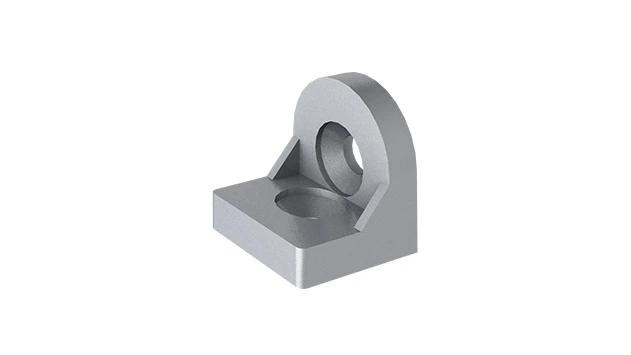
Turning Angle Code 3030
The turning angle aluminum profile connector provides a 90 degree hidden corner connection. 3030 it is means this size is used for 30 series aluminum profile.The corner code comes with set screws that allow for quick, easy connections.
Walk into any well-run manufacturing facility, and you'll notice something subtle but critical: the rhythm of material flow. It's the quiet hum of components gliding along conveyors, the steady movement of parts from one workstation to the next, and the seamless transition of finished goods onto pallets. When this rhythm falters—when a box gets stuck on a roller, a track misaligns, or a joint loosens—everything slows down. Waste creeps in, deadlines slip, and frustration builds. That's where lean systems come in, and at the heart of many lean systems lie lean pipe conveyors. But even the best conveyors rely on small, unsung components to keep things moving. Today, we're shining a light on one such component: the Turning Angle Code 3030. This unassuming piece of hardware plays a starring role in ensuring smooth, efficient material flow, and understanding its impact can transform how you approach conveyor design and optimization.
The Backbone of Lean Systems: Lean Pipe Conveyors
Before diving into the specifics of Turning Angle Code 3030, let's ground ourselves in the basics of lean systems. At their core, lean systems are all about eliminating waste—whether that's wasted time, wasted space, or wasted effort. In manufacturing, one of the biggest sources of waste is inefficient material handling. If parts have to be manually carried across the floor, if conveyors jam, or if storage racks are disorganized, every second of delay adds up. Lean pipe conveyors address this by providing flexible, modular solutions that adapt to your workflow, not the other way around.
Lean pipe conveyors are built from lightweight, durable materials like aluminum or steel pipes, connected by joints and brackets, and often paired with roller tracks to allow materials to slide or roll with minimal friction. What makes them "lean" is their adaptability: you can reconfigure them as your production needs change, add or remove sections, or integrate them with other lean tools like flow racks or workbenches. They're the Swiss Army knife of material handling—versatile, cost-effective, and designed to keep things moving.
But here's the thing: even the most well-designed conveyor system is only as strong as its weakest link. A loose joint, a misaligned track, or a flimsy bracket can turn a smooth-flowing line into a bottleneck. That's where components like Turning Angle Code 3030 come into play. They're the connective tissue that holds the system together, ensuring that every part works in harmony to keep materials moving.
What is Turning Angle Code 3030?
Let's start with the basics: what exactly is Turning Angle Code 3030? In simple terms, it's a type of angle bracket or connector designed to join aluminum profiles at a 90-degree angle. The "3030" refers to the size of the aluminum profile it's intended for—specifically, 30mm x 30mm profiles, which are widely used in medium-load applications like conveyors, workbenches, and flow racks. Made from high-strength aluminum alloy, these angle codes are lightweight yet surprisingly sturdy, capable of supporting the kind of daily wear and tear that comes with busy manufacturing environments.
At first glance, it might look like just another metal bracket, but a closer inspection reveals thoughtful engineering. Most Turning Angle Code 3030 components feature pre-drilled holes or slots that align with the T-slots of 3030 aluminum profiles, allowing for secure attachment with bolts or screws. Some designs include reinforced edges to prevent bending under load, while others have rounded corners to reduce the risk of snags or injuries. They're small—usually just a few inches long—but their impact is outsized.
Think of it this way: if your conveyor system is a human body, the aluminum profiles are the bones, the roller tracks are the muscles, and the Turning Angle Code 3030 is the ligament that connects the bones to the muscles. Without strong ligaments, the muscles can't do their job effectively. Similarly, without a secure, precise connection between the aluminum frame and the roller track, the track can shift, misalign, or even detach—all of which spell trouble for material flow.

How Turning Angle Code 3030 Enhances Roller Track Performance
Roller tracks are the workhorses of lean pipe conveyors. Whether you're moving plastic bins, cardboard boxes, or metal parts, roller tracks reduce friction, making it easy to slide materials with minimal effort. But for roller tracks to work well, they need to be perfectly aligned and securely mounted. Even a tiny misalignment—say, a track that's tilted by just a few degrees—can cause materials to get stuck, requiring manual intervention and disrupting the flow.
This is where Turning Angle Code 3030 shines. By creating a rigid, stable connection between the aluminum profile frame and the roller track, it ensures that the track stays level and aligned, even under heavy loads. Let's break down how it does this:
- Precision Alignment: The 3030 angle code is designed to fit snugly into the T-slots of 3030 aluminum profiles, leaving little room for play. This tight fit means the roller track, which is mounted to the angle code, stays exactly where you position it. No more "wobbly" tracks that shift over time.
- Load Distribution: When a heavy box rolls over a roller track, the weight isn't just on the rollers—it's transferred to the track itself, then to the frame. Turning Angle Code 3030 distributes this load evenly across the aluminum profile, preventing stress concentrations that could bend or warp the frame over time.
- Vibration Reduction: Conveyors vibrate—whether from the movement of materials or the operation of nearby machinery. Over time, this vibration can loosen bolts and joints. The 3030 angle code's secure fit minimizes vibration transfer, keeping connections tight and reducing the need for frequent re-tightening.
To put this in perspective, imagine two identical roller tracks: one mounted with generic, one-size-fits-all brackets, and another mounted with Turning Angle Code 3030. The first track might start off aligned, but after a week of heavy use, the generic brackets could loosen, causing the track to sag. Boxes would catch on the sagging section, requiring workers to stop and push them through. The second track, with its secure 3030 angle code connections, would stay aligned, letting boxes glide through without a hitch. Over time, that difference translates to hours of saved labor and fewer delays.

Integration with Aluminum Profiles: A Match Made in Lean Heaven
Aluminum profiles are the unsung heroes of lean conveyor design. They're lightweight, corrosion-resistant, and incredibly strong for their weight. Unlike steel, they don't rust, which is a huge plus in environments where moisture or chemicals are present. And their T-slot design makes them infinitely customizable—you can attach brackets, shelves, roller tracks, or even caster wheels with ease. 3030 aluminum profiles, in particular, are a sweet spot for many applications: they're small enough to keep conveyors compact but strong enough to handle loads up to several hundred pounds, depending on the design.
Turning Angle Code 3030 is specifically engineered to work with these 3030 profiles, creating a synergy that's hard to beat. Let's say you're building a flow rack—a gravity-fed storage system where materials slide down from the back to the front, ensuring first-in, first-out (FIFO) inventory management. Flow racks rely on sloped roller tracks, and to get that slope just right, you need the tracks to be mounted at a precise angle. With Turning Angle Code 3030, you can adjust the angle of the track relative to the aluminum profile frame, then lock it in place with bolts. The T-slot connection ensures that the angle code won't shift, even as heavy boxes slide down the track day after day.
Another example: mobile conveyors. Many lean operations use conveyors mounted on caster wheels to move materials where they're needed, rather than building fixed lines. For these mobile systems, stability is key—you don't want the conveyor wobbling as it's moved or loaded. By using Turning Angle Code 3030 to connect the aluminum frame to the caster mounts, you create a rigid base that can handle movement without flexing. This not only improves safety but also ensures that the roller tracks stay aligned, even when the conveyor is in motion.
The beauty of this integration is that it's modular. If you need to add a new section to your conveyor, you can simply cut a length of 3030 aluminum profile, attach a Turning Angle Code 3030, and bolt it to the existing frame. No welding, no specialized tools—just a hex key and a few minutes of work. This modularity is what makes lean systems so adaptable, and Turning Angle Code 3030 is a big reason that adaptability is possible.
Comparing Angle Codes: Why 3030 Stands Out
Turning Angle Code 3030 isn't the only angle code on the market. There are smaller codes, like 2020 (for 20mm x 20mm profiles), and larger ones, like 4040 (for 40mm x 40mm profiles). Each has its place, but 3030 hits a sweet spot for many lean conveyor applications. Let's compare these common angle codes to see why 3030 is often the go-to choice:
| Angle Code Type | Profile Size (mm) | Typical Load Capacity (per bracket) | Best For | Key Advantage |
|---|---|---|---|---|
| Turning Angle Code 2020 | 20x20 | Up to 50 lbs | Light-duty applications: small parts conveyors, shelving for lightweight items | Ultra-lightweight, ideal for tight spaces |
| Turning Angle Code 3030 | 30x30 | Up to 150 lbs | Medium-duty applications: standard roller conveyors, flow racks, workbenches | Balances strength and weight; most versatile for general use |
| Turning Angle Code 4040 | 40x40 | Up to 300 lbs | Heavy-duty applications: industrial conveyors, large part storage | Maximum strength for heavy loads |
As the table shows, 3030 angle codes are the workhorses of the bunch. They're strong enough to handle most everyday conveyor loads—think boxes of electronics components, automotive parts, or packaged goods—without adding unnecessary weight. For example, a typical flow rack in an electronics factory might hold bins of circuit boards, each weighing 10-15 lbs. A 2020 angle code could handle this, but 3030 provides extra stability, reducing the risk of the rack wobbling when bins are removed. On the flip side, a 4040 angle code would be overkill, adding cost and weight without any real benefit.
Another advantage of 3030 angle codes is their compatibility with a wide range of accessories. From roller track brackets to caster wheel mounts, most lean pipe accessories are designed with 3030 profiles in mind. This means you can mix and match components without worrying about compatibility issues, making it easier to design a conveyor system that fits your exact needs.
Case Study: Flow Rack Optimization with Turning Angle Code 3030
To really understand the impact of Turning Angle Code 3030, let's look at a real-world example. A mid-sized automotive parts manufacturer we worked with recently was struggling with their flow racks. These racks, which held plastic bins of small components (like screws, washers, and clips), were critical to their assembly line—workers relied on them to quickly grab parts without leaving their workstations. But the racks had a problem: the roller tracks kept misaligning, causing bins to get stuck. Workers were spending 5-10 minutes per hour just unjamming bins, and the constant stopping and starting was fraying morale.
When we inspected the racks, we noticed they were using generic steel angle brackets to mount the roller tracks to the frame. These brackets were cheap, but they had a lot of play—even when tightened, they could shift slightly under load. Over time, this shifting caused the roller tracks to tilt, creating "speed bumps" where bins would catch. The solution? We replaced the generic brackets with Turning Angle Code 3030, which were designed to fit the 3030 aluminum profiles the racks were built from.
The results were immediate. Within a week, bin jams dropped by 40%. Workers reported spending less time unjamming and more time assembling parts. By the end of the month, the line's throughput had increased by 8%, simply because the material flow was smoother. The manufacturer estimated that the switch to Turning Angle Code 3030 saved them over 200 labor hours per month—more than enough to justify the small investment in new brackets.
What's most interesting about this case is that the problem wasn't with the roller tracks themselves or the aluminum profiles—it was with the connection between them. The generic brackets were the weak link, and by upgrading to a component designed for the job, the entire system performed better. It's a reminder that in lean systems, every detail matters, and sometimes the smallest changes yield the biggest results.
Installation Best Practices: Getting the Most Out of Turning Angle Code 3030
Even the best components can underperform if installed incorrectly. To ensure your Turning Angle Code 3030 brackets deliver the stability and alignment you need, follow these best practices:
1. Use the Right Tools
Aluminum profiles and angle codes are designed to be installed with hex keys (Allen wrenches) or torque wrenches, not regular screwdrivers. Using the wrong tool can strip the bolts or damage the T-slots, weakening the connection. Invest in a good set of hex keys with ball ends—they'll make it easier to reach bolts in tight spaces.
2. Don't Over-Tighten (or Under-Tighten)
Aluminum is softer than steel, so over-tightening bolts can strip the threads or warp the profile. Under-tightening, on the other hand, leaves room for movement. Most manufacturers recommend a torque of 15-20 Nm for 3030 angle code bolts—check the specs for your specific product. If you don't have a torque wrench, a good rule of thumb is to tighten until the bolt is snug, then give it a quarter-turn more.
3. Check Alignment Before Finalizing
Before fully tightening all the bolts, use a level to ensure the roller track is straight and level. Even a small tilt can cause materials to jam. Once aligned, tighten the bolts in a crisscross pattern (like you would with a car tire) to distribute pressure evenly.
4. Use Thread-Locking Fluid for High-Vibration Areas
If your conveyor is near heavy machinery or experiences a lot of vibration, apply a small amount of thread-locking fluid (like Loctite) to the bolts before tightening. This prevents them from loosening over time, reducing maintenance needs.
Maintenance Tips: Keeping Your Turning Angle Code 3030 in Top Shape
Like any component, Turning Angle Code 3030 brackets need a little TLC to stay effective. Here's how to keep them performing at their best:
- Inspect Regularly: Once a month, walk the conveyor line and check each angle code for signs of looseness, bending, or corrosion. Tighten any loose bolts and replace any brackets that show damage.
- Clean the T-Slots: Dust, debris, and even small metal shavings can build up in the T-slots of aluminum profiles, making it hard to adjust or replace brackets. Use a small brush or compressed air to clean them out every quarter.
- Lubricate Moving Parts: If your conveyor has adjustable angle codes (some designs let you pivot the track slightly), apply a dry lubricant (like graphite) to the pivot points to keep them moving smoothly.
- replace Worn Brackets Proactively: Aluminum doesn't rust, but it can fatigue over time, especially if exposed to extreme temperatures or heavy loads. If a bracket starts to show signs of bending or cracking, replace it immediately—don't wait for it to fail.
Common Challenges and Solutions
Even with proper installation and maintenance, you might run into issues with Turning Angle Code 3030. Here are some common problems and how to solve them:
Problem: Brackets Keep Loosening
Solution: This is usually due to vibration or under-tightening. Try using thread-locking fluid, and ensure bolts are torqued to the manufacturer's specs. If the T-slots in the aluminum profile are worn (common in older systems), you can use larger bolts or add a shim to create a tighter fit.
Problem: Roller Track is Misaligned Despite Using 3030 Angle Codes
Solution: Check if the aluminum profile itself is bent. If the frame is warped, even the best brackets can't keep the track aligned. Use a straightedge to verify the profile is straight; if not, replace the section. Also, ensure the floor under the conveyor is level—uneven floors can cause the frame to tilt.
Problem: Brackets Are Hard to Install in Tight Spaces
Solution: Use low-profile hex keys or ratcheting hex wrenches to reach tight spots. Some manufacturers also make "offset" Turning Angle Code 3030 brackets, which have a bent design to make installation easier in cramped areas.
Future Innovations: What's Next for Lean Conveyor Components?
As manufacturing continues to evolve—with trends like automation, IoT, and sustainability driving change—lean conveyor components are evolving too. What does the future hold for Turning Angle Code 3030 and similar parts? Here are a few trends to watch:
- Smart Brackets with Sensors: Imagine angle codes embedded with tiny sensors that monitor bolt tightness or track vibration. If a bracket starts to loosen, the sensor could send an alert to your maintenance team, preventing jams before they happen.
- Eco-Friendly Materials: As sustainability becomes a bigger priority, we might see angle codes made from recycled aluminum or bio-based composites, without sacrificing strength.
- 3D-Printed Custom Brackets: For unique conveyor designs, 3D printing could allow for on-demand, custom-shaped angle codes that fit specific profiles or loads, reducing waste and lead times.
Even with these innovations, the core purpose of Turning Angle Code 3030—providing a strong, stable connection—will remain the same. Sometimes, the most effective solutions are the ones that focus on doing one job really well, and that's something that won't change anytime soon.
Conclusion: Small Component, Big Impact
In the world of lean manufacturing, it's easy to get caught up in big-picture tools—automated robots, sophisticated software, or high-tech sensors. But as we've seen, small components like Turning Angle Code 3030 play an equally critical role in keeping operations running smoothly. By ensuring that roller tracks stay aligned, frames stay stable, and materials flow without interruption, this unassuming bracket helps eliminate waste, boost productivity, and keep workers focused on what they do best: building great products.
So the next time you walk through your facility, take a moment to look at the conveyor systems. Notice the angle brackets holding the tracks in place. If they're generic, loose, or mismatched, consider the difference that upgrading to Turning Angle Code 3030 could make. It might seem like a small change, but as the automotive parts manufacturer discovered, small changes can lead to big results. After all, in lean systems, every detail counts—and every detail deserves to be built to last.