- Company Articles
- Products and Technology
- Application Cases
- Turning Angle Code 3030 in Logistics Warehouses: Optimizing Storage Racks

Turning Angle Code 3030 in Logistics Warehouses: Optimizing Storage Racks
Related Product
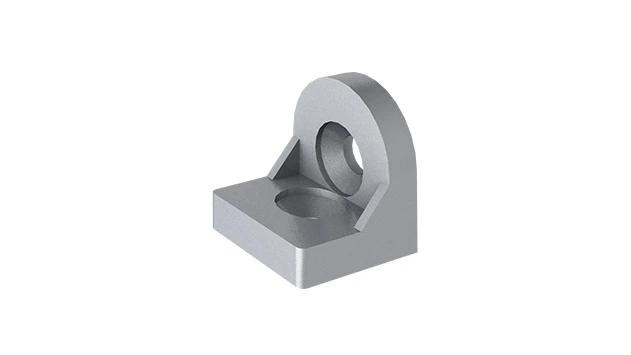
Turning Angle Code 3030
The turning angle aluminum profile connector provides a 90 degree hidden corner connection. 3030 it is means this size is used for 30 series aluminum profile.The corner code comes with set screws that allow for quick, easy connections.
In the fast-paced world of logistics, where every square foot of warehouse space counts and efficiency can make or break a business, the unsung heroes often lie in the smallest components of the operation. Walk into any modern warehouse, and you'll see rows of towering storage racks, bustling workbenches, and smooth-moving roller tracks—but have you ever stopped to wonder what holds it all together? Today, we're shining a spotlight on a yet critical piece of this puzzle: the Turning Angle Code 3030. This unassuming aluminum profile accessory is quietly revolutionizing how warehouses design, build, and adapt their storage systems, aligning perfectly with the principles of lean systems to cut waste, boost productivity, and future-proof operations.
The Logistics Warehouse Challenge: Space, Speed, and Flexibility
Logistics warehouses are the beating hearts of supply chains. They're where raw materials arrive, where products are sorted, stored, and shipped out to customers—and where inefficiencies can quickly snowball into missed deadlines, increased costs, and frustrated teams. Ask any warehouse manager about their top challenges, and you'll likely hear the same trio: space constraints , the need for faster turnaround , and the demand for flexibility .
Space is a finite resource. As e-commerce booms and consumer expectations for rapid delivery rise, warehouses are under pressure to store more inventory without expanding their physical footprint. Speed matters too: the longer a product sits on a shelf or gets stuck in a bottleneck, the higher the holding costs and the greater the risk of stockouts. And flexibility? In an era where product lines change overnight and seasonal demands swing wildly, rigid, one-size-fits-all storage systems are obsolete. Warehouses need to reconfigure racks, adjust workbench heights, or reroute roller tracks at a moment's notice—without grinding operations to a halt.
This is where lean systems come into play. Rooted in the idea of eliminating waste (whether it's time, space, or unnecessary movement), lean principles have become the gold standard for modern warehouse management. But lean isn't just a philosophy—it's a practical approach that relies on tools and components designed to work smarter, not harder. Enter the Turning Angle Code 3030: a small but mighty aluminum profile accessory that's making lean warehouse design achievable for businesses of all sizes.
What Is the Turning Angle Code 3030, Anyway?
Let's start with the basics. If you've ever assembled a shelving unit or a modular workbench, you're familiar with the concept of connectors—the pieces that join beams, posts, and panels together. The Turning Angle Code 3030 is a specialized type of connector, specifically designed for use with 3030 aluminum profiles. These profiles, named for their 30mm x 30mm cross-section, are lightweight, durable, and infinitely customizable, making them a favorite in industrial settings.
But what sets the Turning Angle Code 3030 apart from generic connectors? For starters, it's engineered for precision. Unlike clunky plastic brackets or one-off welded joints, this angle code is machined to fit 3030 profiles snugly, creating a rigid, wobble-free connection. Its design allows for 90-degree angles (the "turning" in its name) but also supports adjustments, making it versatile enough for everything from vertical rack posts to horizontal crossbeams. And because it's made from high-grade aluminum, it's resistant to rust, corrosion, and the wear and tear of daily warehouse use—no small feat in environments where humidity, dust, and heavy loads are par for the course.
Think of it as the "glue" that holds a lean warehouse system together. Without reliable connectors, even the sturdiest aluminum profiles would fail to create stable storage racks or workbenches. The Turning Angle Code 3030 doesn't just connect parts—it ensures those connections are repeatable , adjustable , and strong enough to handle real-world warehouse demands .

3030 Aluminum Profiles: The Backbone of Modern Storage Systems
To truly appreciate the Turning Angle Code 3030, we need to talk about its partner in crime: the 3030 aluminum profile. These extruded aluminum beams are the workhorses of warehouse design, and for good reason. Let's break down why they've become so popular:
- Strength-to-weight ratio: Aluminum is lightweight, which makes profiles easy to transport and install, but it's also surprisingly strong. A 3030 profile can support hundreds of pounds without bending, making it ideal for storage racks holding heavy inventory.
- Modularity: Unlike fixed steel racks, aluminum profiles are designed to be taken apart and reassembled. Need to shorten a shelf? Just cut the profile to length. Want to add a new beam? Slide in a connector. This modularity is key for flexibility.
- Cost-effectiveness: While aluminum might have a higher upfront cost than some materials, its durability and reusability mean lower long-term expenses. No more replacing entire racks when needs change—just reconfigure what you have.
- Compatibility with accessories: 3030 profiles feature T-slots along their length, which act as built-in channels for accessories like the Turning Angle Code 3030, 3030 aluminum profile end caps (to cover sharp edges), and even roller track guides. This compatibility turns basic profiles into a fully integrated system.
It's this last point—compatibility—that makes the Turning Angle Code 3030 so powerful. When paired with 3030 profiles and accessories, it transforms a collection of parts into a cohesive, adaptable storage solution that can grow and change with your warehouse's needs.

Turning Angle Code 3030: Engineering for Lean Efficiency
Now, let's dive deeper into what makes the Turning Angle Code 3030 a lean system superstar. At first glance, it might look like just another bracket, but its design is packed with features that address common warehouse pain points:
1. Tool-Free Installation (or Minimal Tools, At Least)
Traditional warehouse racks often require welding, drilling, or specialized tools to assemble—processes that take time, require skilled labor, and make adjustments nearly impossible. The Turning Angle Code 3030, however, leverages the T-slot design of 3030 profiles. Most models simply slide into the slot and tighten with a hex key or a hand screw, allowing even a small team to assemble a rack section in minutes, not hours. This cuts down on installation time (waste of labor) and means reconfigurations can happen during off-hours without disrupting the workday.
2. Precision Alignment for Safer, Sturdier Racks
A wobbly rack isn't just inefficient—it's dangerous. When storage racks are misaligned, they're more likely to tip, sag, or fail under load, putting workers at risk and damaging inventory. The Turning Angle Code 3030 is machined to exact tolerances, ensuring that every connection is square and secure. This precision reduces the risk of accidents and eliminates the need for time-consuming adjustments to fix uneven shelves or leaning posts.
3. Flexibility to Reconfigure on the Fly
Seasonal spikes, new product lines, or sudden shifts in demand can turn a once-efficient warehouse layout into a cluttered mess. With the Turning Angle Code 3030, reconfiguring a storage rack is as simple as loosening a few screws, moving the profiles, and tightening them back down. Need to add a shelf to accommodate taller boxes? Swap out a short profile for a longer one. Want to angle a section of roller track to redirect product flow? The angle code's adjustable design makes it possible. This flexibility is lean in action: it turns "fixed infrastructure" into "adaptable tool," eliminating the waste of unused space or the cost of buying new racks.
4. Durability That Reduces Replacement Waste
Lean systems aren't just about saving time—they're about reducing waste in all forms, including the waste of replacing broken parts. Made from high-strength aluminum, the Turning Angle Code 3030 is built to withstand the daily grind of a warehouse. It won't crack under heavy loads, rust in humid environments, or degrade from exposure to dust and chemicals. This durability means fewer replacements, lower maintenance costs, and a longer lifespan for your entire storage system.
Real-World Impact: How Turning Angle Code 3030 Transforms Warehouses
To put this all into perspective, let's walk through a hypothetical (but realistic) example of a warehouse that upgraded to 3030 aluminum profiles with Turning Angle Code 3030 connectors. Meet "SpeedyShip Logistics," a mid-sized e-commerce fulfillment center struggling with two main issues: their fixed steel racks were wasting space (they couldn't adjust shelf heights to fit varying product sizes), and their workbenches, which were bolted to the floor, made it hard to rearrange workflows during peak seasons.
SpeedyShip's team decided to invest in a modular system built around 3030 aluminum profiles, using Turning Angle Code 3030 connectors to assemble racks and workbenches. Here's what happened next:
- Space savings: By adjusting shelf heights with the angle code, they could fit 15% more inventory in the same footprint. For example, they used shorter profiles for small electronics and taller ones for bulky items, eliminating the "dead space" between fixed shelves.
- Faster order picking: They reconfigured their workbenches to sit alongside roller tracks connected via the angle code, reducing the distance pickers had to walk by 20%. The workbenches themselves were adjustable, so team members of different heights could work comfortably, cutting down on fatigue and errors.
- Peak season readiness: When holiday orders surged, they quickly added extra rack sections using spare profiles and angle codes, avoiding the cost of renting temporary storage. After the season, they disassembled the extra sections and stored the parts for next year.
- Safety improvements: The 3030 aluminum profile end caps (paired with the angle code) eliminated sharp edges on racks, reducing the risk of cuts. The stable connections also meant fewer incidents of falling items, lowering workers' compensation claims.
In just six months, SpeedyShip saw a 12% reduction in operating costs and a 18% increase in order fulfillment speed—all thanks to a system built around small, smart components like the Turning Angle Code 3030.
Comparing Turning Angle Code 3030 to Traditional Connectors
Still not convinced that this angle code is worth the investment? Let's compare it to two common alternatives: welded steel joints and plastic snap-on brackets. The table below breaks down the key differences in terms of cost, flexibility, durability, and lean alignment:
| Feature | Welded Steel Joints | Plastic Snap-On Brackets | Turning Angle Code 3030 (Aluminum) |
|---|---|---|---|
| Initial Cost | High (requires skilled labor and equipment) | Low (cheap materials) | Moderate (higher than plastic, lower than welding) |
| Flexibility | None (permanent; cannot be reconfigured) | Limited (prone to breaking when adjusted) | High (easily disassembled and reassembled) |
| Durability | High (but prone to rust if not painted) | Low (cracks under heavy loads; degrades in sunlight/heat) | High (rust-resistant; withstands heavy loads and adjustments) |
| Installation Time | Slow (hours per joint) | Fast (but insecure) | Fast (minutes per joint with minimal tools) |
| Lean System Alignment | Poor (creates waste via inflexibility and high upfront cost) | Poor (high replacement waste; limited lifespan) | Excellent (reduces waste via reusability, speed, and adaptability) |
As you can see, the Turning Angle Code 3030 strikes a balance between cost, durability, and flexibility that's hard to beat. It's not the cheapest option upfront, but its long-term value—especially for warehouses aiming for lean efficiency—makes it a smart investment.
Beyond Racks: Turning Angle Code 3030 in Workbenches and Roller Tracks
While storage racks are a primary use case, the Turning Angle Code 3030's versatility shines in other warehouse areas too. Let's explore two more applications:
Workbenches: Customizable, Comfortable, and Connected
Workbenches are where the magic happens in a warehouse—packing, sorting, labeling, and quality control all happen here. A poorly designed workbench can lead to wasted motion, ergonomic injuries, and slowdowns. With the Turning Angle Code 3030, warehouses can build workbenches that are:
- Height-adjustable: Using the angle code to connect leg profiles of different lengths, or adding telescoping profiles, allows workbenches to be raised or lowered for standing or seated work.
- Accessory-ready: T-slots and angle codes make it easy to add shelves, tool holders, or even small roller tracks for moving products across the bench.
- Mobile: By attaching casters (another aluminum profile accessory) via the angle code, workbenches can be rolled to where they're needed most—no more carrying heavy items across the warehouse.
Roller Tracks: Smooth Flow, Thanks to Secure Connections
Roller tracks are essential for moving products from point A to point B with minimal effort. But if the tracks aren't properly secured, they can shift, jam, or even collapse under weight. The Turning Angle Code 3030 ensures roller tracks stay in place by creating rigid connections between track guides and support profiles. This stability reduces jams, speeds up material flow, and lowers the risk of product damage—all key components of a lean system.
The Future of Warehouse Design: Small Components, Big Impact
As logistics continues to evolve, driven by automation, AI, and changing consumer demands, the warehouses of tomorrow will need to be more flexible and efficient than ever. Fixed systems will give way to modular ones, and the focus will shift from "how much can we store?" to "how quickly can we adapt?" In this future, components like the Turning Angle Code 3030 will be the building blocks of success.
Imagine a warehouse where storage racks reconfigure themselves overnight to accommodate a new product line, where workbenches adjust to the height of each worker automatically, and where roller tracks reroute with the push of a button. While we're not quite there yet, the modular foundation laid by 3030 aluminum profiles and accessories like the Turning Angle Code 3030 is making this vision possible. By investing in these small, adaptable parts today, warehouses are preparing for the challenges of tomorrow—without breaking the bank.
Conclusion: The Power of the "Small Stuff" in Lean Systems
In the grand scheme of logistics, it's easy to overlook components like the Turning Angle Code 3030. We're drawn to the flashy technologies—robotic pickers, AI-powered inventory systems, automated conveyor belts—but the truth is, even the most advanced warehouses rely on the basics: racks that hold, workbenches that support, and connectors that keep it all together.
The Turning Angle Code 3030 is more than just a connector. It's a symbol of how lean systems thinking can transform even the smallest parts of an operation into tools for success. By prioritizing flexibility, durability, and efficiency in its design, it helps warehouses make the most of their space, adapt to change, and keep their teams safe and productive.
So, the next time you walk through a warehouse, take a closer look at the racks and workbenches. Chances are, you'll spot a Turning Angle Code 3030 holding it all together—quietly, reliably, and leanly. And if you're a warehouse manager looking to boost efficiency, maybe it's time to ask: Is my current storage system built on the right foundation? With the right components, the answer could be a resounding "yes."