- Company Articles
- Products and Technology
- Product knowledge
- Turning Angle Code 3030 in Mechanical Manufacturing: Enhancing Workflow Efficiency

Turning Angle Code 3030 in Mechanical Manufacturing: Enhancing Workflow Efficiency
Related Product
Turning Angle Code 3030
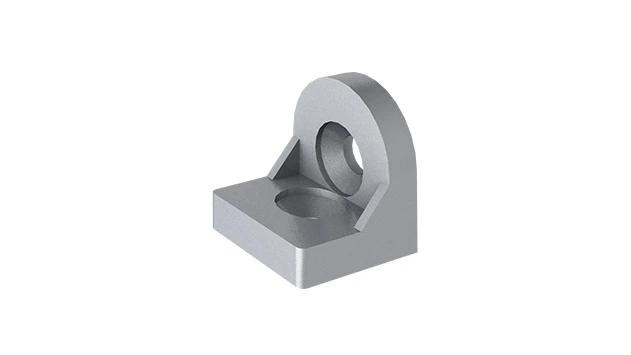
The turning angle aluminum profile connector provides a 90 degree hidden corner connection. 3030 it is means this size is used for 30 series aluminum profile.The corner code comes with set screws that allow for quick, easy connections.
If you've ever spent a morning on a factory floor, you know the rhythm of production is everything. A single bottleneck—a workbench that's too rigid to reconfigure, a material rack that takes hours to assemble, or a joint that loosens after weeks of use—can throw off an entire shift. In today's fast-paced manufacturing world, where product lines change overnight and customization is king, flexibility and efficiency aren't just nice-to-haves; they're survival skills. That's where small but mighty components like the Turning Angle Code 3030 come into play. You might not notice it at first glance, but this unassuming piece of hardware is quietly revolutionizing how factories build, adapt, and thrive. Let's dive into why this little angle code matters, how it works, and the real difference it makes in day-to-day manufacturing workflows.
The Workflow Puzzle: Why Traditional Setups Fall Short
Before we talk about solutions, let's talk about the problem: workflow inefficiency. Walk into a factory that's still using old-school methods, and you'll see the signs immediately. Welded steel workbenches that take a team of workers and a welder to modify. Material racks bolted to the floor, so rearranging the production line means days of downtime. Angle brackets that rust or loosen, leading to wobbly structures and constant repairs. These setups were fine when production lines ran the same product for years, but today? Manufacturers switch between products weekly, if not daily. A consumer electronics plant might assemble smartwatches on Monday and wireless earbuds on Tuesday; a automotive parts supplier could shift from sedan components to SUV parts overnight. Rigid, fixed structures can't keep up.
The result? Wasted time. Workers spend hours (or days) disassembling and rebuilding workstations instead of focusing on production. Wasted money. Custom welding or machining for every new setup adds up fast. And wasted potential. A team with innovative ideas for streamlining workflow hits a wall when the physical infrastructure can't adapt. This is where modular manufacturing solutions—like those built with aluminum profiles and compatible accessories—start to make sense. And at the heart of many of these modular systems? The Turning Angle Code 3030.
Meet the Turning Angle Code 3030: Small Part, Big Impact
So, what exactly is a Turning Angle Code 3030? Let's break it down. First, it's an aluminum profile accessory —a small, precision-engineered bracket designed to connect two pieces of 3030 aluminum profile at a 90-degree angle (though some designs allow for adjustments, hence the "turning" in the name). The "3030" refers to the size of the aluminum profile it's meant to work with: 30mm by 30mm, a common standard in modular manufacturing setups. Think of it as the "hinge" that holds modular systems together, but with a twist: it's strong, reusable, and requires no special tools to install or remove.
To visualize: Imagine you're building a workbench. You've got lengths of 3030 aluminum profile—lightweight, strong, with T-shaped slots running along their length. To connect the vertical legs to the horizontal frame, you need something that locks them together securely but can be taken apart later if you want to make the workbench taller, shorter, or wider. That's where the Turning Angle Code 3030 comes in. It slides into the T-slots of the profiles, locks into place with a simple bolt or screw, and creates a rigid, stable joint. No welding, no drilling new holes, no permanent modifications. Just a secure connection that can be adjusted or disassembled in minutes.
Design Features That Make It Tick
What sets the Turning Angle Code 3030 apart from generic angle brackets? Let's get into the details. First, material: it's typically made from high-grade aluminum alloy, the same stuff used in aerospace components and high-performance machinery. That means it's lightweight (so it doesn't add unnecessary bulk to structures) but surprisingly strong—able to handle the vibrations, weight, and wear of daily factory use. Unlike steel brackets, it won't rust, even in humid or dusty environments, which is a big plus for factories that deal with coolant, oils, or outdoor storage.
Then there's the design itself. Most Turning Angle Code 3030 brackets have a "L" shape, with two flanges that fit into the T-slots of 3030 profiles. The flanges are precision-machined to match the slot dimensions exactly, so there's no wiggle room once installed. Many models also include built-in reinforcement ribs—small ridges along the inner corner of the "L"—that distribute weight evenly across the joint, preventing stress cracks or bending over time. And the best part? Installation is tool-free for basic setups (though a hex key or screwdriver might be needed for a tighter fit). Just slide the bracket into the slots, align the profiles, and tighten the locking screw. Done. No need to call in a maintenance crew or break out the power tools.

How Turning Angle Code 3030 Fits Into Lean Systems
If you're familiar with lean system principles—eliminating waste, continuous improvement, maximizing value—you'll immediately see why the Turning Angle Code 3030 is a lean manufacturing dream. Lean systems thrive on flexibility: the ability to adapt quickly, reduce downtime, and cut out unnecessary steps. Traditional fixed structures are the opposite of lean; they create waste in the form of time (waiting for reconfigurations), labor (custom modifications), and materials (throwing away old setups). Modular systems built with 3030 aluminum profiles and Turning Angle Code 3030 brackets, on the other hand, are lean by design.
Let's take a common lean goal: reducing changeover time. Suppose a factory needs to switch a production line from assembling small parts to large components. With a welded steel workbench, this might mean shutting down the line for a day while workers cut, weld, and repaint the bench to the new height. With a modular workbench built using 3030 profiles and Turning Angle Code 3030 brackets? The team can loosen the angle codes, adjust the legs to the new height, re-tighten, and be back to work in under an hour. That's hours of production saved—no waste, no downtime, just continuous flow. That's the lean promise, and the Turning Angle Code 3030 helps deliver on it.
Another lean principle is "standardization with flexibility." Factories need consistency in their setups to ensure quality, but they also need to adapt to unique orders. The Turning Angle Code 3030 enables both. Since it's a standardized accessory—same size, same fit, same installation process every time—workers don't need special training to use it. But because it's modular, they can mix and match 3030 profiles and angle codes to build custom workstations, material racks, or turnover trolleys for specific jobs. It's like using Lego blocks: the pieces are standard, but the creations are endless.

Real-World Applications: Where It Shines
Enough theory—let's talk about how the Turning Angle Code 3030 actually gets used on the factory floor. The applications are endless, but here are a few of the most common (and impactful) ones:
1. Workbenches: The Backbone of Production
The workbench is where the magic happens—assembly, testing, packaging. A good workbench needs to be sturdy, the right height, and adaptable. With Turning Angle Code 3030 brackets, building a workbench becomes a breeze. For example, a "Workbench E (single deck-without caster)" (to borrow a term from common modular setups) can be assembled in under 30 minutes: four vertical 3030 profile legs, connected to horizontal rails via Turning Angle Code 3030 brackets, topped with a plywood or aluminum deck. Need to add a shelf halfway up? Just slide in more angle codes and rails. Want to move it later? Swap out the fixed feet for casters (using, you guessed it, more angle codes to attach them). No custom cutting, no welding, just a workbench that grows with your needs.
What about heavy-duty workbenches, like those used for machining or automotive repair? The Turning Angle Code 3030 holds up here too. Thanks to its aluminum alloy construction and reinforced design, a properly assembled workbench can support hundreds of pounds of tools, parts, and equipment without wobbling. And if a bracket ever wears out (unlikely, but possible), it's easy to replace—just unscrew the old one and pop in a new one. No need to replace the entire workbench.
2. Material Racks: Keeping Parts Within Reach
Material racks are another area where modularity matters. A "Material Rack B (3 row and 3 floor)" (again, a common setup) needs to hold boxes of parts, tools, or raw materials—often of varying sizes. With traditional wooden or welded steel racks, you're stuck with fixed shelf heights. Too tall, and you waste space; too short, and you can't fit larger boxes. With 3030 profiles and Turning Angle Code 3030 brackets, each shelf height is adjustable. Need a taller section for bulky items? Loosen the angle codes holding that shelf, slide it up, re-tighten. Done. This not only saves space but also reduces the time workers spend searching for parts—everything has a place, and the rack can evolve as inventory changes.
3. Turnover Trolleys: Moving Materials Safely
Turnover trolleys (those wheeled carts used to move parts from one station to another) take a beating. They're pushed, pulled, loaded, unloaded, and sometimes even bumped into walls. A flimsy trolley can lead to damaged parts or worker injuries. But a trolley built with 3030 profiles and Turning Angle Code 3030 brackets? It's lightweight (easy to push), strong (can carry heavy loads), and durable. The angle codes ensure the frame stays square, even over rough factory floors, and the modular design means you can add sides, shelves, or dividers to keep parts secure. Plus, if a wheel breaks or a bracket loosens, repairs are quick—no need to take the entire trolley out of service for days.
The Numbers: Quantifying the Efficiency Gains
Talk is cheap—let's look at the data. How much difference does the Turning Angle Code 3030 actually make in workflow efficiency? Let's compare two scenarios: a factory using traditional welded steel setups, and one using modular 3030 profiles with Turning Angle Code 3030 brackets.
| Metric | Traditional Welded Setups | Modular Setups with Turning Angle Code 3030 | Efficiency Gain |
|---|---|---|---|
| Time to assemble a basic workbench | 4-6 hours (including welding, painting, drying) | 20-30 minutes | 90%+ reduction |
| Time to reconfigure a workstation | 1-2 days (welding new joints, cutting metal) | 30-60 minutes (loosening/tightening brackets) | 95%+ reduction |
| Cost to replace a damaged joint | $100-$200 (welding, labor, materials) | $10-$20 (replacement angle code + 5 minutes labor) | 80-90% reduction |
| Weight of a typical workstation | 150-200 lbs (steel) | 50-75 lbs (aluminum profiles + angle codes) | 50-60% lighter |
| Scrap/waste from setup changes | High (cut steel, welding slag, unused custom parts) | Low (profiles and brackets are reusable) | Nearly 100% reduction |
These numbers tell a clear story: modular setups with Turning Angle Code 3030 brackets save time, money, and resources. For a mid-sized factory with 50 workstations, the time saved on assembly and reconfiguration alone could add up to hundreds of production hours per year. And since the brackets are reusable, even when a workstation is retired, the profiles and angle codes can be repurposed into something new—no waste, just continuous value.
Case Study: GreenTech Electronics' Modular Makeover
From Welded Chaos to Modular Order
Let's take a look at a real-world example (with names changed for privacy). GreenTech Electronics is a mid-sized manufacturer of circuit boards, with about 100 employees and a production floor that runs two shifts. A few years ago, their production manager, Maria, was struggling with constant workflow bottlenecks. "We were running three different product lines, and every time we switched, we'd spend a full day reconfiguring workbenches and material racks," she recalls. "The old steel workbenches were welded, so we'd have to call in a contractor to cut and re-weld them. It was expensive, and the downtime killed our productivity."
Maria's team decided to test a modular approach. They invested in 3030 aluminum profiles, Turning Angle Code 3030 brackets, and a few other aluminum profile accessories. The first project? Rebuilding their five most-used assembly workbenches. "The first workbench took about 45 minutes to assemble—two guys, no power tools," Maria says. "We couldn't believe it. We used to spend a day on one welded bench, and now we could build five modular ones in a morning."
The real test came a month later, when a rush order for a new circuit board required reconfiguring three workstations. "In the past, that would have meant shutting down those lines for a day," Maria explains. "With the modular setups? We had the team adjust the workbenches during the night shift change—loosen the angle codes, move the shelves, re-tighten. By the time the morning shift started, the lines were ready. We met the order deadline, and the team was thrilled they didn't have to work overtime."
A year later, GreenTech has replaced 80% of their welded setups with modular systems. "We've saved over $50,000 in contractor fees and downtime," Maria reports. "And the workers love it—they can adjust their workbenches to their height, add shelves for their tools, and it just feels more… modern. The Turning Angle Code 3030 might seem small, but it's the reason the whole system works. Without those brackets, the profiles would just be pieces of metal. With them, we've got a factory that can keep up."
Choosing the Right Angle Code: It's Not One-Size-Fits-All
Now, you might be thinking: "If the Turning Angle Code 3030 is so great, why not use it for everything?" The answer is simple: not all manufacturing setups need the same load capacity or profile size. For example, a small electronics assembly line might use 2020 aluminum profiles (20mm by 20mm) for lightweight workstations, which would pair better with a Turning Angle Code 2020. A heavy machinery plant, on the other hand, might need 4040 profiles (40mm by 40mm) and Turning Angle Code 4040 brackets to handle the extra weight. The key is to match the angle code to the profile size and the job's requirements.
So, how do you choose? Start with load capacity. Check the manufacturer's specs for the Turning Angle Code 3030—most can handle 150-200 kg per joint, which is plenty for workbenches, material racks, and trolleys. If you're building something that needs to hold more (like a platform for heavy equipment), you might need a beefier angle code or multiple brackets per joint. Next, consider the environment. If your factory is humid or uses corrosive chemicals, look for angle codes with anodized finishes (a protective coating that resists rust and wear). Finally, think about future scalability. Investing in 3030 profiles and Turning Angle Code 3030 brackets means you can easily expand or modify setups later—no need to buy all new components.
The Future of Manufacturing: Modularity as a Competitive Edge
As factories move toward Industry 4.0—smart manufacturing with IoT sensors, automation, and data-driven workflows—modularity is becoming even more critical. Smart factories need setups that can integrate with sensors, robots, and automated guided vehicles (AGVs). A rigid, welded workstation can't easily accommodate a new sensor or a robotic arm. But a modular workstation built with 3030 profiles and Turning Angle Code 3030 brackets? You can add a sensor mount with a few extra brackets, or reposition the entire workstation to make room for an AGV. It's flexibility built into the infrastructure.
Even beyond Industry 4.0, the demand for customization is only growing. Consumers want products tailored to their needs, and manufacturers need to deliver without sacrificing efficiency. Modular systems, anchored by components like the Turning Angle Code 3030, make that possible. They turn factories from static production lines into dynamic, adaptable ecosystems where change is not a disruption—but a routine part of doing business.
Final Thoughts: The Unsung Hero of the Factory Floor
The Turning Angle Code 3030 might not get the same attention as a new robot or a high-tech sensor, but it's just as important. It's the quiet innovator that turns rigid factories into flexible, efficient workspaces. It's the reason workers spend less time building and more time producing. It's the small part that adds up to big results.
So, the next time you walk through a factory—whether it's electronics, automotive, or consumer goods—take a closer look at the workbenches, the material racks, the trolleys. Chances are, you'll spot 3030 aluminum profiles connected by Turning Angle Code 3030 brackets. And now you'll know: that little bracket isn't just holding the structure together. It's holding the workflow together, too. In the end, manufacturing isn't just about making products—it's about making progress. And with tools like the Turning Angle Code 3030, progress has never been easier.