- Company Articles
- Products and Technology
- Solution
- Turning Angle Code 3030 in Mechanical Repair Shops: Flexible Workbench Solutions

Turning Angle Code 3030 in Mechanical Repair Shops: Flexible Workbench Solutions
Related Product
Turning Angle Code 3030
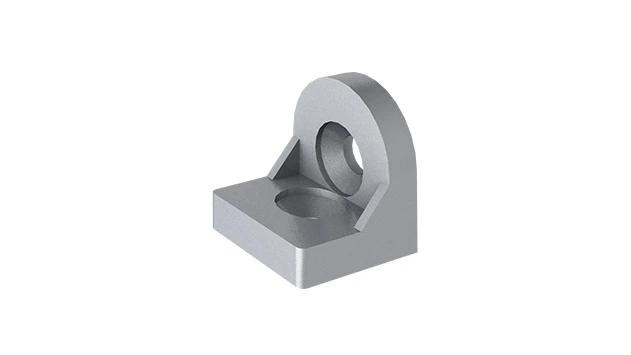
The turning angle aluminum profile connector provides a 90 degree hidden corner connection. 3030 it is means this size is used for 30 series aluminum profile.The corner code comes with set screws that allow for quick, easy connections.
In the clatter of wrenches, the hum of power tools, and the constant shuffle of parts, mechanical repair shops thrive on one thing: efficiency. But all too often, the very workspaces designed to support that efficiency end up holding shops back. Rigid, one-size-fits-all workbenches, static storage racks, and inflexible layouts leave little room for adaptation—whether you're tackling a compact motorcycle engine one day or a bulky tractor transmission the next. Enter the unsung hero of modular workspace design: the Turning Angle Code 3030. This small but critical component is quietly revolutionizing how repair shops build, adapt, and optimize their workbenches, proving that sometimes the smallest parts make the biggest difference in keeping operations running smoothly.
The Problem with "Set It and Forget It" Workbenches
Walk into almost any mechanical repair shop, and you'll likely encounter the same dilemma: workbenches that were built for a specific task, a specific part size, or a specific technician—and now, years later, they're still there, refusing to evolve. A bench that's perfect for rebuilding carburetors might be too short for assembling truck engines. A storage rack designed for small hand tools becomes a chaotic mess when tasked with holding heavy gearboxes. And when a last-minute rush job comes in—a commercial van needing a transmission swap, say—technicians end up wasting precious time rearranging equipment, clearing space, or even working on the floor because their workbench just isn't up to the task.
Traditional workbenches are often welded or bolted together, making them permanent fixtures. If you need to adjust the height, add a shelf, or reconfigure the layout, you're looking at hours of work (or a costly call to a contractor). For small to mid-sized shops operating on tight margins, this rigidity isn't just inconvenient—it's a drain on productivity and profits. According to a 2024 survey by the National Association of Automotive Service Excellence (ASE), 62% of repair shop owners cite "inefficient workspace layout" as a top barrier to meeting daily repair quotas. The message is clear: static workspaces can't keep up with the dynamic needs of modern repair work.
But what if your workbench could adapt as quickly as your to-do list? What if you could reconfigure it in minutes, not days, to fit a new project? That's where modular components like the Turning Angle Code 3030 come into play—turning rigid workspaces into flexible, problem-solving tools.
What Is Turning Angle Code 3030, Anyway?
At first glance, the Turning Angle Code 3030 might seem unassuming—a small, L-shaped piece of metal with pre-drilled holes, designed to connect two lengths of material at a 90-degree angle. But don't let its simplicity fool you. This unpretentious component is the linchpin of modular workspace design, acting as the "glue" that holds together customizable workbenches, racks, and tables. Think of it as the building block that lets you snap together a workspace tailored to your exact needs—no welding, no specialized tools, no permanent commitments.
Made from durable aluminum or steel, the Turning Angle Code 3030 is engineered to work seamlessly with aluminum profiles—a popular choice for modular systems thanks to their lightweight strength and versatility. Aluminum profiles, with their T-slot design, allow for easy attachment of accessories like shelves, hooks, and tool holders, but they need a reliable way to connect at corners. That's where the Turning Angle Code 3030 shines: it slides into the T-slots of two perpendicular profiles, locks into place with screws, and creates a sturdy joint that can support heavy loads (think engine blocks, tool chests, or stacks of parts) without wobbling or weakening over time.
What makes the Turning Angle Code 3030 particularly valuable for repair shops is its adaptability. Unlike fixed angle brackets, which lock you into a single configuration, this code allows for quick disassembly and reconfiguration. Need to shorten a workbench to fit a new diagnostic machine? Unscrew the angle codes, remove a section of aluminum profile, and reattach—done. Want to add a side shelf for extra parts storage? Grab a few more angle codes, some additional profiles, and you're set. It's workspace design on your terms, at your pace.

Building a Lean Pipe Workbench with Turning Angle Code 3030: The Perfect Partnership
While aluminum profiles are a cornerstone of modular design, they're often paired with another workhorse of repair shop setups: lean pipe. Lean pipe—also known as "flexible pipe" or "kitchen pipe"—is a lightweight, cost-effective alternative to traditional steel piping, often coated in plastic to resist scratches and corrosion. When combined with Turning Angle Code 3030 and aluminum profiles, lean pipe becomes the backbone of a lean pipe workbench: a versatile, mobile, and highly customizable workspace that embodies the principles of lean manufacturing—minimizing waste, maximizing efficiency, and adapting to change.
Here's how it works: Start with a base frame built from aluminum profiles, connected at the corners with Turning Angle Code 3030. This frame provides the stability needed to support heavy loads, while the T-slots in the profiles let you attach lean pipe brackets at any height. From there, you can add lean pipe rails to create shelves, tool hangers, or part bins—all adjustable as your needs change. Want a lower shelf for bulky tools? Position the lean pipe brackets 18 inches from the floor. Need a higher shelf for small parts bins? Move them up to 30 inches. The Turning Angle Code 3030 ensures the frame stays rigid, while the lean pipe adds the flexibility to tweak the details.
One of the biggest advantages of a lean pipe workbench built with Turning Angle Code 3030 is its mobility—often enhanced by adding caster wheels to the base. Caster wheels, when paired with the sturdy frame created by the angle codes and aluminum profiles, let technicians roll the workbench directly to the job site, whether that's across the shop floor to a parked vehicle or into a corner for storage when not in use. No more carrying heavy parts back and forth between a fixed bench and the repair bay; the bench comes to you. And if you need to lock it in place during precision work? Many caster wheels come with brakes, turning a mobile workspace into a stable one in seconds.
Take, for example, a shop specializing in both small engine repair (lawnmowers, generators) and large diesel truck engines. In the morning, a technician might use a lean pipe workbench with a lower shelf (secured with Turning Angle Code 3030) to rebuild a lawnmower engine, keeping screws and gaskets organized in bins on the shelf. By afternoon, that same bench can be reconfigured with taller lean pipe rails and a higher shelf to accommodate a truck's fuel injector assembly, with caster wheels allowing it to roll right up to the truck's engine bay. It's not just a workbench—it's a chameleon, adapting to whatever the day throws at it.

Roller Tracks: Adding Material Flow to the Mix
Efficiency in a repair shop isn't just about having a flexible work surface—it's also about how parts and tools move around that surface. That's where roller tracks come in. Roller tracks are long, narrow strips fitted with small, rotating wheels that allow parts, bins, or tools to slide smoothly from one end to the other with minimal effort. When integrated into a workbench built with Turning Angle Code 3030 and aluminum profiles, roller tracks turn a static workspace into a dynamic material flow system, reducing the time technicians spend bending, reaching, and lifting.
Installing roller tracks on a modular workbench is surprisingly straightforward, thanks to the T-slot design of aluminum profiles and the stability provided by Turning Angle Code 3030. Most roller tracks come with brackets that slide into the T-slots of the aluminum profiles, letting you mount them along the edge of the workbench, under a shelf, or even as a standalone rack. For example, mounting a roller track along the back edge of a lean pipe workbench allows technicians to slide heavy parts bins from one end of the bench to the other without lifting, while a roller track under a shelf can hold small tool drawers that glide out when needed.
The key here is compatibility: Turning Angle Code 3030 ensures the aluminum profile frame is level and sturdy, so the roller track sits evenly and operates smoothly. A wobbly frame would cause the roller track to jam or the wheels to wear unevenly, defeating the purpose of adding it in the first place. With the angle codes locking the profiles into place, the roller track becomes a reliable, low-maintenance addition that keeps parts moving and technicians focused on the repair, not the logistics.
Consider a scenario where a shop is rebuilding a fleet of delivery van engines. Each engine requires dozens of parts—pistons, gaskets, valves, belts—stored in separate bins. With a roller track mounted along the workbench, technicians can load all the bins onto the track at the start of the day, then slide each bin into position as they need it. No more walking to a distant shelf or digging through a messy pile; the parts come to them. And when the job is done, the bins slide back to the end of the track, ready for the next engine. It's a small change, but it adds up to hours of saved time over a week.
Traditional vs. Modular: A Comparison of Workbench Solutions
Still on the fence about whether modular workbenches with Turning Angle Code 3030 are worth the investment? Let's break down how they stack up against traditional fixed workbenches across key metrics that matter to repair shop owners and technicians.
| Feature | Traditional Fixed Workbench | Modular Workbench with Turning Angle Code 3030 |
|---|---|---|
| Flexibility | Fixed dimensions; cannot be adjusted for height, length, or add-ons without major modifications. | Highly adjustable: reconfigure height, add/remove shelves, or change length in minutes using angle codes and aluminum profiles. |
| Setup Time | Requires professional installation (welding, bolting to floor); can take days to build and install. | DIY-friendly: assemble with basic tools (screwdrivers, Allen wrenches); most setups take 1–2 hours. |
| Cost Over Time | High long-term cost: need to replace entire bench when needs change; limited resale value. | Lower long-term cost: reconfigure instead of replace; components (angle codes, profiles) can be reused for new setups. |
| Mobility | Static; often bolted to floor or too heavy to move. | Mobile option: add caster wheels to base (secured with angle codes) for easy movement around the shop. |
| Compatibility with Accessories | Limited: accessories must be custom-fitted or welded on; no standardized attachment points. | High: T-slots in aluminum profiles and lean pipe brackets work with roller tracks, tool hooks, bins, and more. |
The data speaks for itself: modular workbenches built with Turning Angle Code 3030 aren't just more flexible—they're smarter investments. For repair shops where every square foot and every minute counts, the ability to adapt on the fly isn't a luxury; it's a necessity.
Case Study: How Joe's Auto Repair Cut Downtime by 35% with Modular Workbenches
From Chaos to Order: A Shop's Transformation
Joe's Auto Repair, a family-owned shop in suburban Ohio, had been struggling with inefficiency for years. With five technicians working on everything from compact cars to pickup trucks, their fixed workbenches were a constant source of frustration. "We had one bench that was too short for truck engines, so we'd end up working on the floor half the time," says Joe, the shop's owner. "Another bench had a shelf that was too high—techs were straining their shoulders reaching for tools. And don't even get me started on storage: parts bins were overflowing, and we were wasting 10 minutes every hour just looking for the right socket or gasket."
In 2023, Joe decided to invest in modular workbenches built with Turning Angle Code 3030, aluminum profiles, and lean pipe. He started with three workbenches, each customized to a different task: one for engine work, one for electrical repairs, and one for general maintenance. Each bench was fitted with caster wheels for mobility and roller tracks along the edges for parts bins. The transformation was immediate.
"Within the first month, we noticed a difference," Joe recalls. "The engine workbench? We adjusted the height by 6 inches using the angle codes, so techs aren't bending over anymore. The electrical bench got a lower shelf for diagnostic tools, and the roller track lets them slide wiring harnesses right where they need them. Best of all, when we took on a fleet of delivery vans, we reconfigured one bench in 20 minutes to fit their larger engines—no more working on the floor."
After six months, Joe tracked their metrics: downtime (time spent waiting for tools, searching for parts, or rearranging workspaces) was down by 35%, and technicians were completing 12% more repairs per day. "The Turning Angle Code 3030 was the secret sauce," Joe says. "It's not flashy, but it made our workbenches work for us, not against us. We've since added two more modular benches, and I'll never go back to fixed ones."
Joe's story isn't unique. Across the country, repair shops are discovering that modular workbenches—powered by components like Turning Angle Code 3030—aren't just about saving space or time. They're about empowering technicians to work smarter, reducing physical strain, and creating a shop environment that can grow and change with the business.
Beyond the Bench: Turning Angle Code 3030 in the Wider Shop Ecosystem
While workbenches are the most obvious application for Turning Angle Code 3030, their utility extends far beyond the repair bay. In fact, this versatile component can transform nearly every corner of a repair shop, from storage racks to mobile carts, creating a cohesive, flexible ecosystem that works in harmony.
Take storage racks, for example. Traditional metal shelving is bulky and hard to adjust—if a shelf is too short for a stack of oil filters, you're out of luck. But with aluminum profiles and Turning Angle Code 3030, you can build custom racks with shelves that adjust to any height. Need a shelf for tall oil bottles? Space the angle codes 18 inches apart. Need a shorter shelf for spark plugs? Move them to 12 inches. And because the racks are modular, you can add sections as your inventory grows, without buying an entirely new unit.
Mobile tool carts are another area where Turning Angle Code 3030 shines. By building a cart frame with aluminum profiles and angle codes, then adding lean pipe rails for tool hooks and a roller track for parts bins, you create a rolling tool station that can follow technicians to any job. Lock the caster wheels, and it becomes a temporary workbench; unlock them, and it's off to the next repair. It's versatility that fixed carts—with their pre-drilled holes and non-adjustable shelves—can't match.
Even small details, like workbench lighting or power strips, become easier with Turning Angle Code 3030. Attach a strip of aluminum profile to the back of a workbench (using angle codes, of course), and you've got a mounting point for LED lights or power outlets—no drilling into the wall, no messy extension cords. It's these small, thoughtful touches that add up to a shop that feels organized, intentional, and ready for anything.
Conclusion: The Future of Repair Shop Workspaces Is Modular
In the fast-paced world of mechanical repair, standing still is falling behind. Customers demand faster turnaround times, technicians need ergonomic workspaces to stay productive, and shop owners must maximize every square foot of space to remain profitable. Turning Angle Code 3030 isn't just a component—it's a catalyst for change, enabling repair shops to build workspaces that are as dynamic and adaptable as the work they do.
Whether you're building a lean pipe workbench with caster wheels for mobility, integrating roller tracks for seamless material flow, or designing custom storage racks that grow with your business, the Turning Angle Code 3030 provides the flexibility, durability, and simplicity that modern repair shops need. It's a reminder that sometimes the most impactful innovations aren't the flashy new tools or high-tech gadgets—they're the quiet, reliable components that make the everyday work of keeping machines running just a little bit easier.
So the next time you walk into a repair shop and notice how smoothly everything flows—how workbenches seem to fit the job perfectly, how parts glide effortlessly from bin to bench, how technicians move with purpose—take a closer look. Chances are, there's a Turning Angle Code 3030 holding it all together, quietly proving that in the world of mechanical repair, adaptability isn't just a buzzword. It's the key to success.