- Company Articles
- Products and Technology
- Product knowledge
- Turning Angle Code 3030 in Sustainable Manufacturing: Reducing Carbon Footprint

Turning Angle Code 3030 in Sustainable Manufacturing: Reducing Carbon Footprint
Related Product
Turning Angle Code 3030
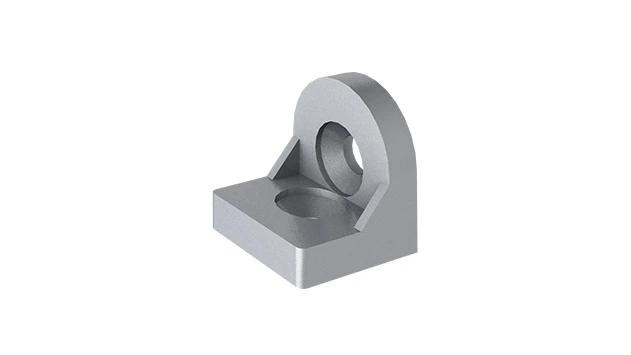
The turning angle aluminum profile connector provides a 90 degree hidden corner connection. 3030 it is means this size is used for 30 series aluminum profile.The corner code comes with set screws that allow for quick, easy connections.
The Quiet Revolution: How Small Components Drive Big Sustainability Gains
In the race to slash carbon emissions and build a more sustainable future, much of the spotlight falls on grand gestures: wind farms, electric vehicle fleets, or solar-powered factories. But what if some of the most impactful changes are happening at a much smaller scale—hidden in the nuts and bolts of manufacturing itself? Enter the Turning Angle Code 3030, a seemingly unassuming piece of hardware that's quietly reshaping how factories operate, one aluminum extrusion profile at a time. In this article, we'll explore how this tiny component, paired with thoughtful design and lean system principles, is helping manufacturers reduce their carbon footprint while boosting efficiency. Because when it comes to sustainability, every detail counts—and the Turning Angle Code 3030 is proof that small parts can drive big change.
What Even Is a Turning Angle Code 3030? Let's Break It Down
If you've ever walked through a modern factory, warehouse, or assembly line, you've probably seen the structures that keep operations running: workbenches where products are assembled, material racks stacked with components, or conveyor systems moving goods from one station to the next. Many of these structures are built using aluminum extrusion profiles—long, hollow beams with a consistent cross-section, designed to be lightweight yet strong. And to hold these profiles together, you need accessories that connect them securely at various angles. That's where the Turning Angle Code 3030 comes in.
Put simply, the Turning Angle Code 3030 is a precision-engineered aluminum profile accessory. Its job? To join 3030 aluminum extrusion profiles—profiles with a 30mm x 30mm cross-section—at angles (most commonly 90 degrees, but sometimes 45 or 135 degrees, depending on the design). Think of it as a specialized bracket, but one that's been optimized for durability, ease of use, and, crucially, sustainability. Made from high-grade aluminum alloy, it's typically small—maybe 50mm long, with holes pre-drilled to align perfectly with the T-slots in 3030 profiles—and designed to lock profiles together with minimal fuss, often using just a hex key or a simple bolt.
But why does this matter? Because in manufacturing, the way you build your workspaces and equipment directly impacts your environmental footprint. A flimsy bracket might break after a few months, requiring replacement. A poorly designed connector might leave gaps, leading to wobbly structures that waste energy or damage products. The Turning Angle Code 3030, though? It's built to avoid those problems—and in doing so, it becomes a silent partner in sustainability.

Aluminum Extrusion Profiles: The Sustainable Backbone of Modern Factories
To understand the Turning Angle Code 3030's role in sustainability, we first need to talk about its partner in crime: the aluminum extrusion profile. Aluminum, as a material, is already a sustainability standout. Unlike steel or plastic, aluminum is 100% recyclable, and recycling it uses just 5% of the energy required to produce new aluminum from raw bauxite ore. That's a staggering energy saving—and a huge reduction in associated carbon emissions. For context, producing one ton of new aluminum emits about 16 tons of CO2; recycling the same ton emits just 0.8 tons. That's a 95% drop in carbon footprint for the material alone.
Then there's the extrusion process itself. Extrusion involves heating aluminum billets and forcing them through a die to create profiles with specific cross-sections (like the 30mm x 30mm shape of 3030 profiles). This process is incredibly efficient: it produces minimal waste, as the aluminum is shaped precisely to the desired dimensions, and the dies can be reused thousands of times. Compare that to cutting or welding steel, which often results in scrap metal that may or may not be recycled. Extruded aluminum profiles also tend to be lighter than steel alternatives, which reduces energy use in transportation and makes the structures they're part of easier to move and reconfigure—both wins for sustainability.
3030 aluminum extrusion profiles, in particular, are workhorses in manufacturing. Their size is versatile enough for everything from small workbenches to large material racks, and their T-slot design (the grooves running along their length) makes them compatible with a wide range of accessories—including, of course, the Turning Angle Code 3030. This compatibility is key: it means factories aren't stuck with one-size-fits-all structures. Instead, they can mix and match profiles and accessories to build exactly what they need, when they need it.

How Turning Angle Code 3030 Turns Sustainability from a Goal into a Reality
Now, let's circle back to the star of the show: the Turning Angle Code 3030. How does this small accessory take the sustainability benefits of aluminum extrusion profiles and amplify them? Let's break down its superpowers.
1. Modularity: Build, Break, Rebuild—Without the Waste
Traditional manufacturing setups often rely on fixed structures: workbenches welded from steel, material racks bolted permanently to the floor, or conveyor systems that can't be adjusted without cutting or welding. When production needs change—say, a factory switches from making smartphones to tablets, or needs to scale up a new product line—these fixed structures become liabilities. They're either too big, too small, or the wrong shape, so they get torn down and replaced. The result? Piles of waste metal (even if recycled, recycling still uses energy), and the carbon emissions from producing and transporting new materials.
The Turning Angle Code 3030 solves this with modularity. Because it connects 3030 profiles with simple bolts (no welding required), structures built with it can be disassembled just as easily as they're assembled. Need to shorten a workbench? Unbolt the angle codes, remove a section of profile, and reattach. Want to turn a straight material rack into an L-shape? Swap out a few angle codes for ones that pivot at 90 degrees. This flexibility means factories rarely need to discard entire structures. Instead, they repurpose the same profiles and accessories—including the Turning Angle Code 3030—over and over again. The result? Less waste, fewer new materials, and a lower carbon footprint.
2. Precision Fit: No Gaps, No Waste, No Compromises
Ever tried to build something with parts that don't quite fit? Maybe a bookshelf where the screws don't align with the pre-drilled holes, or a furniture set where the brackets leave wobbly gaps. In manufacturing, poor fit isn't just frustrating—it's wasteful. If a connector like the Turning Angle Code 3030 doesn't lock tightly to the 3030 profile, factories might overcompensate by using extra bolts, adding shims, or even welding the joint to make it stable. All of these "fixes" waste materials, time, and energy.
The Turning Angle Code 3030 avoids this with precision engineering. Its holes are drilled to match the T-slot spacing in 3030 aluminum extrusion profiles exactly, and its shape is designed to hug the profile's edges, creating a tight, rattle-free connection. This precision means no extra hardware is needed—just a few bolts, and the joint is secure. Less hardware equals less waste, and a tighter fit means the structure is more stable, reducing wear and tear over time. It's a small detail, but multiplied across hundreds of joints in a factory, it adds up to significant sustainability gains.
3. Durability: Built to Last (and Last, and Last)
Sustainability isn't just about reducing waste—it's about making products that last. A Turning Angle Code 3030 made from cheap plastic or low-grade steel might crack, bend, or rust after a year of heavy use, forcing factories to replace it. But the Turning Angle Code 3030 is typically made from the same high-grade aluminum alloy as the profiles it connects. Aluminum is naturally resistant to corrosion (thanks to its oxide layer), and when alloyed with elements like magnesium or silicon, it becomes strong enough to withstand the bumps, vibrations, and weight loads of a busy factory floor.
This durability means the angle code can stay in use for years—even decades—with minimal maintenance. And when it does finally reach the end of its life? It's 100% recyclable, just like the aluminum profiles. No plastic parts to separate, no toxic coatings to strip—just clean, recyclable metal. Compare that to plastic connectors, which often end up in landfills, or steel ones that may be coated in non-recyclable paints. The Turning Angle Code 3030's longevity and recyclability make it a circular economy champion.
4. Compatibility with Other Sustainable Accessories
The Turning Angle Code 3030 doesn't work alone. It's part of a family of aluminum profile accessories that together create a closed-loop sustainable system. Take the 3030 aluminum profile end cap, for example. These small caps fit over the ends of 3030 profiles, protecting them from damage and preventing dust or debris from getting inside. Like the angle code, they're made from recyclable aluminum, and they're designed to last. Or consider aluminum profile rubber strips, which line the T-slots of profiles to reduce friction and noise when accessories are adjusted. These strips are often made from recycled rubber, adding another layer of sustainability.
When you combine the Turning Angle Code 3030 with these accessories, you get a system where every component is designed to be reused, recycled, or both. There's no "one-off" part that can't be replaced or repurposed. This compatibility reduces the need for custom-made components, which are often more resource-intensive to produce. It also makes it easier for factories to adopt sustainable practices: once they invest in 3030 profiles and a set of accessories like angle codes and end caps, they can keep reusing those components across multiple projects.
Lean System Principles: Where Efficiency Meets Sustainability
If aluminum extrusion profiles and accessories like the Turning Angle Code 3030 are the "hardware" of sustainable manufacturing, then lean system principles are the "software." Lean manufacturing, which originated with Toyota's production system, focuses on eliminating waste—whether that's wasted time, materials, or energy. And it turns out that lean and sustainability are two sides of the same coin: less waste means lower costs and a smaller carbon footprint.
Modular structures built with Turning Angle Code 3030 and 3030 profiles are a perfect fit for lean systems. Here's why: Lean manufacturing often requires production lines to be flexible—able to adapt quickly to changes in demand or product design. A modular workspace makes that flexibility possible. For example, if a factory needs to increase production of a certain part, it can reconfigure its workbenches and material racks using the same angle codes and profiles, rather than building new ones from scratch. This reduces "waste of overproduction" (a key lean principle) and the associated carbon emissions.
Lean also emphasizes "just-in-time" production, where materials arrive exactly when they're needed, reducing inventory and storage waste. Modular material racks, built with Turning Angle Code 3030, can be adjusted to hold exactly the right amount of inventory—no more, no less. This prevents overstocking, which in turn reduces the energy used to store and transport excess materials. And because these racks are lightweight (thanks to aluminum), they're easy to move closer to the assembly line, cutting down on the time workers spend walking to fetch materials—a win for efficiency and worker satisfaction.
Perhaps most importantly, lean systems encourage continuous improvement: regularly evaluating processes to find and fix inefficiencies. Modular structures make this easier, because they can be tweaked incrementally. A factory might start with a basic workbench, then add a shelf using extra profiles and angle codes as needs change. There's no need for a complete overhaul—just small, sustainable adjustments. Over time, these adjustments add up to significant waste reduction and carbon savings.
| Aspect | Traditional Manufacturing Setups | Modular Setups with Turning Angle Code 3030 & Aluminum Profiles |
|---|---|---|
| Material Waste | High: Fixed structures often discarded when needs change; excess scrap from cutting/welding. | Low: Structures disassembled and reconfigured; precision-fit accessories reduce excess hardware. |
| Energy Use | Higher: Heavier materials (steel) require more energy to transport and assemble; frequent replacement means more production energy. | Lower: Lightweight aluminum reduces transport energy; reusability cuts production energy for new parts. |
| Carbon Emissions | Higher: More raw material production, transportation, and waste processing. | Lower: Recyclable aluminum reduces emissions; modularity cuts need for new manufacturing. |
| Flexibility | Low: Fixed designs can't adapt to changing production needs. | High: Easy to disassemble, reconfigure, and expand as needs evolve. |
| Lifespan | Shorter: Welded steel may rust; plastic parts degrade over time. | Longer: Durable aluminum resists corrosion; accessories like angle codes and end caps designed for reuse. |
Real-World Impact: How One Factory Cut Emissions with a Simple Switch
Case Study: GreenTech Electronics Reduces Carbon Footprint by 25% with Modular Workspaces
GreenTech Electronics, a mid-sized manufacturer of circuit boards in Ohio, was facing a dilemma in 2023. Demand for its products was growing, but so was pressure from customers and regulators to reduce its carbon emissions. The factory's existing setup—workbenches and material racks made from welded steel—was rigid and wasteful. When production lines needed to be reconfigured, old structures were cut up and sent to recycling (which, while better than landfilling, still used energy), and new steel was ordered, adding to the factory's carbon footprint.
In early 2024, GreenTech decided to test a modular approach. It replaced three steel workbenches and two material racks with setups built using 3030 aluminum extrusion profiles, Turning Angle Code 3030 connectors, and 3030 aluminum profile end caps. The results were eye-opening:
- Material waste dropped by 35%: When the factory switched from assembling smartphones to tablets (a smaller product), it reconfigured the modular workbenches by removing sections of profile and reattaching them with the same Turning Angle Code 3030 connectors. No steel was discarded, and only a few new profiles were needed for extensions.
- Energy use fell by 20%: The aluminum structures were lighter, so the factory's HVAC system used less energy to cool the production floor (lighter structures block less airflow). Transportation costs for materials also dropped, as aluminum profiles are lighter than steel.
- Carbon emissions decreased by 25%: Over six months, the switch to modular setups reduced GreenTech's Scope 3 emissions (those from purchased materials and transportation) by 25% compared to the previous year. The factory estimates that scaling the approach to all workbenches and racks could cut emissions by up to 40%.
"We used to think sustainability meant big investments in solar panels or electric trucks," said Maria Gonzalez, GreenTech's operations manager. "But the Turning Angle Code 3030 showed us that small changes to how we build our workspace can have a huge impact. It's not just about being green—it's about being smart. These modular setups are easier to use, cheaper in the long run, and better for the planet. It's a no-brainer."
Challenges and the Road Ahead: Making Modular Sustainability Accessible to All
Of course, no sustainability solution is without challenges. The initial cost of aluminum extrusion profiles and accessories like the Turning Angle Code 3030 can be higher than cheaper alternatives like plastic or low-grade steel. For small manufacturers operating on tight margins, this upfront investment might seem daunting. However, the long-term savings—from reduced material waste, lower energy bills, and fewer replacements—almost always offset the initial cost. Many suppliers also offer bulk discounts on aluminum profile accessories, making the switch more affordable.
Another challenge is awareness. Many factory managers simply aren't familiar with modular aluminum systems or the role accessories like the Turning Angle Code 3030 play in sustainability. Education is key here: suppliers, industry associations, and sustainability consultants can help spread the word about the benefits of modular setups. Case studies like GreenTech's also help, showing real-world results that other manufacturers can emulate.
Looking ahead, innovation in aluminum profile accessories is only set to grow. Engineers are designing angle codes and other connectors that are even easier to assemble (think tool-free snap-on designs), more durable (using advanced alloys), and more compatible with other sustainable materials (like recycled aluminum or bio-based plastics for non-structural parts). There's also potential to integrate smart technology: embedding sensors in angle codes to monitor wear and tear, allowing factories to replace parts only when necessary, further reducing waste.
Small Parts, Big Dreams: The Future of Sustainable Manufacturing
The Turning Angle Code 3030 is more than just a bracket. It's a symbol of a shift in manufacturing: a move away from "take-make-waste" models and toward systems that are circular, efficient, and kind to the planet. It proves that sustainability doesn't have to be about grand gestures—it can be about the choices we make in the smallest components, the way we design our workspaces, and the accessories we use to hold it all together.
As more manufacturers discover the benefits of modular aluminum setups—powered by accessories like the Turning Angle Code 3030, 3030 aluminum profile end caps, and lean system principles—we'll see a ripple effect across industries. Factories will produce more with less, waste will decline, and carbon emissions will drop. And maybe, just maybe, we'll start to realize that the future of sustainability isn't in the headlines—it's in the details.
So the next time you walk through a factory, take a closer look at those aluminum structures. The Turning Angle Code 3030 might be small, but it's hard at work—building a more sustainable world, one connection at a time.