- Company Articles
- Products and Technology
- Product knowledge
- Turning Angle Code 3030: Key Functions in Flexible Production Equipment

Turning Angle Code 3030: Key Functions in Flexible Production Equipment
Related Product
Turning Angle Code 3030
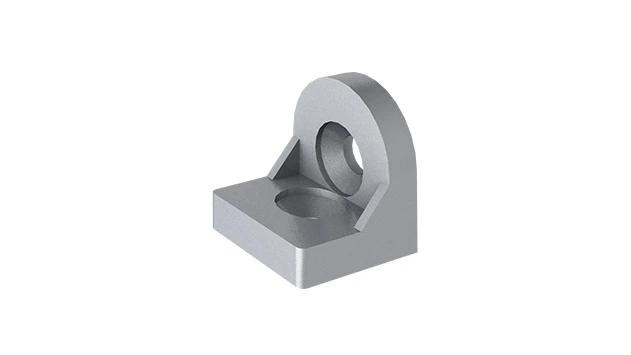
The turning angle aluminum profile connector provides a 90 degree hidden corner connection. 3030 it is means this size is used for 30 series aluminum profile.The corner code comes with set screws that allow for quick, easy connections.
In the bustling world of modern manufacturing, where production lines hum with precision and adaptability is the name of the game, it's often the smallest components that hold the biggest impact. While flashy robots and high-tech software grab headlines, the unsung heroes of the factory floor are the quiet workhorses—components like connectors, brackets, and joints—that keep everything together, flexible, and ready to evolve. Among these, the Turning Angle Code 3030 stands out as a critical player in building the flexible production equipment that powers today's lean, agile manufacturing facilities. It's not just a piece of metal; it's a bridge between rigidity and adaptability, a silent enabler of efficiency, and a key ally for workers who rely on stable, customizable workspaces to do their best work.
Whether you're walking through an automotive assembly plant, a electronics manufacturing facility, or a warehouse fulfillment center, chances are you're surrounded by structures built with aluminum profiles. These lightweight, durable frames form the backbone of workbenches, material racks, conveyor systems, and more. But what holds these profiles together at the corners, ensuring they stay strong under heavy loads while still allowing for quick reconfiguration? That's where angle codes like the Turning Angle Code 3030 come into play. Designed to connect 30x30mm aluminum profiles at precise angles (most commonly 90 degrees), this unassuming component is the glue that turns individual metal bars into functional, flexible systems. In this article, we'll dive deep into the world of the Turning Angle Code 3030—exploring its design, its role in lean systems , its impact on workbench stability, and why it's become a staple for manufacturers aiming to stay ahead in a fast-changing industry.
What Is the Turning Angle Code 3030, Anyway?
Let's start with the basics. The Turning Angle Code 3030 is a specialized connector designed to join aluminum profiles —specifically 3030 series profiles—at right angles (though some variants can handle other angles with adjustments). If you've ever seen the modular aluminum frames used in production lines, you know they're made up of long, T-slotted bars. These slots allow for accessories like shelves, brackets, and tools to be attached anywhere along the profile, but when it comes to joining two profiles at a corner, you need something sturdy yet removable. That's the job of the angle code.
Physically, the Turning Angle Code 3030 is a compact, L-shaped component, typically made from aluminum alloy (often 6063-T5, a material prized for its strength, corrosion resistance, and machinability). Its dimensions are tailored to fit 3030 profiles, which measure 30mm in width and height—common in medium-duty applications like workbenches and light material racks. The code features pre-drilled holes that align with the T-slots in the profiles, allowing it to be secured with screws or bolts. Some designs include flanges or reinforced edges to boost load capacity, while others prioritize lightweight simplicity for quick assembly.
But what makes the "turning" part of its name significant? Unlike fixed corner brackets, many Turning Angle Code 3030 models allow for minor adjustments during installation. This means if a profile is slightly misaligned (a common issue when building large structures), the angle code can "turn" or pivot just enough to compensate, ensuring a tight, secure fit without warping the frame. This small degree of flexibility is a game-changer for assembly teams, reducing frustration and saving time during setup.
Design Features That Make the Turning Angle Code 3030 Indispensable
To truly appreciate the Turning Angle Code 3030, it helps to look at the details of its design. These features aren't just about aesthetics—they're engineered to solve real-world problems faced by manufacturers every day.
1. Precision Fit for 3030 Aluminum Profiles
Aluminum profiles come in a range of sizes, from slim 2020 (20x20mm) for lightweight shelving to robust 4080 (40x80mm) for heavy machinery frames. The Turning Angle Code 3030 is purpose-built for 3030 profiles, meaning its inner dimensions match the outer dimensions of the profile exactly. This tight tolerance ensures a snug fit, eliminating wobble or "play" at the joint. For workers using a workbench built with these components, this translates to stability—no more tools sliding off a shaky surface or parts vibrating loose during assembly. It's the difference between a workstation that feels temporary and one that inspires confidence.
2. Material Strength Without the Weight
Aluminum alloy is the material of choice for the Turning Angle Code 3030, and for good reason. Compared to steel, aluminum is significantly lighter, making it easier to handle during assembly—no need for two people to lift a single bracket. Yet, thanks to alloys like 6063-T5, it still offers impressive strength. A typical Turning Angle Code 3030 can support loads of up to 50kg per joint (depending on the design and installation), which is more than enough for most workbench tools, material bins, or small conveyor components. This strength-to-weight ratio is crucial for lean systems , where minimizing waste (including the waste of physical effort) is a top priority. Lighter structures are also easier to reconfigure, aligning with the lean principle of "flexibility over rigidity."
3. T-Slot Compatibility: The Key to Modularity
Aluminum profiles are famous for their T-slots—long, recessed channels that run the length of the profile, allowing accessories to be attached anywhere along the bar. The Turning Angle Code 3030 is designed to work seamlessly with these slots. Instead of welding or drilling holes in the profiles (which would make them permanent and hard to modify), you simply slide a screw or bolt through the angle code's pre-drilled holes and into the T-slot, tightening it with a nut or T-slot bolt. This not only speeds up assembly but also makes disassembly a breeze. If a production line needs to be rearranged to accommodate a new product, workers can loosen the angle codes, reposition the profiles, and retighten—no cutting, welding, or special tools required. It's modularity in action, and it's why aluminum profile systems with components like the Turning Angle Code 3030 have replaced so many fixed steel structures in modern factories.
4. Corrosion Resistance for Longevity
Manufacturing environments can be tough on equipment. From coolants and lubricants in machining shops to humidity in electronics plants, metal components are constantly exposed to substances that cause rust and corrosion. The Turning Angle Code 3030 addresses this with surface treatments like anodization. Anodizing creates a protective oxide layer on the aluminum, making it resistant to rust, scratches, and chemical damage. This means the angle codes last longer, reducing the need for frequent replacements—a boon for maintenance teams and a cost-saver for manufacturers. In facilities where cleanliness is critical (like pharmaceutical or food packaging plants), anodized aluminum also resists bacterial growth, supporting hygiene standards.

Key Functions of the Turning Angle Code 3030 in Flexible Production
Now that we understand what the Turning Angle Code 3030 is and how it's designed, let's explore its core functions—the reasons it's more than just a "corner bracket" and instead a vital part of flexible production equipment.
Function 1: Structural Integrity—The Foundation of Safe, Reliable Systems
At its most basic level, the Turning Angle Code 3030's job is to hold things together. But "holding together" in manufacturing isn't just about preventing collapse—it's about maintaining structural integrity under dynamic conditions. Think about a material rack in a warehouse: it might hold heavy boxes that are loaded and unloaded multiple times a day, subjecting the frame to constant stress. A poorly designed angle code could bend or loosen over time, leading to sagging shelves or, worse, a collapse. The Turning Angle Code 3030, with its precision fit and strong aluminum construction, distributes this stress evenly across the joint, ensuring the rack stays upright and stable for years. For workers, this means peace of mind—they don't have to worry about the structure failing while they're loading a 20kg box. It's a small component, but it plays a big role in workplace safety.
This structural integrity is especially important for workbench setups, where precision is key. Imagine an electronics assembler soldering tiny components onto a circuit board. If their workbench wobbles even slightly, they might misplace a solder joint, leading to a defective product. The Turning Angle Code 3030 ensures the workbench frame remains rigid, providing a steady platform for detailed tasks. It's the difference between a workstation that hinders productivity and one that supports it.
Function 2: Enabling Modularity—The Heart of Flexible Manufacturing
In the past, manufacturing lines were often fixed—built to produce one product, and one product only. If a company wanted to switch to a new model, they'd have to tear down the old line and build a new one from scratch, a process that took weeks (or months) and cost a fortune. Today, lean systems demand flexibility: the ability to reconfigure production lines in days or even hours to meet changing customer demands. The Turning Angle Code 3030 is a cornerstone of this flexibility.
Because it connects aluminum profiles without welding or permanent fasteners, the Turning Angle Code 3030 makes it easy to disassemble and rebuild structures. Need to add a shelf to a workbench to accommodate a new tool? Loosen the angle codes, add a new profile section, and retighten. Want to shorten a material rack to fit a new storage layout? Remove a few profiles and rejoin the remaining ones with the same angle codes. This modularity reduces downtime during line changes, allowing manufacturers to respond quickly to market trends. It also reduces waste: instead of scrapping an entire frame when needs change, you can reuse the profiles and angle codes, cutting down on material costs and environmental impact.
Consider a small electronics manufacturer that produces both smartwatches and fitness trackers. During peak seasons for smartwatches, their assembly line is configured with long workbenches for large-scale production. When fitness tracker demand spikes, they need smaller, more compact workstations to accommodate different tools. With Turning Angle Code 3030-connected frames, they can reconfigure the line overnight, swapping out long profiles for shorter ones and adjusting shelf heights to fit the new product. No custom fabrication, no expensive contractors—just a team of workers with basic tools and a set of angle codes. That's the power of modularity.
Function 3: Compatibility with Aluminum Profile Accessories —Building Beyond the Basics
A production system is more than just a frame—it's a collection of accessories that turn a simple structure into a functional workspace. Think of tool hooks, monitor mounts, bin holders, and cable management clips—all designed to attach to aluminum profiles via their T-slots. The Turning Angle Code 3030 doesn't just connect profiles; it works in harmony with these accessories to create a cohesive system.
For example, a workbench built with 3030 profiles and Turning Angle Code 3030 joints can easily accommodate a monitor arm clipped into the T-slot above the workspace, a tool holder bolted to the side, and a cable tray underneath—all without compromising the frame's stability. The angle code ensures the profile remains rigid, even with multiple accessories adding weight and stress. This compatibility means manufacturers aren't locked into a single "style" of setup; they can mix and match accessories to create workstations tailored to their specific needs. It's customization without complexity, and it's made possible by the Turning Angle Code 3030's ability to integrate seamlessly with the broader ecosystem of aluminum profile components.
Function 4: Supporting Lean Systems —Reducing Waste, Boosting Efficiency
Lean manufacturing is all about eliminating waste—whether it's wasted time, wasted materials, or wasted effort. The Turning Angle Code 3030 aligns perfectly with this philosophy in several ways:
- Waste of Time: Traditional steel frames require welding, which is time-consuming and requires skilled labor. The Turning Angle Code 3030 allows for tool-free or simple screwdriver assembly, cutting setup time by 50% or more. Reconfiguring a line takes hours instead of days.
- Waste of Materials: When a fixed steel frame is no longer needed, it's often cut up and scrapped. Aluminum profiles and angle codes, however, can be reused indefinitely. A single Turning Angle Code 3030 might start its life in a workbench, then move to a material rack, then to a conveyor guard—reducing the need for new materials.
- Waste of Space: Lean systems prioritize "5S" (Sort, Set in Order, Shine, Standardize, Sustain), which includes organizing the workspace to minimize clutter. The modularity of Turning Angle Code 3030 systems allows manufacturers to design compact, efficient layouts that make the most of available space. No more giant, unused gaps between fixed structures.
In short, the Turning Angle Code 3030 isn't just a component of lean systems—it's a driver of them. By making flexibility and efficiency possible, it helps manufacturers live the lean mindset every day.

How the Turning Angle Code 3030 Compares to Other Angle Codes
The Turning Angle Code 3030 is part of a family of angle codes designed for different aluminum profile sizes. To understand why it's so widely used, let's compare it to two common counterparts: the Turning Angle Code 2020 (for 20x20mm profiles) and the Turning Angle Code 4040 (for 40x40mm profiles). The table below highlights key differences in design, application, and performance:
| Feature | Turning Angle Code 2020 | Turning Angle Code 3030 | Turning Angle Code 4040 |
|---|---|---|---|
| Profile Size Compatibility | 20x20mm aluminum profiles | 30x30mm aluminum profiles | 40x40mm aluminum profiles |
| Material Thickness | 1.5mm (light-duty) | 2.0mm (medium-duty) | 2.5mm (heavy-duty) |
| Max Load Capacity (per joint) | 20-30kg | 40-60kg | 80-100kg |
| Common Applications | Small shelving, display racks, lightweight workstations | Workbenches, material racks, conveyor frames, assembly lines | Heavy machinery frames, industrial storage racks, large conveyors |
| Weight (per unit) | 15-20g | 30-40g | 60-70g |
| Best For | Low-load, space-constrained setups | Versatile, medium-load systems (most common in general manufacturing) | High-load, industrial-strength applications |
As the table shows, the Turning Angle Code 3030 hits the sweet spot for most manufacturing applications. It's strong enough to handle medium loads (like workbenches and material racks) but not so heavy or bulky that it complicates assembly. This versatility is why it's the go-to choice for everything from small workshops to large-scale production facilities. While 2020 codes are too light for many tasks and 4040 codes are overkill for most, the 3030 version balances strength, weight, and cost—making it the backbone of flexible production equipment.
Real-World Impact: How the Turning Angle Code 3030 Solves Daily Challenges
To truly grasp the value of the Turning Angle Code 3030, let's step into the shoes of a production manager named Maria, who runs a mid-sized automotive parts plant. A few years ago, Maria's facility relied on fixed steel workbenches and material racks. When the plant needed to switch from producing parts for sedans to SUVs, the process was a nightmare: crews spent weeks cutting and welding new steel frames, production ground to a halt, and costs skyrocketed. "We were losing money every day the line was down," Maria recalls. "And even then, the new frames never felt quite right—they were heavy, hard to adjust, and if a shelf sagged, we had to replace the whole thing."
Then, Maria's team decided to switch to aluminum profiles with Turning Angle Code 3030 joints. The difference was immediate. "Our first line reconfiguration took two days instead of two weeks," she says. "The workers could handle the aluminum profiles themselves—no need for welders or heavy equipment. And when we noticed a shelf was too low for the new SUV parts, we just loosened the angle codes, raised the shelf by 10cm, and tightened them back up. It was that easy."
Today, Maria's plant reconfigures lines monthly to keep up with changing orders, and the Turning Angle Code 3030 is at the center of it all. "We have a storage room full of extra profiles and angle codes," she laughs. "When a new order comes in, the team just grabs what they need and builds the setup. Last month, we had to add a new conveyor section to handle larger parts—we had it up and running in four hours. With steel, that would have taken a week. The angle codes turned our factory from a rigid structure into a living, breathing system that adapts with us."
Maria's story isn't unique. Across industries, manufacturers are discovering that components like the Turning Angle Code 3030 aren't just about building structures—they're about building resilience. In a world where customer demands change overnight and competition is fierce, the ability to pivot quickly can mean the difference between success and failure. And it all starts with the small, unassuming components that make flexibility possible.
Choosing the Right Turning Angle Code 3030: What to Look For
Not all Turning Angle Code 3030 components are created equal. To ensure you're getting a product that will stand the test of time, here are a few key factors to consider when selecting a supplier:
1. Material Quality
Look for angle codes made from high-grade aluminum alloy (6063-T5 is the industry standard) with a smooth, anodized finish. Avoid cheap, uncoated aluminum, which can rust or bend easily. A good supplier will provide material certifications, so don't hesitate to ask for them.
2. Precision Machining
The holes and slots in the angle code should be drilled with tight tolerances—even a 0.5mm misalignment can lead to a loose joint. Check that the code fits snugly into your 3030 profiles without gaps. If possible, request a sample to test before ordering in bulk.
3. Load Capacity Ratings
Different designs offer different load capacities. Be sure to match the angle code's rating to your needs. If you're building a workbench for heavy tools, opt for a reinforced model with a higher load capacity (60kg+ per joint). For lighter applications like shelving, a standard model (40-50kg) should suffice.
4. Supplier Reliability
A reliable lean system supplier will offer consistent quality, on-time delivery, and responsive customer service. Look for suppliers with a track record in the manufacturing industry—they'll understand your needs better than a general hardware store. Reading reviews and asking for references can also help you avoid suppliers with spotty quality.
The Future of Angle Codes: What's Next for the Turning Angle Code 3030?
As manufacturing continues to evolve, so too will the components that power it. While the Turning Angle Code 3030 is already a staple, we can expect to see innovations that make it even more versatile. One emerging trend is the integration of smart features: imagine angle codes with built-in RFID tags that allow manufacturers to track inventory of components automatically. Another is the use of advanced alloys to reduce weight while increasing load capacity, making the code even more efficient for lean systems .
There's also growing interest in "sustainable manufacturing," and the Turning Angle Code 3030 is well-positioned to play a role here. Aluminum is 100% recyclable, and as suppliers adopt more eco-friendly production methods (like using renewable energy to power extrusion and anodization), the carbon footprint of these components will shrink further. For manufacturers aiming to reduce their environmental impact, this is a win-win: flexible systems that are also green.
Conclusion: Small Component, Big Impact
In the grand scheme of manufacturing, the Turning Angle Code 3030 might seem like a minor detail. But as we've explored, it's a detail that ripples through the entire production process—enabling flexibility, reducing waste, boosting safety, and empowering workers to adapt quickly to change. It's the kind of component that doesn't get noticed until it's missing, but once you've experienced a production line built with it, you'll never go back.
Whether you're a production manager like Maria, an assembly line worker, or a manufacturer looking to stay competitive, the Turning Angle Code 3030 is more than just a connector. It's a tool for innovation, a partner in efficiency, and a reminder that in manufacturing, the smallest parts often hold the biggest potential. So the next time you walk through a factory, take a closer look at those aluminum frames—and remember the quiet hero holding them together. The Turning Angle Code 3030 may not make headlines, but it's building the future of flexible production, one joint at a time.